

Event QR tipping means a personalized link and QR code that let supporters pay you instantly with Apple Pay, Google Pay, or a card, no account required on their end. The fastest path to using it: build a tip page, generate the QR, and run a $1 test scan before you ever put it in front of a crowd. The platform is built specifically for this flow.
TL;DR:
- A checkout process under two seconds is crucial, especially at live events, to prevent supporters from abandoning the tip due to delays.
- Personalization, such as preset tip amounts and a brief thank-you message, significantly increases the likelihood of repeat tipping.
- Proper QR code placement at eye level in high-traffic, natural pause points maximizes scan rates and support.
- Using branded QR codes and short, clear copy around them builds trust and encourages more support, especially on digital screens or slides.
- Always verify QR code destinations with HTTPS links and test scans beforehand to prevent “quishing” phishing attacks.
Table of Contents
- How Does Account-Free QR Tipping Work?
- Step-by-Step: Set Up Your Tip Page and QR Code
- Where Should You Place Your QR Code for Maximum Scans?
- Is Scanning a Tip QR Code Safe?
- What Tipper Offers for Event Tipping
- Why Most Tipping Advice Gets the Order Wrong
- Try Tipper Before Your Next Event
- Sources
- FAQ
How Does Account-Free QR Tipping Work?
The flow is short by design. Someone scans your QR with their phone camera, lands on a secure checkout page, taps Apple Pay, Google Pay, or enters a card, and the tip lands in your account seconds later, no app download and no sign-up screen standing between them and you
That speed isn’t a nice extra. It’s the entire mechanism. Industry guidance on QR tipping points to page loads under 1.5 seconds as the target, and conversions tend to drop once the process stretches past roughly eight seconds. Every extra tap, every spinning loader, every “create an account to continue” screen is a chance for someone to give up and pocket their phone instead.

Quick Stat: A checkout that clears in under two seconds keeps far more people in the flow than one that makes them wait, according to the same QR tipping guidance. At a live event, with noise and distraction working against you, that margin is everything.
Personalization does the rest of the work. Preset tip amounts remove the “how much is appropriate” hesitation. A short thank-you message, whether it’s a line of text or a ten-second video, gives the supporter something back and makes them more likely to tip again next time. This is also standard creator practice outside of live events: QR-code workflows that route fans to a tip page or bio link are already common on merch tables, in video outros, and on printed cards, so attendees at your event have likely seen this pattern before.
Step-by-Step: Set Up Your Tip Page and QR Code
You can have this running the same afternoon. Work through it in order.
- Build your tip page. Add a clear photo, one sentence explaining what the tip supports, and preset amounts like $5, $10, and $20. Record a short thank-you video (ten seconds is plenty) or write a brief note that plays after someone tips.
- Connect your payout method. Enter your bank details, confirm your identity, and set your payout cadence. Once that’s done, generate a short, clean URL for your tip page.
- Generate your QR code. Export it as a PNG for digital use and an SVG for print, so it stays sharp whether it’s on a slide deck or a foam-core sign.
- Test it before the event. Scan with an iPhone and an Android phone. Confirm the Apple Pay or Google Pay button actually appears, run a real $1 tip, and check that the payout notice shows up where it should.
A few practical notes as you build:
- Keep the URL short. Long, parameter-heavy links produce dense QR codes that scan poorly from a distance.
- Print at a size a person can scan from arm’s length, not just up close, especially for signage on a stage or bar.
- Save both the light-background and dark-background versions of your QR, since event lighting varies.
The six-step setup checklist Tipper publishes covers this same sequence with printable sign templates if you want a head start on the design side.
Where Should You Place Your QR Code for Maximum Scans?
Placement decides whether any of this matters. A perfectly built tip page is worthless taped to a wall nobody looks at twice.
Put your QR wherever people naturally pause: the final slide of a set or presentation, the merch table, the edge of the bar, even a bathroom mirror at a venue that allows it. Eye level beats knee level, and a spot with steady foot traffic beats a quiet corner every time, even if the quiet corner “looks nicer” on camera.
Branding the QR itself matters more than most people assume. A branded code, meaning one with your logo or colors worked into the design rather than a plain black-and-white square, gets roughly 25% more scans than a generic one. People are more likely to trust and tap something that looks like it belongs to a real person or business, not a random sticker someone left behind.
Keep the copy around it short:
- “Enjoyed the show? Tip here.” beats a paragraph explaining your creative process.
- List two or three preset amounts near the code so the ask feels concrete, not open-ended. Suggested amounts genuinely reduce decision fatigue, which means fewer people stall out trying to decide what’s fair.
- Add simple alt text if the QR appears on a digital screen or slide, so screen readers can describe it.
Pro Tip: Put your QR on the last slide of any presentation or set, not the first. People act on impulse right as something ends, not before it’s started.
A related idea worth stealing from other small businesses: pairing your tip collection setup with a quick way to capture repeat supporters, so a one-time tipper at an event becomes a recurring one online.
Is Scanning a Tip QR Code Safe?
It is, as long as you and your supporters both take a few basic precautions. QR codes carry a real, documented risk called “quishing,” a form of phishing where a malicious code sends people to a fake payment page instead of your real one.
Protect against it with a short checklist:
- Always generate your QR from an HTTPS link, and scan-test it yourself before printing anything.
- Preview the destination URL on your own phone before trusting a printed code, especially if you didn’t generate it yourself.
- Keep your landing page visually consistent, same colors, same logo, every time, so returning supporters notice immediately if something looks off.
- Add a one-line privacy note on your tip page explaining what information you collect and how payouts work.
Security researchers who track QR phishing attacks recommend exactly this kind of consistency check as a first line of defense, since fake codes almost always route to a landing page that looks slightly, but noticeably, different.
What Tipper Offers for Event Tipping
Tipper is built around the exact flow this guide describes, not a stripped-down version of it. Supporters tip without creating an account, using Apple Pay or Google Pay directly from the checkout screen.
A few specifics worth knowing:
- No account is required for the person sending the tip.
- Apple Pay, Google Pay, and standard card payments are supported at checkout.
- Users keep 100% of what they earn, with only standard payment processing fees applied.
- Tip pages are customizable, and thank-you messages can be text, photo, or a short video.
- Payouts go directly to the user, with no long approval delays.
For the sign and layout side of setup, Tipper’s guide on QR tipping sign ideas walks through placement and printable templates step by step. It’s worth pairing with real examples other creators have used for contactless tip collection if you want to see the layout choices in context before designing your own.
Why Most Tipping Advice Gets the Order Wrong
Most guides on this topic obsess over design first: colors, fonts, sign placement. That’s backwards. The order that actually matters is speed, then trust, then design.
If your checkout takes ten seconds and asks someone to create a password, no amount of clever signage saves it. Get the payment flow fast and account-free first. Then make it look trustworthy, consistent branding, a real thank-you, a privacy line people can actually read. Design comes last, and it’s the part most creators over-invest in relative to its actual impact.

The other place conventional advice falls short is treating a tip QR as a one-time print job. It’s not. It’s a small piece of ongoing infrastructure, worth testing before every event the same way you’d check a microphone before a show. A code that worked in March might route to a payout account you closed in June if you’re not careful.
Prioritize the boring stuff first: test your scan, verify your payout method, confirm the button someone expects to see actually shows up on their phone. Everything else is decoration on top of a system that either works or doesn’t.
— Tipper
Try Tipper Before Your Next Event
Tipper gets you paid the moment someone decides to be generous, without making them dig for a wallet, create an account, or wait for a receipt email that never comes. Supporters tap Apple Pay, Google Pay, or a card, and you keep 100% of what they send.
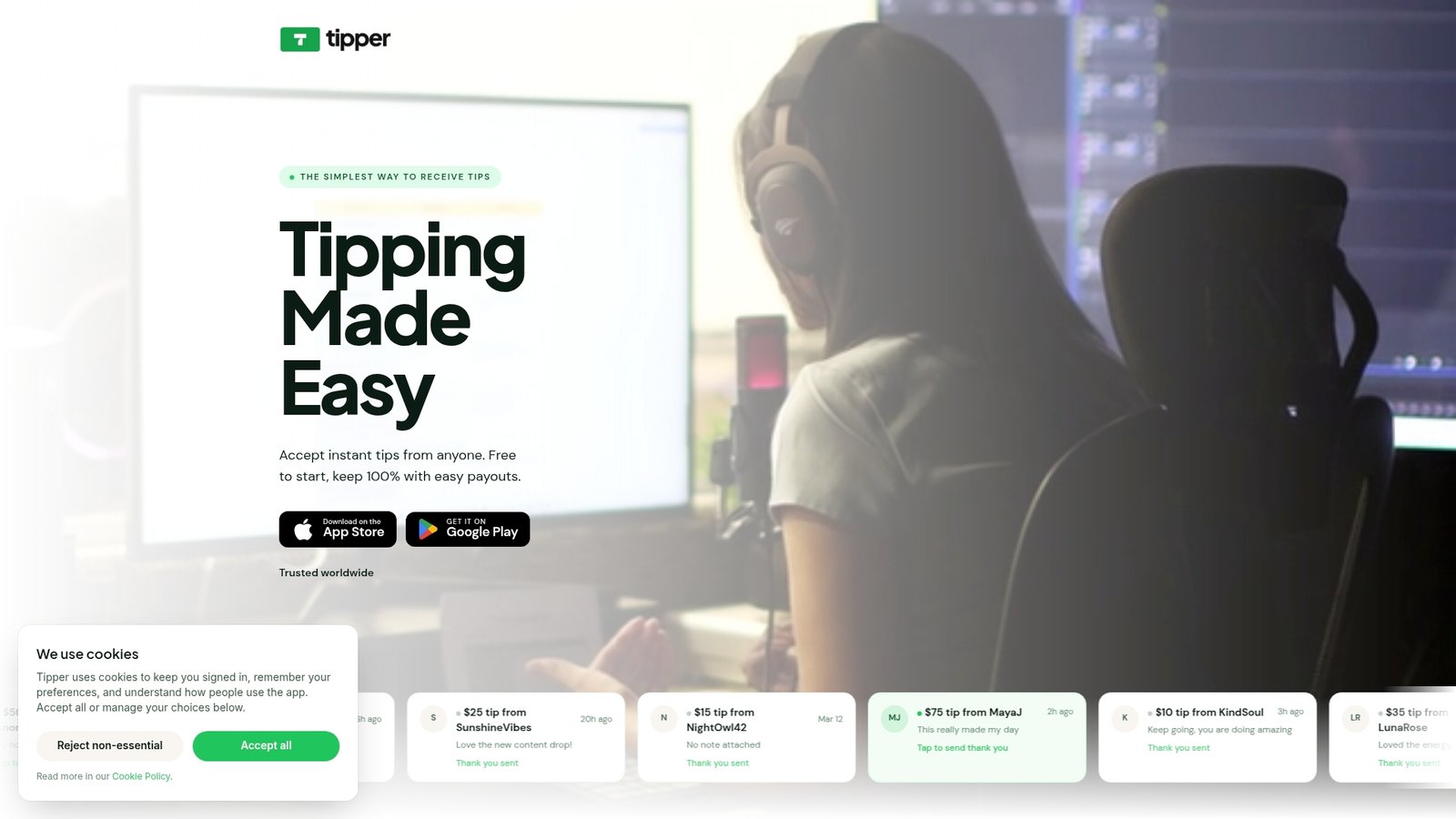
The concrete next step: build your tip page, generate your QR, and run a real $1 test tip on your own phone before you print anything or step on stage. Confirm the payment button shows up, the payout lands, and the thank-you message plays the way you set it up. Start that test now on Tipper, or check out this creator’s guide to collecting tips without a signup if you want a walkthrough before you commit.
Sources
- The Ultimate Guide to QR Codes for Tips and Gratuity in 2026 — Blog
- QR Codes for Content Creators & Influencers Guide | QR-Verse
- Quishing – Επιθέσεις ηλεκτρονικού ψαρέματος μέσω κωδικού QR
FAQ
What Is Event QR Tipping?
It’s a personalized tip link and QR code that let supporters send you money instantly, using Apple Pay, Google Pay, or a card, without needing an account of their own.
Do Supporters Need an App to Tip Me?
No. They scan the QR with their phone’s regular camera, and the checkout opens in their browser, no app download required.
How Fast Should My Tip Page Load?
Aim for under 1.5 seconds. Conversions drop noticeably once the whole process passes about eight seconds.
Is It Safe to Scan a Tip QR Code at an Event?
Yes, as long as the code uses an HTTPS link and the landing page looks consistent with the creator’s branding. Watch for “quishing” attempts where a fake code redirects to a lookalike page.
Does this platform take a cut of my tips?
Creators keep 100% of what they earn on Tipper; only standard payment processing fees apply at checkout.
Can I Personalize My Thank-You Message?
Yes. Tipper lets you add a text note, photo, or short video that plays after someone sends a tip, which is one of the simplest ways to turn a one-time tipper into a repeat supporter.



[…] Run a small pilot: test with a $1 transaction internally to confirm the flow works end to end before a guest ever scans it, an approach covered in more detail in this event QR tipping setup guide. […]