


TL;DR:
- Tip-based revenue models allow supporters to pay creators directly, boosting loyalty and real-time feedback. These models thrive with transparent, frictionless payment options, but tips alone are volatile compared to stable memberships. Combining recurring income with tips creates a more resilient and personalized creator support system.
Tip-based revenue models are defined as voluntary gratuity systems where supporters pay creators directly for content, services, or experiences they value. The benefits of tip-based revenue models go beyond simple income. They create real-time feedback loops, deepen audience loyalty, and generate income without locking creators into rigid subscription structures. Platforms like Tipper have made this model accessible to any creator with a link, no account required from supporters. When tipping is transparent and optional, 73% of users voluntarily tip, which shows just how powerful the right setup can be.

1. How do tip-based revenue models increase income and audience engagement?
Voluntary tipping works because it taps into a specific psychological trigger: reciprocity. When a creator delivers real value, supporters feel a natural pull to give something back. That impulse is strongest when the tipping process is visible, frictionless, and clearly optional.
Transparent tipping systems consistently outperform opaque ones. The 73% voluntary tip adoption rate tied to transparent, optional models proves that removing pressure actually increases giving. Supporters tip more freely when they feel in control of the decision.
Tipping also changes how audiences relate to creators. A supporter who tips is no longer a passive viewer. They become an active participant in the creator’s work. That shift in identity drives repeat engagement, higher comment rates, and stronger word-of-mouth referrals.
- Supporters who tip once are more likely to return and tip again
- Public tipping moments (live streams, comment sections) create social proof that encourages others
- Personalized thank-you messages from creators reinforce the emotional reward of giving
Pro Tip: Send a short video thank-you to every first-time tipper. That one gesture converts a one-time supporter into a repeat contributor more reliably than any automated email.
2. What technological innovations drive higher tipping rates?
Friction kills tip conversion. Every extra tap, login screen, or app download reduces the chance a supporter follows through. NFC tap solutions reduce tipping time to 2 seconds, which directly increases tip frequency by removing the hesitation window.
Modern digital tipping platforms solve this with app-less flows, QR codes, and one-tap payment via Apple Pay or Google Pay. Tipper uses this exact model. A supporter clicks a personalized link, taps their preferred payment method, and the tip lands instantly. No account creation. No friction.
Beyond speed, digital tipping platforms increase average gratuity through suggested tip amounts. When a platform shows three preset options ($3, $5, $10), supporters anchor to the middle or high option rather than defaulting to the minimum. That single design choice raises average tip size without any extra effort from the creator.
Analytics dashboards add another layer of advantage. Creators can see which content generates the most tips, what time of day supporters are most generous, and which audience segments convert best. That data turns guesswork into a repeatable income strategy.
- App-less tipping via NFC or QR code removes the biggest conversion barrier
- Suggested tip amounts anchor supporters toward higher giving
- Real-time dashboards show which content and timing drive the most revenue
- Contactless tip collection increases frequency by meeting supporters where they already are
Digital tipping systems increase guest service scores by 14%, which reflects how ease of tipping improves the overall experience for both sides. A supporter who tips easily feels good about the interaction. That positive feeling attaches to the creator’s brand.
3. What are the limitations of tip-based revenue models?
Tips provide immediate income but no predictable floor. A creator who earns $800 in tips one month may earn $200 the next, depending on content performance, algorithm changes, or audience mood. That volatility makes financial planning difficult when tips are the only income source.
Tips provide immediate gratification but lack a predictable income floor. Memberships, by contrast, lock in recurring revenue regardless of whether a specific piece of content performs well. The psychological difference matters too. A member has made a commitment. A tipper has made a one-time decision.
The most resilient income architecture combines both. Memberships serve as the foundation, providing stable monthly revenue. Tips serve as the variable upside, rewarding exceptional content and live moments. Membership income outperforms tip-only income by 2–4x after 6–12 months due to retention and lower churn. That gap is significant for any creator planning long-term.
| Income type | Predictability | Upside potential | Audience commitment |
|---|---|---|---|
| Tips only | Low | High | Low |
| Memberships only | High | Medium | High |
| Hybrid model | Medium-high | High | High |
Pro Tip: Set a monthly membership goal that covers your fixed costs. Then treat every tip as profit. That mental separation removes financial anxiety and lets you create without pressure.
4. How do tip menus and structured tipping strategies enhance participation?
A tip menu is a structured list that links specific tip amounts to defined actions or content. Instead of asking supporters to “tip what you feel,” a tip menu tells them exactly what each amount unlocks. That clarity removes hesitation and converts passive viewers into active participants.
Structured tip menus convert passive viewers and gamify tipping through clearly mapped amounts and tiered goals. A creator might offer $5 for a shoutout, $20 for a custom photo, and $100 for a personalized video. Each tier gives the supporter a concrete reason to choose a higher amount.
Goal-driven tipping adds another layer. When a creator sets a visible tip goal (“$500 to fund next month’s video series”), supporters can track progress in real time. That progress bar creates urgency and community. Supporters who tip toward a shared goal feel invested in the outcome.
- Tip menus reduce decision fatigue by giving supporters clear options
- Tiered rewards encourage higher tip amounts through perceived value
- Visible progress goals create a community dynamic around shared outcomes
- Frictionless tipping paired with a clear menu maximizes both conversion and average tip size
5. What are the best practices for implementing tip-based revenue models in 2026?
The single most important factor in tip adoption is simplicity. If a supporter has to create an account, download an app, or enter card details manually, most will abandon the process. The best tipping setups require zero steps from the supporter beyond choosing an amount and tapping pay.
Communicate openly with your audience about how tips support your work. Supporters give more generously when they understand the impact. A creator who says “your tips fund my editing software and studio time” gives supporters a concrete reason to contribute. Vague calls to “support my work” underperform specific ones.
- Use a personalized tipping link that works on any device without an app
- Display suggested tip amounts to anchor supporters toward higher giving
- Explain publicly what tips fund, whether equipment, time, or future content
- Integrate tipping into your existing content flow, not as a separate ask
- Send personalized thank-you messages within 24 hours of receiving a tip
- Track which content generates the most tips and produce more of it
- Combine tipping with a membership tier for stable income plus variable upside
Data nudges in digital tipping platforms raise average tip amounts and give creators analytics to refine their approach over time. Treat your tipping setup as a system to test and improve, not a static link you post once.
Key takeaways
Tip-based revenue models work best when paired with transparent communication, frictionless technology, and a hybrid income structure that includes recurring memberships.
| Point | Details |
|---|---|
| Transparency drives adoption | 73% of users tip voluntarily when tipping is transparent and optional. |
| Friction is the biggest barrier | NFC and app-less tipping reduce transaction time to 2 seconds, raising conversion rates. |
| Tips alone are volatile | Membership income outperforms tip-only income by 2–4x after 6–12 months. |
| Tip menus increase average size | Structured menus with tiered rewards convert passive viewers and raise per-tip amounts. |
| Hybrid models are most resilient | Memberships provide the income floor; tips provide the variable upside. |
Tipper’s take on tip-based income
Tip income feels good in a way that subscription revenue does not. There is something immediate and personal about a supporter choosing to give you money right now, for this piece of work. That dopamine hit is real. But I have watched creators build their entire income strategy around that feeling, and it rarely ends well.
The volatility is the part most creators underestimate. A bad month on social media does not just hurt your views. It can cut your tip income in half overnight. Memberships do not behave that way. A member who committed in january is still paying in march, even if your last three posts underperformed.
The creators I have seen build genuinely sustainable income treat tips as a bonus layer, not a foundation. They use digital tipping platforms to capture spontaneous generosity from their audience, while memberships cover the baseline. That architecture gives you the emotional reward of tipping and the financial security of recurring revenue. Both matter.
The psychological dimension of tipping also builds community in a way that subscriptions do not. A supporter who tips publicly is making a statement. They are telling other viewers that this creator is worth paying for. That social signal is free marketing. Use it.
— Tipper
How Tipper makes tip collection effortless
Collecting tips should not require your supporters to jump through hoops. Tipper gives you a personalized link that works instantly on any device. Supporters pay with Apple Pay or Google Pay in seconds, with no account creation required.
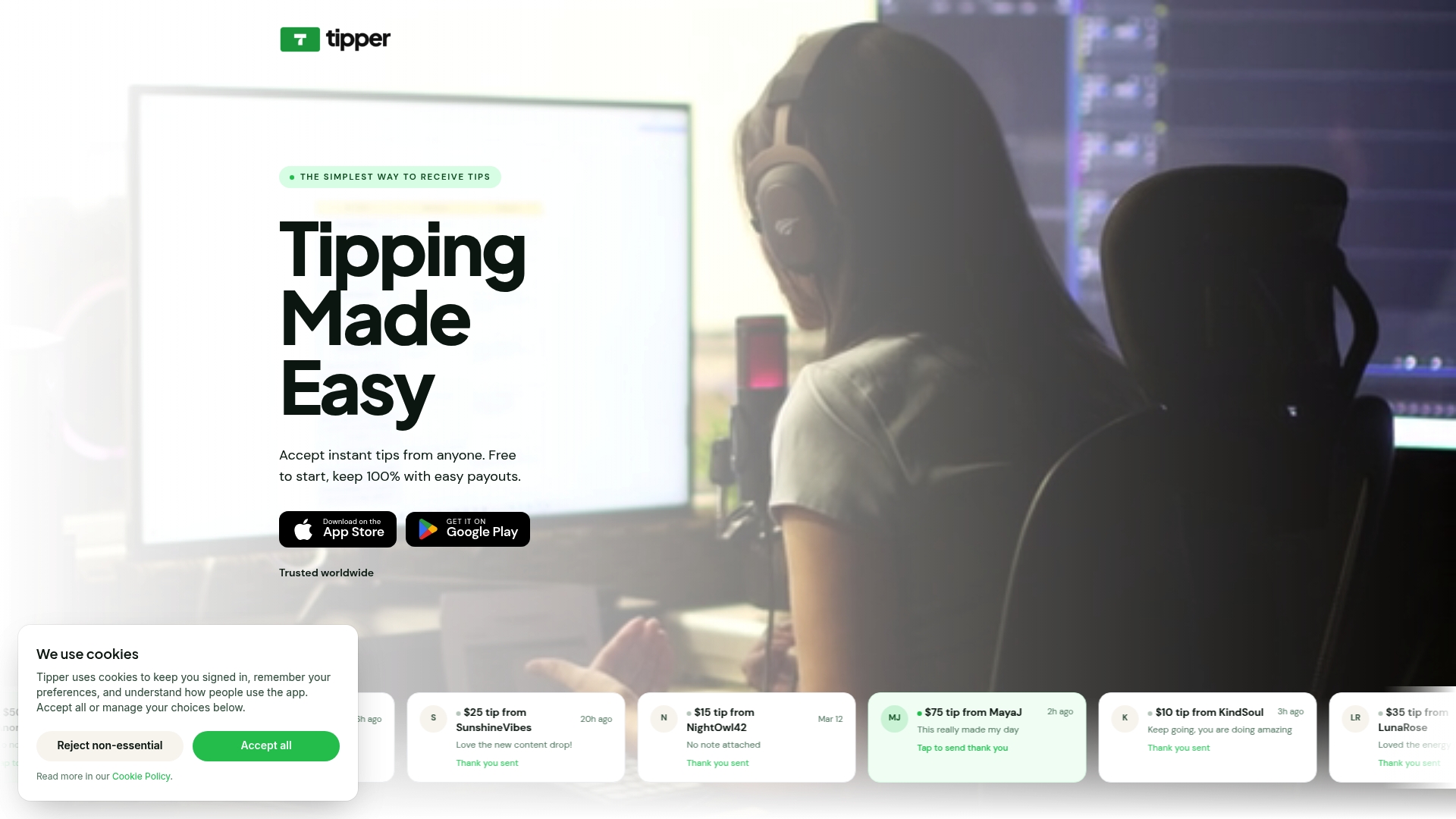
You keep 100% of every tip. Tipper’s dashboard shows you which content drives the most revenue, so you can make smarter decisions about what to create next. Thank-you notes and video responses let you build real connections with your most generous supporters. If you are ready to add gratuity-based income to your creator toolkit, Tipper is the fastest way to start collecting tips today.
FAQ
What are the main benefits of tip-based revenue models?
Tip-based revenue models generate immediate income, strengthen audience loyalty, and create real-time feedback on content value. They work best when tipping is transparent, optional, and frictionless.
How do tip-based models work for content creators?
Creators share a personalized tipping link or display a tip menu, and supporters pay voluntarily using digital payment methods like Apple Pay or Google Pay. Platforms like Tipper process the payment instantly with no account required from the supporter.
Are tips a reliable primary income source?
Tips are not reliable as a sole income source because they lack a predictable floor. Membership income outperforms tips by 2–4x after 6–12 months, making a hybrid model the stronger long-term strategy.
What is a tip menu and why does it matter?
A tip menu links specific dollar amounts to defined actions or content, giving supporters a clear reason to choose a higher tier. Structured tip menus convert passive viewers and increase average tip size through gamification.
How does reducing friction improve tip revenue?
Removing steps from the tipping process directly raises conversion rates. App-less NFC tipping reduces transaction time to 2 seconds, which eliminates the hesitation that causes most supporters to abandon the process before completing a tip.




[…] can attach a thank-you note or video, which deepens the audience connection. You can explore how tip-based revenue works as part of a broader income […]
[…] or an influencer who wants to start collecting tips this afternoon, that’s the right call. The tip-based revenue model rewards […]
[…] of that relationship at a high level, your organic endorsements carry more weight, not less. The benefits of tip-based revenue models extend this logic: when supporters can see aggregated tip figures, they understand they’re […]
[…] benefits of tip-based revenue models extend beyond the behavioral data: tips also diversify income away from ad CPMs and platform […]
[…] Publication 531, keeping a daily tip record is a procedural requirement, not a best practice. The benefits of tip-based revenue are real, but they only compound when your records are clean enough to […]