
Digital tipping platforms are defined as tools that let supporters send money directly to creators through contactless, digital payment channels without needing cash or a shared physical space. The digital tipping platforms comparison 2026 reveals a clear truth: the best platform is not the most popular one. It is the one that matches your average tip size, your audience’s location, and your payment preferences. Cash usage is declining as creators without digital tipping options risk missing spontaneous support from digitally native audiences. Tipper, for example, lets supporters pay instantly via Apple Pay or Google Pay with no account required, and creators keep 100% of their earnings.
1. What features define the best digital tipping platforms for creators in 2026?
The single most important feature is fee structure. A platform that charges a fixed fee per transaction will eat a large share of micro-tips, while a percentage-based fee favors smaller amounts. Fixed per-transaction fees typically run around $0.29 or €0.29, which can wipe out most of a $1 tip before it reaches you.
Beyond fees, the best platforms share these qualities:
- Zero friction for supporters. No account creation, no app download, no waiting. The fewer steps between intent and payment, the higher your conversion rate.
- Multiple payment methods. Apple Pay, Google Pay, and major credit cards cover the vast majority of digital-first audiences in 2026.
- Global currency support. If your audience spans multiple countries, your platform must handle multi-currency transactions without punishing exchange rates.
- Privacy and data compliance. Platforms operating under GDPR or equivalent standards protect both you and your supporters.
- Flexible tip amounts. Supporters should be able to send $1 or $100 without the interface making either feel awkward.
Pro Tip: Set a suggested tip amount slightly above your average. Research on pricing psychology shows that anchoring guides supporters toward higher amounts without pressure.
Tipper checks every box on this list. Supporters pay with one tap, creators receive funds with no platform cut, and the setup takes minutes.

2. Top digital tipping methods and technologies used in 2026
Four core technologies power digital tipping in 2026: instant bank-to-bank networks, credit card processors, QR codes, and NFC chips. Each serves a different use case.
Instant bank-to-bank networks work best for micro-tips in supported regions. Wero charges about €0.05 on a €1 tip, compared to a €0.29 fixed fee from card processors. That difference makes bank-to-bank networks up to 5x cheaper for very small amounts.
Credit card processors handle larger tips and international payments well. They charge a percentage of the transaction, which becomes proportionally smaller as tip size grows. For a $20 tip, a 2.9% fee costs $0.58. That is reasonable. For a $1 tip, it is not.
QR codes remain the most accessible contactless method. Every smartphone camera can read one, and they cost nothing to generate. The downside is security: QR codes can be spoofed or replaced at in-person events.
NFC chips, specifically those using NTAG 424 DNA technology, solve the spoofing problem. NFC tipping is harder to spoof and delivers a smooth tap-to-tip experience that venues and live-event creators prefer. The trade-off is device compatibility. Older smartphones may not support NFC tipping.
| Method | Best for | Main limitation |
|---|---|---|
| Bank-to-bank (instant) | Micro-tips in supported regions | Limited geographic coverage |
| Credit card processor | Larger tips, international reach | Fixed fees hurt micro-tips |
| QR code | Broad accessibility, online sharing | Spoofing risk at in-person events |
| NFC chip | In-person events, security-focused | Requires NFC-compatible devices |
Pro Tip: Combine QR and NFC at live events. Display a QR code for broad access and offer an NFC tap point for supporters with compatible devices. Hybrid QR and NFC setups maximize conversion by covering both audiences.
3. How to optimize digital tipping setups for mixed international audiences
Creators with global audiences face a real cost problem. No single payment method is cheapest for every supporter in every country. The solution is a hybrid setup.
Combining low-cost eurozone instant payments with a global card processor reduces overall fees while keeping your tipping page accessible to everyone. EU-based supporters use the instant network. Everyone else uses a card. You present both options clearly on one page.
Practical steps for a mixed-audience setup:
- Segment by region. Identify where your top supporters are located. If 60% are in the EU, prioritize an instant payment option for that group.
- Display local currency. Supporters tip more when they see their own currency. A $5 tip feels different from a €4.62 tip, even at the same exchange rate.
- Keep the interface in one language. Multilingual tipping pages create confusion. Use English as the default for global audiences unless your audience is predominantly one language.
- Test on mobile first. The majority of digital tips come from mobile devices. If your tipping page does not load cleanly on a phone, you lose the tip.
- Minimize redirects. Every page redirect between “I want to tip” and “tip sent” costs you conversions. Platforms like Tipper handle the full transaction on one page.
Cross-platform tipping strategies help creators manage multiple payment methods without overwhelming supporters with choices.
4. Integrating digital tipping into your creator workflow and audience engagement
Tipping works best when it feels like a natural part of your content, not an interruption. The framing matters more than most creators expect. Positive, supportive messaging outperforms generic donation requests every time. “Support this work” converts better than “donate if you can.”
A practical integration workflow looks like this:
- Create a personalized tipping page. Use your name, a short description of your work, and a clear call to action. Tipper generates a shareable link and QR code automatically.
- Add your tipping link to every content channel. Pin it to your social profiles, include it in video descriptions, and add it to your email signature.
- Mention tipping at natural moments. The end of a video, the bottom of a newsletter, or after a live Q&A are all low-pressure moments to mention support.
- Enable real-time notifications. Real-time tip alerts let you acknowledge supporters immediately, which builds loyalty and encourages repeat tips.
- Send a personal thank-you. Tipper supports thank-you notes and video messages. A 15-second video response to a tip creates a connection that no automated email can replicate.
- Track your tip revenue monthly. Reviewing which content generates the most tips tells you what your audience values most. That data shapes your content calendar.
Verified performance tracking shifts audience perception from casual donation to genuine investment in your work. Transparency builds the kind of trust that turns one-time tippers into regular supporters.
5. Common pitfalls and overlooked options in digital tipping platforms
The most expensive mistake creators make is choosing a platform based on name recognition rather than fee math. A well-known card processor may cost you 29 cents on every $1 tip. That is a 29% fee before the percentage charge even applies. Transaction fee structure depends entirely on your average tip amount, and most creators never run the numbers.
Other common mistakes:
- Relying on one payment method. A creator who only accepts card payments excludes supporters who prefer Apple Pay, Google Pay, or bank transfers.
- Weak tipping copy. Phrases like “buy me a coffee” or “donate” carry connotations that reduce conversion. Frame tipping as audience participation, not charity.
- Ignoring NFC for in-person work. Freelancers who meet clients or perform live often overlook NFC tipping. NFC adoption at in-person events is growing because it reduces fraud and speeds up the payment moment.
- Skipping no-fee alternatives. Platforms that charge creators zero platform fees exist. Tipper keeps 100% of tips with the creator, which is a meaningful difference over time.
Choosing a tipping platform without calculating your average tip size against the fee structure is the same as pricing a product without knowing your costs. The math determines your actual earnings, not the platform’s marketing copy.
Explore types of digital tip jar tools to compare categories before committing to a single solution.
Key Takeaways
The best digital tipping platform in 2026 is the one that matches your average tip size, your audience’s geography, and your workflow, not the one with the biggest brand name.
| Point | Details |
|---|---|
| Fee structure drives real earnings | Fixed fees destroy micro-tip revenue; calculate cost per average tip before choosing a platform. |
| Hybrid setups reduce total fees | Combine instant bank networks for EU supporters with card processors for international reach. |
| NFC beats QR for in-person security | NFC chips using NTAG 424 DNA technology reduce spoofing risk and improve conversion at live events. |
| Framing determines conversion | Supportive, non-begging copy consistently outperforms generic donation language. |
| Zero-fee platforms exist | Tipper charges creators no platform fee, meaning 100% of every tip reaches the creator. |
What I have learned from watching creators choose the wrong platform
The pattern repeats constantly. A creator picks a well-known payment processor because it feels safe, then spends months wondering why their tipping revenue is lower than expected. The answer is almost always fee math combined with friction. Their supporters hit one extra step and abandon the process.
The creators who earn the most from tipping share two habits. First, they treat their tipping page like a product page. They write clear copy, use a real photo, and update the page when their content focus changes. Second, they review their tip data monthly. They know which posts drive tips and which do not. That feedback loop shapes their content decisions in ways that no analytics dashboard can replicate.
The technology trend worth watching is NFC at live events. Creators who perform, teach workshops, or meet clients in person are leaving money behind if they rely only on QR codes. An NFC card or sticker costs a few dollars and converts at a higher rate because the tap feels intentional. It is a small investment with a measurable return.
The honest advice is this: start with a platform that charges you nothing and requires nothing from your supporters. Add complexity only when your volume justifies it. Most creators never need more than a clean tipping link, a good payment method, and a genuine thank-you.
— Tipper
Tipper makes digital tipping simple for creators in 2026
Tipper gives you a personalized tipping page with a shareable link and QR code ready in minutes. Supporters pay with Apple Pay, Google Pay, or a card. No account creation, no app download, no friction.
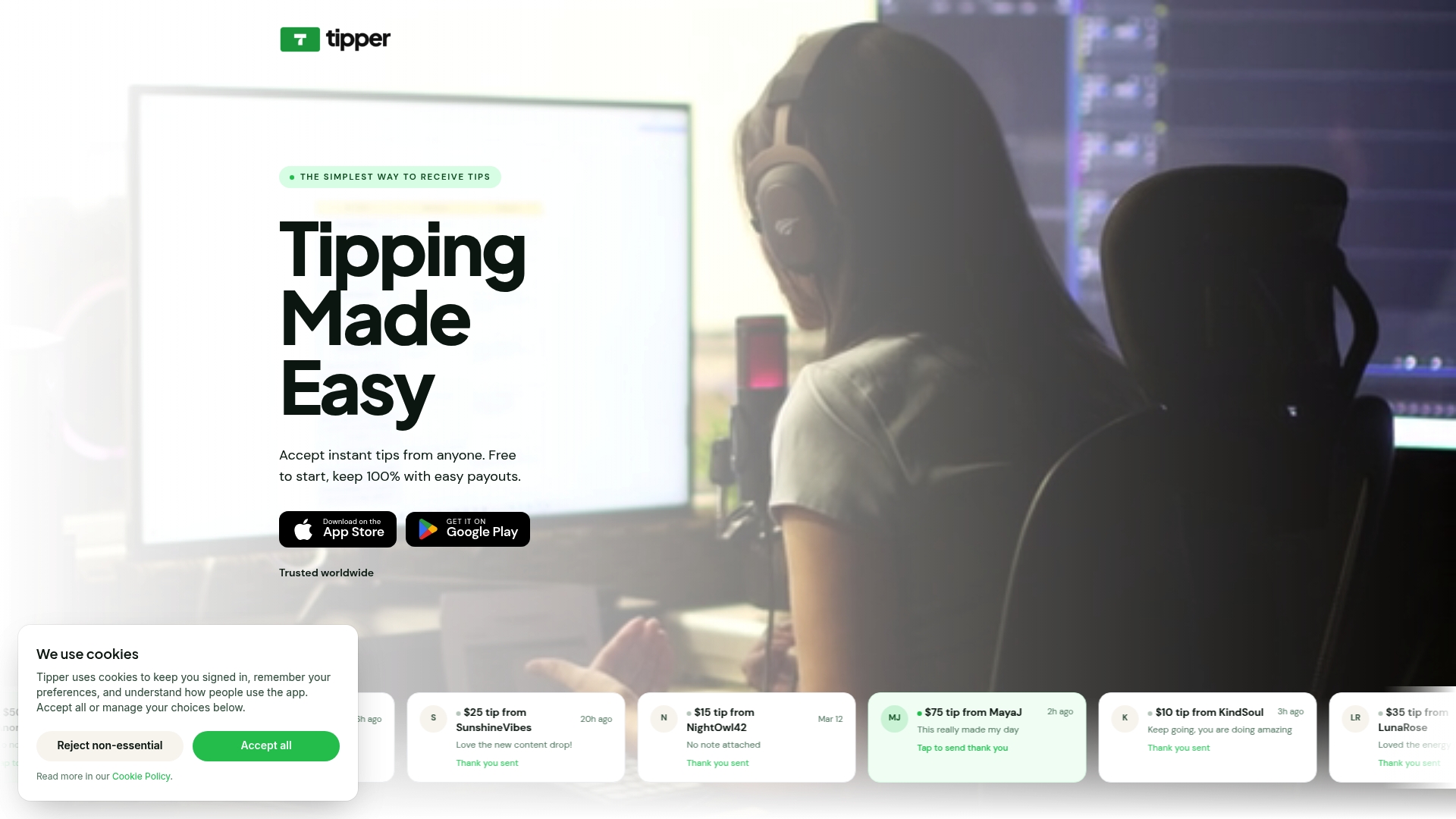
Creators keep 100% of every tip. Tipper handles the payment processing, the thank-you message tools, and the real-time notifications. If you want tipping made easy without platform fees eating your earnings, Tipper is built for exactly that. The setup takes less time than writing a single social post, and your first tip can arrive the same day. Learn more about frictionless tipping practices that help creators convert audience support into real income.
FAQ
What is the cheapest digital tipping platform for micro-tips?
Instant bank-to-bank networks cost significantly less than card processors for tips under $5, with fees as low as $0.05 compared to a fixed $0.29 per transaction from card processors. Tipper charges creators no platform fee at all.
How do I use a digital tipping platform as a freelancer?
Create a personalized tipping page, add your shareable link to your client communications and social profiles, and mention it at natural moments after delivering work. Tipping links for creators can be shared anywhere a URL works.
Is NFC tipping better than QR code tipping?
NFC tipping using NTAG 424 DNA chips is more secure and harder to spoof than QR codes, making it the better choice for in-person events. QR codes remain more accessible for online and remote audiences.
Do supporters need an account to tip through Tipper?
No. Tipper lets supporters send a tip using Apple Pay, Google Pay, or a card with no account required. That zero-friction experience is the main reason conversion rates stay high.
What 2026 tipping app features matter most for international creators?
Multi-currency support, multiple payment methods, and low or no platform fees matter most. A hybrid setup combining regional instant payment networks with a global card processor covers the widest audience at the lowest cost.




Leave A Comment