
Loyalty-linked tipping is defined as the practice of connecting customer loyalty rewards directly with digital tipping systems, so that a single payment action captures both a tip and a loyalty credit at once. This model is gaining traction in 2026 because payment-linked loyalty and NFC-based tipping credentials have matured enough to make the experience genuinely frictionless. Businesses using these systems report stronger customer retention and higher worker satisfaction than those running loyalty and tipping as separate programs. Understanding how loyalty-linked tipping works gives both businesses and individuals a clear path to better engagement and real monetization.
What is loyalty-linked tipping explained: the core mechanics
Loyalty-linked tipping works by connecting two systems that traditionally operated in isolation. The first is a payment-linked loyalty program. The second is a digital tipping mechanism. When both are active, a customer’s payment triggers a loyalty reward and delivers a tip to a worker in a single interaction.
Payment-linked loyalty enables automatic reward earning by linking one payment card to a loyalty account. The initial setup takes about 60 seconds. After that, every qualifying transaction earns rewards with zero customer action at the point of sale. No app to open, no card to scan, no code to enter.

The tipping side works through NFC-based personal credentials. A staff member carries a small token or badge loaded with their tipping identity. A customer taps their smartphone to that badge, and a browser payment screen appears instantly. The tip completes via Apple Pay or Google Pay in under one second, with no account creation required.
The key insight is that these two mechanisms work best when they are kept separate at the technical level. Separating loyalty from tipping at the point of sale optimizes the customer experience and operational efficiency for both reward types. Trying to force both into a single POS workflow creates friction and confusion.
How NFC credentials change the tipping experience
NFC tipping credentials give workers a portable professional identity that travels with them. A server at a restaurant, a hotel porter, or a freelance creator can each carry a credential tied directly to their personal payment details. The guest taps, the tip lands in the worker’s account immediately, and the employer never touches the funds. This is a structural shift from the old model where tips pooled through employer systems before reaching workers.
Pro Tip: If you are a business owner setting up loyalty-linked tipping, configure your loyalty program through card-linking first, then deploy NFC tipping credentials separately. Mixing both into one POS screen slows the checkout and reduces tip rates.
Why the psychology behind loyalty tipping drives real behavior
Behavioral psychology explains why loyalty-linked tipping works better than either system alone. The combination activates two powerful motivators: the desire to gain rewards and the fear of losing earned status.
Loss aversion drives customer retention in tiered loyalty programs because customers work harder to avoid losing earned status than they do to gain new benefits. A customer who has reached a “Gold” tier will spend more to protect that status than a new customer will spend to reach it. Tipping fits into this dynamic because it becomes part of the ritual that maintains the relationship with a brand or service worker.
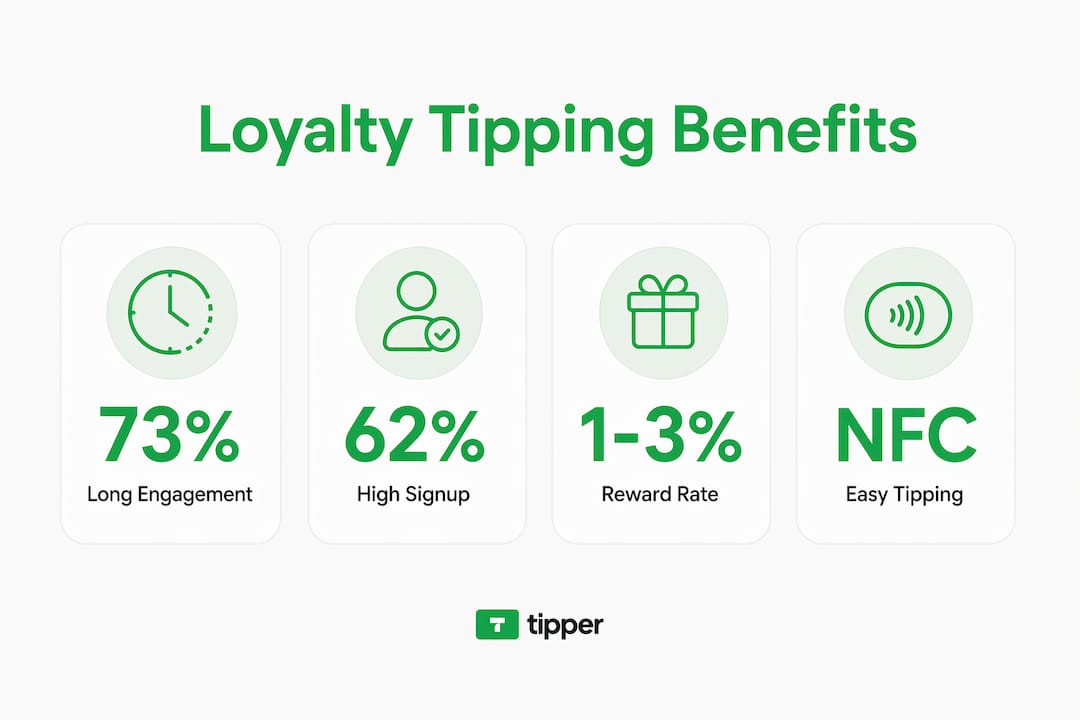
The data on program structures confirms this. Cashback loyalty models have high signup rates of 62% but only 8% engagement after six months. Tiered programs start lower at 38% adoption but hold 73% engagement at 18 months. That gap shows that emotional investment, not just financial incentive, keeps customers active.
Direct, verified tipping through NFC credentials adds another psychological layer. Digital tipping transforms workers from passive recipients into principals with portable professional identities. When a customer taps to tip a specific person, the act feels personal and direct. That emotional connection increases the likelihood of tipping and the likelihood of returning.
Key psychological drivers behind loyalty-linked tipping:
- Loss aversion: Customers protect earned tier status by continuing to spend and engage.
- Reciprocity: Receiving instant, personalized recognition from a worker triggers a desire to tip.
- Habit formation: Frictionless reward capture turns loyalty participation into an automatic behavior.
- Autonomy: Direct NFC tipping gives customers full control over who receives their tip and when.
“Consumer behavior is shifting toward expecting frictionless, no-manual-step rewards and tipping enabled by mobile wallets and identification-linked payments.” — Rewardly research on payment-linked loyalty
What loyalty program structures work best with tipping integration?
Three main loyalty structures exist, and each integrates with tipping differently. Understanding the differences helps businesses choose the right model.
Cashback programs return a percentage of spend as cash or credit. They are easy to understand and drive fast signups. The problem is that cashback feels transactional. Customers earn and redeem without building any emotional attachment to the brand. Tipping in a cashback environment tends to stay flat because the relationship never deepens beyond the discount.
Points programs assign a point value to each dollar spent. Customers accumulate points and redeem them for rewards. Effective points programs tie rewards directly to behavior change and manage breakage, which is the percentage of points that are never redeemed, to subsidize rewards for engaged users. Breakage typically ranges from 10% to 30%. That unredeemed value funds better rewards for active customers, which is how well-run programs stay financially healthy. Points programs pair well with tipping because both systems reward ongoing engagement rather than one-time transactions.
Tiered programs assign customers to status levels based on cumulative spend or activity. Each tier unlocks better rewards. As shown above, tiered programs produce the strongest long-term engagement. They also create the best environment for loyalty-linked tipping because customers at higher tiers are already emotionally invested in the brand.
| Program type | Signup rate | 18-month engagement | Tipping compatibility |
|---|---|---|---|
| Cashback | High | Low | Weak |
| Points-based | Medium | Medium | Strong |
| Tiered | Lower | Very high | Strongest |
Virtual payment cards add another layer to points redemption. Some programs issue a virtual card loaded with redeemable points, which customers use at checkout. This approach keeps the loyalty and payment experience inside a single wallet, making it easier to layer in tipping credentials from the same device.
Pro Tip: For points and tiered programs, set your effective reward rate between 1% and 3% of spend. Rates below 1% feel meaningless. Rates above 3% erode margin faster than breakage can offset.
What are the real benefits of loyalty tipping for businesses and customers?
The benefits of loyalty tipping split cleanly between the business side and the customer side. Both gain something concrete.
For businesses, the primary gain is retention. Modern commerce links mobile wallets to transactions, enabling hyper-personalization and instant recognition at payment. When a business knows who a customer is at the moment of payment, it can tailor offers, track tipping behavior, and identify its most valuable customers without any manual data entry. That data feeds better decisions about staffing, promotions, and service design.
For workers, the gain is financial and psychological. Tips delivered immediately without an employer intermediary improve worker retention in high-turnover environments like hospitality. A server who receives a tip directly to their account within seconds of completing a table service has a fundamentally different relationship with their work than one who waits for a weekly payroll disbursement.
For customers, the gain is simplicity and meaning. A single tap handles both the loyalty credit and the tip. No fumbling with cash, no navigating a payment terminal, no creating yet another account.
Practical steps for businesses implementing loyalty-linked tipping:
- Link your loyalty program to a card-based or mobile wallet system so rewards capture automatically at payment.
- Deploy NFC tipping credentials for individual staff members, separate from the POS loyalty workflow.
- Set tip amounts to display as suggested values rather than open fields. Suggested amounts increase average tip size.
- Protect tip privacy by keeping individual tip amounts visible only to the recipient. Workers and customers both prefer this, and it increases tipping rates.
- Review breakage data quarterly to confirm your reward rate stays within a sustainable range.
For local businesses adopting digital tipping, the NFC credential model removes the need for expensive hardware upgrades. A badge or sticker with an embedded NFC chip costs a fraction of a new POS terminal and works with every modern smartphone.
Key Takeaways
Loyalty-linked tipping works best when payment-linked loyalty and NFC-based tipping credentials operate as separate but complementary systems, each optimized for its own moment in the customer experience.
| Point | Details |
|---|---|
| Keep systems separate | Run loyalty through card-linking and tipping through NFC credentials for best results. |
| Tiered programs win long-term | Tiered loyalty holds 73% engagement at 18 months versus 8% for cashback models. |
| Direct tipping empowers workers | NFC tips reach workers instantly without employer intermediary, improving retention. |
| Breakage funds sustainability | Unredeemed points (10%–30%) subsidize rewards for active users and protect margin. |
| Privacy increases tip rates | Keeping tip amounts private from management raises both worker comfort and tipping frequency. |
The shift I see coming in loyalty and tipping
The most underappreciated part of loyalty-linked tipping is not the technology. It is the power shift it creates for workers. For years, tipping was controlled by whoever owned the POS system. Employers decided when tips were distributed, how they were pooled, and what workers could see. NFC credentials break that model entirely. A worker’s tipping identity now belongs to them, not their employer. They carry it from job to job, build a reputation on it, and receive funds directly. That is a structural change, not a feature update.
Businesses that recognize this shift early will attract better staff. Workers choose employers who let them keep their tipping identity intact. The businesses that try to route NFC tips back through their own systems will lose workers to those that do not.
The privacy dimension matters just as much. Software systems that protect individual tip amounts from management scrutiny consistently see higher tipping adoption. Customers tip more when they know the money goes directly to the person they intend to reward. Transparency to the recipient and privacy from management is the combination that works.
The next phase will be loyalty programs that recognize tipping behavior as a signal of customer quality. A customer who tips consistently is a better long-term customer than one who maximizes cashback without tipping. Programs that weight tipping history in their tier calculations will build more loyal, higher-value customer bases. That is where the real monetization opportunity sits.
— Tipper
Tipper makes loyalty-linked tipping work for you
Tipper is built for exactly this moment in the tipping and loyalty space. Any creator, freelancer, or business can set up a personalized tipping link in minutes, with no signup required from the person tipping. Supporters pay instantly through Apple Pay or Google Pay, and the creator keeps 100% of every tip.
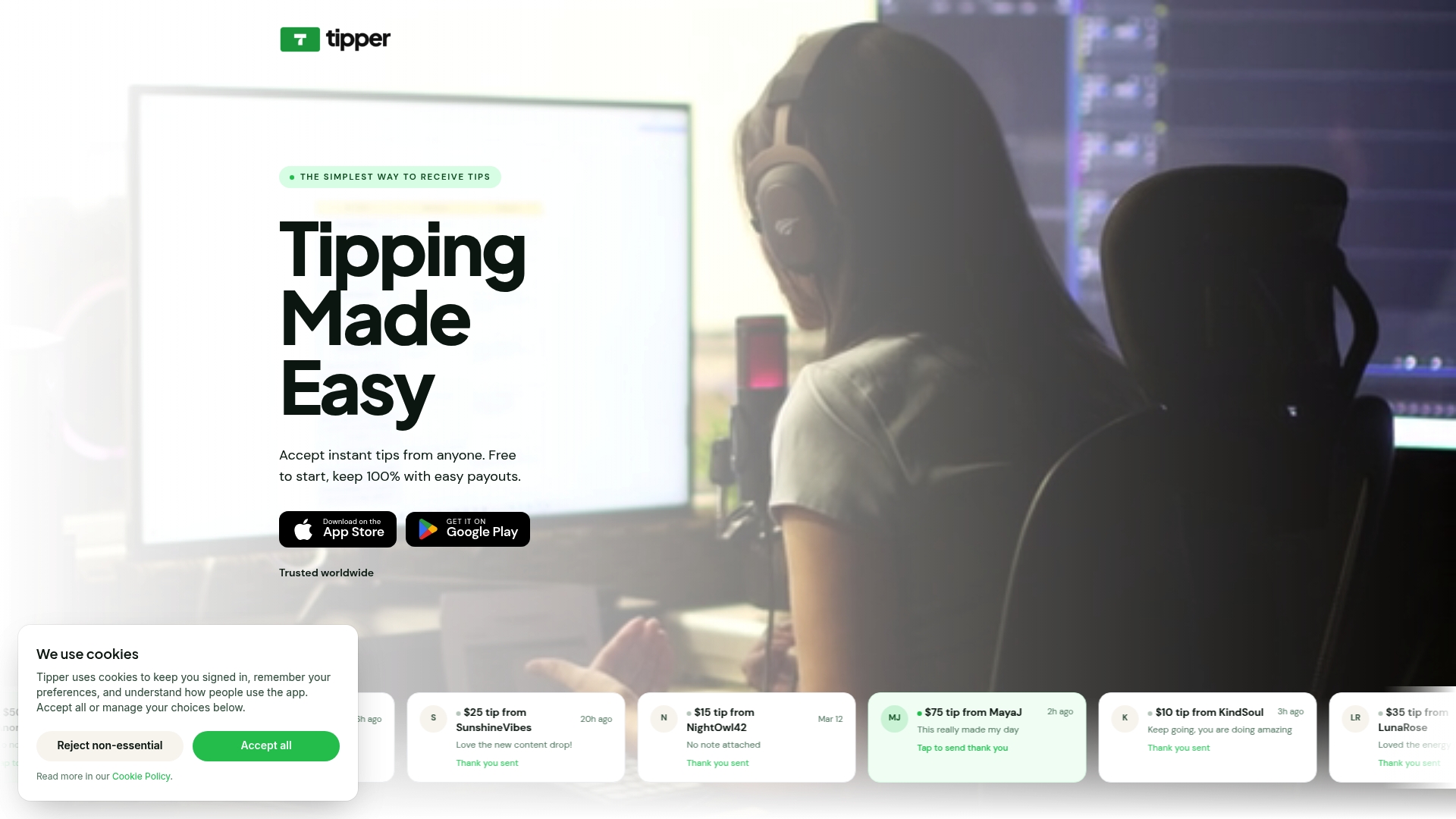
Tipper’s model fits naturally into loyalty-linked tipping programs because it removes every barrier between a supporter’s intention and the actual payment. No apps, no accounts, no delays. The person tipping taps or clicks, and the funds move. For businesses exploring contactless tip collection or creators building a direct support channel, Tipper provides the infrastructure without the complexity. Visit Tipper to set up your tipping link and start receiving instant appreciation from your audience today.
FAQ
What is loyalty-linked tipping?
Loyalty-linked tipping is the practice of connecting customer loyalty rewards with digital tipping systems so that a single payment captures both a tip and a loyalty credit. It uses payment-linked loyalty and NFC-based credentials to make the process automatic and frictionless.
How does NFC tipping work with loyalty programs?
A staff member carries an NFC badge loaded with their personal tipping identity. A customer taps their smartphone to the badge, and a payment screen appears via Apple Pay or Google Pay, completing the tip in under one second with no app or account required.
Which loyalty program type works best with tipping?
Tiered loyalty programs produce the strongest long-term engagement, holding 73% of participants active at 18 months. Their emotional investment structure makes customers more likely to tip consistently compared to cashback or basic points models.
Why should tip amounts stay private from management?
Workers and customers both prefer tip amounts to remain visible only to the recipient. Systems that protect this privacy consistently see higher tipping rates and greater worker comfort, which improves overall adoption of digital tipping programs.
Can small businesses implement loyalty-linked tipping without expensive hardware?
Yes. NFC tipping credentials work as low-cost badges or stickers that pair with any modern smartphone. Payment-linked loyalty requires only a card-linking setup, not a new POS terminal, making the full system accessible for small business cashless tipping at minimal cost.




Leave A Comment