
Tipping is a voluntary monetary reward given to service providers to recognize and encourage quality service, combining social expectations with economic incentives. The question of why tipping boosts service quality is more complex than it first appears. Research shows that bill size drives tip amounts far more than perceived service quality, yet tipping systems still improve aggregate customer satisfaction. Understanding both the social and economic forces behind gratuity helps consumers tip more thoughtfully and helps service professionals earn more consistently.
Why tipping boosts service quality: what the research says
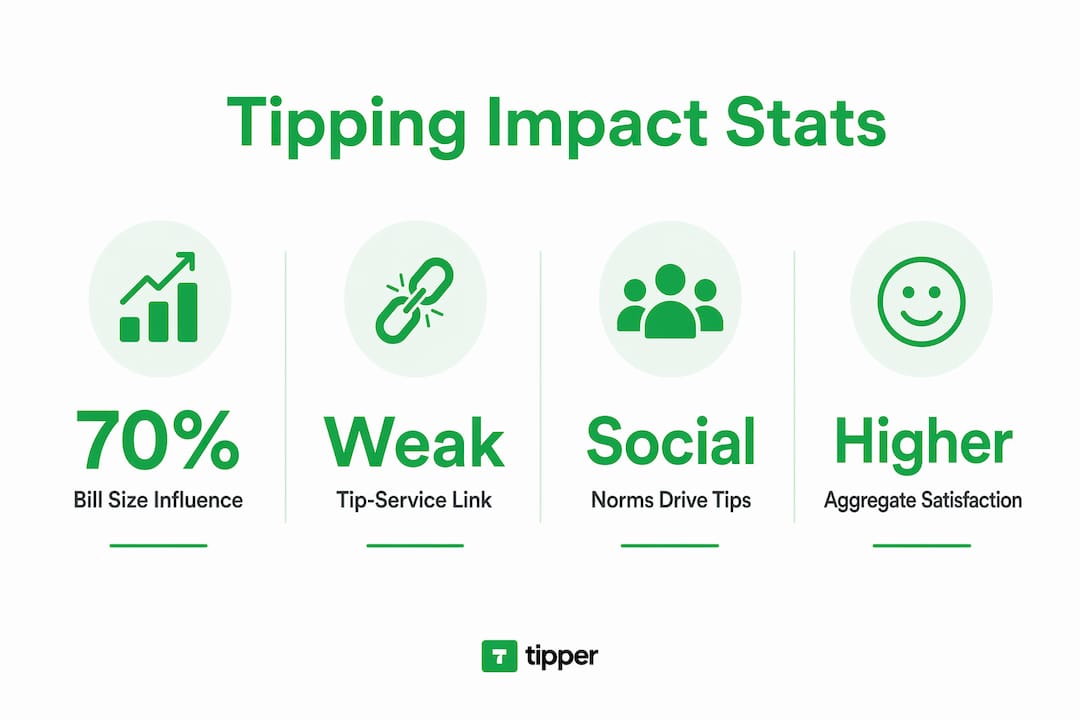
Tipping functions as both a performance incentive and a social signal, but the two roles carry unequal weight. Bill size explains about 70% of the variance in tip amounts, while customer-rated service quality explains only about 4%. That gap is striking. It means most customers tip based on what they spent, not how well they were served.

That said, the 4% figure is not meaningless. An improvement in perceived service quality increases the probability of a customer leaving a tip by approximately 4%. In high-volume service environments, that modest shift adds up across hundreds of daily transactions. Service quality does move the needle, just not as dramatically as the cultural narrative around tipping suggests.
Research also identifies several key drivers of tipping behavior beyond bill size and service quality:
- Social approval: Customers tip partly to be seen as generous and fair by servers and peers.
- Empathy: A personal connection with the server increases tip likelihood.
- Conformity: Customers follow perceived social norms, tipping a standard percentage regardless of their actual experience.
- Reciprocity: Tipping satisfies a felt obligation to reward someone who has served you.
The effects of tipping on service also vary by industry. In restaurants, tipping is deeply embedded in compensation structures. In banking, retail, and personal services, the relationship between tips and service performance is less established. Tipping behavior is driven by social signaling, empathy, and conformity rather than purely by self-interest, which explains why economic theory alone cannot predict tipping patterns in one-off transactions.
What this means for service quality at scale
Individual tip amounts correlate weakly with service quality. Yet tipping systems improve aggregate customer satisfaction even when individual tip decisions are driven by social norms. The system works at a macro level because it creates a culture of attentiveness, even if each transaction does not perfectly reward each interaction.
How do social norms shape tipping and service behavior?
Social norms are the invisible engine behind most tipping decisions. The conformity effect causes many customers to tip a standard percentage regardless of service quality. Customers tip 18–20% at a restaurant not because they consciously evaluated the service, but because that is what people do. This norm sustains the tipping system even when individual service falls short.
Social rapport between customer and server plays a measurable role. Servers who introduce themselves by name, make eye contact, and mirror customer body language receive higher tips. These behaviors build the empathy and connection that tipping sustains through reciprocity and social approval. The interaction itself becomes part of the service experience, not just the food or the product.
Tipping in non-traditional settings creates friction. When a tip prompt appears at a self-service kiosk or a counter where no table service occurred, customers feel social pressure without a clear social contract. Tip prompts in non-traditional or self-service settings often reduce customer satisfaction and repurchase intent. The discomfort comes from a mismatch between the social norm and the context.
- Normative settings: Full-service restaurants, hair salons, taxis. Tipping is expected and reinforces service quality.
- Ambiguous settings: Coffee counters, fast-casual restaurants. Tipping is optional and often driven by guilt rather than gratitude.
- Non-normative settings: Self-checkout kiosks, automated services. Tipping prompts here frequently damage customer experience.
Pro Tip: If you manage a service business, frame digital tip prompts as optional and explain what the suggested percentages represent. Customers who understand the context tip more willingly and return more often.
What are the practical implications for service professionals?
Tipping creates a direct financial incentive for attentive service. Tipped servers earn a median wage of $27 per hour, which reflects how performance-based compensation shapes service culture. That figure underscores why gratuity matters not just as a courtesy but as a core part of service worker income.
Training is the most reliable lever for improving tipping outcomes. Staff who demonstrate product knowledge, attentiveness, and genuine courtesy can enhance tipping outcomes significantly. Specific behaviors that research links to higher tips include:
- Introducing yourself by name at the start of the interaction.
- Repeating the customer’s order back to confirm accuracy and show care.
- Checking in at the right moments, not too often, not too rarely.
- Offering personalized recommendations based on what the customer has ordered before.
- Thanking customers sincerely at the end of the transaction.
These behaviors work because they build the social connection that drives tipping. They also improve the overall service experience, which benefits the business beyond the tip itself.
Digital tipping tools change the mechanics of how tips are collected and distributed. Digital tipping tools offer frictionless tip collection, potentially increasing tip revenue while reducing the awkwardness of cash handling. For managers, the key is transparency. Digital tipping prompts should be explained as calculation aids to reduce customer tip fatigue and negative sentiment. A brief note explaining that suggested amounts help customers calculate a fair tip reduces resistance and increases average tip size.
Pro Tip: Service managers should review tipping etiquette standards for 2026 to align staff training with current customer expectations and digital tipping norms.
What are the real criticisms of tipping as a service incentive?
Tipping as a pure performance incentive has genuine weaknesses. The conformity effect means that most customers tip a standard amount regardless of service quality, which weakens the direct link between pay and performance. A server who delivers exceptional service may receive the same tip as one who delivers average service, simply because both customers follow the same social script.
Unequal tip distribution is a structural problem. In many restaurants, tips flow primarily to front-of-house staff while kitchen workers receive little or none. This creates pay inequity that does not reflect the full team effort behind a quality meal. Customer bias also affects tip amounts, with research showing that demographic factors unrelated to service quality influence how much customers tip.
“Monetizing empathy in non-traditional service contexts can erode customer experience rather than enhance it.” — Harvard Business Review
Some service businesses have experimented with no-tip models, building gratuity into menu prices or service fees. These models often improve pay equity and reduce staff anxiety about income variability. However, restaurants that eliminate tipping often experience lower customer satisfaction ratings online. Customers appear to value the sense of control and reciprocity that tipping provides, even when the financial outcome is similar.
The core tension is this: tipping works as a social system better than it works as a pure economic incentive. Removing it disrupts the social contract without always replacing the satisfaction it generates.
How can consumers use tipping to improve their service experience?
Consumers hold more influence over service quality than they often realize. Tipping thoughtfully, rather than automatically, sends a clearer signal to service providers about what earns genuine appreciation. The impact of tips on service quality grows when customers treat gratuity as a performance-based reward rather than a fixed social tax.
Practical ways to tip more effectively:
- Tip based on service, not just bill size. A $5 tip on a $20 order communicates more than a $5 tip on a $100 order.
- Acknowledge good service verbally. A compliment paired with a tip reinforces the specific behavior you want to see again.
- Use digital tipping when available. It is faster, traceable, and often goes directly to the individual who served you.
- Skip the tip guilt in non-service contexts. Tipping at a self-service kiosk does not improve service quality. Reserving tips for genuine service interactions keeps the signal meaningful.
- Build rapport early. Customers who engage warmly with service staff tend to receive better service, which creates a positive cycle that benefits both sides.
Pro Tip: When you receive outstanding service, leave a short written note alongside your tip. Many service platforms and digital tipping tools allow notes or messages. That personal acknowledgment often means more to the service provider than the dollar amount alone.
The impact of tips on service quality depends on how consistently customers use tipping as a real signal. When gratuity becomes purely automatic, it loses its power to reinforce good behavior.
Key Takeaways
Tipping boosts service quality primarily through social norms and aggregate satisfaction effects, not through a direct one-to-one link between tip size and individual performance.
| Point | Details |
|---|---|
| Bill size dominates tip amounts | Bill size explains 70% of tip variance; service quality explains only about 4%. |
| Service quality still matters | A perceived quality improvement raises the probability of tipping by approximately 4%. |
| Social norms drive conformity | Most customers tip a standard percentage regardless of actual service, sustaining the system socially. |
| Non-normative prompts backfire | Tip requests in self-service settings reduce satisfaction and repurchase intent. |
| Training improves tipping outcomes | Staff who show knowledge, attentiveness, and courtesy earn higher tips and deliver better experiences. |
Tipping is more social contract than economic formula
The research on tipping has shifted my thinking considerably. For years, the conventional wisdom held that tips are a clean performance incentive: serve well, earn more. The data tells a different story. Social conformity, bill size, and empathy drive most tipping decisions. That is not a reason to dismiss tipping. It is a reason to understand it more honestly.
What I find most interesting is the aggregate effect. Individual tip amounts may not track service quality closely, but tipping systems as a whole appear to sustain a culture of attentiveness. Restaurants that remove tipping often see satisfaction scores drop, not because the service gets worse, but because customers lose the sense of agency and reciprocity that tipping provides. That psychological dimension is real and worth preserving.
The future of tipping will be shaped by digital tools and changing social norms. Younger consumers are more comfortable with digital tipping and more skeptical of automatic prompts in non-service contexts. Service businesses that explain their tipping systems clearly, train staff in the behaviors that earn genuine appreciation, and use digital tools to make tipping frictionless will come out ahead. The goal is not to extract tips. The goal is to create service experiences worth tipping for.
— Tipper
Tipper makes fair, instant tipping simple for everyone
Tipping works best when it is easy, transparent, and goes directly to the person who earned it. Tipper is built on exactly that principle.
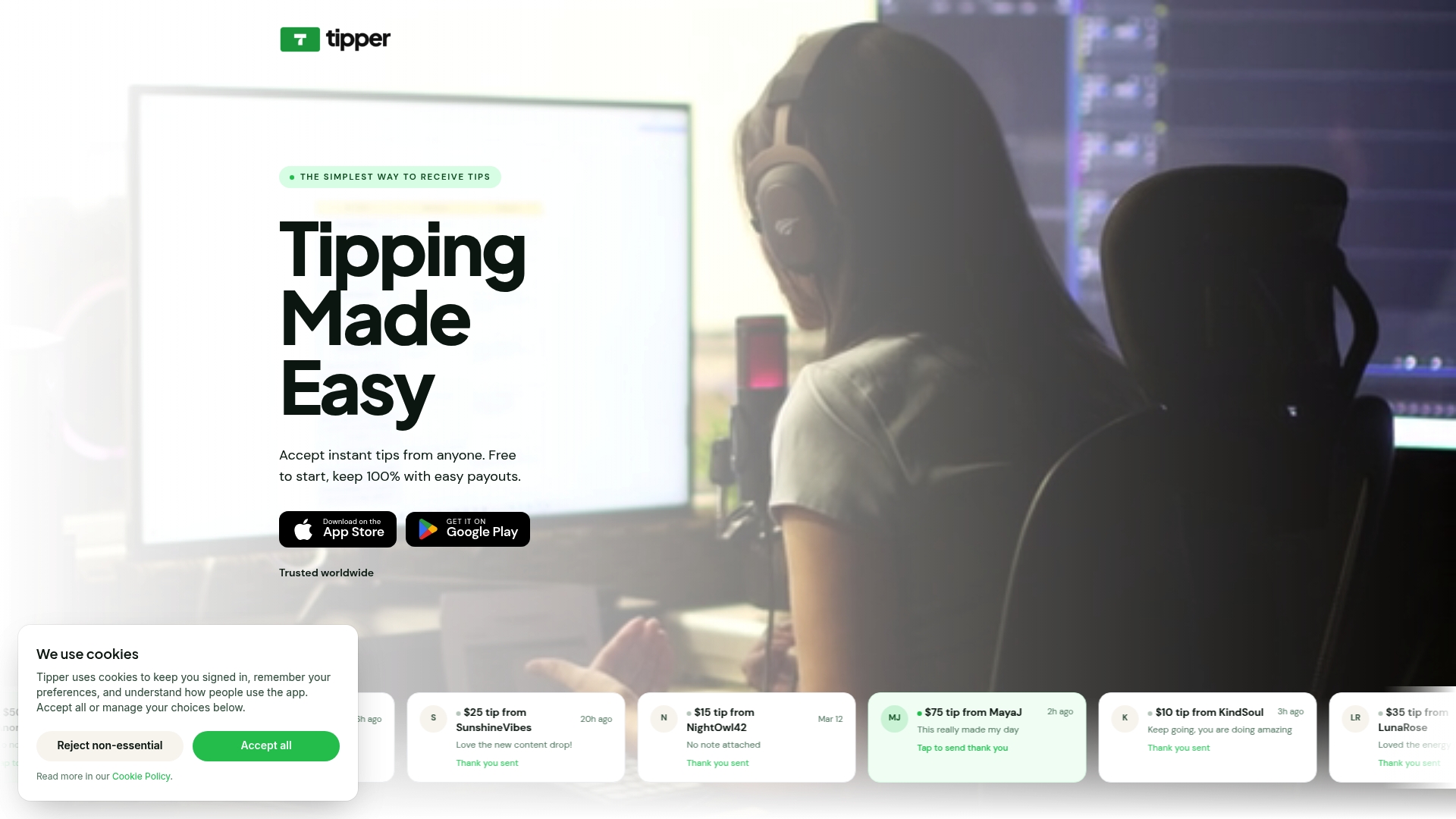
With Tipper, service providers and creators receive tips instantly through a personalized link, with no account required from the person tipping. Customers can pay via Apple Pay or Google Pay in seconds. Tipper charges no fees, so service workers keep 100% of their tips. The platform also supports thank-you notes and video messages, which deepens the connection between the person tipping and the person being tipped. For any service professional looking to modernize how they collect gratuity, Tipper removes the friction and puts the full reward where it belongs.
FAQ
Does tipping actually improve service quality?
Tipping improves service quality at the system level by creating a culture of attentiveness, though individual tip amounts correlate weakly with individual service performance. Research shows service quality explains only about 4% of tip variance.
Why do customers tip even when service is poor?
The conformity effect causes most customers to tip a standard percentage regardless of service quality, driven by social norms and the desire to avoid social disapproval rather than by a genuine performance evaluation.
What behaviors help service workers earn higher tips?
Staff who introduce themselves by name, repeat orders for accuracy, check in attentively, and offer personalized recommendations consistently earn higher tips, according to research on server behavior and gratuity outcomes.
Are tip prompts at self-service counters effective?
Tip prompts in non-traditional or self-service settings often reduce customer satisfaction and repurchase intent. Businesses that explain prompts as optional calculation aids see better customer responses than those that present them without context.
How does digital tipping affect service quality and worker income?
Digital tipping tools reduce friction in the tipping process and can increase tip revenue while making distribution more transparent. Platforms like Tipper allow instant, no-fee tips that go directly to the service worker, strengthening the link between good service and fair reward.




Leave A Comment