
TL;DR:
- Online creators produce content across platforms like YouTube, TikTok, and podcasts to engage audiences and earn income. Building a niche, developing skills, and using AI tools help creators grow their audience and diversify revenue streams. The creator economy is expanding, with increasing advertiser investment and options like tipping boosting creator earnings.
An online creator is a digital professional who produces and shares content across platforms like YouTube, TikTok, Instagram, blogs, and podcasts to engage audiences and often earn income from their work. The role spans a wide range: a solo travel vlogger, a freelance copywriter managing brand social accounts, and a podcast host are all online creators. What unites them is the act of producing content with intention, whether for personal brand growth, audience connection, or direct monetization.
Common content forms include:
- Videos and short-form clips (YouTube, TikTok, Instagram Reels)
- Written content (blogs, newsletters, long-form articles)
- Images and graphics (photography, designed posts)
- Livestreams and podcasts (real-time and audio-first formats)
Gen Z creators have particularly excelled at managing multiple platforms simultaneously, acting as the primary communication voice for their brand or the companies they represent. A digital content creator can work as a solo freelancer, as part of an in-house marketing team, or as a founder running a full creative agency.
How to become an online creator in 2026
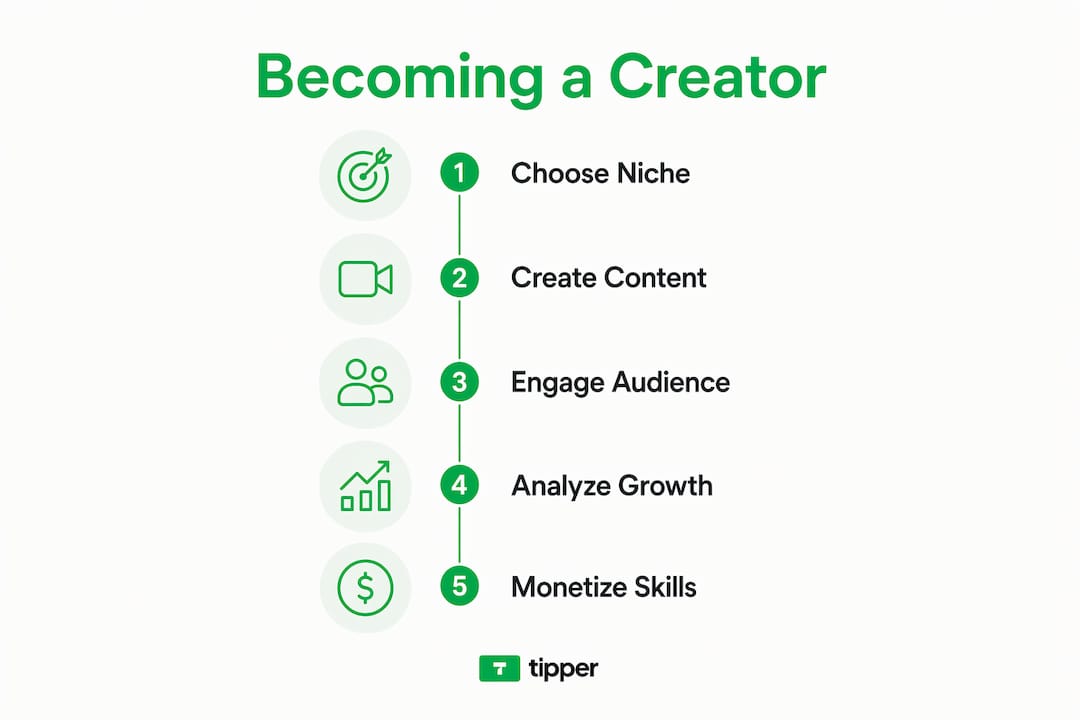
Getting started as a content creator is less about having the right gear and more about making deliberate choices early. The core steps are consistent: pick a niche, build skills, create a portfolio, and grow an audience over time.
- Choose a focused niche. A narrow focus attracts a specific audience faster than broad, general content. If you want to cover personal finance for freelancers, own that lane completely before expanding.
- Develop technical skills. Video editing, graphic design basics, SEO, and social media management are the skills that separate creators who grow from those who stall. Platforms like Coursera and LinkedIn Learning offer structured paths.
- Build a digital portfolio. Even if you have no paid clients yet, create sample work for fictional brands. A portfolio signals professionalism before you have testimonials to back it up.
- Use accessible tools. Free AI-powered platforms like Invideo AI let beginners produce professional-quality videos using templates, without needing advanced editing skills.
- Network with intention. Tag brands you want to work with, comment on creators in your niche, and attend industry events. Pitching directly to brands for sponsorships works better than waiting for inbound opportunities.
- Post consistently. Consistency beats perfection. A realistic posting schedule you can maintain for six months outperforms a burst of daily uploads followed by silence.
- Give it real time. Adobe’s career guidance suggests giving yourself at least six to eight months of active effort before expecting meaningful results.
Pro Tip: Batch your content production. Record or write several pieces in one session, then schedule them across the week. Combined with AI-assisted templates, this approach cuts production time and protects you from burnout.
Which tools and platforms do online creators actually need?
The tools that matter most depend on your content format, but a few categories apply to nearly every creator.

Social media platforms are where audiences live. YouTube suits long-form video; TikTok and Instagram Reels favor short, high-energy clips; Facebook still reaches older demographics effectively; podcasts are growing fast, with the US podcasting audience on track to surpass 110 million listeners by 2029.
Content production tools range from free to professional-grade. Adobe Express offers design templates for graphics, social posts, and marketing materials without requiring design experience. Invideo AI handles video creation through AI-generated scripts and pre-built scene templates. For audio, Audacity remains a free, capable starting point for podcast editing.
SEO and analytics tools are non-negotiable for growth. Google Trends helps you identify what people are actively searching for, so you can align your content with real demand. Platform-native analytics on TikTok, Instagram, and YouTube tell you who your audience is and which content they actually watch.
Scheduling and productivity tools like Buffer or Later let you plan posts in advance, freeing up time for creation rather than daily manual publishing.
AI-assisted workflows are now a genuine advantage. Adopting AI tools and template libraries reduces the technical workload, letting creators focus on the creative decisions that actually differentiate their content.
What does the creator economy look like right now?
The market signal is hard to ignore: 44% of advertisers planned to increase their investments in creator-generated content by 2024, according to the Interactive Advertising Bureau. That shift reflects a broader recognition that audiences trust creators more than they trust traditional advertising.
Career paths in this space follow a recognizable arc. Most creators start as hobbyists, posting without a monetization strategy. Those who stick with it and treat the work seriously eventually move into freelance arrangements, brand partnerships, or salaried content roles. The next stage, for those who scale, involves building a team and running what amounts to a small media company.
That long-game mindset is backed by real data on creator careers. Sustainable success typically requires a decade of experimentation, community-building, and adaptation, not a single viral moment.
Monetization options have expanded well beyond ad revenue. Sponsorships, affiliate marketing, digital products, memberships, and direct audience support through tipping platforms all contribute to a creator’s income mix. Tipping, in particular, has grown as a direct revenue stream. Tipper lets creators receive instant tips through a personalized link, with supporters paying via Apple Pay or Google Pay without needing an account. Creators keep 100% of what they earn, and supporters can attach a thank-you note or video, which deepens the audience connection. You can explore how tip-based revenue works as part of a broader income strategy.
Challenges are real. Platform moderation policies directly affect how content is distributed and monetized, with account warnings or suspensions capable of cutting off a creator’s income overnight. Copyright issues are equally complex: using unlicensed music or images in a video can trigger demonetization or content removal. Understanding these rules before they become a problem is part of treating content creation like a business.
Start earning with Tipper
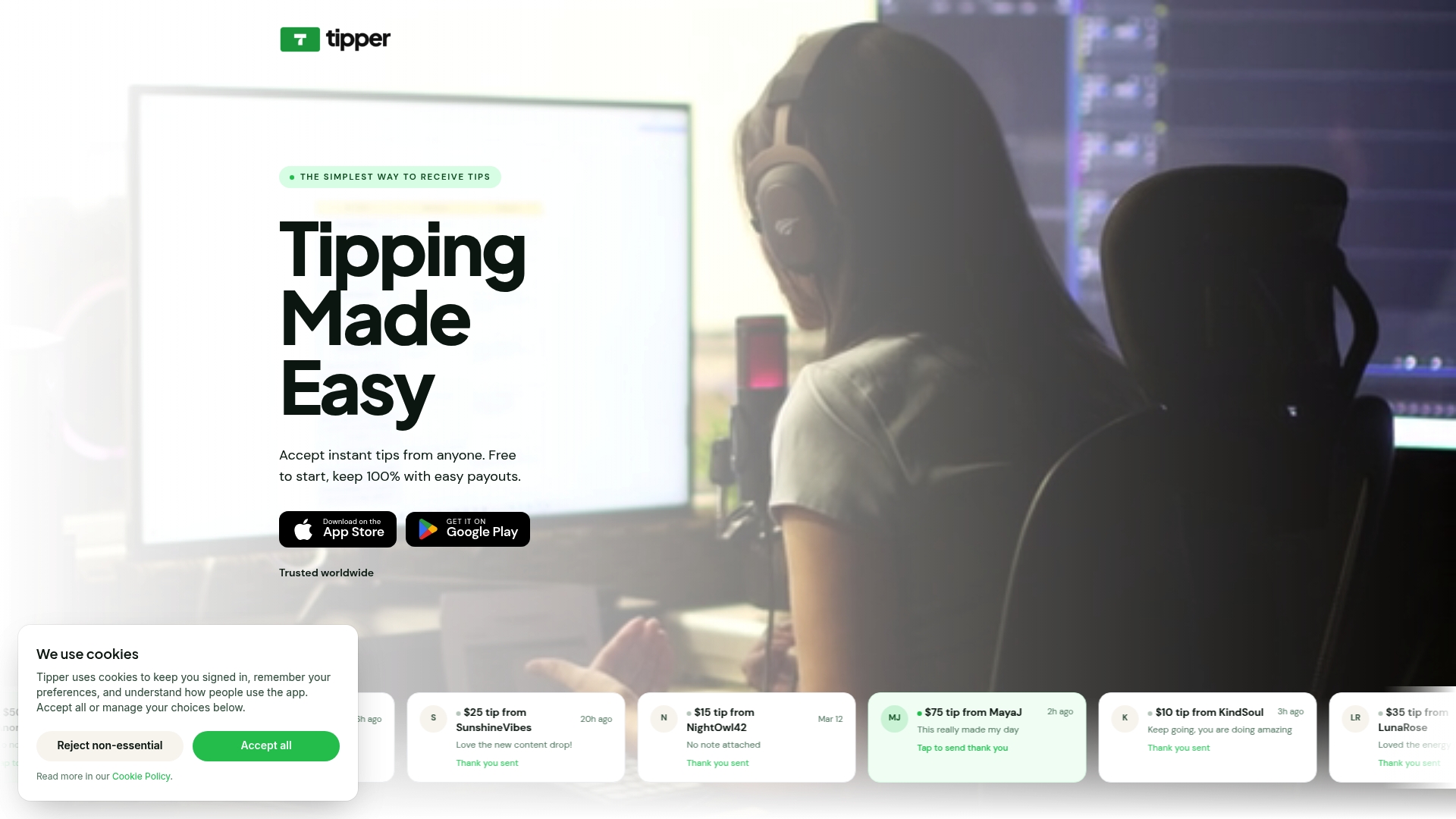
Tipper gives creators a direct, friction-free way to receive support from their audience. No platform fees, no account required for supporters, and payments through Apple Pay or Google Pay take seconds. Whether you’re a freelance creator just starting out or a full-time digital content creator looking to diversify income, start with Tipper and keep everything you earn.
Key Takeaways
Building a sustainable career as an online creator requires niche focus, consistent output, the right tools, and multiple income streams, including direct audience support through tipping.
| Point | Details |
|---|---|
| Define your niche early | A focused content niche attracts a specific audience faster and builds credibility more reliably than broad content. |
| Invest in core skills | Video editing, SEO, and social media management are the skills that drive real audience growth. |
| Use AI tools to stay consistent | Platforms like Invideo AI reduce production time, helping creators maintain output without burning out. |
| Advertiser demand is growing | A 2024 IAB report found many advertisers planned to increase investment in creator content. |
| Diversify your income | Combining sponsorships, ads, and direct tipping through platforms like Tipper reduces reliance on any single revenue source. |
FAQ
What does an online creator actually do?
An online creator produces digital content, such as videos, blogs, podcasts, or social posts, to engage an audience and often earn income through ads, sponsorships, or direct support like tipping.
How do you become an online creator with no experience?
Start by choosing a niche, building sample work for a digital portfolio, and using free tools like Invideo AI to produce content. Consistency over six to eight months matters more than starting with professional equipment.
Can you build a free website as an online creator?
Yes. Platforms like WordPress.com, Wix, and Squarespace offer free tiers that let creators publish written content and showcase a portfolio without upfront costs.
Which free AI tools help creators make content?
Invideo AI handles video creation through templates and AI-generated scripts at no cost for basic use. Adobe Express offers free graphic design templates. NightCafe provides free daily credits for AI-generated images.
How long does it take to earn income as a creator?
Most career guides suggest allowing at least six to eight months before expecting consistent results, and creator Katie Steckly notes that sustainable success in the field typically takes 10 or more years of building an audience and refining your approach.




Leave A Comment