
A content creator produces and distributes original media, including video, text, audio, and images, to inform, entertain, or inspire an audience across digital platforms. The role combines creative storytelling with data analysis to build engagement and support brand presence. Think YouTube tutorials, Instagram reels, long-form blog posts, and branded podcasts. All of it counts.

What separates a working creator from a casual poster is the combination of creative instinct and analytical discipline. Those who ignore data analysis struggle to scale. The ones who treat every post as a data point, adjusting headlines, pacing, and format based on what the numbers show, are the ones who build lasting careers.
Key attributes and roles of a content creator:
- Produces media across formats: video, written articles, photography, audio, and graphics
- Publishes across platforms including social media, blogs, YouTube, and podcasts
- Builds and engages a specific audience through consistent, relevant output
- Supports brand messaging, either independently or for a company
- Analyzes performance data to refine content strategy
- Monetizes through brand deals, ad revenue, affiliate marketing, and direct audience support
- Collaborates with brands, other creators, and marketing teams
One distinction worth knowing: all influencers are creators, but not all creators are influencers. Influencers specifically aim to shape audience opinions and buying decisions. Creators focus more broadly on engagement and brand presence.
What platforms do content creators actually use?
Platform choice shapes everything from content format to audience size to income potential. Each major platform has a distinct culture and content type that rewards different skills.
- YouTube: Long-form video and tutorials. The YouTube Partner Program lets creators earn ad revenue once they hit eligibility thresholds. Best for educational, entertainment, and review content.
- TikTok: Short-form vertical video, typically 15 seconds to 3 minutes. Discoverability is high, making it one of the fastest platforms for growing a new audience.
- Instagram: Visual content including photos, Reels, and Stories. Strong for lifestyle, fashion, food, and brand partnership content.
- Twitch: Live streaming, primarily gaming and entertainment. Audience interaction happens in real time through chat and direct tips.
- Podcasting platforms (Spotify, Apple Podcasts): Audio-first content for interview, commentary, and educational formats. Lower production barrier than video.
- LinkedIn: Professional and B2B content. Written posts, articles, and short video perform well for career, business, and thought leadership niches.
- Blogs and personal websites: Long-form written content with strong SEO value. Owned media, meaning no algorithm can take it away.
Multi-platform strategies work well once a creator has a core channel established. Repurposing a YouTube video into a short TikTok clip and a written blog post, for example, extends reach without tripling the workload.
Five practices that separate successful creators from the rest

1. Publish on a consistent schedule
Consistency outperforms infrequent high-quality hits. Audiences build habits around creators who show up reliably. Batching content production, recording or writing multiple pieces in one session, helps maintain that schedule without burning out.
2. Treat every post as a data point
Top creators analyze engagement continuously, using platform analytics to test headlines, thumbnails, video pacing, and posting times. A video that underperforms tells you something. One that spikes tells you more. The feedback loop between publishing and analyzing is what separates professionals from hobbyists.
3. Build authentic community connections
Responding to comments, asking questions, and acknowledging your audience by name builds the kind of loyalty that survives algorithm changes. Creators who maintain authenticity and provide genuine utility build longer-lasting audiences than those chasing viral moments.
4. Diversify content formats
A creator who only posts one format is one platform update away from irrelevance. Mixing written posts, short video, long-form video, and audio keeps the audience engaged and opens new discovery channels.
5. Build a brand, not just a following
Chasing platform trends produces short-term spikes and long-term instability. The creators with durable careers build a recognizable niche and a consistent point of view that audiences trust, regardless of what the algorithm favors that week.
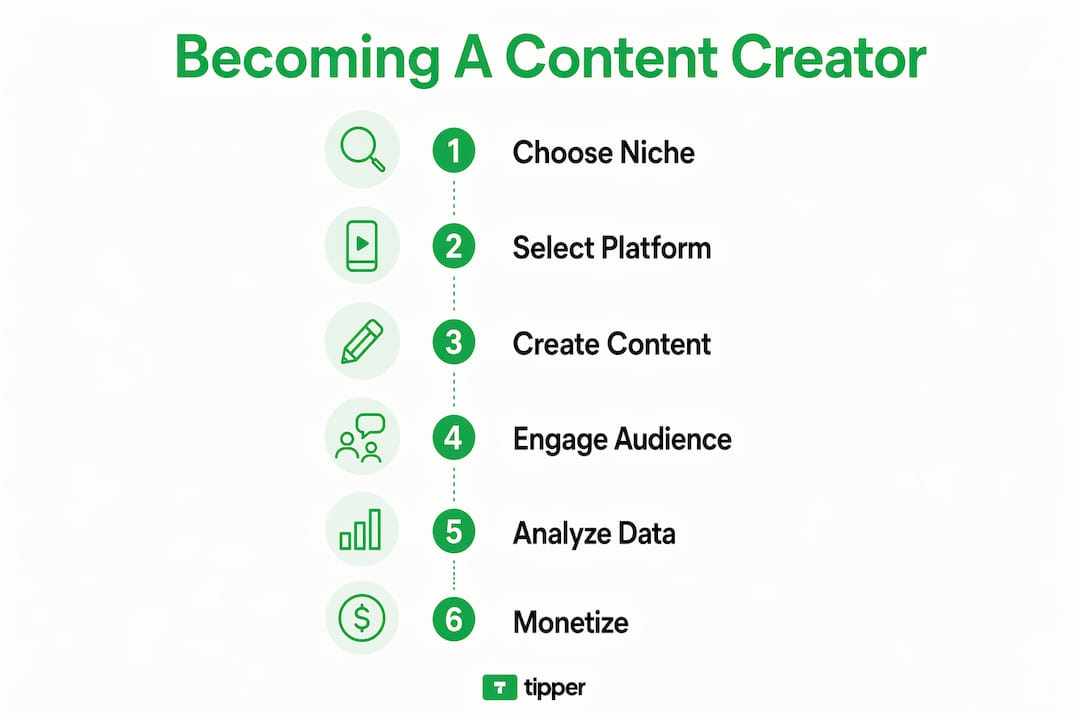
How to become a content creator: practical steps
Pro Tip: Start creating now, with whatever equipment you have. Experts consistently recommend gaining experience over waiting for perfect conditions or gear.
-
Identify your niche. Pick a topic you know well or are genuinely curious about. Specificity helps. “Personal finance for freelancers” attracts a more loyal audience than “money tips.”
-
Choose your primary platform. Match the platform to your content type. Writers go to blogs or LinkedIn. Visual storytellers go to Instagram or TikTok. Educators often do well on YouTube.
-
Develop core skills. Storytelling, basic video editing, SEO fundamentals, and reading analytics are the four skills that matter most early on. Certifications like Google Analytics Individual Qualification or YouTube Certified can accelerate the learning curve.
-
Build a portfolio. Launch a channel, blog, or account and publish at least 10–15 pieces before pitching brands or applying for roles. Quality matters, but volume builds the range that shows what you can do.
-
Publish consistently. Set a realistic schedule and stick to it. Two posts a week you can sustain beats five posts a week you abandon after a month.
-
Engage your audience. Reply to comments, ask for feedback, and participate in your niche community. Early engagement signals to platforms that your content is worth distributing.
-
Promote across channels. Share content on secondary platforms, use relevant hashtags, and collaborate with other creators to expand reach beyond your existing audience.
-
Consider formal education selectively. Degrees in digital marketing, communications, multimedia, or graphic design provide useful foundations, but they are optional. Many working creators are self-taught.
-
Monetize strategically. Once you have a consistent audience, layer in revenue streams. Start with one method, learn it well, then add others.
How content creators in the US earn money
In 2024, 44% of advertisers planned to increase investments in creator content, according to the Interactive Advertising Bureau. That shift reflects how central creators have become to brand marketing budgets.
Some influencers may charge high fees for single sponsored posts, especially those with large, highly engaged audiences. That ceiling is reserved for creators with large, highly engaged audiences, but the range of income options is wide enough that creators at every level can build real revenue.
| Monetization channel | How it works | Key consideration |
|---|---|---|
| Brand partnerships | Sponsored posts, product reviews, long-term ambassador deals | Requires audience trust; rates scale with reach and engagement |
| Affiliate marketing | Earn a commission when your audience buys through your link | Low barrier to entry; income depends on conversion rates |
| Platform ad revenue | YouTube Partner Program, podcast host ads | Requires meeting platform eligibility thresholds |
| Direct audience support | Tips, memberships, subscriptions | Highly loyal audiences convert best; no middleman needed |
| Digital products | Courses, presets, templates, e-books | High margin; requires upfront creation time |
Diversifying income streams early protects against platform changes and sponsorship volatility. A creator who relies entirely on one brand deal or one platform’s ad program is exposed. Layering tips, affiliate income, and a digital product alongside brand deals creates a far more stable base.
Tipper fits directly into the direct support category. Creators share a personalized link, and supporters tip instantly using Apple Pay or Google Pay, with no account required. Creators keep 100% of what they receive, and supporters can add a thank-you note or video, which strengthens the connection between creator and audience. For creators building a loyal community, real-time tipping adds an income layer that requires no brand approval and no platform eligibility threshold.
Legal basics every content creator needs to know
Copyright is the first legal concept creators need to understand. Any original work you create, whether a video, article, or photograph, is automatically protected by copyright the moment it is fixed in a tangible form. That protection runs both ways: your work is protected, and using someone else’s work without permission can expose you to infringement claims.
Fair use is a legal doctrine that allows limited use of copyrighted material for commentary, criticism, education, or parody, but it is not a blanket permission. Courts weigh four factors, including the purpose of the use and the effect on the market for the original work. When in doubt, license the material or create your own.
Music is a common trap. Using a popular song in a YouTube video without a license can result in the video being muted, monetized by the rights holder, or taken down entirely. Royalty-free music libraries like Epidemic Sound and Artlist exist specifically to solve this problem.
Beyond copyright, creators who earn income need to understand their tax obligations. Freelance and self-employed creators in the US typically pay self-employment tax on net earnings and must make quarterly estimated tax payments to the IRS. Sponsored content and affiliate income both count as taxable income. The Federal Trade Commission also requires creators to clearly disclose paid partnerships and sponsored content to their audiences.
Platform terms of service add another layer. Violating community guidelines can result in account suspension or demonetization, which directly affects income. Reading the terms for each platform you use is not optional if content creation is your livelihood.
Building and engaging an audience that actually sticks
Audience growth follows a predictable pattern: early growth is slow, then compounds once a creator establishes a consistent presence and a clear point of view. The mistake most new creators make is optimizing for follower count before optimizing for connection.
Engagement rate matters more than raw numbers, especially for brand partnerships. A creator with 10,000 highly engaged followers often commands better deals than one with 100,000 passive ones. Respond to comments, ask questions in your posts, and create content that invites a response rather than just passive consumption.
Collaborating with other creators in your niche is one of the fastest ways to reach new audiences who are already primed to care about your topic. Cross-promotion, guest appearances on podcasts, and joint videos all work because the trust transfer is built in. Your collaborator’s audience already trusts them, and that trust extends to you by association.
Email lists and owned channels provide a safety net that social media cannot. Algorithms change. Platforms rise and fall. An email list is yours regardless of what any platform decides to do next.
Ready to add direct audience support to your income mix? Tipper lets your supporters tip you instantly, no account required, with 100% of every tip going directly to you. Share your personalized link and start receiving real-time appreciation from the people who value your work.
Key Takeaways
Building a sustainable content creation career requires combining consistent publishing, data-driven iteration, diversified income streams, and direct audience engagement from the start.
| Point | Details |
|---|---|
| Consistency beats perfection | Publishing on a reliable schedule outperforms sporadic high-quality posts for audience growth. |
| Data analysis is non-negotiable | Creators who treat each post as a data point and refine based on analytics build scalable careers. |
| Diversify income early | Layering tips, affiliate income, brand deals, and digital products protects against platform shifts. |
| Advertiser investment is growing | 44% of advertisers planned to increase creator content investment in 2024, per the IAB. |
| Own your audience relationship | Email lists and direct tipping channels give creators income stability no algorithm can remove. |
FAQ
What does a content creator do?
A content creator produces digital media, including videos, written articles, podcasts, and graphics, for distribution across platforms like YouTube, Instagram, and blogs, with the goal of engaging a specific audience and building a brand.
Do content creators make money?
Yes. Creators earn through brand partnerships, affiliate marketing, platform ad revenue, digital products, and direct audience support like tips. Some influencers earn up to $25,000 for a single social media post, though income varies widely by audience size and niche.
How do I start being a content creator?
Pick a niche, choose one platform that fits your content type, and start publishing immediately. Experts recommend starting now with whatever equipment you have rather than waiting for ideal conditions.
What is the difference between a content creator and a social media influencer?
All influencers are content creators, but not all creators are influencers. Influencers specifically aim to shape audience opinions and buying decisions, while creators focus more broadly on engagement, storytelling, and brand presence.




[…] A streamer is someone who broadcasts live video content online, engaging an audience in real time through platforms like Twitch, YouTube, or Facebook Live. Unlike a YouTuber who edits and uploads finished videos, a streamer performs in the moment, responding to chat, reacting to events, and building a relationship with viewers as it happens. That live interaction is what separates streamers from most other content creators. […]