

What is a streamer, exactly?
A streamer is someone who broadcasts live video content online, engaging an audience in real time through platforms like Twitch, YouTube, or Facebook Live. Unlike a YouTuber who edits and uploads finished videos, a streamer performs in the moment, responding to chat, reacting to events, and building a relationship with viewers as it happens. That live interaction is what separates streamers from most other content creators.
According to the Cambridge Dictionary, a live streamer is “someone who makes videos that show them playing computer games, talking about products, or doing other activities, and streams them at the same time as they are being made.” The definition has expanded considerably since then.
Key traits that define a streamer:
- Live broadcasting: Content goes out in real time, unedited
- Audience interaction: Viewers participate through live chat, polls, and donations
- Platform presence: Primarily Twitch, YouTube Live, or Facebook Live
- Content range: Gaming, lifestyle, commentary, cooking, fitness, and more
- Community identity: Regular viewers often form tight-knit communities around a channel
Table of Contents
- How streaming went from niche hobby to mainstream career
- What types of streamers are out there?
- How streamers build real communities
- How streamers make money in the U.S. right now
- Key Takeaways
- FAQ
How streaming went from niche hobby to mainstream career
Streaming did not appear overnight. It grew out of the mid-to-late 2000s video culture on YouTube, where creators posted Let’s Play videos and gaming commentary. The leap from recorded video to live broadcast changed everything. Suddenly, viewers could talk back.
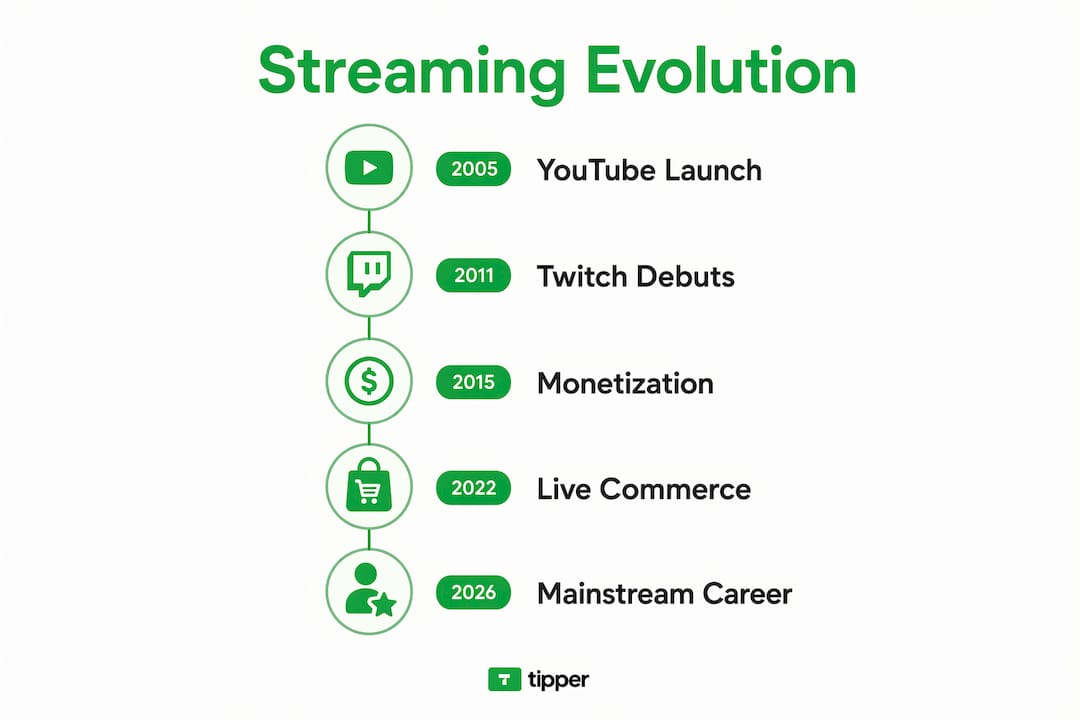
| Year | Milestone |
|---|---|
| — | YouTube launches; video creators build early audiences |
| — | Twitch launches as Justin.tv spinoff focused on gaming |
| — | Amazon acquires Twitch |
| — | YouTube Gaming launches as a dedicated streaming platform |
| — | Facebook Live opens to all users globally |
| 2020 | Pandemic drives record streaming growth; non-gaming content surges |
| — | Live commerce begins gaining serious traction in the U.S. market |
| 2026 | Multi-platform streaming and AI-assisted content repurposing become standard |
Innovations like video clipping, channel subscriptions, and pay-for-play features turned streaming into a real income source for thousands of creators. Non-gaming content, from cooking to political commentary to fitness, expanded the audience well beyond the original gaming base.
What types of streamers are out there?
Streaming has fractured into dozens of subcultures. The categories below cover the main ones, though the lines between them blur constantly.
- Gaming streamers: The original format. Let’s Plays, speedruns, competitive play, and game reviews. Still the largest category on Twitch by viewership hours.
- IRL (In Real Life) streamers: Broadcast daily life, travel, cooking, fitness routines, or tutorials. Think of it as a reality show where the audience shapes what happens next.
- VTubers: Creators who use animated virtual avatars instead of showing their face. Over 10,000 active VTubers were counted as of 2020, with the number growing sharply since.
- Commentary and reaction streamers: Watch and respond to news, other videos, or live events. Often overlap with political or entertainment commentary.
- Educational streamers: Teach coding, language learning, art, or music live. Viewers ask questions; the streamer answers in real time.
- Live commerce streamers: Sell products directly during a broadcast, blending entertainment with shopping. This format is growing fast in the U.S.
- Fitness and wellness streamers: Lead live workouts, meditation sessions, or nutrition coaching with real-time audience participation.
- Music and performance streamers: Perform live concerts, DJ sets, or collaborative jam sessions for online audiences.
Pro Tip: If you are starting out, pick one content type and own it for at least six months before branching out. Audiences follow consistency more than variety.
How streamers build real communities

The chat window is where streaming lives or dies. A streamer who ignores their chat is essentially broadcasting into a void. The most successful creators treat their live audience like guests at a dinner party, not passive viewers.
That insight holds up in practice. Average concurrent viewers and retention time are the metrics that actually predict long-term success, not raw subscriber counts.
Community-building tools that work:
- Chat moderation: Appointing trusted moderators keeps conversations civil without the streamer having to police every message
- Discord servers: Give the community a place to connect between streams, share content, and organize events
- Email lists: Building an email list from day one protects against algorithm changes that can wipe out a channel’s reach overnight
- Consistent scheduling: Viewers plan around streams they can count on; irregular schedules bleed audiences slowly
Moderation is also an ethical responsibility. Streamers who let harassment run unchecked in chat lose viewers and damage their reputation. Most platforms offer automated moderation tools, but human moderators remain the most effective solution for active channels.
How streamers make money in the U.S. right now
Streaming income is real, but it is not simple. The gap between the top and the middle is wide: the top 1% of streamers earn over $10,000 per month, mid-tier creators typically bring in $2,000–$4,000, and most earn less than $500 monthly from platform payouts alone. Diversification is not optional at any level.
The seven main revenue streams:
- Tips and donations: Direct viewer support, often the most immediate income for smaller streamers. Accepting multiple payment methods such as Apple Pay, Google Pay, CashApp, Venmo, and PayPal can increase tip revenue, influenced by U.S. viewers’ payment preferences. Platforms like Tipper let viewers send tips instantly through a personalized link, with no account required and creators keeping 100% of what they receive.
- Channel subscriptions: Monthly recurring revenue from loyal viewers on Twitch or YouTube. Predictable, but platform-dependent.
- Ad revenue: Scales with viewership. Volatile and often the smallest slice for mid-tier creators.
- Sponsorships: Brand deals for product mentions or dedicated segments. Rates vary enormously by niche and audience size.
- Merchandise: Branded apparel, accessories, or digital products sold to the community.
- Affiliate marketing: Commission from products recommended during streams, using tracked links.
- Content repurposing: Clipping highlights into short-form videos for TikTok, YouTube Shorts, or Instagram Reels to reach new audiences and generate additional ad revenue.
U.S. live commerce is a category worth watching closely, with expectations of substantial market growth and notable conversion rates. Streamers who can blend entertainment with product sales are positioning themselves at the intersection of media and retail.
The financial side carries real responsibilities. Streamers are independent contractors in the U.S., which means no employer withholding taxes, no employer-sponsored health insurance, and no paid leave. Experts recommend setting aside roughly 30% of earnings for taxes and private health insurance. The transition from part-time to full-time streaming generally takes multiple years, and having a financial safety net is important for new streamers.
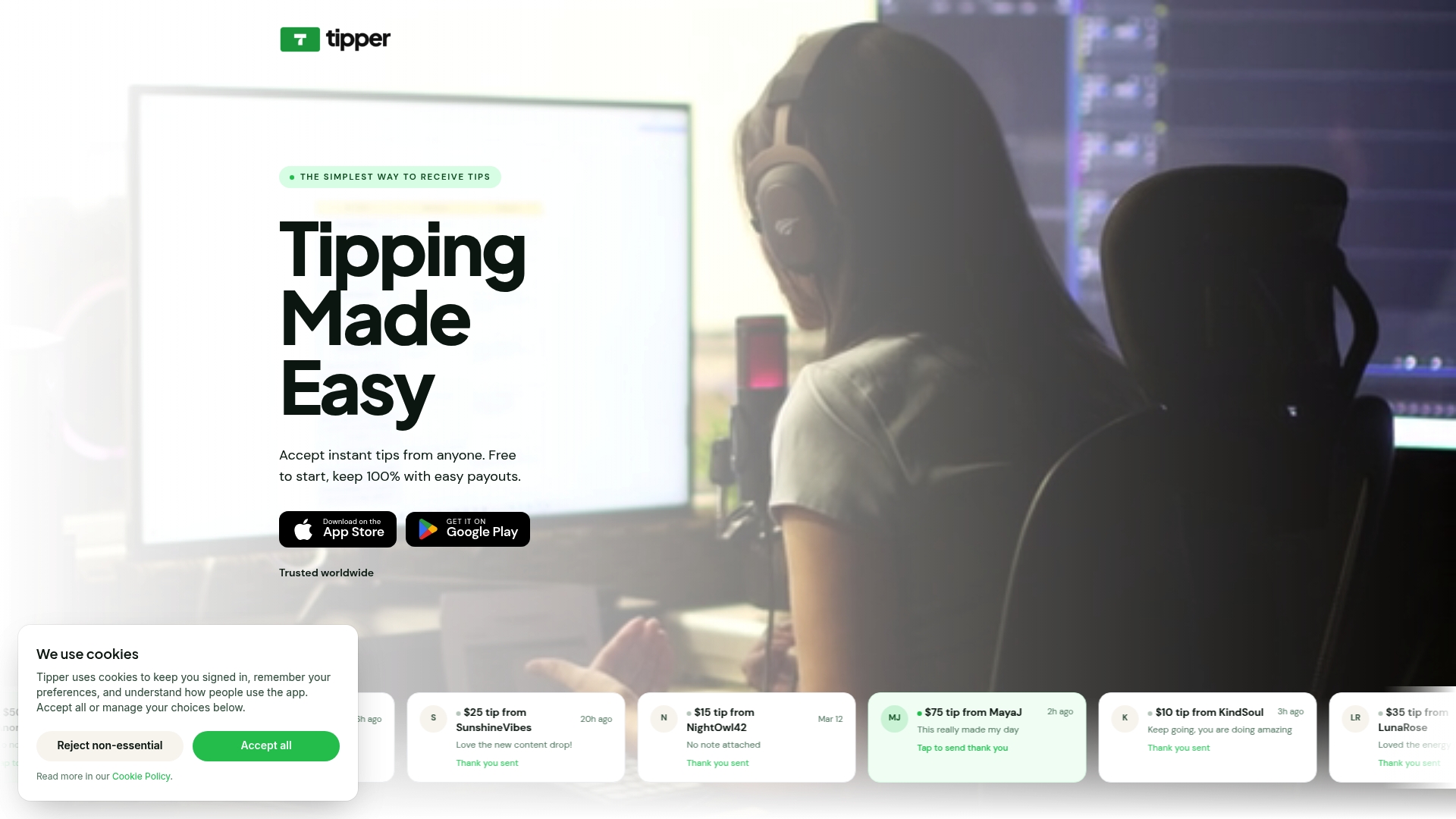
Tipper makes tipping frictionless for streamers. Viewers send tips through your personalized link using Apple Pay or Google Pay, no account needed, and you keep every dollar. Set up real-time tip alerts that fire the moment a tip lands, turning viewer appreciation into live on-stream moments. It takes minutes to start.
Key Takeaways
Streamers who build engaged communities and diversify across multiple revenue streams are the ones who turn live broadcasting into a sustainable career.
| Point | Details |
|---|---|
| Live interaction defines streaming | Real-time chat and audience response separate streamers from standard video creators. |
| Income varies sharply by tier | Top 1% earn over $10,000/month; mid-tier earn $2,000–$4,000; most earn less than $500 from platforms alone. |
| Diversification is necessary | Tips, subscriptions, sponsorships, merch, and content repurposing all contribute to stable income. |
| Live commerce is growing fast | U.S. live commerce is growing fast, with notable conversion rates. |
| Community beats follower count | Engaged viewers with strong retention sustain careers better than large passive audiences. |
FAQ
What is a streamer?
A streamer is a person who broadcasts live video content online in real time, typically through platforms like Twitch, YouTube, or Facebook Live, engaging viewers through chat and interactive features.
Is a streamer the same as an influencer?
Streamers function similarly to influencers but rely on live interaction rather than polished, pre-edited content. The real-time format creates a different kind of audience relationship.
How do streamers make money?
Streamers earn through tips, channel subscriptions, ad revenue, sponsorships, merchandise, affiliate marketing, and content repurposing. Most full-time streamers combine several of these rather than relying on any single source.
Who are the most famous streamers?
Ninja (Tyler Blevins) and Pokimane are among the most recognized names in U.S. streaming, with audiences built primarily on Twitch and YouTube. Both have expanded beyond gaming into broader entertainment and brand partnerships.




Leave A Comment