

TL;DR:
- Instant tipping allows creators to earn directly from fans in real time, replacing unreliable ad income. It encourages small, immediate payments from engaged audiences and mitigates delays and dependence on ad platforms. Combining tipping with other revenue streams creates a diversified and stable income model for creators.
Instant tipping is a direct payment model where fans send money to creators in real time, bypassing ad networks entirely. Understanding how instant tips replace ad revenue matters now more than ever, because ad income is fragile: algorithm changes, RPM drops, and platform cuts can erase months of earnings overnight. Tipping flips that equation. Instead of monetizing eyeballs for advertisers, you monetize appreciation from the people who actually care about your work. Platforms like Tipper make this possible with zero signup friction, Apple Pay and Google Pay support, and a 100% revenue share for creators.
How instant tips replace ad revenue: the core mechanics
Ad revenue pays creators based on impressions, not on value delivered. A video with a million views can earn less than $1,000 after platform cuts, while the same creator’s most loyal 500 fans could tip far more if given a frictionless way to do it.
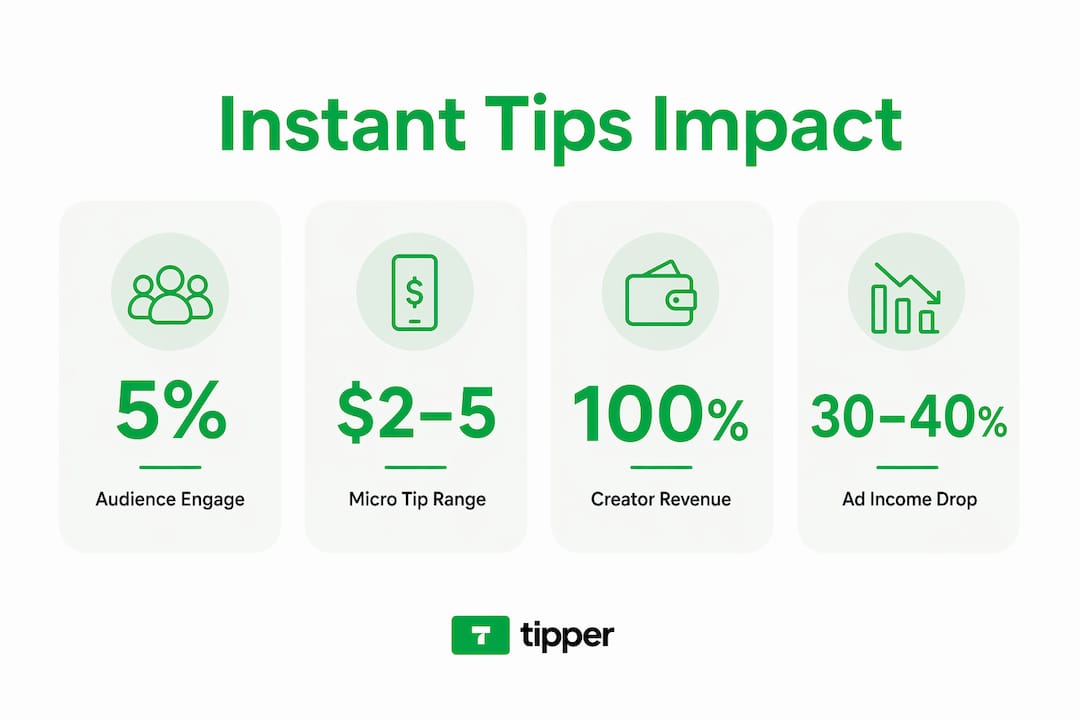
The math behind tipping is more favorable than most creators expect. Engaging just 1%–5% of your audience through direct tipping can match or exceed traditional ad revenue, especially for niche content with a highly engaged following. That means a podcast with 10,000 listeners only needs 100–500 people to tip regularly to outperform what ad slots would pay.

Direct payments also remove the delays that plague ad-based income. Traditional platforms impose minimum payout thresholds and processing windows that can stretch up to 15 days. Instant settlement systems fix that cash flow problem entirely, putting money in your hands the moment a fan sends it.
Crypto tipping takes this further. Sending a $5 tip costs under $0.01 in gas fees and settles within minutes on-chain. That near-zero transaction cost means more of every dollar reaches the creator, not a payment processor.
- No minimum thresholds. Tips pay out immediately, regardless of amount.
- No advertiser dependency. Revenue does not drop when ad markets soften.
- Higher per-dollar yield. Direct payments skip the platform revenue split that ad networks take.
- Real-time cash flow. Freelancers can budget around predictable, daily income rather than monthly ad checks.
Pro Tip: Set up a real-time tip dashboard so you can see exactly when tips arrive and from which content. That data tells you which videos or posts your most supportive fans love most.
What alternative monetization strategies work alongside tipping?
Tipping works best as part of a diversified income mix, not as a solo replacement for every revenue stream. The strongest creator businesses treat monetization like an investment portfolio: spread across multiple sources so no single platform can collapse your income.
A recommended 2026 revenue structure uses a diversified mix of 35% subscriptions, 25% sponsorships, and 20% affiliate commerce, with the remaining 20% split between licensing and services. The rule of thumb is that no single source should exceed 50% of total income. That cap protects you when ad RPMs fall or a sponsorship deal ends.
Tipping fits naturally into this structure as a direct audience support layer. It captures revenue from fans who love your work but do not want a subscription commitment. Subscriptions, by contrast, work best for creators who publish on a reliable schedule and can promise recurring value.
Here is how the main alternative monetization strategies compare in practice:
| Strategy | Best for | Revenue predictability |
|---|---|---|
| Instant tipping | Engaged niche audiences | Variable but immediate |
| Subscriptions | Regular publishing schedules | High and recurring |
| Sponsorships | Large or growing audiences | Medium, deal dependent |
| Affiliate marketing | Tutorial or review content | Low to medium |
| Digital products | Skill-based creators | High once built |
Hybrid community models that combine tipping with memberships and sponsorships give audiences multiple ways to support you. A casual viewer tips $3 after a great video. A superfan pays $10 per month for a membership. A business pays for a sponsorship slot. All three paths coexist without conflict.
The creators who struggle with monetization are those who wait for one stream to scale before building the next. Start layering early, even when your audience is small.
How to use instant tips effectively as a creator
Setting up tipping is the easy part. Getting your audience to actually use it requires a clear, low-pressure approach that respects the people who cannot or choose not to pay.
-
Choose a frictionless platform. Your tipping tool must work without requiring fans to create an account. Any extra step cuts conversion sharply. Tipper lets supporters pay via Apple Pay or Google Pay through a single personalized link, which removes nearly all friction from the process.
-
Offer micro-tipping amounts. Successful creators promote micro-tips of $2–$5 alongside larger options. Micro-tips engage the roughly 90% of your audience who will never commit to a subscription but are happy to send a small amount after a piece of content genuinely helps them.
-
Be transparent about why you tip. Tell your audience exactly what tips fund: better equipment, more research time, or simply keeping the content free for everyone. Transparency builds trust and removes the awkwardness around asking for money.
-
Promote tipping at the right moment. The best time to mention tipping is immediately after delivering real value, not at the start of a video or post. A creator who says “if this helped you, a $3 tip keeps me going” at the end of a tutorial converts far better than one who leads with a pitch.
-
Use multiple payment paths. Managing multiple payment platforms protects you from payout minimums and cash flow gaps. Do not rely on a single tool or payment method.
Pro Tip: Add your Tipper link to every piece of content you publish: video descriptions, newsletter footers, podcast show notes, and your social media bio. Visibility drives tips far more than any single ask.
What challenges come with replacing ad income through tips?
Tipping is not a perfect system, and creators who treat it as a complete ad replacement without understanding its limits will be disappointed. The honest picture is more nuanced.
The biggest reality check is audience payment willingness. Most of your audience will never tip, and that is normal. Tipping works best as a low-friction complement to other revenue streams, not as a full replacement. The goal is to capture incremental revenue from the fans who want to support you, not to convert every viewer into a paying customer.
Pay-to-play dynamics are a real risk. If you gate content behind tips or make non-paying fans feel like second-class members of your community, you erode the trust that makes tipping work in the first place. The most effective tipping setups keep all content free and frame tips as optional appreciation.
Other challenges creators face include:
- Audience size dependency. Small audiences produce small tip volumes. Tipping scales with engagement, not just follower count.
- Inconsistent income. Tips spike after popular content and drop during quiet periods. Budget accordingly.
- Technical friction. Payment tools that require account creation or redirect fans through multiple steps lose most potential tippers before checkout.
- Platform risk. Relying on a single tipping tool creates the same dependency problem as relying on a single ad network.
Top creators see ads drop below 30%–40% of income as they shift to memberships, products, and tips. That shift does not happen overnight. Expect a transition period of several months before tipping income becomes meaningful.
Key Takeaways
Instant tipping replaces ad revenue most effectively when creators combine frictionless payment tools, micro-tip options, and a diversified income strategy that no single platform can disrupt.
| Point | Details |
|---|---|
| Tipping beats ad math | Engaging 1%–5% of your audience through tips can match or exceed ad revenue. |
| Instant settlement matters | Direct-to-wallet payments eliminate the 15-day delays common in ad platforms. |
| Micro-tips capture the majority | Offering $2–$5 options reaches the 90% of fans who will never subscribe. |
| Diversify beyond tipping | No single revenue source should exceed 50% of your total creator income. |
| Friction kills conversion | Tipping tools that require account creation lose most supporters before payment. |
Why tipping is the most honest monetization model I know
The ad model has always been a strange bargain. You create something valuable, a platform sells attention around it to advertisers, and you get a fraction of what that attention is worth. The creator is the last person in that chain to get paid, and the first to get cut when algorithms change.
Tipping inverts that completely. The person who found your content useful sends you money directly. No intermediary decides what your work is worth. No algorithm determines whether your video qualifies for monetization. The audience votes with their wallets in real time, and the signal is unambiguous.
What I find most compelling about direct tipping is what it does to the creator-audience relationship. When someone tips you $5 after a tutorial, they are not just paying for content. They are telling you that your work changed something for them. That feedback loop is more valuable than any CPM report.
The realistic expectation is that tipping will not replace all your ad income on day one. It builds gradually as your audience learns that the option exists and trusts that their money reaches you directly. Creators who stick with it for six months consistently report that tipping income becomes one of their most stable revenue lines, precisely because it is not tied to platform algorithms or advertiser budgets.
The creators who will thrive in 2026 are the ones who own their audience relationship. Tipping is one of the clearest ways to do that.
— Tipper
Tipper: collect tips without the complexity
Tipper gives creators a personalized tipping link that supporters can use in seconds, with no account required on either side.
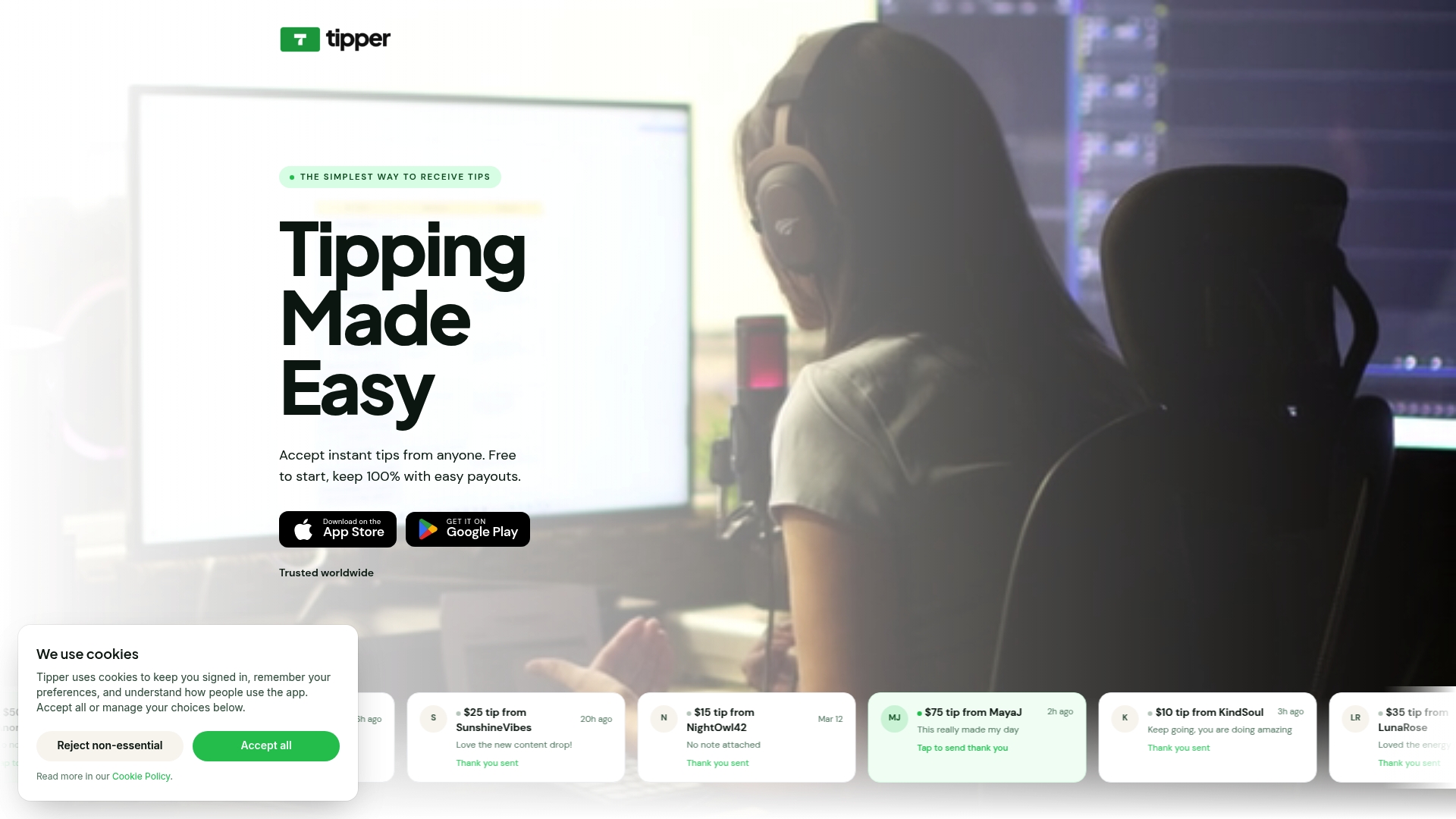
Fans pay with Apple Pay or Google Pay, tips settle instantly, and creators keep 100% of every dollar. There are no minimum payout thresholds and no waiting periods. Whether you create videos, write newsletters, produce podcasts, or freelance, Tipper fits into your existing workflow without adding steps. Add your link to your bio, your content descriptions, and your email footer, then let your audience support you on their terms. Start collecting tips today and see what direct audience support actually feels like.
FAQ
How do instant tips replace ad revenue for small creators?
Engaging 1%–5% of a small audience through direct tipping can match or exceed what ad revenue pays, especially for niche content with highly engaged fans. Tips also pay out immediately, unlike ad platforms that impose minimum thresholds and long delays.
What is the best micro-tip amount to suggest to fans?
The most effective range is $2–$5, which captures revenue from the large portion of your audience who will never commit to a subscription but are willing to send a small amount after genuinely useful content.
Do I need to stop running ads to use instant tipping?
No. The strongest creator revenue models combine tipping with ads, subscriptions, and sponsorships. A diversified income mix where no single source exceeds 50% of total income protects you from platform volatility.
How does Tipper differ from traditional donation platforms?
Tipper requires no account from the supporter, accepts Apple Pay and Google Pay, and passes 100% of each tip directly to the creator with no minimum payout threshold.
When is the best time to ask for tips during content?
Ask immediately after delivering clear value, such as at the end of a tutorial or after a key insight. Asking at the start of content, before the audience has received anything, converts far less effectively.




Leave A Comment