

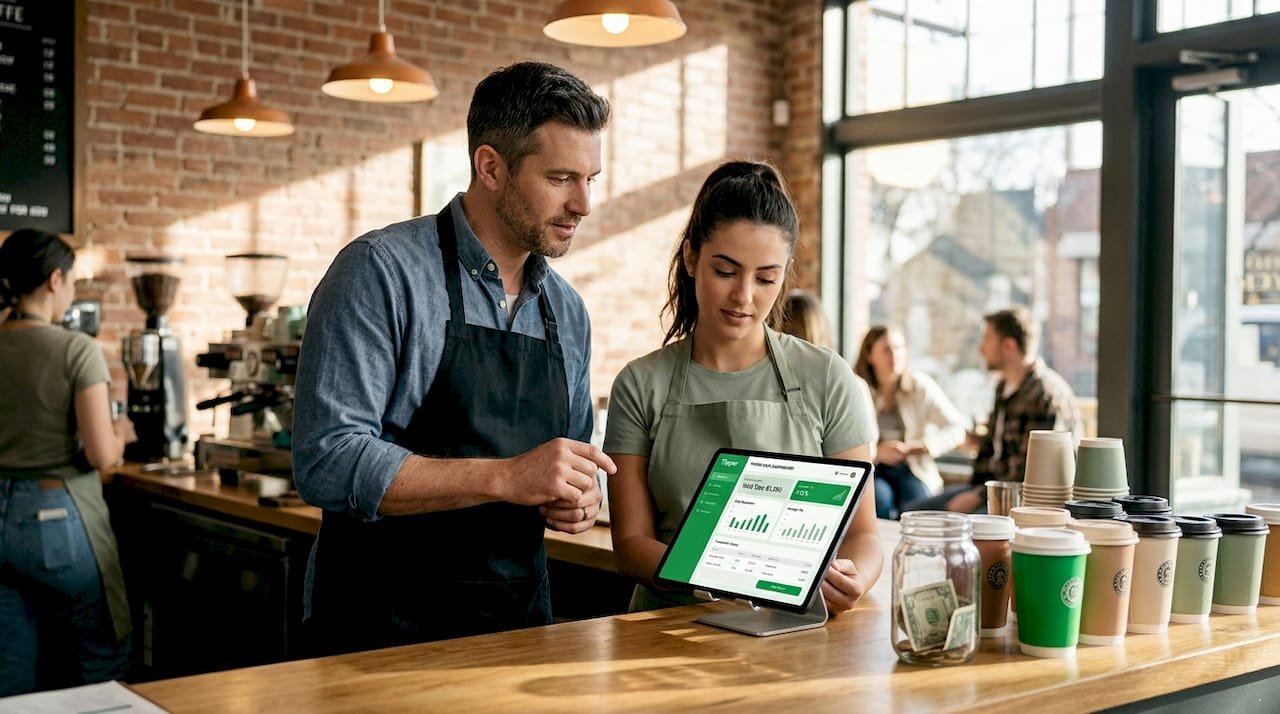
Digital tipping is the process of enabling customers to leave gratuities electronically via mobile devices, and it is reshaping how local businesses earn, retain staff, and serve guests. The advantages of digital tipping go well beyond convenience. Restaurants using platforms like Sunday, Instant Tips, and GratifID report tip rates rising to 20–22% compared to lower cash baselines, with measurable gains in table turnover speed and online reputation. For any local business owner wondering how to get more from every transaction, digital tipping systems deliver results that show up directly on the bottom line.
What measurable benefits do local businesses gain from digital tipping?
Digital tipping produces quantifiable gains across revenue, staffing, and operations. Restaurant operators using QR-based systems see revenue increases up to 10% within three months, driven by faster table turns and higher per-table gratuities. That 6 to 10 minutes saved per table adds up to dozens of additional covers per week in a busy dining room.
The financial impact on staff is equally direct. 78% of service employees report higher motivation when they can access their earnings instantly, rather than waiting for a weekly payroll cycle. Motivated staff deliver better service, which feeds back into higher tips and stronger reviews.
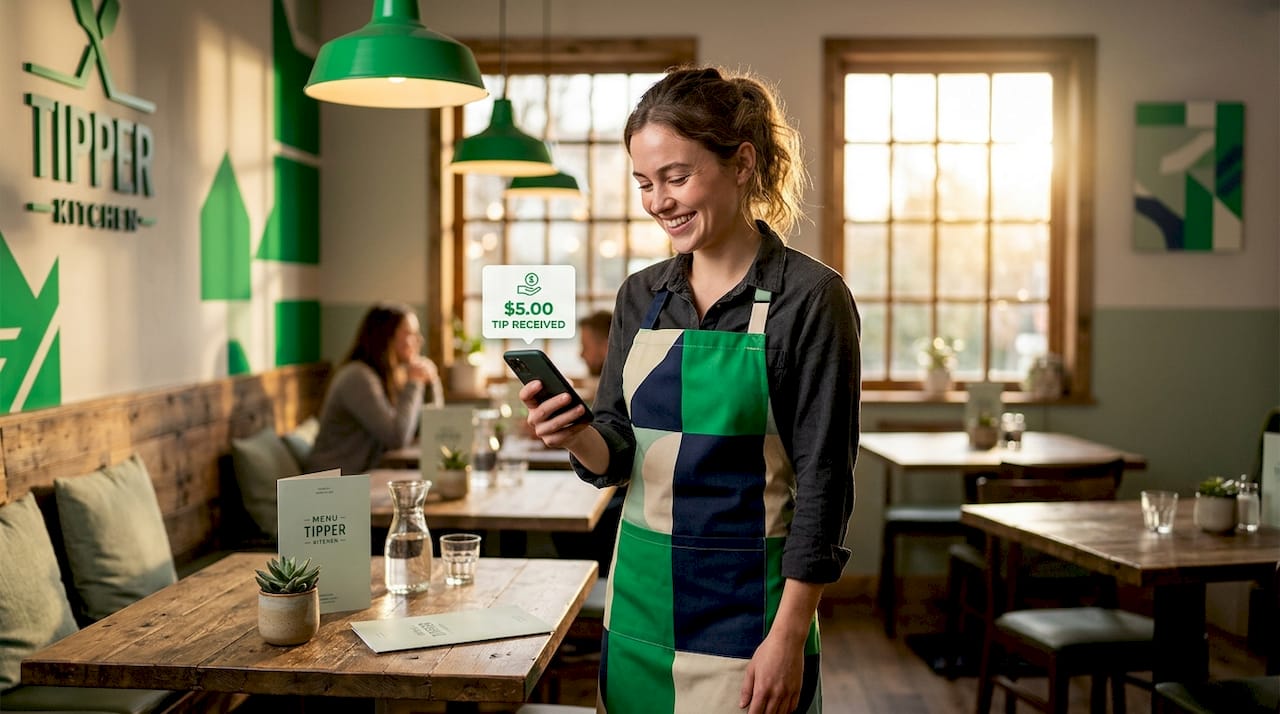
One underappreciated driver of higher gratuities is the anchoring effect built into digital tipping interfaces. When a screen presents default options of 18%, 20%, 22%, or 25%, customers choose from preset amounts rather than calculating a tip from scratch. This removes tipping fatigue and consistently pushes averages above what cash or manual card tipping produces.
The reputation benefits are significant too. Businesses using digital tipping generate 8 to 10 times more 5-star Google reviews than those relying on traditional payment methods. A satisfied guest who just tapped to pay and tip in seconds is far more likely to leave a review than one who fumbled for cash.
- Higher tip rates: Default prompts push averages to 20–22%, above typical casual dining baselines.
- Faster table turns: Saving 6–10 minutes per table directly increases covers and revenue.
- Staff retention savings: Replacing one service employee costs an average of $5,864 per hire. Better morale cuts that cost.
- Review volume: Digital checkout flows linked to review prompts multiply 5-star feedback.
Pro Tip: Link your digital tipping screen to a Google review prompt. Guests who tip generously are already in a positive mindset, making them far more likely to leave a glowing review.
How do QR codes, NFC, and apps compare for local businesses?
Not all local business tipping systems work the same way, and choosing the right technology affects both guest experience and staff satisfaction. The three main options are QR code tipping, NFC tipping, and standalone app tipping.
| Technology | Speed | Friction level | Best use case |
|---|---|---|---|
| QR code | Moderate | Low to medium | Table service, fixed locations |
| NFC tap | Fast (15 sec to 2 sec) | Very low | Mobile staff, personal service |
| Standalone app | Slow | High | Subscription-based creators |
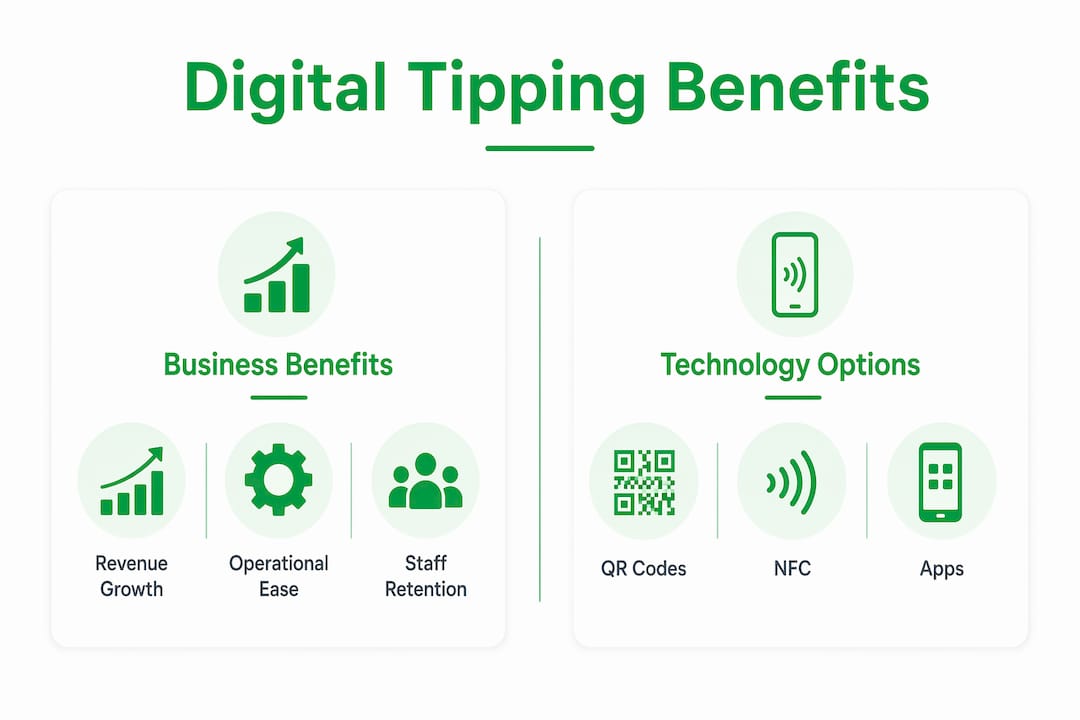
QR codes are the most widely deployed option. They are cost-effective, require no hardware beyond a printed or displayed code, and work on any smartphone camera. The limitation is location dependency. A QR code sits on a table or check presenter, so it cannot follow a server across the room or to a different venue.
NFC tipping solves that problem. NFC reduces wait time from 15 to 2 seconds per transaction and attaches to the individual employee rather than a fixed location. A server wearing an NFC-enabled badge or wristband can receive a tip anywhere in the restaurant, at a catering event, or during a hotel room service delivery. This portability makes NFC a genuine workforce tool, not just a payment method. By 2026, 90% of smartphones are NFC-enabled, so the technology barrier for guests is essentially gone.
Standalone apps require guests to download software and create a profile before tipping. That friction makes them the least effective option for in-person service businesses. They work well for content creators and freelancers who have an established audience willing to install an app, but for a coffee shop or salon, the drop-off rate before a tip is completed is too high to justify the setup.
Security is a legitimate concern for any payment system. NFC uses banking-grade encryption, and reputable QR platforms process payments through PCI-compliant gateways. Neither option carries the theft or reconciliation risk of a cash tip jar.
Pro Tip: If your staff moves between locations or departments, invest in NFC-enabled wearables linked to individual employee profiles. The personal connection between guest and server is preserved, and tips follow the worker, not the table.
What operational and compliance advantages do digital tipping systems offer?
Beyond revenue and morale, the impact of digital tipping on back-office operations is substantial. Automated tip pooling and role-based distribution eliminates roughly 30 minutes of managerial administrative work per shift. Across a seven-day week, that is three and a half hours returned to management for actual service oversight.
The compliance picture is also changing fast. Approximately 6 million Americans report tipped wages, with tips making up 57.4% of compensation for many restaurant workers. New provisions like the “No Tax on Tips” deduction allow qualifying workers to deduct up to $25,000 in tips from taxable income. To claim that deduction, workers need accurate records. Digital tipping systems generate those records automatically.
Key operational advantages include:
- Automated calculations: Digital platforms integrate with POS and payroll systems, removing manual tip entry and the errors that come with it.
- Real-time tracking: Real-time tip dashboards give both managers and employees instant visibility into earnings, reducing disputes and building trust.
- Audit trails: Every transaction is timestamped and recorded, supporting tax filings and labor compliance reviews.
- Reduced cash handling: Eliminating physical cash from the tipping process removes theft risk, shortens end-of-shift reconciliation, and reduces the need for change funds.
Pro Tip: Before selecting a digital tipping platform, confirm it exports tip data in a format compatible with your payroll software. Platforms that integrate directly with systems like Toast, Square, or ADP save significant time during payroll processing.
The transparency of digital records also reduces the interpersonal friction that cash tip disputes create. When every employee can see exactly what was collected and how it was distributed, trust in management improves and grievances decrease.
How can local businesses implement digital tipping effectively?
Adoption rate is the metric that determines whether a digital tipping system pays off. A well-chosen platform that guests never use produces no benefit. These steps move adoption from optional to habitual.
- Place prompts at the moment of decision. QR codes belong on table tents, check presenters, and receipt folders. NFC devices belong on lanyards or wristbands worn by staff during service. Placement at the natural payment moment removes the need for guests to seek out a tipping option.
- Train staff to mention it once, casually. A server saying “you can tip right on the screen if you’d like” normalizes the behavior without pressure. Guests who feel prompted but not pushed are more likely to complete the action.
- Keep cash as a backup. Removing cash tipping entirely alienates a segment of guests, particularly older demographics. Maintaining both options preserves goodwill while digital adoption grows organically.
- Connect tipping to review prompts. Platforms that display a Google or Yelp review link immediately after a tip is submitted capture guests at their most satisfied moment. This is the mechanism behind the 8 to 10x review multiplier cited earlier.
- Track three metrics weekly: tip adoption rate (percentage of tables that use digital tipping), average tip percentage, and table turn time. These three numbers tell you whether your system is working and where to adjust.
- Communicate transparently with staff. Show employees how tips are calculated and distributed in real time. Instant payout access paired with visible dashboards builds the kind of trust that reduces turnover.
Pairing digital tipping with in-store digital signage that explains the tipping process can also reduce guest hesitation, particularly in businesses where digital tipping is new.
Key takeaways
Digital tipping benefits for shops and service businesses are clearest when the right technology is matched to the right workflow, and when staff are empowered with transparent, instant access to their earnings.
| Point | Details |
|---|---|
| Revenue impact is immediate | Tip rates rise to 20–22% and table turns improve within 3 months of adoption. |
| NFC outperforms QR for mobile staff | NFC reduces tipping time to 2 seconds and follows employees across locations. |
| Compliance is built in | Automated records support the 2026 “No Tax on Tips” deduction and reduce audit risk. |
| Staff retention improves | Instant payouts and real-time dashboards cut turnover costs averaging $5,864 per employee. |
| Adoption requires active management | Placement, staff training, and metric tracking determine whether a system succeeds or stalls. |
Why digital tipping is a workforce strategy, not just a payment feature
I have spent years watching local businesses treat digital tipping as a checkout upgrade. Install a QR code, move on. That framing misses the larger opportunity entirely.
The businesses that get the most from digital tipping are the ones that treat it as a staff retention and engagement tool first. When a server knows their tips are tracked accurately, paid out instantly, and visible on their phone before they leave the building, their relationship with the job changes. They are not waiting on a manager to count cash or hoping the pool was divided fairly. They have evidence. That shift in trust is worth more than any percentage point gain in average gratuity.
The technology side is moving fast. NFC wearables linked to individual employee profiles mean that a great bartender who moves to a new venue can carry their tipping reputation with them. Digital tipping is evolving as a workforce portability tool, and local businesses that recognize this early will have a meaningful hiring and retention advantage over those that do not.
My honest advice: do not wait for your competition to force the change. The businesses already using Sunday, GratifID, or similar platforms are generating more reviews, turning tables faster, and losing fewer good employees. The gap between early adopters and holdouts is widening every quarter.
— Steve
How Tipper makes digital tipping work for your business
Tipper is built for exactly the kind of local business this article describes. Any customer can send a tip through a personalized Tipper link using Apple Pay or Google Pay, with no account required on their end. That zero-friction experience is what drives adoption. Tipper also keeps 100% of earnings with the recipient, so every dollar a guest intends to tip reaches your staff without platform deductions eating into their income. Whether you run a salon, a food truck, or a neighborhood restaurant, start tipping with Tipper and see how fast the numbers move. Setup takes minutes, and the impact on staff morale shows up the same day.
FAQ
What is digital tipping and how does it work?
Digital tipping allows customers to leave gratuities electronically using a smartphone, QR code scan, or NFC tap, without needing cash or a separate app. The tip is processed instantly through the payment platform and credited to the employee or business.
How much can tip rates increase with digital tipping?
Restaurants using digital tipping systems report average tip rates of 20–22%, driven by preset default options that use the anchoring effect to push gratuities above typical cash tipping levels.
Is NFC tipping better than QR code tipping for local businesses?
NFC tipping is faster and more personal, reducing transaction time from 15 seconds to 2 seconds, and it attaches to individual employees rather than fixed locations. QR codes are more cost-effective and work well for table-service settings where staff positions are consistent.
How does digital tipping help with tax compliance?
Digital systems generate automatic, timestamped records of every tip transaction, which supports accurate reporting under provisions like the 2026 “No Tax on Tips” deduction and simplifies payroll audits. Platforms that integrate with POS systems like digital menu tools reduce manual data entry errors further.
Do customers need an account to tip digitally?
Most modern digital tipping platforms, including Tipper, allow guests to tip without creating an account, using payment methods like Apple Pay or Google Pay for a frictionless experience.



[…] local businesses adopting digital tipping, the NFC credential model removes the need for expensive hardware upgrades. A badge or sticker with […]
[…] table shows why digital tipping for local businesses matters most to service-based operators. The revenue gap between a mobile beautician and a coffee […]