


A tip refund policy determines who can reverse a tip payment and how. Creators or the platform can issue a merchant refund voluntarily, but only the supporter’s card issuer can start a chargeback. If you receive either notice, your first move is the same: pull the transaction from your platform ledger, check the receipt details, and document everything before you respond.
TL;DR:
- Refund requests should be verified immediately, and genuine cases must be refunded quickly to avoid escalation and higher costs.
- Maintaining consistent billing descriptors and clear, timestamped receipts with supporter acknowledgment significantly reduces the risk of disputes.
- Chargebacks are initiated by cardholders directly with their banks and can take 30 to 120 days to resolve, requiring prompt response from merchants.
- Evidence such as matching receipts, disclosure proof, and metadata is crucial for successful representment and disputing invalid claims.
- Setting up transparent tipping flows and visible refund policies helps prevent disputes and minimizes the time and effort needed to resolve them.
Table of Contents
- How Tip Refunds Work on Digital Tipping Platforms
- Chargebacks vs. Disputes: The Timeline Creators Can’t Ignore
- The Evidence That Actually Wins a Dispute
- Your Checklist for a Refund Request or Chargeback
- How Tipper Handles Receipts and Dispute Prevention
- Balancing Goodwill With Fraud Prevention
- Fewer Disputes, Faster Payouts With Tipper
- Sources
- FAQ
How Tip Refunds Work on Digital Tipping Platforms
Three different things get called a “refund,” and mixing them up costs you money. A merchant refund is voluntary, initiated by you or the platform when a tip was sent by mistake or a supporter changes their mind quickly. A platform-initiated refund happens when the tipping service catches an error, like a duplicate charge, before you ever see it. A supporter-requested refund is just a request; you decide whether to grant it.
Timing matters more than most creators realize. A card transaction authorizes instantly, but it doesn’t fully settle for one to three business days. Payouts to creators typically follow on a set schedule after settlement. If a refund request lands before payout, the platform can usually cancel or reduce that payout automatically. If it lands after, the refund gets deducted from a future payout or billed back directly.
A few cost realities to plan around:
- Payment processing fees on the original tip are often nonrefundable, even when you return the full tip amount.
- Refunds issued after payout create a negative balance that gets recovered from your next payout cycle.
- Frequent refund requests can flag your account for manual review, slowing down future payouts.
- Platforms distinguish refunds from chargebacks specifically because refunds are merchant-controlled while chargebacks are issuer-controlled, which changes who absorbs the cost.
Chargebacks vs. Disputes: The Timeline Creators Can’t Ignore
A chargeback isn’t a refund request. It’s a forced reversal that a cardholder files directly with their bank, bypassing you entirely. Here’s how it actually moves:
- The cardholder disputes a charge with their card issuer, often because they don’t recognize the billing descriptor or forgot they sent the tip.
- The issuing bank reviews the claim and typically issues a temporary credit to the cardholder while it investigates.
- The acquirer notifies you or your platform, giving you a window to respond with evidence, a process called representment.
- The card network’s rules set the clock. Cardholders generally get 30 to 120 days (or longer, depending on the scheme) to file, while merchants often get only 14 to 40 days to respond, according to Mastercard’s chargeback guide.
- The issuer rules on the evidence, either restoring the funds to you or finalizing the reversal.
A temporary credit to the cardholder isn’t the final word. Treat every chargeback notice as provisional until the issuer closes the case. What isn’t provisional is the fee: most processors charge a per-dispute fee regardless of outcome, and a rising dispute ratio can affect your standing with your payment processor, sometimes triggering extra scrutiny or higher processing costs.
The Evidence That Actually Wins a Dispute
Representment isn’t about writing a persuasive appeal. It’s about matching the network’s checklist. Card networks and processors expect a specific packet, not a story.
Start with your billing descriptor. If your tipping platform’s name shows up differently on a bank statement than it does on your public profile, that mismatch alone drives a huge share of “I don’t recognize this charge” disputes, according to Adyen’s chargeback prevention guidance. Keep the two consistent.
Your receipt or confirmation should include:
- The date and exact tip amount
- Payment method and last four card digits
- A clear label identifying the charge as a tip, not a generic payment
- The supporter’s email and an authorization code
- Timestamp and device or IP metadata, when your platform captures it
Pro Tip: Screenshot or save your tip page’s refund disclosure on the day you publish it. If a dispute comes up months later, you want proof the policy was visible at the time of payment, not just that it exists today.
That last point matters more than most creators assume. Networks give real weight to proof that a supporter saw and acknowledged a refund policy before paying, according to Verifi’s guidance on Visa chargeback rules. A visible checkbox or a one-line disclosure near the payment button creates exactly that record.
Your Checklist for a Refund Request or Chargeback
Handle this in order, and don’t skip the verification step even when you’re in a hurry.
- Verify the transaction first. Pull the exact record from your platform ledger and confirm the supporter’s name, email, and amount match what they’re disputing.
- Reach out before escalating. A short, friendly message clears up most confusion. Many chargebacks stem from someone simply forgetting they sent a tip, not from actual fraud.
- Decide fast. If the request is legitimate, refund it immediately. Acting quickly on genuine cases usually costs less than fighting a chargeback later, since merchant-side speed tends to prevent escalation entirely. If it’s not legitimate, start building your representment packet the same day.
- Assemble your evidence. Include the receipt, disclosure proof, and any metadata your platform stored, then submit it through your processor’s dispute portal.
- Weigh the fight. For a small tip, contesting may cost more in time and fees than it recovers. For a pattern of disputes from the same supporter, or a larger amount, representment is usually worth it.
- Tighten your setup afterward. Update your billing descriptor, adjust your payout schedule if holds are causing cash flow problems, and add a visible refund policy if you haven’t already.
Card issuers must acknowledge a cardholder’s billing error notice within roughly 30 days and follow structured investigation timelines under federal consumer protection rules. That protection cuts both ways: it gives supporters real recourse, which is exactly why your documentation has to be airtight before a dispute ever reaches that stage.
How Tipper Handles Receipts and Dispute Prevention
Tipper’s tip flow generates an immediate receipt the moment a payment clears, which gives both you and the supporter a timestamped record instead of a vague bank line item weeks later. Because Tipper supports Apple Pay and Google Pay alongside card payments, and no recipient account is required for the sender, every transaction still carries a clear, labeled confirmation rather than an ambiguous charge.
A few practical setup steps make a real difference:
- Use a tip label on your page that matches what will appear on the supporter’s statement.
- Post a short, visible refund policy directly on your tip page, not buried in a separate terms link.
- Save copies of thank-you notes and receipts. They double as evidence if a dispute surfaces later.
- Review receipt content and setup periodically, since small wording changes can reduce “I don’t recognize this” disputes.
Reducing friction upfront, on the tipping flow itself, does more to prevent disputes than any amount of paperwork after the fact.
Balancing Goodwill With Fraud Prevention
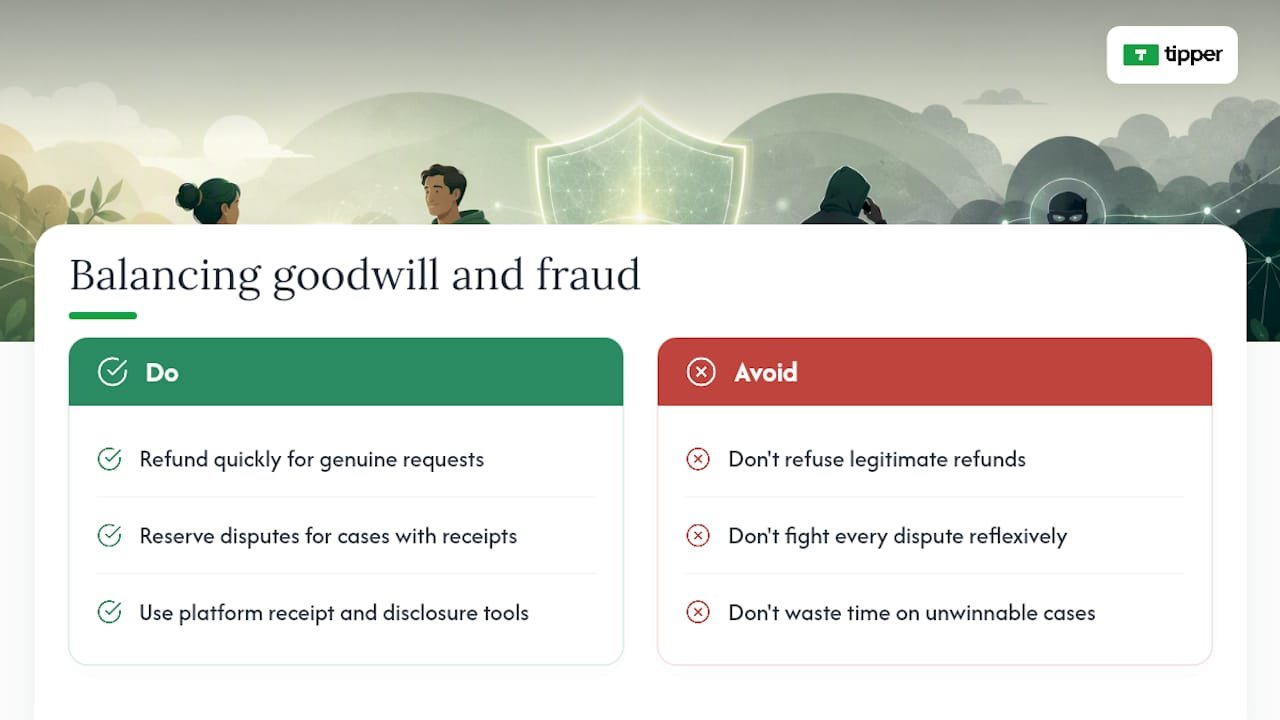
Tips carry an emotional weight that a normal transaction doesn’t. Refuse a legitimate refund and you burn trust with someone who was trying to support you. Fight every dispute reflexively and you’ll waste hours on cases you were never going to win.
The workable rule: refund fast when the request is clearly genuine, and reserve your energy for disputes where you have a real paper trail. Use whatever receipt and disclosure features your platform gives you. They’re not paperwork for its own sake. They’re the difference between a five-minute resolution and a drawn-out fight with your processor.
**
Fewer Disputes, Faster Payouts With Tipper
Most unrecognized-charge disputes come down to one thing: the supporter didn’t get a clear, immediate record of what they paid for. Tipper’s tip flow issues receipts the moment payment clears, labels every charge as a tip rather than a generic transaction, and supports Apple Pay and Google Pay so supporters never need to create an account to pay you.

That clarity at the point of payment is what keeps a friendly mistake from turning into a formal chargeback weeks later. If you’re setting up disclosures, checking your billing descriptor, or just want a tipping page built to reduce confusion rather than create it, review your Tipper settings and see what a receipt-first tip flow looks like for your page.
Sources
FAQ
What Is the Difference Between a Refund and a Chargeback?
A refund is voluntary and controlled by you or the platform. A chargeback is forced by the cardholder’s bank and bypasses the merchant entirely until the representment stage.
How Long Do I Have to Respond to a Chargeback?
Merchants typically get 14 to 40 days to submit representment evidence, though the exact window depends on the card network and reason code, per Mastercard’s chargeback guide. Missing that window usually means an automatic loss.
What Evidence Actually Helps Win a Dispute?
Receipts, transaction metadata, proof the supporter saw your refund policy, and confirmation details like timestamps and authorization codes all strengthen a representment case, according to PayPal’s evidence guidelines. A mismatched billing descriptor is one of the most common reasons disputes happen in the first place.
Should I Refund a Tip Before It Becomes a Chargeback?
Yes, when the request looks genuine. Refunding quickly is usually cheaper than fighting a chargeback later, since fast merchant-side resolution tends to prevent escalation to the card issuer altogether.
Does Tipper Charge a Fee When a Tip Gets Refunded?
Tipper’s own pricing details, including how processing fees apply to refunded transactions, are available directly on the Tipper website rather than as a flat published rate. Payment processing fees on the original transaction are commonly nonrefundable across the industry, even when the tip itself is returned in full.




Leave A Comment