

For most creators, a recurring subscription builds a more reliable income base, while tips deliver flexible, immediate rewards that spike around big moments. Subscriptions win on predictability. Tips win on speed and spontaneity. The exceptions matter: viral clips, one-off appreciation, and platforms that restrict recurring billing all tilt the math back toward tips. The KPIs, math examples, and a decision checklist below will tell you which one fits your situation right now.
TL;DR:
- Creating regular income from subscriptions depends heavily on maintaining low churn and a consistent streaming schedule, especially for scheduled streamers.
- Tipping produces short-term spikes but often lacks the long-term stability that subscriptions offer, making it less predictable over extended periods.
- Supporters can maximize their impact by tipping during viral moments or milestones, while subscribing is better for ongoing engagement with creators.
- Reducing payment friction with quick, no-account methods like Apple Pay or Google Pay significantly increases support frequency and average tip size.
- Combining both options allows creators to benefit from stable recurring revenue and moment-based income spikes, optimizing overall monetization.
Table of Contents
- Tips vs Subscriptions: How the Mechanics Actually Differ
- Pros and Cons for Supporters and for Creators
- What the Numbers Tell Creators About Tips vs Subscriptions
- When Should You Tip vs Subscribe? A Quick Decision Guide
- Combining Tips and Subscriptions the Smart Way
- Why We Think Layering Beats Picking One
- Send a Tip in Seconds With Tipper
- Sources
- FAQ
Tips vs Subscriptions: How the Mechanics Actually Differ
A subscription is a recurring charge, typically monthly, that renews automatically until someone cancels. A tip is a single, voluntary payment sent once, for any amount, with no future obligation attached. That structural difference explains almost everything else in this comparison.
Subscriptions generate what’s called Monthly Recurring Revenue, or MRR. Creators track MRR against churn, the rate at which subscribers cancel each month. Low churn means the subscriber base keeps compounding. High churn means a creator has to keep replacing subscribers just to stay flat. This is the core mechanic behind why subscription revenue tends to outperform tips over time: subscribers don’t have to actively decide to pay again. The charge just happens.
Tips work on impulse. A viewer watches a clutch play, a funny bit, or a genuinely moving moment, and sends money right then. There’s no commitment, no perk tier, no monthly reminder. That’s the appeal and the limitation in one package: tips spike hard around specific triggers and go quiet the rest of the time.
Platform visibility changes viewer behavior on both sides. Gifted subs and on-screen tip alerts create social proof. When one person tips $20 during a stream and everyone sees the alert, it primes others to do the same. Anonymous tips or private subscription upgrades don’t get that visibility boost, which is one reason platforms lean so heavily on public alerts.
Payment friction is where a lot of potential support quietly disappears. A supporter who has to create an account, enter a card number, and confirm an email is far more likely to abandon the tip than someone who taps Apple Pay or Google Pay and confirms with Face ID. Lower friction doesn’t just make tipping more pleasant. It changes whether the tip happens at all.
Here’s where the numbers get interesting. Say a creator has 500 monthly viewers.
- Subscription path: a small percentage convert to a subscription at a modest monthly rate. Month one generates predictable revenue that typically grows with retention over months.
- Tip path: a portion of viewers send average-sized tips during big moments, creating one-time spikes of income followed by quiet periods.
Modeling from creator income analysis shows this compounding effect typically causes memberships to overtake tip income somewhere between month four and month twelve, assuming retention stays reasonable. Tips can still win in a single explosive month. They rarely win over a quarter.
Pros and Cons for Supporters and for Creators
Neither model is universally better. The right one depends on what the creator needs and what the supporter is willing to commit to.
For creators, subscriptions offer:
- Predictable income you can budget around, which matters if content creation is your primary job.
- Lower daily pressure to perform for one-off rewards.
- A built-in reason to plan perks, tiers, and community features.
The tradeoff: subscriptions require ongoing content commitments. Cancel a few weeks of streams and churn creeps up fast. There’s also more administrative overhead: managing tiers, fulfilling perks, and handling cancellations.
For creators, tips offer:
- Zero pressure to maintain a fixed schedule or deliver recurring perks.
- Immediate cash for one-off wins, whether that’s a viral clip or a single great stream.
- A lower barrier for brand-new creators who don’t yet have an audience large enough to justify subscription tiers.
The tradeoff: income volatility. A creator relying only on tips has to stay “always on,” because a quiet week often means a quiet bank account.
For supporters, subscriptions feel like membership. You get a badge, maybe a Discord role, maybe early access, and a sense of ongoing belonging. The cost is a recurring commitment you have to remember to cancel if your interest fades. Tips feel more like a spontaneous thank you. There’s no guilt about missing a payment because there was never an obligation. The tradeoff is that a one-time tip often produces less lasting connection with the creator than a subscription badge that shows up every stream.
Pro Tip: If you’re a new viewer who just discovered a creator and want to say thanks without commitment, tip first. Save the subscription decision for after you’ve watched a few sessions and know you’ll keep coming back.
Small or brand-new creators tend to benefit more from tips early on, since they haven’t built the trust needed for recurring commitments. Schedule-driven creators, the ones who stream three nights a week like clockwork, do better pushing subscriptions, because consistency is exactly what subscribers pay for. Event-driven streamers, like those who only go live for major releases or tournaments, often lean on tips because their audience shows up in bursts, not on a schedule.
What the Numbers Tell Creators About Tips vs Subscriptions
Guesswork doesn’t hold up here. A handful of KPIs separate creators who understand their income from creators who are just hoping the next stream does well.
- MRR (Monthly Recurring Revenue): total subscription income for the month, the clearest signal of financial stability.
- Churn rate: the percentage of subscribers who cancel each month. Anything above 10% monthly churn usually signals a perks or engagement problem.
- Average tip size: total tip revenue divided by number of tips, useful for spotting whether a payment method change moved the needle.
- Donation frequency: how often tips arrive relative to stream count, a good proxy for audience engagement outside of subscription hours.
- Tipper-to-subscriber conversion rate: the percentage of one-time tippers who eventually convert to a recurring subscription, arguably the most useful number for growth.
Analysis of livestream monetization confirms that gifts and tips drive the spikes, while subscriptions carry the stability, and platform format determines which one deserves more attention. A creator with a tight, ritual-based schedule (same three nights a week) has the ingredients subscriptions need. A creator who goes viral unpredictably has the ingredients tips reward.
The compounding argument keeps showing up in creator finance data for a reason. Creators with similar audience sizes often earn more from memberships after six to twelve months even when tips generated more cash in the first month. Subscriptions reduce the churn risk baked into relying on people’s mood on any given night.
Friction also directly affects the tip side of these numbers. When a supporter can send money through a personalized link with Apple Pay or Google Pay and no account creation, more of those impulse moments turn into completed tips instead of abandoned carts. This is one of the areas where a tool like Tipper changes the equation: reducing the steps between “I want to tip” and “the tip is sent” tends to raise both tip conversion and average tip size, since supporters are less likely to second-guess a payment that only takes two taps.

When Should You Tip vs Subscribe? A Quick Decision Guide
Run through this checklist before deciding where your money goes.
- How often do you watch this creator? If it’s a first-time viewer situation, tip. If you’re a regular who shows up every week, a subscription makes more sense.
- What outcome do you want for the creator? A one-off reward for a specific moment calls for a tip. Long-term support for someone whose content you rely on calls for a subscription.
- Do the perks matter to you? If badges, Discord access, or exclusive content genuinely add value to your experience, subscribe. If you just want to say thanks without extras, tip.
- What does the platform allow? Some platforms cap subscription tiers or restrict outside payment tools; check what’s actually available before committing to a plan.
- How much friction are you willing to deal with? If you want to give money in under ten seconds with no account setup, tipping through Apple Pay or Google Pay is the faster path.
Three quick scenarios show how this plays out. A viewer who just discovered a creator through a clipped highlight should tip a small amount, maybe $2 to $5, as a low-commitment way to signal interest. A longtime viewer who’s watched every stream for six months and genuinely values the community should move to a subscription, ideally at a tier that matches what they’d naturally spend on entertainment in a month anyway. A regular subscriber who witnesses an exceptional moment, a personal milestone, a charity stream, a big win, should tip on top of their existing subscription rather than upgrading tiers, since a one-time tip captures that moment without changing their ongoing commitment.
Pro Tip: A reasonable starting tip is $2 to $10 for casual appreciation. A reasonable subscription tier is whatever you’d spend on a single coffee per month, since that’s the price point most viewers sustain without resentment.
Combining Tips and Subscriptions the Smart Way
The strongest creator income strategies don’t pick one model. They layer both, using subscriptions as the stable spine and tips as the flexible bonus on top. This layered structure shows up repeatedly in creator income analysis for a simple reason: subscriptions cover baseline costs, and tips capture upside from big moments that a flat subscription tier can’t account for.
This avoids subscription fatigue, where a viewer signs up for five different $10 tiers and quietly resents the total.
For creators, presenting both options without pressuring the audience matters more than most people think. The creators who do this well mention subscriptions occasionally, usually tied to a specific perk announcement, and let tips stay purely optional and low-pressure in the moment. Hammering the audience with “subscribe now” messaging every five minutes creates the opposite effect: viewers disengage rather than convert. A quieter approach, where the value of subscribing is obvious from the perks themselves, tends to convert better than repeated asks.
- Treat subscriptions as your predictable floor, not your only income source.
- Treat tips as bonus revenue tied to specific moments, not a replacement for stable income.
- Mention subscription perks sparingly; let the perks sell themselves.
- Never make tipping feel obligatory during a stream. Optional support stays optional in tone, too.
Why We Think Layering Beats Picking One
Treating this as an either/or choice misses the point. The data on compounding subscriptions is real, but so is the data on tip-driven spikes carrying moments a flat monthly fee can’t capture. The healthiest creator income mixes both, and the healthiest viewer habit does too.
What changes the math for tips specifically is friction. A platform built around personalized links and instant payment methods removes the excuses that usually kill an impulse tip. That doesn’t replace subscriptions. It just makes tips do their job better: fast, occasional, and frictionless.
Test both approaches with your own habits or your own audience. The numbers will tell you more than any general rule.
— Tipper
Send a Tip in Seconds With Tipper
Tipper strips out the one thing that kills most impulse tips: friction. There’s no account to create, no app to download, and no waiting for a payout request to process.
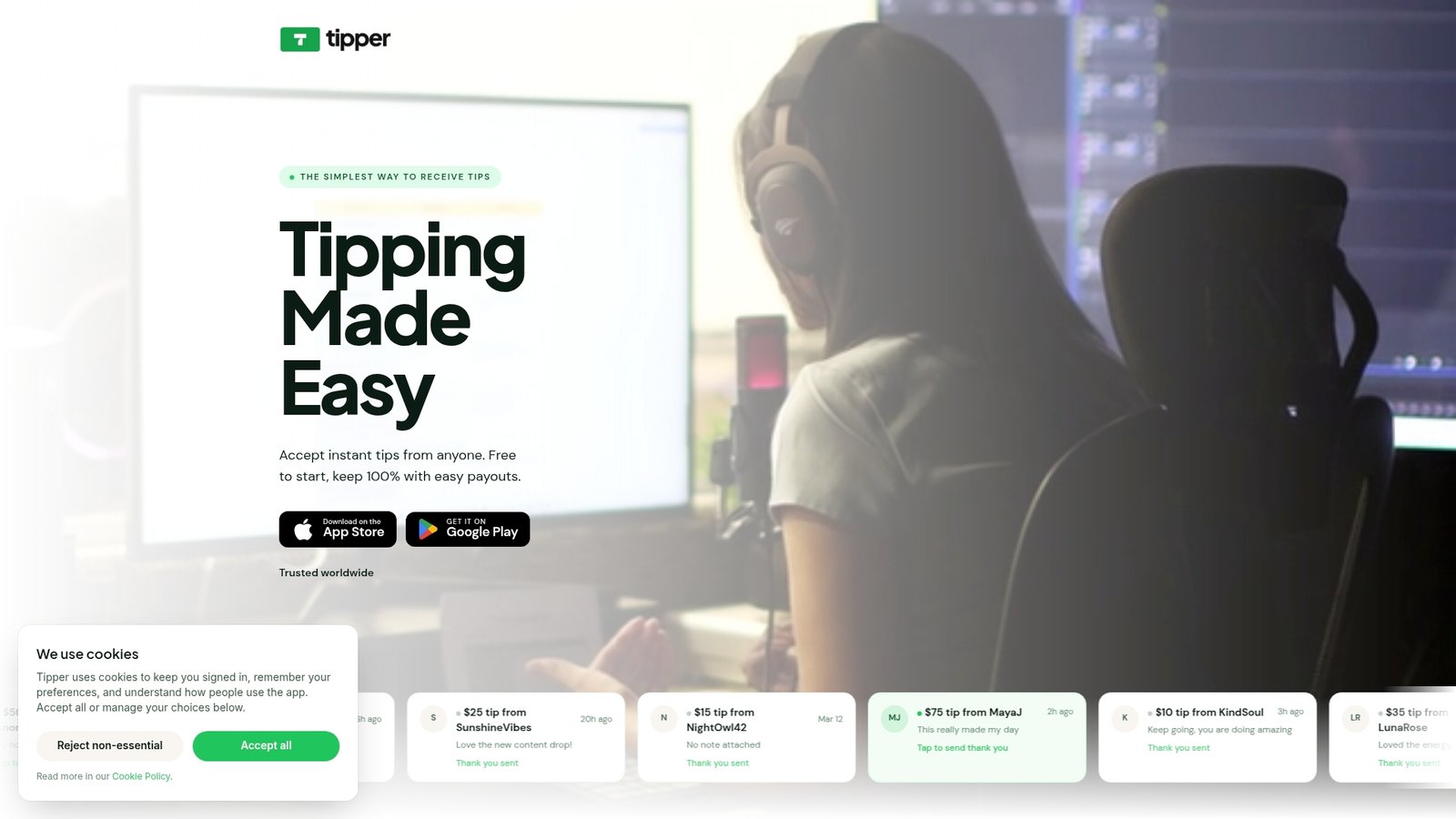
That speed matters most in the exact moments this article covers: the highlight clip, the milestone stream, the spontaneous thank you that would otherwise never happen because the payment process got in the way. Creators can also add a personal thank you back, whether that’s a short note or a quick video, which turns a one-off tip into something closer to a real connection. If you want to see how a personalized tipping link works in practice, or you’re a creator ready to set one up for your own audience, visit Tipper’s tipping page and send or start collecting your first tip today.
Sources
- Subscription revenue models (Harvard Business School faculty note)
- Livestream monetization guide: gifts, subs, tips and brand deals compared
- One-off tips vs recurring memberships: The real maths (Spenny Piggy)
- Subscription pricing models explained (Swell)
FAQ
What are the three main types of subscriptions?
Most creator subscriptions fall into flat-rate, tiered, or hybrid models, where hybrid combines a base fee with add-on perks or usage-based extras. Tiered and hybrid structures are the most common choice among creators because they let supporters pick a price point that matches their budget.
Are bits or tips better than subscriptions?
Neither is universally better. Bits and tips work best for immediate, one-off rewards and viral moments, while subscriptions build the predictable income base that lets creators plan ahead.
What is the subscription trap?
The subscription trap refers to supporters accumulating multiple recurring charges they forget to cancel, leading to spending that quietly outpaces what they intended. Reviewing your active subscriptions every few months and reallocating unused ones toward tips or a single favorite creator avoids this.
Are subscriptions really worth it for supporting creators?
For creators you watch consistently, yes. Subscriptions give creators the predictable revenue that reduces the pressure to chase viral moments every week, and they typically overtake one-off tip income within four to twelve months for the same audience size.
Should I tip a creator I just discovered?
Yes. A small tip, sent through a low-friction option like a personalized link with Apple Pay or Google Pay, is the lowest-commitment way to show appreciation before deciding whether a subscription makes sense.




[…] can’t capture. If you’re weighing tips against a full subscription setup, our breakdown of tips versus subscriptions walks through the timeline for each. Set up your page at Tipper and start collecting tips […]
[…] and platforms with restrictive minimum payout amounts that delay access to your own money. A tips versus subscriptions comparison breaks down how these tradeoffs play out over several months, which is worth a look before locking […]