

If you’ve ever fumbled for cash to tip someone or abandoned a donation page because it demanded account creation, you already understand the problem that frictionless tipping solves. What does frictionless tipping mean, exactly? It means removing every unnecessary step between a supporter’s impulse to tip and the moment that money actually lands in your pocket. For content creators, freelancers, and anyone building an audience online, understanding this concept is the difference between leaving money on the table and getting paid in real time for the value you deliver.
Table of Contents
- Key takeaways
- What frictionless tipping means and why it’s different
- How frictionless tipping works technically
- The social and behavioral side of frictionless tipping
- Practical steps for creators and freelancers
- My take on frictionless tipping for direct support
- Start receiving tips without the friction
- FAQ
Key takeaways
| Point | Details |
|---|---|
| No barriers to tip | Frictionless tipping removes account creation, app downloads, and cash requirements from the tipping process. |
| Instant payouts matter | Tips move immediately to recipients, eliminating the delays common in traditional tip collection. |
| UX design drives behavior | How a tip prompt looks and where it appears directly influences whether supporters follow through. |
| Social pressure is real | Digital tip prompts increase average tip sizes but can also create discomfort for some supporters. |
| Platform choice is critical | Choosing a platform without hidden onboarding steps prevents drop-off before the tip is ever sent. |
What frictionless tipping means and why it’s different
Frictionless tipping is the practice of sending a monetary tip with the fewest possible steps, using digital tools that require no cash, no app download, and no account setup from the person tipping. Think of it as applying the same logic behind one-click checkout to the act of showing appreciation. Frictionless payments reduce checkout steps by preloading payment information or using contactless methods, and frictionless tipping borrows that exact framework for gratuity.
What separates it from regular digital payments is the focus on tipping-specific friction. Standard contactless payments still often require a merchant terminal, a registered card, or a specific app. Frictionless tipping addresses tip-specific barriers like UI complexity, manual tip collection, and reconciliation headaches that a general payment solution never touches.
The core characteristics that define a genuinely frictionless tipping experience:
- No cash handling. The entire transaction is digital, from the supporter’s phone to the recipient’s account.
- No app required. Supporters scan a QR code or tap a link and tip using tools they already have, like Apple Pay or Google Pay.
- No account creation. Tips complete in seconds without requiring the supporter to register, verify an email, or create a profile.
- Instant transmission. The tip moves immediately, with automated backend processing handling distribution and reporting.
- Digital confirmation. Receipts arrive via SMS or email, giving supporters proof without extra steps.
Pro Tip: When evaluating any tipping platform, test the supporter experience yourself before sharing it with your audience. If you hit a login screen or a form with more than two fields, your supporters will too.
How frictionless tipping works technically
Understanding the mechanics helps you choose the right setup for your situation. There are two dominant patterns in frictionless tipping in digital payments, and they behave very differently.
The two main tipping patterns
- Merchant-collected tips. The tip amount is added before the payment is processed. The supporter sees a suggested amount or percentage on a screen and confirms the total before the transaction completes. This pattern is common in point-of-sale systems at coffee shops and restaurants.
- Wallet-prompted tips. After a scan-to-pay action, the digital wallet itself surfaces a tip suggestion natively inside its own UI. Wallet-native tip prompts allow suggested fixed amounts or percentages, and supporters can accept or skip without leaving the wallet interface.
The second pattern is more powerful for creators and freelancers because it leverages the familiar wallet interaction the supporter already trusts. Wallet-native tipping feels more natural than a custom tip form because it reduces cognitive friction by using an interface the user already knows.
Comparing tipping integration approaches
| Approach | Barrier level | Best for | Key limitation |
|---|---|---|---|
| QR code to payment link | Very low | Freelancers, creators | Requires phone camera access |
| Wallet-prompted tip UI | Very low | In-person and digital | Wallet compatibility varies |
| Custom tip form (web) | Medium | Branded experiences | Account creation risk |
| Blockchain gasless tipping | Low (advanced) | Crypto-native audiences | Niche adoption |
On the advanced end, blockchain tipping with biometric authentication eliminates wallet popups and network gas fees entirely using passkey flows. A supporter authenticates with their fingerprint or face ID and the tip processes without any visible blockchain interaction. This is still early-stage, but it points to where frictionless tipping is heading.

The biggest pitfall in any of these approaches is hidden friction. Mandatory account creation causes drop-off at the onboarding stage, not the payment stage. Supporters who were ready to tip abandon the process when they hit a registration wall. The technical sophistication of your payment backend means nothing if the front end asks for a username and password.
Pro Tip: For creators sharing tipping links in video descriptions or social bios, a personalized link that opens directly to a wallet pay screen converts far better than one that routes through a landing page with a sign-up form.
The social and behavioral side of frictionless tipping
Frictionless tipping explained purely as a technical concept misses half the story. The behavioral effects are just as significant, and for creators and freelancers, they carry real implications.
Digital tip prompts have measurably increased tipping frequency and average tip sizes. But digital tipping also creates social pressure for customers who feel watched or judged when declining. This tension is worth understanding because it shapes how your supporters experience your tipping setup.
“Digital tipping increased tipping but reactions to the process itself vary,” noted Professor John Quiggin, highlighting that social friction exists alongside technical friction even in the most convenient systems.
The design of the tip prompt matters enormously. A screen that defaults to a 25% tip and requires an active tap to select “No tip” creates a very different psychological experience than one that presents tipping as an optional, low-pressure choice. For content creators especially, the frictionless tipping meaning should include respecting supporter autonomy, not just maximizing tip conversion.
Here is what the research and real-world behavior tell us about the social dynamics:
- Supporters who feel pressured by tip prompts are less likely to tip again in the future, even if they complete the transaction once.
- Voluntary, low-pressure tip flows build stronger long-term supporter relationships than high-pressure defaults.
- Digital tip prompts raise ethical questions about customer autonomy and hospitality norms that creators should think through before choosing a platform.
- The framing of a tip as “support” or “appreciation” rather than an expected gratuity tends to generate more goodwill among online audiences.
For freelancers working with clients directly, frictionless tipping also opens a channel for spontaneous appreciation that invoicing never captures. A client who loved a deliverable can send a tip in ten seconds without it feeling transactional.
Practical steps for creators and freelancers
Knowing the benefits of frictionless tipping is one thing. Actually setting it up in a way that works for your specific audience is another. Here is how to approach it without overcomplicating things.
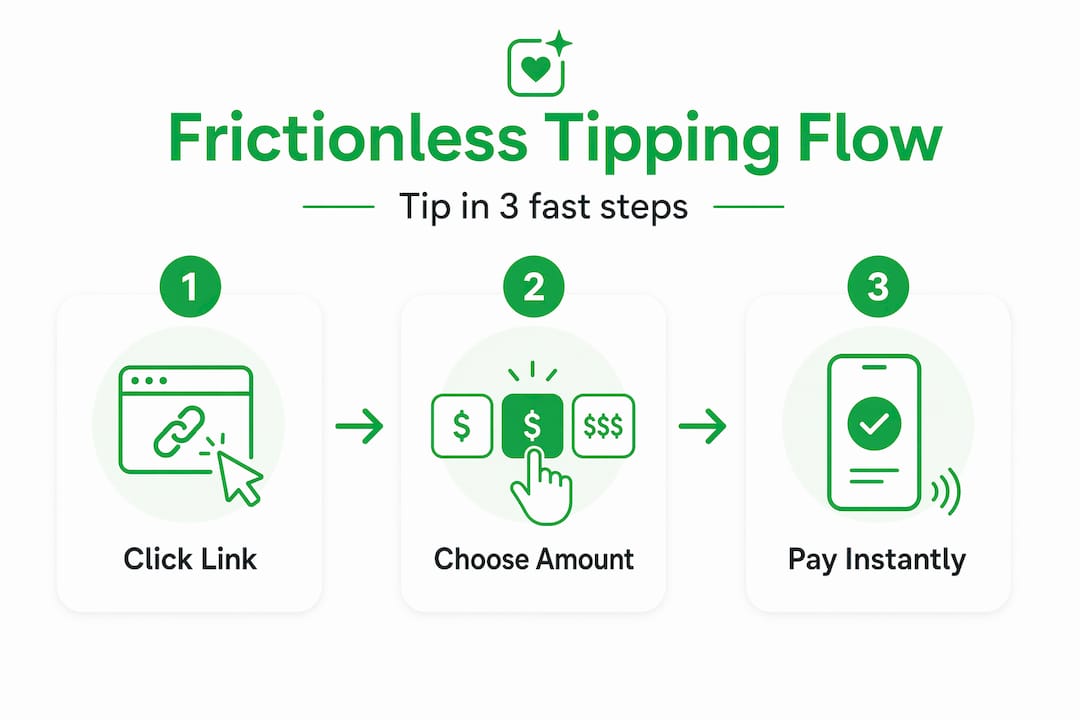
Evaluate platforms on the right criteria. The most important question is not “what features does this platform have?” It is “what does my supporter have to do before the tip goes through?” Count the steps. If there is an account creation screen anywhere in that flow, look for a different platform. No app or account requirement is the single most important feature for maximizing tip completion rates.
Set up a personalized tipping link. Most quality frictionless tipping platforms generate a unique URL you can place anywhere: your Instagram bio, YouTube description, email signature, or podcast show notes. The link should open directly to a payment screen that accepts Apple Pay, Google Pay, or a card without any intermediate steps.
Communicate it clearly to your audience. Supporters do not tip if they do not know tipping is an option. A brief, direct mention works better than a long explanation. Something like “If this helped you, you can send a tip in about ten seconds at [link]” is more effective than a paragraph about how much you appreciate support.
- Place your tipping link in the first three lines of any description field, since most platforms collapse text after that.
- Mention it verbally in video content at a natural moment, not as a hard sell at the end.
- Rotate the framing occasionally. “Buy me a coffee,” “support the work,” and “send a tip” all resonate differently with different audiences.
Balance ease with respect. The best frictionless tipping setups feel like an open door, not a toll booth. Make it easy, make it visible, and then let supporters decide. The creators who build the most loyal supporter bases treat tipping as a two-way relationship, often sending a personal thank-you note or short video back to anyone who tips.
Watch the emerging space. Gasless crypto tipping and biometric-authenticated tip flows are moving from experimental to practical. If your audience skews tech-forward, keeping an eye on these developments now means you will be ready to adopt them when they hit mainstream usability.
Pro Tip: Backend automation matters more than most creators realize. Platforms that automate tip tracking and payouts save you hours of manual reconciliation every month, especially as your audience grows.
My take on frictionless tipping for direct support
I’ve spent years watching creators underestimate how much friction kills their income. They build great content, they mention tipping once, and then they wonder why the numbers are low. The answer is almost always the same: the path from “I want to tip this person” to “the tip is sent” has too many steps.
What I’ve learned is that frictionless tipping is not just a convenience feature. It is a conversion rate problem. Every extra click, every form field, every “create an account to continue” screen is a percentage of supporters who never complete the transaction. The creators I’ve seen do this well treat their tipping setup with the same seriousness they give their content quality.
I’ve also noticed a misconception worth naming directly. Many creators assume that a platform with more features is automatically better. It is not. A platform that requires supporters to download an app or verify an email before tipping will consistently underperform a simpler one that opens straight to a pay screen. Simplicity is the feature.
The social pressure question is real too, and I think creators should be honest with themselves about it. If your tipping prompt feels pushy, your audience will notice. The best approach I’ve seen is framing tips as optional appreciation, making the process genuinely easy, and then trusting your audience to respond when the content earns it.
The future of this space is genuinely exciting. Gasless crypto tipping and biometric flows will eventually make even the current “scan and pay” experience feel clunky. But right now, the gap between the best frictionless platforms and the worst is enormous, and choosing correctly matters a great deal for your income.
— Steve
Start receiving tips without the friction
If you are a creator or freelancer who has been putting off setting up a tipping option because the existing tools felt complicated, Tipper was built specifically for your situation. With Tipper, supporters can send you a tip through a personalized link using Apple Pay or Google Pay, with zero account creation required on their end. You keep 100% of every tip, and supporters can attach a thank-you note or video so the exchange feels personal, not transactional.
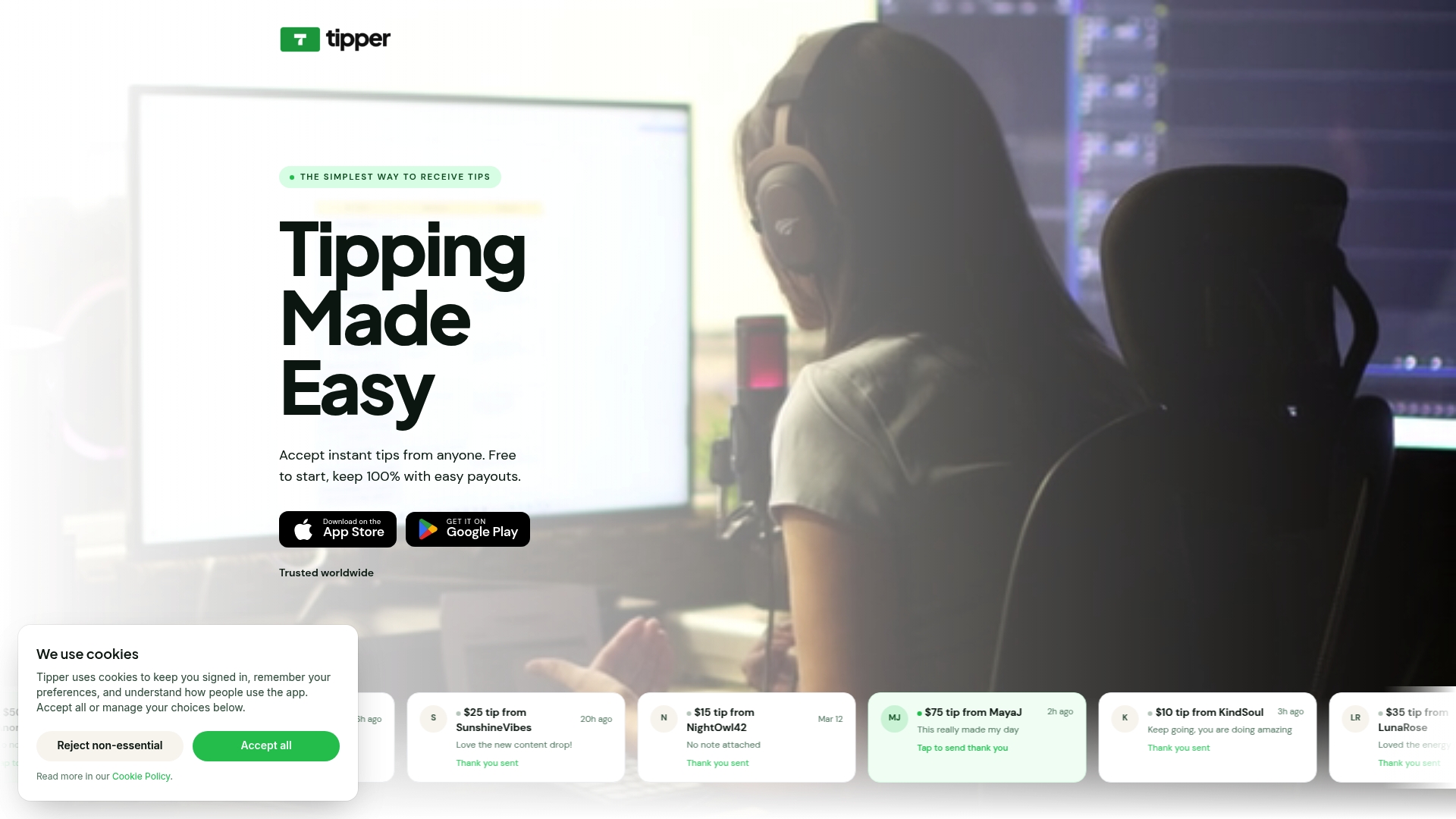
Tipper works globally, respects supporter privacy, and gets you from setup to your first live tipping link in minutes. Whether you share it in a YouTube description, a newsletter, or a social bio, the experience for your supporters is frictionless by design. If you are ready to make it easy for people to support your work, start with Tipper and see the difference a genuinely barrier-free tipping flow makes.
FAQ
What does frictionless tipping mean?
Frictionless tipping means sending a monetary tip with minimal steps, requiring no cash, no app download, and no account creation. The goal is to reduce every barrier between a supporter’s intent to tip and the completed transaction.
How does frictionless tipping work for content creators?
Creators share a personalized tipping link, and supporters tap it to pay instantly using Apple Pay or Google Pay. No registration is needed, and the tip reaches the creator immediately with automated backend processing.
What is the biggest risk with frictionless tipping platforms?
The biggest risk is hidden friction, specifically mandatory account creation or app downloads that cause supporters to abandon the process before completing a tip. Always test the full supporter flow before sharing a platform with your audience.
Does frictionless tipping create social pressure?
It can. Digital tip prompts increase average tip sizes but some supporters feel uncomfortable when prompted, especially if declining requires an active step. Framing tips as optional appreciation rather than expected gratuity reduces this tension.
What is frictionless tipping in digital payments?
In digital payments, frictionless tipping applies the same logic as one-click checkout to gratuity. It uses QR codes, digital wallets, or personalized links to let supporters tip in seconds without leaving a familiar payment interface.




[…] combination of frictionless tipping and personal response tools is what separates a transaction from a relationship. With real-time tip […]
[…] What Does Frictionless Tipping Mean for Creators? […]