

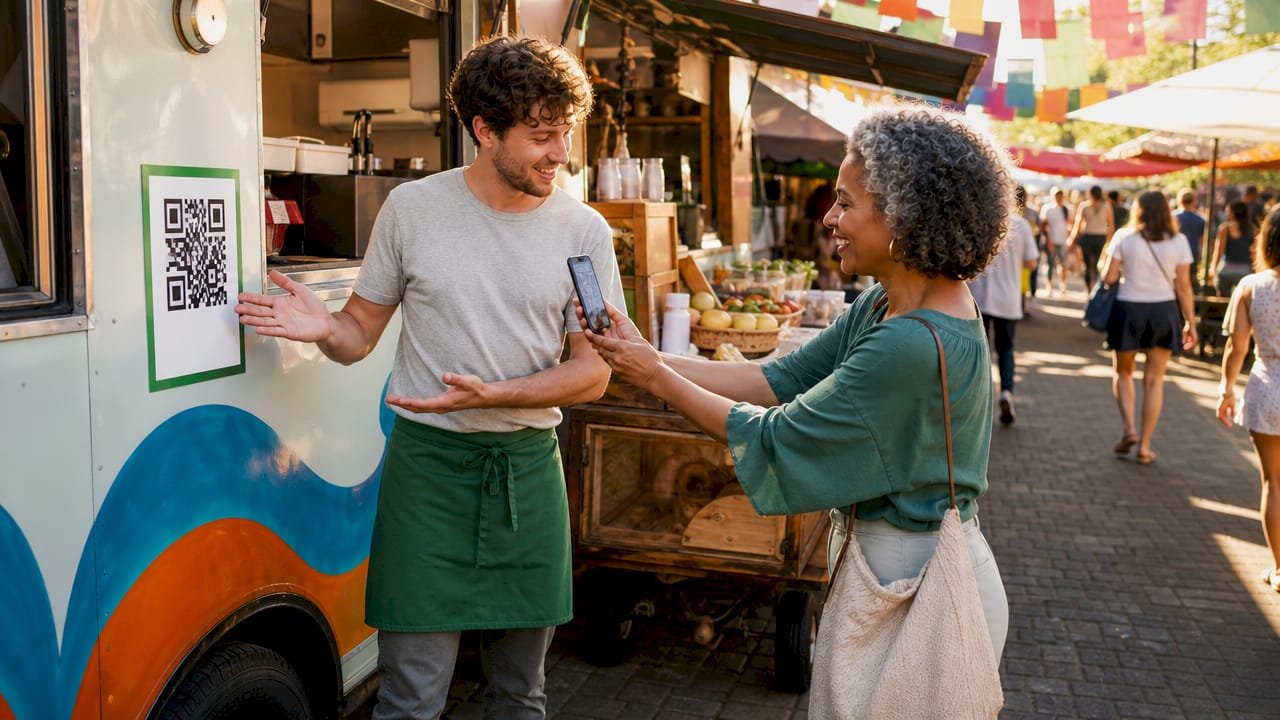
QR code tip collection is a contactless gratuity method that lets customers tip directly from their smartphones, with no cash, no app download, and no extra hardware required. Platforms like sunday, EasyTip, and Tipper have made this approach the fastest-growing tipping format in hospitality and service businesses. The core benefits of QR code tip collection include higher average tips, faster transactions, and measurable gains in employee retention. Restaurants using QR code tipping report tip rates in the 20–22% range with revenue increases up to 10% within three months. That kind of result is not an accident. It comes from removing friction at the exact moment a customer decides whether and how much to tip.
1. What are the top benefits of QR code tip collection?
QR code tipping removes the single biggest barrier to gratuity: the moment of inconvenience. Customers no longer need cash, a card terminal, or a downloaded app. They scan, tap, and tip in seconds using Apple Pay, Google Pay, or a saved card.
The advantages stack up across three groups: customers, employees, and business owners. Customers get speed and control. Employees get higher, more consistent pay. Owners get data, efficiency, and reduced overhead.
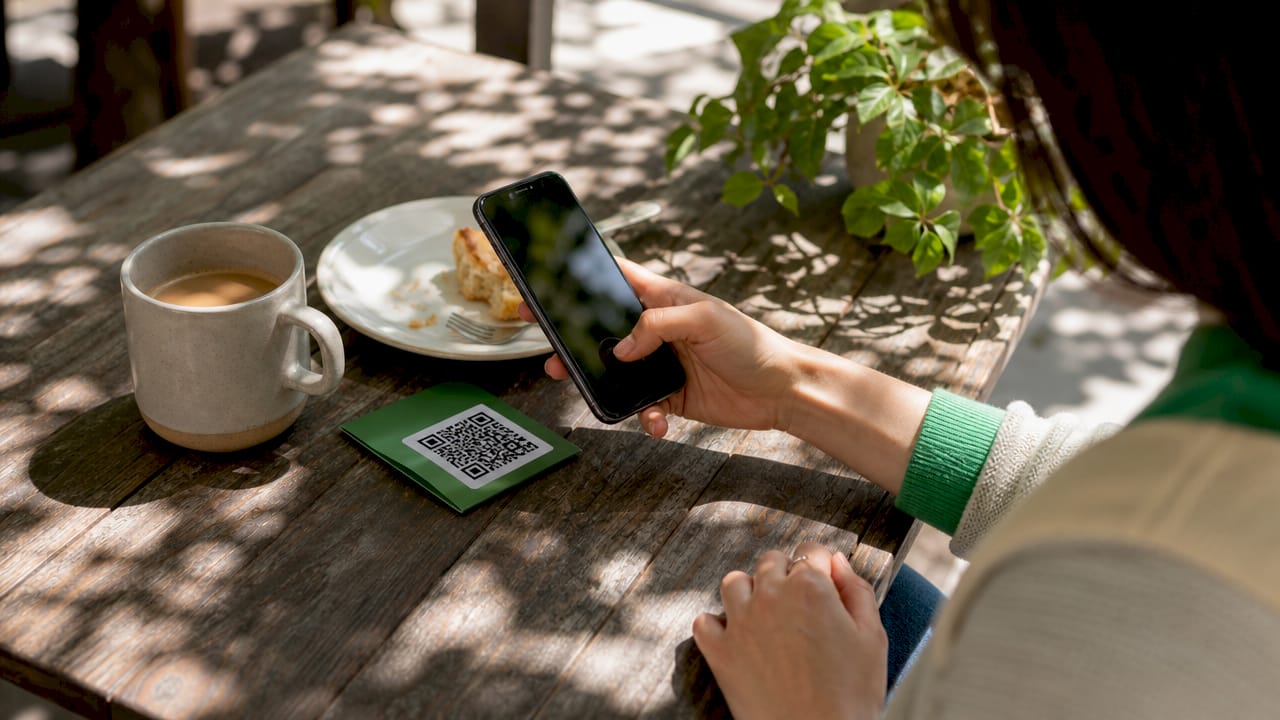
Pro Tip: Place a QR code at every natural pause point in the customer experience, not just at checkout. The more visible the code, the higher the scan rate.
2. No cash or hardware needed
QR code tipping requires zero physical infrastructure on the customer side. No wallet, no coins, no fumbling for the right bill. QR codes require no app downloads or wallet setup, which removes the friction that kills NFC conversion rates.
On the business side, you print or display a QR code. That is the entire setup. There is no card reader to maintain, no software to install on a terminal, and no staff training on hardware. A freelancer, a food truck owner, or a hotel housekeeper can deploy QR tipping in under an hour.
3. Higher tip amounts through preset suggestions
Automated tip suggestion prompts embedded in digital payment flows increase tip amounts by about 10%. The mechanism is the anchoring effect: when a customer sees preset buttons for 18%, 20%, and 22%, they treat those numbers as the norm rather than the ceiling.
Without a prompt, many customers default to the lowest socially acceptable amount or skip tipping entirely. Preset percentages remove that decision fatigue. The customer picks a button and moves on. That single design choice consistently produces higher average gratuity across service categories.
4. Faster transactions and table turns
Digital tipping speeds up table turns by 6–10 minutes per table, based on data from over 3,500 restaurant operators. That time saving translates directly into more covers per shift and higher revenue per square foot.
The reason is simple. Customers no longer wait for a server to bring the check, process a card, return with a receipt, and collect a signature. They scan, pay, and tip on their own timeline. Staff are freed to focus on the next table rather than managing payment logistics.
5. Improved employee satisfaction and retention
Replacing a single service employee costs approximately $5,864 in recruitment and training. QR code tipping reduces that cost by increasing take-home pay and automating tip distribution, which eliminates the disputes and errors that drive staff turnover.
When tips are tracked digitally, every dollar is accounted for. Tip pooling calculations happen automatically. Employees see transparent records of what they earned and when. That transparency builds trust between staff and management, which is one of the most underrated drivers of retention in service businesses.
6. QR codes outperform NFC for gratuity collection
NFC tipping sounds appealing in theory. In practice, it confuses customers. Many Android users do not have NFC enabled by default. iPhone users often do not know how to trigger an NFC tap for a third-party payment. QR codes surpass NFC in hospitality because they require no special settings, no hardware compatibility check, and no learning curve.
Every smartphone camera made in the last five years reads QR codes natively. The customer sees the code, points their camera, and the tip page opens. That familiarity is the single biggest reason QR code adoption in tipping continues to outpace every other contactless format.
7. How QR codes compare to other tipping methods
The table below compares QR code tipping against cash, card terminals, and NFC across the factors that matter most to small business owners.
| Method | Hardware needed | Customer friction | Tip suggestion prompts | Works without an app |
|---|---|---|---|---|
| QR code | None | Very low | Yes | Yes |
| Cash | None | High (requires cash) | No | N/A |
| Card terminal | Yes | Low | Sometimes | Yes |
| NFC tap | Reader required | Medium | Sometimes | No (wallet setup) |
QR codes win on deployment speed and customer familiarity. Card terminals are reliable but require hardware investment and staff involvement. Cash tipping is declining because fewer customers carry it. NFC has real adoption barriers that QR codes simply do not face.
A multi-touch tipping strategy combining QR codes, terminals, and payment links captures the widest range of customer preferences. QR codes handle table-side tipping. Terminals catch impulse tips at checkout. Payment links allow customers to tip after the service ends.
8. Strategic placement drives scan rates
Strategic placement at natural customer pauses can increase tipping frequency by up to 22%. The most effective locations are eye-level displays, mirrors in service areas, the final slide of a digital presentation, and the bottom of a printed receipt.
The logic is behavioral. Customers are most likely to tip when they feel satisfied and have a natural moment to pause. Placing a QR code at that exact moment, rather than at an awkward or rushed point in the interaction, produces significantly higher scan rates. Visibility is not decoration. It is a revenue decision.
Pro Tip: Test two or three placement locations for one week each and track scan rates. The data will tell you exactly where your customers are most likely to tip.
9. Branded and secure tipping builds customer trust
Branded, encrypted QR codes feel more reliable to customers than handwritten signs or informal tip jars. A professional-looking tip page with your business name and logo signals that the payment is legitimate and secure. That signal matters more than most business owners realize.
Customers are increasingly cautious about where they enter payment information. A generic QR code pointing to an unbranded page creates hesitation. A branded page with recognizable payment options like Apple Pay and Google Pay removes that hesitation entirely. Trust converts browsers into tippers.
10. Compatibility with Apple Pay and Google Pay
QR code tipping integrates with Apple Pay, Google Pay, and saved cards, offering instant digital payouts and multi-language support. That compatibility is not a minor feature. It is the reason customers complete the tip rather than abandoning the flow.
Platforms like Tipper take this further by allowing anyone to send a tip without creating an account. The customer taps, pays, and optionally leaves a note or video message. The creator or business owner keeps 100% of the tip. That model eliminates the friction that causes drop-off in traditional donation or tipping platforms.
11. Practical strategies to maximize QR tipping results
Getting a QR code in front of customers is step one. Getting them to actually tip requires a few deliberate choices.
- Use preset tip percentages. Offer 18%, 20%, 22%, and 25% as default options. Customers choose faster and tip more when the decision is simplified.
- Train staff to mention the QR code naturally. A brief, pressure-free mention at the end of a service interaction increases scan rates without making customers feel obligated.
- Combine QR codes with payment links. Send a follow-up message or email with a tipping link for after-service gratuity. This captures tips from customers who did not tip in the moment.
- Keep the tip page mobile-first. A page that loads slowly or requires scrolling on a phone will lose customers before they complete the tip.
- Track performance by location and time. Digital tipping generates data. Use it to identify which placements and which staff interactions produce the highest tip rates.
The businesses that see the strongest results treat QR tipping as a system, not a one-time setup. Placement, prompts, staff behavior, and follow-up links all work together.
Key takeaways
QR code tip collection increases average gratuity, speeds up transactions, and reduces employee turnover by removing friction from every step of the tipping process.
| Point | Details |
|---|---|
| Higher tip amounts | Preset tip prompts increase average gratuity by about 10% through the anchoring effect. |
| Faster table turns | Digital tipping saves 6–10 minutes per table, adding covers and revenue per shift. |
| No hardware required | QR codes need no terminals or app downloads, making deployment instant for any business. |
| Employee retention | Automated tip tracking reduces errors and disputes, lowering costly staff turnover. |
| Multi-touch strategy | Combining QR codes, terminals, and payment links captures the widest range of tippers. |
Why I think most businesses underestimate QR tipping
The first time I watched a small café owner tape a handwritten QR code to their counter, I expected customers to ignore it. They did not. Within a week, the owner told me tip frequency had jumped noticeably, and the average amount was higher than what they had seen with a tip jar.
What surprised me was not the technology. It was how little resistance customers showed. People are already comfortable scanning QR codes for menus, parking, and boarding passes. Tipping through one feels like a natural extension of that behavior, not a new habit they have to learn.
The mistake I see most often is treating QR tipping as a replacement for everything else. It is not. The businesses that get the best results use QR codes alongside terminals and payment links for after-service tips. Each channel catches a different type of customer at a different moment.
The other thing I would push back on is the idea that customers find tipping prompts pushy. The data does not support that. Customers who do not want to tip skip it. Customers who do want to tip appreciate having a clear, fast way to do it. The prompt is a service, not a demand.
— Steve
Tipper makes QR code tip collection simple
Tipper is built for exactly this use case: fast, frictionless tipping that works for creators, freelancers, and small business owners without requiring customers to create an account.
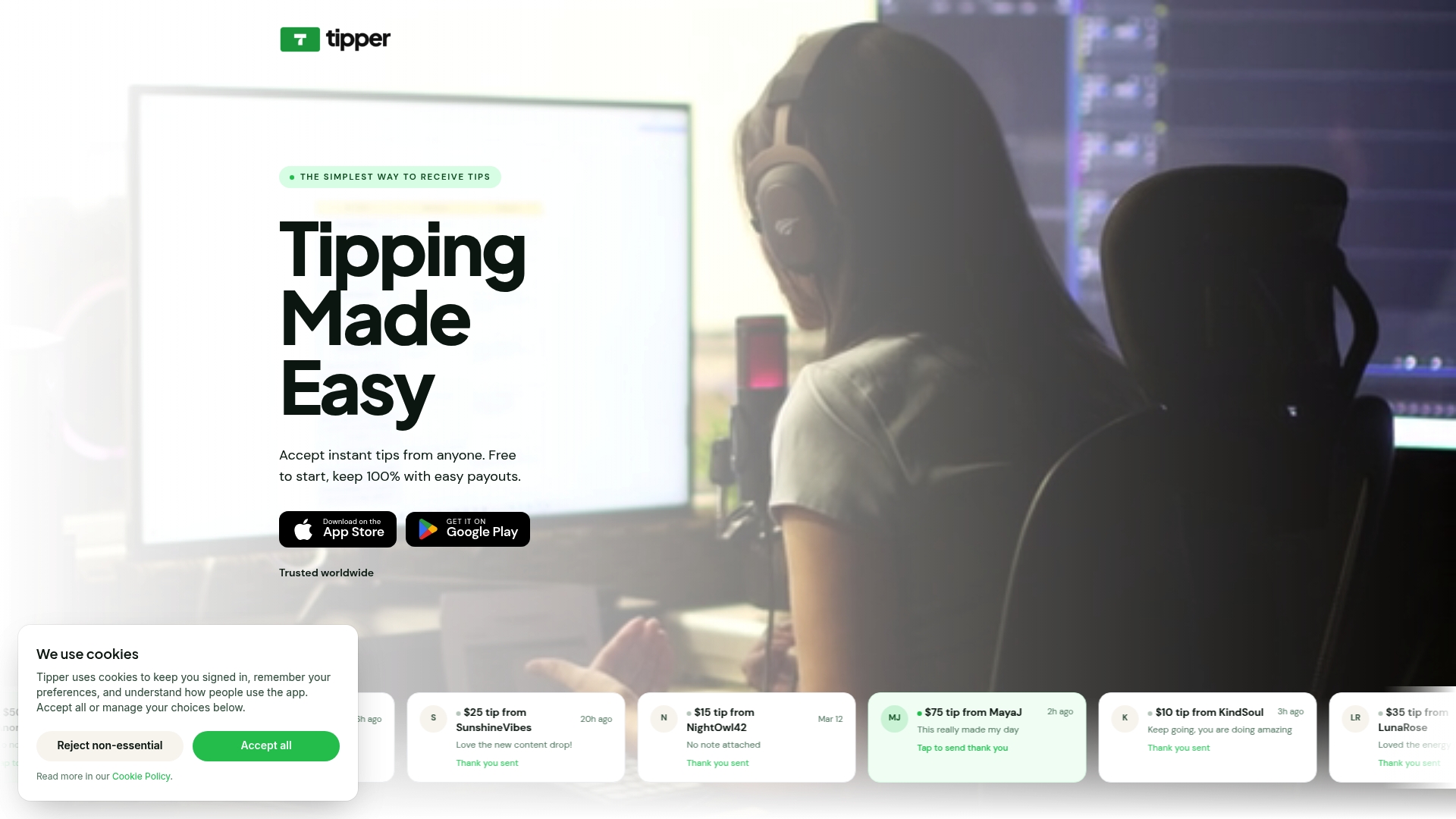
With Tipper, you get a personalized tipping link that works with Apple Pay, Google Pay, and saved cards. Customers tip in seconds, you keep 100% of every tip, and the whole experience feels personal rather than transactional. Supporters can even leave a thank-you note or video alongside their tip. For business owners exploring point-of-sale tipping alternatives or creators looking to collect tips without platform fees, Tipper offers a direct, no-friction path. Visit Tipper to set up your tipping page today.
FAQ
What is QR code tip collection?
QR code tip collection is a digital gratuity method where customers scan a code with their smartphone and complete a tip payment without cash or a card terminal. No app download is required.
Do QR codes actually increase tip amounts?
Yes. Automated tip suggestion prompts in digital payment flows increase tip amounts by about 10%, driven by the anchoring effect of preset percentage buttons.
How does QR tipping compare to NFC tipping?
QR codes outperform NFC because they require no special hardware, no wallet setup, and no app. Every modern smartphone camera reads QR codes natively, which produces higher actual conversion rates.
Where should I place a QR code to get the most tips?
Place QR codes at natural customer pause points such as eye-level displays, mirrors, receipts, and the end of a digital presentation. Strategic placement can increase tipping frequency by up to 22%.
Can customers tip after leaving the business?
Yes. Payment links sent by email or message allow customers to tip after the service ends. Combining QR codes with follow-up links is the most effective multi-touch tipping strategy.




Leave A Comment