


Yes, tips can trigger chargebacks, and it usually happens when the final settled amount runs past what the customer’s card was authorized for, typically beyond the card network’s tip tolerance of around 20%. The immediate move: pull your authorization and capture logs plus the receipt before you do anything else, and for small-dollar disputes with thin evidence, a quick refund often costs less than fighting. The rest of this guide covers exactly what triggers these disputes, what evidence wins them, and how to stop them before they start.
TL;DR:
- Maintaining a tip amount within the card network’s 20% tolerance threshold prevents automatic flags for amount mismatches during settlement.
- Clearly disclosing mandatory service charges separately from tips on menus and receipts reduces misrepresentation claims and dispute risks.
- Using in-transaction tip capture, digital receipts, and instant electronic confirmation significantly lowers post-authorization tip disputes.
- Gathering comprehensive evidence such as signed receipts, audit logs, and authorization records is crucial before contesting a chargeback.
- Implementing digital tipping methods with timestamped confirmations streamlines dispute defense and minimizes amount-mismatch conflicts.
Table of Contents
- How Card Networks Treat Tip Chargebacks and the 20% Tolerance Rule
- Tips vs. Service Charges: Why the Distinction Matters for Disputes
- Preventing Tip Chargebacks: POS Setup and Staff Workflow
- Responding to a Tip Chargeback: Evidence and Representment Steps
- How Digital Tipping Cuts Down on “I Don’t Recognize This” Disputes
- The Real Tension Between Protecting Tips and Avoiding Disputes
- Cut Tip Disputes With Electronic Confirmation at the Source
- Sources
- FAQ
How Card Networks Treat Tip Chargebacks and the 20% Tolerance Rule
Card networks built a buffer into how they handle restaurant and hospitality transactions, because tips get added after the initial swipe or tap. That buffer is commonly known as the tip tolerance, and it typically runs around 20% above the original authorized amount. Stay under that ceiling and the settled charge usually clears without a second look. Go over it, and you’ve created an amount mismatch between what the cardholder approved and what actually posted.
That mismatch is exactly what issuers watch for. Here’s the mechanical sequence that creates risk:
- A card gets pre-authorized for the bill total (say $100).
- The customer adds a tip after the fact, either on a receipt or through a POS prompt, pushing the final charge to an amount that can exceed the usual tip tolerance threshold, which is commonly near 20%.
- The issuer’s system can flag this automatically, sometimes without ever asking the cardholder first.
The reason codes attached to these disputes usually point to “amount exceeds authorization,” which shows up under different labels depending on the network. Some processors reference it by code (Amex uses A01), but the underlying issue is the same across networks: the settled amount doesn’t match what was approved. This is also why post-authorization tip adjustments carry more scrutiny than tips collected in the original transaction. The longer the gap between authorization and final capture, the more room there is for a mismatch to slip through unnoticed until the cardholder’s statement arrives.
Tips vs. Service Charges: Why the Distinction Matters for Disputes
A voluntary tip and a mandatory service charge are not the same thing, and treating them interchangeably is one of the fastest ways to lose a chargeback you should have won. A tip is optional, chosen by the customer, and typically goes straight to staff. A service charge (an 18% gratuity added automatically for parties of six or more, for example) is a business-set fee, and depending on your state, it may be taxed differently and processed through payroll rather than tip pooling.
Networks and issuers expect clear, prominent disclosure whenever a mandatory fee gets added to a bill. Skip that disclosure, or bury it in fine print, and you’re inviting a misrepresentation claim on top of the standard amount dispute, weakening your position on both fronts.
A few places disclosure has to be unmistakable:
- On the physical or digital menu, near the item or party-size threshold that triggers the charge.
- On the payment screen or receipt, before the customer signs or taps to confirm.
- On the final printed or emailed receipt, itemized separately from the tip line.
Pro Tip: Never label a mandatory service charge as a “suggested tip” on your receipt. That single word choice can shift how a chargeback gets categorized and can create payroll tax exposure you didn’t intend.
Preventing Tip Chargebacks: POS Setup and Staff Workflow
Most tip disputes trace back to operational gaps, not fraud. Confusing receipts, delayed batch closings, and tip amounts entered after the original authorization account for a large share of avoidable cases. Fixing this is mostly about tightening your workflow, not buying new hardware.
- Close batches daily. The longer a transaction sits open, the more likely a tip adjustment slips outside the tolerance window unnoticed.
- Require verification on unusually high tips. A manager sign-off on tips well above your typical range catches entry errors before they become disputes.
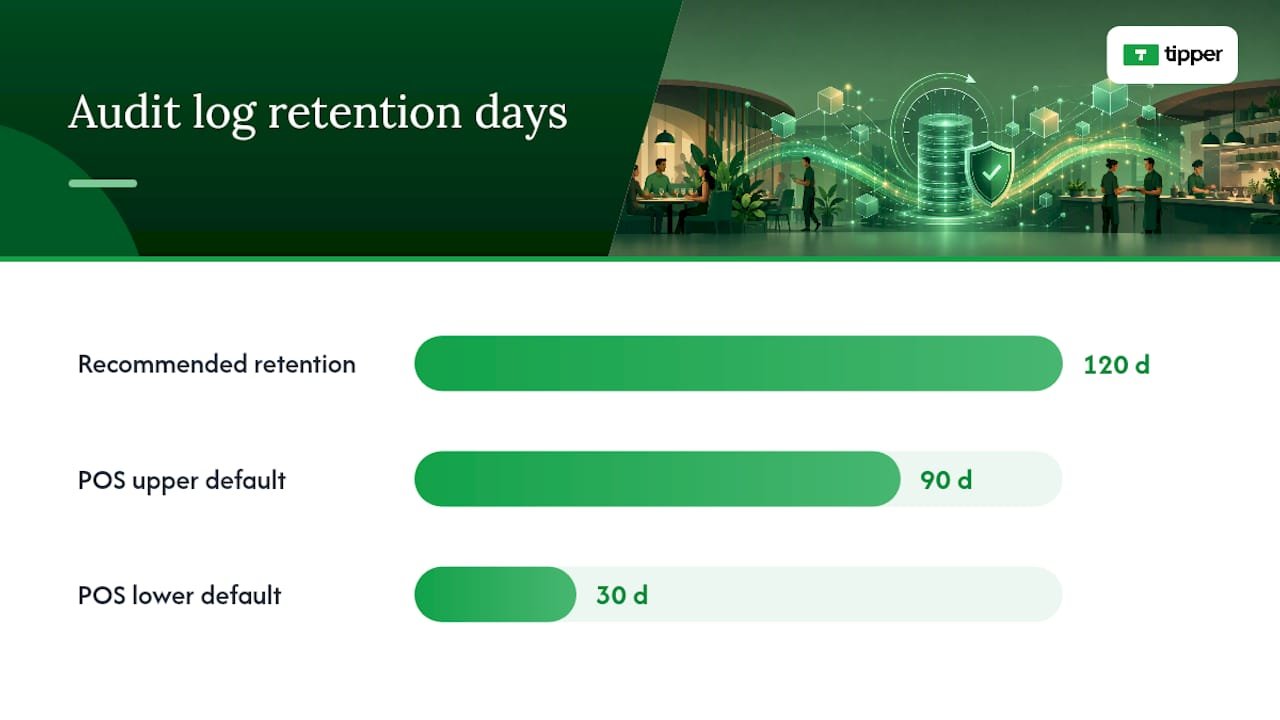
- Retain your tip-adjustment audit logs for at least 120 days. Many POS systems only keep detailed logs for 30 to 90 days by default, which can fall short of network representment windows.
- Collect tips in-transaction where your POS allows it. Pre-authorizing with an estimated tip, or capturing the tip before the card is released, eliminates the entire category of post-authorization mismatch disputes.
- Turn on customer-facing confirmation screens. A visible final total before the customer walks away removes the “I didn’t agree to that amount” argument before it starts.
- Send digital receipts immediately. An instant text or email receipt lets the customer reconcile the charge while it’s still fresh, which cuts down on “I don’t recognize this” claims.
For businesses handling prepaid cards or gift cards, partial-authorization behavior deserves extra attention. A gift card partial auth that doesn’t fully cover a tipped total can trigger a decline or a split transaction that confuses both your POS and your customer, so test that flow specifically if you accept prepaid payment methods.
Pro Tip: If your POS lets you choose between “tip on receipt” and “tip in app before final capture,” pick the in-app option every time you have a choice. It’s the single biggest lever for cutting post-authorization disputes.
Responding to a Tip Chargeback: Evidence and Representment Steps
The moment a chargeback notice arrives, you’re on a clock, and what you gather in the first 24 hours often decides the outcome. Start by pulling four things: the original POS receipt, the tip-adjustment audit trail, the auth-and-capture record, and any guest communication or timestamped footage that confirms presence and service.
Issuers and networks weigh objective transaction records far more heavily than subjective claims, as explained in this guide on how payment disputes are evaluated. A signed receipt or electronic tip confirmation paired with authorization and capture logs tends to carry a dispute; a staff statement about good service on its own rarely does.
That evidence gap is also why a decision framework helps before you commit time to fighting a claim:
- Refund it when the dollar amount is small and your evidence trail is incomplete or missing.
- Represent it when you have a full package: signed or electronic receipt, complete auth-to-capture record, and a clean audit log showing when and how the tip was added.
- Escalate internally when you notice a pattern of disputes from the same terminal or shift, since that usually points to a training or workflow issue rather than isolated customer disputes.
Timing matters on both sides. Cardholders generally have 60 days from the statement date to file written notice of a disputed charge, and once a dispute is opened, your representment window is typically measured in days, not weeks. Some processors also note that even a small overage above the tip tolerance can trigger a dispute, and the chargeback fee alone can exceed the disputed tip amount, which is another reason quick refunds sometimes make more financial sense than a fight over a few dollars.
How Digital Tipping Cuts Down on “I Don’t Recognize This” Disputes
A tip collected through a link or QR code with instant electronic confirmation creates a timestamped record the moment the payment clears, which is exactly the kind of evidence issuers want to see. Instant digital receipts sent by text or email let the customer reconcile the final amount right away, cutting off the “no recognition” dispute before it forms.
Practical steps for building this into your operation:
- Send an electronic tip confirmation the moment payment processes, not at the end of the shift.
- Keep confirmation records tied to the transaction ID so they surface instantly during representment.
- Support the payment methods customers already trust and use daily, including Apple Pay and Google Pay.
- Use a checkout-integrated tip prompt so the tip amount is locked in before authorization closes, not adjusted afterward.
Merchants who shift to digital tip capture generally see fewer amount-mismatch disputes simply because there’s less time between the tip decision and the record of it.
The Real Tension Between Protecting Tips and Avoiding Disputes
Staff depend on tips to make a living wage in a lot of hospitality jobs, and that reality shouldn’t get lost in a conversation about chargeback prevention. The goal isn’t to make tipping harder or slower for the customer. It’s to close the gap between when a tip gets decided and when it gets recorded, because that gap is where nearly every dispute originates.
The businesses that handle this well aren’t the ones with the most complicated fraud rules. They’re the ones with a simple, written playbook everyone on staff actually follows, and a monthly habit of checking their POS logs before a problem becomes a pattern.
— Tipper
Cut Tip Disputes With Electronic Confirmation at the Source
Tipper gives merchants a direct way to close the evidence gap that causes most tip chargebacks: every tip sent through a personalized link or QR code comes with an instant electronic confirmation, timestamped and tied to the transaction the moment it clears.

That confirmation record is exactly what networks ask for during representment, alongside your existing receipt and authorization data. Pairing this with the frictionless tipping practices outlined for 2026 gives you a workflow that’s faster for guests and better documented for you. Set up your Tipper and start generating confirmed, auditable records on your very next transaction.
Sources
- MasterCard 20% Tip Tolerance reinstated for card-not-present restaurants (Toast support)
- How do I dispute a charge on my credit card bill? (CFPB)
FAQ
Can I Dispute a Tip Charge on My Card?
Yes, cardholders can dispute a tip charge, generally by sending written notice within 60 days of the statement that includes the charge, most commonly when the final amount exceeds what they believe they authorized.
Can a Business Legally Take Back a Tip?
A business generally can’t simply reclaim a tip a customer voluntarily gave once it’s processed, though a merchant can refund or adjust a charge to resolve a billing error or a documented dispute.
Is a 10% Tip Disrespectful?
Tipping norms vary by region and service type and aren’t governed by card network rules; what matters for chargeback risk isn’t the tip percentage but whether the final charged amount matches what the customer actually authorized.
Can You Go to Jail for Disputing a Chargeback?
Filing a legitimate chargeback dispute isn’t a criminal matter, but knowingly filing a false dispute to reverse a valid charge (friendly fraud) can expose someone to civil liability and, in serious or repeated cases, fraud-related legal consequences.
What Evidence Do I Need to Fight a Tip Chargeback?
You need objective transaction records: the signed or electronic receipt, tip-adjustment audit log, and authorization-to-capture record, since issuers weigh these far more heavily than staff testimony about service quality.




Leave A Comment