

The simplest way to monetize content without ads or subscriptions is to let people who already like your work pay you directly, once, whenever they feel like it. A tip link in your bio, stream panel or video description does that with no paywall and no ad slot. Tips work best as the base layer, with affiliate links, products and sponsorships added around them as your audience grows.
This guide covers each no-ad route, what it takes, where it goes wrong, and how to combine them. It is written for creators on YouTube, TikTok, Instagram, Twitch and Kick, and for anyone who has outgrown a link-in-bio page and wants income that does not depend on an algorithm or a platform’s payout rules.
TL;DR
- Direct support (tips) and products come from your audience paying you. Affiliate links and sponsorships come from third parties paying for your reach. Stripe’s creator guide draws this same line between direct and indirect monetization.
- Tips are the fastest to start: no inventory, no product to build, no minimum audience. Tipper lets supporters tip through your personal link or QR code with Apple Pay, Google Pay or a card, and with no account.
- Sponsorship income depends on audience fit. Direct support depends on how much a smaller group values you, so a small, loyal audience can still earn.
- Platform rules keep changing, so build income that lives on a link you own rather than inside one app.
- Disclose affiliate links and sponsorships. The FTC puts that responsibility on you, not the platform.
Table of Contents
- Why creators look beyond ads and subscriptions
- The main no-ad, no-subscription options
- Tips: the base layer
- Affiliate links
- Digital products and merchandise
- Sponsorships and brand partnerships
- Services and crowdfunding
- Matching the method to your audience
- Why a link you own beats platform-dependent income
- Our perspective
- Start collecting tips today
- FAQ
- Sources
Why creators look beyond ads and subscriptions
Ad revenue sits behind eligibility gates. YouTube, for example, has announced that from February 1, 2027 new Partner Program entrants will need 1,000 subscribers plus 8,000 watch hours, or 20 million Shorts views in 90 days. Anyone below the line earns nothing from ads, however good the work is.
Subscriptions have a different problem: they ask a fan for a monthly commitment before the fan has decided how much you are worth. Many people who would happily give $3 once will not sign up for $5 every month. That is not a flaw in your audience. It is how people spend on things they enjoy.
The alternative is to make paying easy, optional and immediate. Our guide on how instant tips replace ad revenue goes deeper on that shift. Here, the aim is the full map of options.
The main no-ad, no-subscription options
Stripe’s guide lists affiliate commissions, sponsorships, digital and physical products, donations and crowdfunding, and creator services as the routes. Here they are in the order most creators should consider them.
| Method | Who pays | Setup effort | Main constraint |
|---|---|---|---|
| One-time tips | Your fans | Minutes | Needs an audience that values you |
| Affiliate links | A brand, per sale | Low | Depends on trust; commissions can be low |
| Digital products | Your fans | High upfront | Creation, marketing and support |
| Merchandise | Your fans | High | Inventory, shipping, thin margins |
| Sponsorships | A brand | Medium | Negotiation and brand fit |
| Services | Clients | Medium | Limited by your hours |
| Crowdfunding | Backers | Medium | Tied to a specific project |
Tips: the base layer
HSM University’s creator-earnings lesson describes tips as one-time payments and platform-native gifts, separate from crowdfunding, which finances a specific project. For a creator who does not want to lock content, tips are the cleanest fit: nobody is excluded, and the people who pay are the ones who chose to.
What makes a tip page convert
Tips live or die on friction. Every extra step between “I liked that” and “sent” loses a share of supporters. That is why Tipper is built around three things:
- No account for the sender. A viewer taps your link and pays. Nobody has to sign up first.
- Apple Pay, Google Pay and card. Most people already have one of these on their phone.
- A personal thank-you. You can answer with a text note, photo or video, which turns a payment into a relationship.
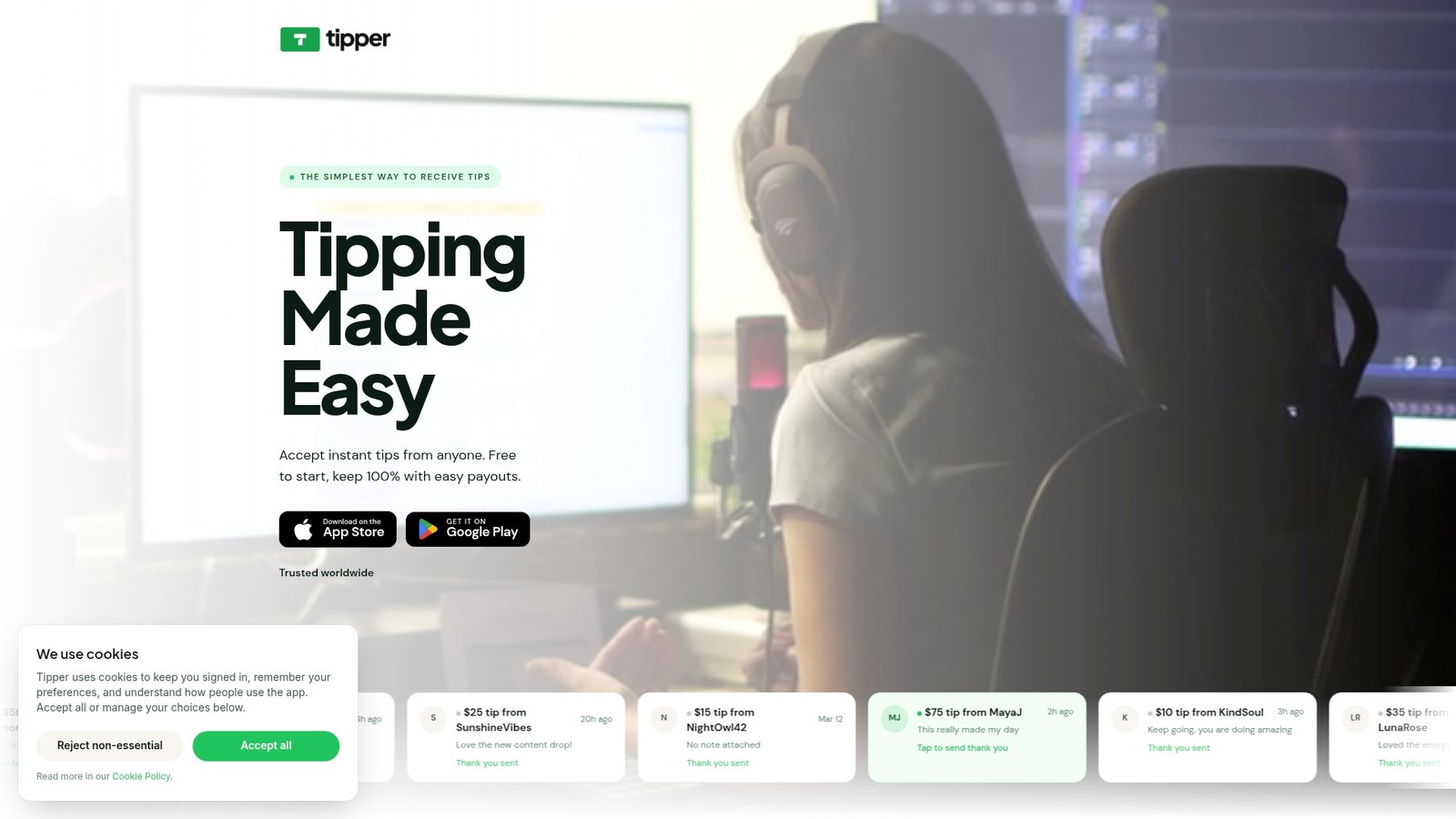
Creators keep 100% of their earnings on Tipper. The business model is a platform fee plus a small payment-processing fee added at checkout on each tip, and it is free to create and keep an account, with no subscription.
Setting up direct support in five steps
- Create your account and tip page. It is free to set up, and the page is customizable so it looks like your brand. See the creator guide to monetizing with instant tips for a walkthrough.
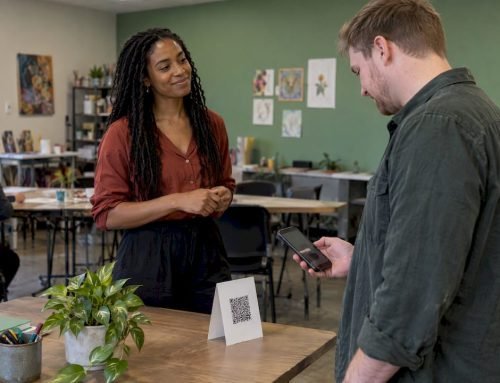
- Put your personal link where attention already is. Bio, video description, pinned comment, stream panel and end screen. A QR code works for live events and in-person moments.
- Ask in context. Place the ask right after something valuable: the answer to a question, the end of a tutorial, a win on stream. A line such as “If this saved you an hour, here is my tip link” beats a generic banner.
- Reply personally. A short thank-you note or video costs you a minute and makes supporters likely to come back.
- Watch which content earns tips. Make more of it.
The mistake to avoid is hiding the link. Creators often put a tip link in one place and never mention it on camera. A spoken mention, once per piece of content, usually does more than any graphic.
If you take payments at a business or service counter too, there is a separate walkthrough for Apple Pay tipping setup for your business.
Keeping supporters engaged
Tips work with live and recurring formats. A running list of recent supporters, a milestone you are tipping toward, or a thank-you shout-out in the next video all give people a reason to join in. Our breakdown of real-time supporter contribution tools covers the formats. Offer perks that do not lock anything away, such as an early look at a draft or a named thank-you, so that your free content stays free.
For a closer look at why this model suits many creators, see the benefits of tip-based revenue models and the tip income business model guide.
Affiliate links
Affiliate marketing pays you a commission when someone buys through your referral link. Stripe notes it can slot into existing content but depends on audience trust, and commissions can be low. Its publisher guide adds that revenue is performance-based: you earn when readers complete a defined action.
Two practical rules:
- Recommend only what you actually use. One bad recommendation costs more trust than the commission is worth.
- Disclose the relationship. The FTC says that for affiliate links in videos you should disclose in the video and in the description near the links, and that responsibility rests with you and the brand, not the platform’s built-in tool.
Affiliate income pairs well with tips: the affiliate link pays when you recommend, the tip link catches the people who simply want to say thanks.
Digital products and merchandise
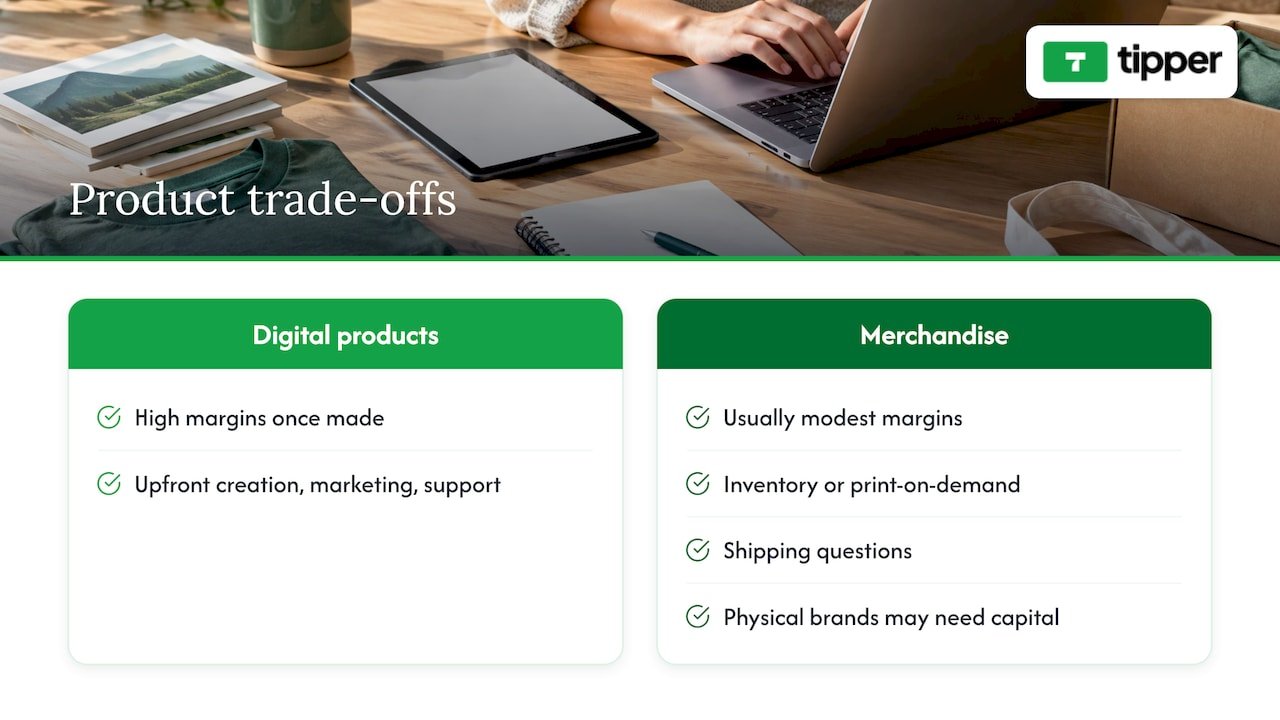
HSM University says digital products can offer high margins once made, while merchandise margins are usually modest and physical brands can require inventory and capital. Stripe adds that digital goods such as ebooks, courses, templates and software need upfront work in creation, marketing and customer support.
If you go this way, start with something small that solves one problem, such as a template pack or a preset bundle. Selling it ahead of launch tests demand before you build everything; this walkthrough on selling digital products from a bio link with a presale shows the approach.
Merch is slower: you carry inventory or rely on print-on-demand, handle shipping questions and accept thin margins. It suits creators with a recognizable identity and a large enough audience to justify the work.
Sponsorships and brand partnerships
Stripe describes sponsorships as brand partnerships for sponsored content or product integrations, with negotiation and brand alignment as considerations. Its publisher guide says sponsored content can often earn a higher CPM (revenue per thousand views) than display ads when it is transparent, relevant and additive to the audience.
Sponsorships are not ads in the programmatic sense: you pick the brand and shape the message. But they depend on audience fit, and they arrive unevenly. A tip link fills the gaps between deals, and a track record of engaged supporters is itself something you can show a brand.
Put ownership, license length and payment terms in writing before any content goes live, and label the post as sponsored.
Services and crowdfunding
If your content shows a skill, such as editing, design, writing or coaching, clients can pay you directly. HSM University points out that services are limited by the time you have, so they work as a high-value add-on, not a scalable base.
Crowdfunding suits one defined project: a documentary, an album, a season of a series. Backers fund it for rewards, and you keep creative control. It is a campaign, not a steady income.
Matching the method to your audience
HSM University’s creator-revenue lesson makes a point worth acting on: sponsorship income depends on audience fit, while direct support and products can depend more on how deeply a smaller group values the creator. So:
- Small but devoted audience (a niche streamer, a tutorial channel): lead with tips and a small product. Depth of loyalty matters more than reach.
- Large, broad audience: add sponsorships and affiliate links on top of tips, since brands pay for reach.
- Live creators on Twitch or Kick: tips arrive in the moment. A link in your panels and a QR code on screen lets viewers pay without leaving the stream or creating an account.
- Short-form creators on TikTok and Instagram: your caption and bio are the only places for a link, so make the destination one tap and a payment away.
Why a link you own beats platform-dependent income
Platforms change their rules often. YouTube’s eligibility thresholds are rising, and TikTok adjusted its Community Guidelines in September 2025 to reduce the visibility of content directing users to buy products off-platform where TikTok Shop is available. You cannot control any of that.
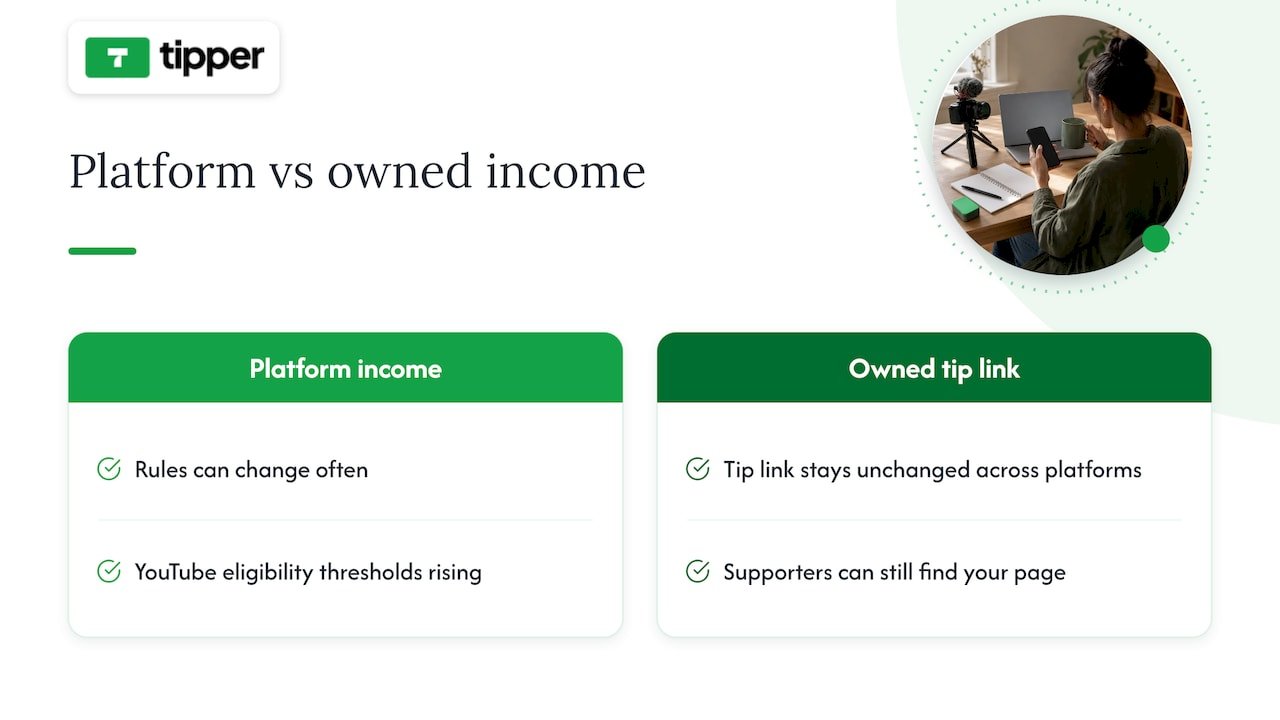
A tip page at your own link travels with you. If you move from Twitch to YouTube, or a platform changes its payout terms, the link in your bio is unchanged and your supporters still know where to find it. That portability is the strongest reason to make direct support the foundation of your income, not an afterthought. For a comparison of how tipping tools differ, see our digital tipping platforms comparison, and if you currently rely on memberships, read when tipping beats subscriptions.
Our perspective
We built Tipper around one belief: the people who love your work should be able to thank you in about ten seconds, with the phone and wallet they already have.
That is why a supporter needs no account and can pay with Apple Pay, Google Pay or a card. Every step we remove is a tip that actually gets sent.
It is also why creators keep 100% of their earnings, with a small payment-processing fee added at checkout on each tip, and why a thank-you can be a note, a photo or a video. Support should feel like a conversation, not a transaction.
Ads pay for attention. Tips pay for appreciation. For many creators, appreciation is the more reliable of the two, because it comes from people who chose you.
Tipper
Start collecting tips today
Tipper gives you a personalized tip link and QR code, customizable tip pages, and thank-you messages in text, photo or video. Creating and maintaining an account is free, with no subscription, and payouts go directly to you. Supporters tip with Apple Pay, Google Pay or card and never need an account.
Set up your page at Tipper and put the link in your bio before your next upload or stream.
FAQ
Can I really earn without ads or subscriptions?
Yes. Tips, affiliate commissions, digital products, sponsorships, services and crowdfunding all pay without ads or a recurring fee. Most creators combine two or three. Tips are the quickest to launch because there is nothing to build or ship.
Do I need a big audience to make money from tips?
No minimum audience is needed to set up a tip link. HSM University notes that direct support can depend more on how deeply a smaller group values you than on sheer reach, so a loyal small audience can support meaningful income.
Do I have to disclose affiliate links and sponsorships?
Yes. The FTC’s endorsement guidance says the responsibility to clearly disclose a material connection rests with the influencer and the brand, so add your own disclosure even when the platform offers a tool. Place it near the link and inside the video itself.
What does Tipper cost?
Creating and maintaining a Tipper account is free, and there is no subscription. The model is a transaction-based platform fee, with a small payment-processing fee added at checkout on each tip. Creators keep 100% of their earnings.
Sources
- What Are Content Monetization Platforms? | Stripe
- Publisher Monetization Strategies That Diversify Revenue | Stripe
- How creators earn money, CRE-101 Lesson 5 | HSM University
- The creator revenue mix, CRE-302 Lesson 1 | HSM University
- FTC’s Endorsement Guides: What People Are Asking
- YouTube Doubles Eligibility Requirements For Creator Monetization | MediaPost
- Inside TikTok’s Walled Garden Strategy | Jigsaw News
- Sell Digital Products From Your Bio Link With a Presale
Leave A Comment