

Set your lowest preset button at $1 or $2, make sure it clears your payment processor’s fee floor and highlight your middle preset as the default. That combination protects you from losing money on micro-tips while giving supporters an easy entry point. Do it now, then watch your numbers for two to four weeks before making further changes.
TL;DR:
- Setting your lowest preset between $1 and $2 ensures it covers payment processor fees and prevents rejected charges on minimum tips.
- Displaying both percentage and dollar amounts together increases tipping likelihood and average tip size compared to showing only percentages.
- A three-button preset structure with a low, highlighted default mid, and a high tip option maximizes conversions and influences average tip amounts.
- Testing and adjusting your tip minimum and presets every two to four weeks helps optimize revenue and supporter engagement.
- Always comply with your payment processor and platform policies to avoid issues with micro-transactions, chargebacks, or tax reporting.
Table of Contents
- How Do You Set a Processor-Aware Tip Minimum Amount?
- Why Do Presets and Displays Change How Much People Tip?
- What Preset Structure Actually Converts?
- How Do You Test and Validate Your Tip Minimum?
- Quick Implementation Checklist for Your Tip Page
- Legal or Platform Policy Considerations Affecting Minimum Tip Amounts
- Tipper’s Perspective: Why These Defaults Reflect Creator Priorities
- Set Up Your Tip Presets in Minutes With Tipper
- Sources
- FAQ
How Do You Set a Processor-Aware Tip Minimum Amount?
Before picking a number out of thin air, check what your payment processor actually charges per transaction in this guide to how to collect dance studio payments online. That’s not nothing, but it’s thin. A $0.50 tip after the same fee structure can leave you with almost nothing, or even trigger a rejected charge if your processor enforces a hard floor.

Support docs from tipping tools confirm this is common practice: most tipping settings pages let creators configure minimum and maximum amounts, and processors will reject charges that fall under their own floors. Help documentation for tip-collection tools also warns that custom amounts below the processor’s minimum will simply fail, which frustrates supporters more than a clearly stated minimum ever would.
Here’s the math, in plain terms:
- Add your processor’s fixed fee to the percentage cut on your target minimum.
- Ask yourself: after fees, does this tip amount still feel worth collecting?
- If the answer is no, raise your floor until it does.
- Check your platform’s settings page for a “minimum tip amount” or “custom amount” toggle. Most let you either lock in preset buttons only, or set a numeric floor for custom entries.
Getting this right up front saves you from support headaches later. For a deeper breakdown of how processor fees interact with small transactions, see this guide to setting up payment processing for tips.
Why Do Presets and Displays Change How Much People Tip?
The buttons you show supporters, and how you label them, change behavior more than most creators expect. A recent natural experiment tracking 5,169 real transactions found that showing both a percentage and its dollar equivalent side by side increased both the average tip size and the likelihood someone tipped at all, compared to showing a percentage alone. The effect held up even after the test period ended.
Pro Tip: If your tipping tool lets you display a percentage next to the dollar amount, turn it on. Supporters make faster decisions when they can see exactly what a number means in real money, not just an abstract percent.
That said, bigger isn’t automatically better. Research on suggested tip defaults found that raising the default amount does increase the size of individual tips, but it can also reduce repeat support and word-of-mouth referrals afterward, especially when supporters feel like the number was chosen for them rather than by them. Perceived control matters as much as the number itself.
Translate that into UI rules you can apply today:
- Always show currency amounts, not vague labels like “small” or “generous.”
- Use percentage-plus-amount displays where your tipping tool supports it.
- Set your default preset at a level your typical supporter would choose naturally, not an aspirational ceiling.
- Never set the highlighted default so high that a one-time supporter feels pressured.
Choice architecture isn’t about tricking people into tipping more. It’s about removing friction so the natural choice is also the profitable one.
What Preset Structure Actually Converts?
Three buttons beat five almost every time. A field experiment testing QR-code tipping pages found that presenting three suggested values, a lower option, a central default, and a higher option, produced measurable anchoring effects tied to the central value. Push the middle number up, and average tips rise with it. Push it down, and they fall. The middle button does most of the work.
Here’s a preset structure that works for most creator tip pages:
- Low preset ($1 to $3): your functional minimum, priced just above your processor’s fee floor.
- Mid preset ($5 to $10), highlighted as the default: this is where most clicks land, so choose a number that matches what your typical supporter can comfortably give.
- High preset ($15 to $25): a ceiling option for your most engaged fans, not an expectation.
If your audience spans wildly different budgets (say, casual scrollers and paying clients), a fourth option or a “custom amount” link can help. But more than four choices tends to slow people down rather than help them.
Pro Tip: Label your custom option as “Send a note + custom tip” rather than just “Other.” It signals that personal messages are welcome, not just spare change.
Always leave a way for supporters to reach out directly for larger or unusual requests. A short “DM me for custom amounts” line covers that without cluttering your main buttons.
How Do You Test and Validate Your Tip Minimum?
Guessing at a minimum once and never revisiting it is the most common mistake creators make. Treat your tip floor and presets as something you tune, not something you set and forget.
Track these numbers before and after any change:
- Tips per visitor (your conversion rate)
- Average tip amount
- Net revenue per visitor, after processor fees
- Repeat-tip rate among returning supporters
For the test itself:
- Change one variable at a time (just the minimum, or just the default preset, not both).
- Run the test for at least two to four weeks, or until you’ve collected at least 50 to 100 tips, whichever comes first.
- Compare net revenue per visitor, not just average tip size, since a higher default can inflate individual tips while shrinking your total tipper count.
- If conversion drops more than it gains in average tip size, revert and try a smaller adjustment.
Small, sequential changes beat sweeping overhauls. You’ll learn more from three small tests than one big guess.
Quick Implementation Checklist for Your Tip Page
Once you’ve done the math and picked your presets, implementation takes minutes. Work through this list on whatever platform hosts your tip page:
- Confirm your processor’s minimum charge and fixed fee before locking in a floor.
- Set your lowest preset at or above that floor, typically $1 to $2.
- Highlight your middle preset as the visual default.
- Decide whether to allow a custom amount field, and if so, enforce the same minimum on it.
- Turn on thank-you tools (text, photo, or video replies) so supporters get instant acknowledgment.
- Double-check that receipts or confirmations are enabled for transparency.
A quick privacy note: if you’re collecting names or messages alongside tips, be clear about what you’ll do with that information, even a one-line note builds trust. And keep the KPIs from your testing plan visible somewhere you’ll actually check them weekly, not buried in a settings tab you forget exists.
Legal or Platform Policy Considerations Affecting Minimum Tip Amounts
Tip minimums aren’t purely a design choice. Payment processors set hard technical floors, and some platforms add their own policy layers on top. Most major processors reject any charge below a fixed cents’ threshold, which is why so many creator guides land on $1 as a practical floor rather than a round marketing number.
Some platforms also restrict what you can call a “tip” versus a “purchase” or “donation,” which matters for tax reporting and terms-of-service compliance. If your tipping tool routes payments through a third-party processor, read its terms on chargebacks and refund windows. Micro-transactions are more prone to disputes relative to their value, and a $1 tip that gets reversed can cost you more in fees than the tip itself was worth.
If you’re a small business owner rather than an individual creator, sales tax treatment of tips can vary depending on your state and whether the tip is voluntary or added automatically. That’s a question worth a quick check with a tax professional if you’re processing tips at any real volume.
Finally, some platforms cap how high a “suggested” amount can be displayed without triggering additional verification or reporting requirements. None of this should scare you away from setting a floor. It just means the number you pick should account for the rules of whichever processor and platform you’re actually using, not just the psychology of what converts best.

Tipper’s Perspective: Why These Defaults Reflect Creator Priorities
We built Tipper around one belief: creators should keep what they earn, and supporters shouldn’t need an account to show appreciation. That shapes how we think about minimums, too. A $1 floor only makes sense if the creator actually nets a meaningful amount after fees, which is why we push for practical floors over flashy round numbers.
Instant tips through popular payment methods can reduce the friction that kills small transactions elsewhere.
— Tipper
Set Up Your Tip Presets in Minutes With Tipper
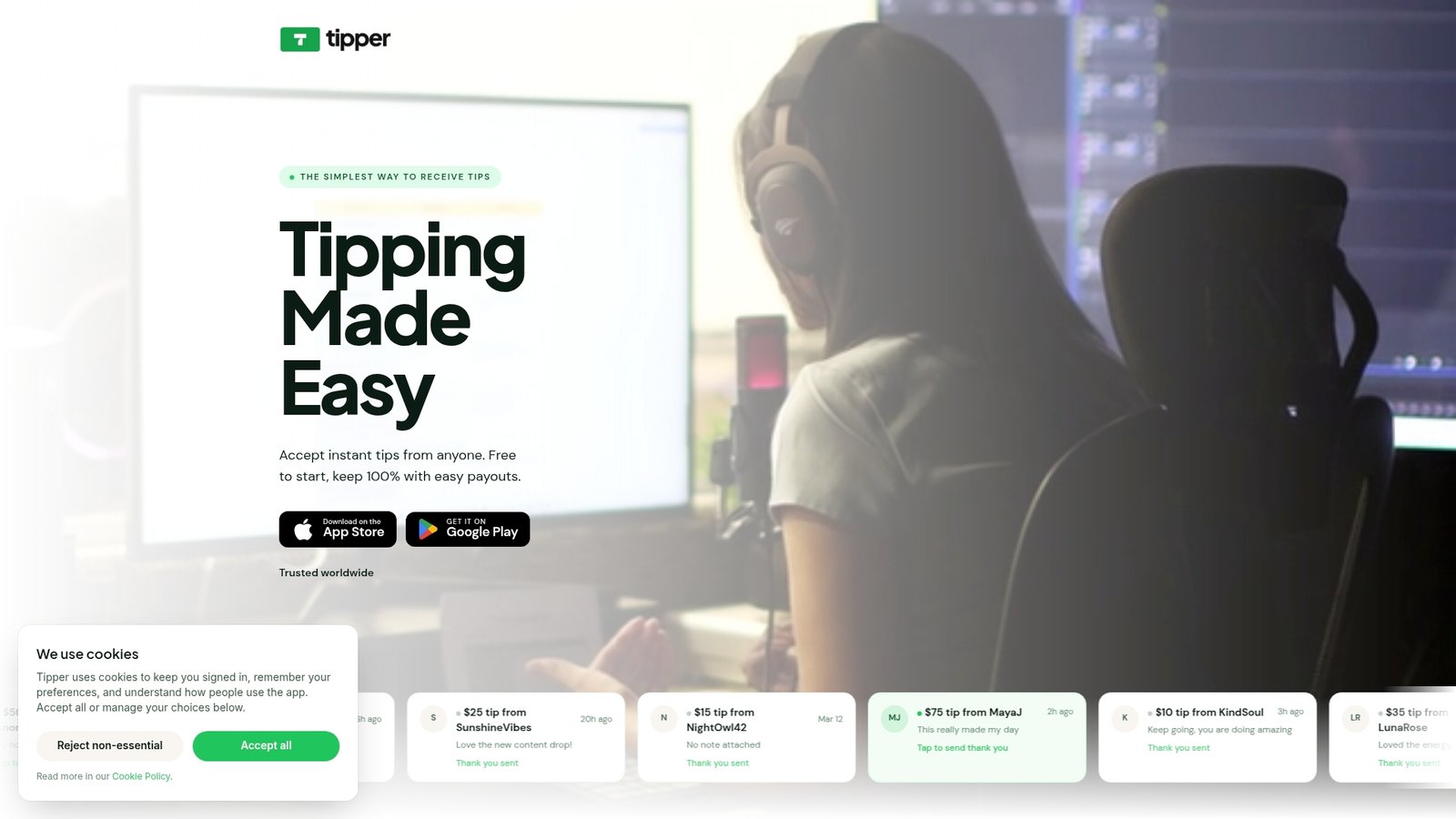
Everything covered above, the fee math, the preset structure, the highlighted default, is designed to be handled easily by modern tipping platform settings. You get a personalized link or QR code, preset buttons you control, and instant payments through various methods, without requiring an account on the supporter’s side.
If you’re weighing this against a traditional point-of-sale tipping setup, Tipper skips the hardware and the account friction entirely; see how it compares for point-of-sale tipping alternatives. For creators who want their tip link doing double duty as a monetization strategy, this guide on tip link strategy pairs well with the presets covered here.
Ready to put your new minimum and presets into practice? Set up your Tipper page and start testing today.
Sources
- When percentages meet amounts: Evidence from a natural experiment on digital tipping prompts
- Effects of suggested tip defaults on tipping and non-tip customer responses
- Experimental evidence on QR-code tipping and suggested values
- Tipping Settings Page Overview – StreamElements
- How to use the Tips block in UniLink (Accept Tips and Micro-Payments on Your Page)
FAQ
What is a good minimum tip amount to set?
Most creators land on $1 to $2 as a functional floor, high enough to clear typical processor fees without blocking impulse tips.
Why do payment processors reject very small tips?
Processors charge a fixed fee per transaction plus a percentage. Below a certain amount, that fee consumes the entire tip, so many processors block the charge outright.
How many preset tip amounts should I offer?
Three works best for most tip pages: a low option near your minimum, a highlighted mid-range default, and a higher option for engaged supporters. Four or five can work for audiences with a wide income range.
Does showing a percentage next to the dollar amount actually increase tips?
Yes. A natural experiment tracking 5,169 real transactions found that percent-and-amount displays increased both average tip size and tipping likelihood compared to percentage-only prompts.
Can setting my default tip too high backfire?
It can. Research on tip defaults found that while higher suggested amounts raise individual tip sizes, they can also reduce repeat support and referrals if supporters feel pressured rather than in control.




[…] Creators: Set a $1–$2 Tip Minimum Amount That Covers Fees and Converts […]