
Digital tipping etiquette comes down to one idea: a tip should be a thank-you for service you received, not a toll you pay to a screen. Tip when a person did something for you, scale the amount to the effort, and feel free to skip the prompt when nobody served you. If you are a creator or freelancer who accepts tips, the same idea runs the other way: ask gently, never imply that a tip is required, and let supporters choose how visible their gift is.
This guide covers both sides. First the rules for people holding the phone or facing the iPad, then the rules for people on the receiving end.
TL;DR
- Tip people, not screens: if no one handled your order or served you, you can decline a kiosk prompt without guilt.
- Typical anchors: 15% to 20% for table service, about 10% for larger takeout or curbside orders, and $1 to $5 per night for hotel housekeeping.
- Creators should keep tips voluntary, make amounts and names private by default, and say thank you personally.
- Tips for creators are income. Report them, and ask a tax professional how the new tipped-income deduction applies to you.
- Check any QR code before you pay, and creators should check their own codes for tampering.
Table of Contents
- Why digital tipping feels different from cash
- Etiquette for the person tipping
- Etiquette for creators who accept tips
- What we think at Tipper
- Tipping tools for in-person and online creators
- A short code of conduct
- FAQ
- Sources
Why digital tipping feels different from cash
Cash tipping happened after the service, in private, with an amount you chose from scratch. A tip screen changes all three. It appears at the register, often before anything has been done. A staff member may be watching. The amounts are pre-filled, and the lowest button is frequently higher than what you would have picked.
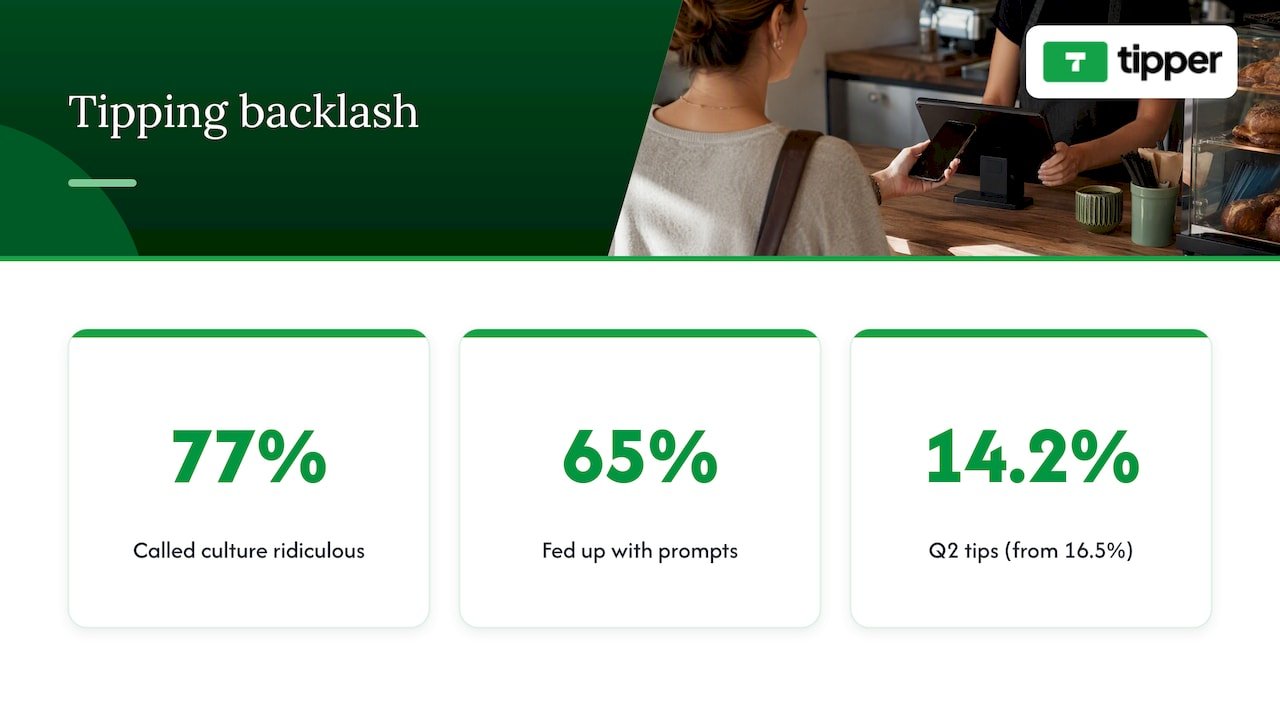
The backlash is measurable. A 2025 summary of tipping surveys reports that 77% of Americans called US tipping culture ridiculous, 65% said they were fed up with tipping prompts, and the average tip on quick-service transactions slid to 14.2% in the second quarter of 2025, down from a pandemic-era peak of 16.5%. The same source notes that asking for a tip before service is delivered triggers discomfort and a feeling that the tip is undeserved.
Cornell researcher William Michael Lynn, quoted in an analysis of payment screens, ties the fatigue to tipping requests spreading into new occupations and to suggested percentages that often start at 20% to 30%. Customers who feel cornered, he and other experts note, may stop visiting businesses whose prompts seem aggressive or impersonal.
None of that means digital tipping is bad. It means the etiquette has to catch up with the technology, and the person who wants to be fair needs a few working rules.
Etiquette for the person tipping
Ask who the tip is for
The first question is whether a human did something for you. A server who carried your meals, a stylist who spent an hour on your hair, a driver who hauled your bags: yes. A self-serve kiosk, a retail checkout where you scanned your own items, a counter where someone handed you a pre-packaged item: much less clear.
Etiquette expert Jacqueline Whitmore told the New York Post that people should feel no obligation to tip at unmanned kiosks, and discourages the practice when no one is bagging up your food or handling your order. That is a useful test: was there contact, effort, or customization?
The question gets stranger with automation. A BBC report on robots asking for tips describes how easy it is to hesitate when a machine presents a tip prompt, and how often it is unclear who actually keeps the money. If you cannot tell where the tip goes, it is reasonable to ask staff, or to tip the person directly in another way.
Match the amount to the service
You do not have to accept the default button. Here are common US anchors:
| Situation | Typical tip | Notes |
|---|---|---|
| Sit-down restaurant | 15% to 20% | Check the bill for an included service charge first |
| Takeout, larger or customized order | About 10% | Experts quoted by AOL recommend 10% for curbside delivery and larger orders; tips are appreciated, not mandatory |
| Simple counter pickup | Optional | No personalized service means no obligation |
| Hotel housekeeping | $1 to $5 per night | Per CNBC’s etiquette guidance |
| Hotel room service | 15% to 20% | Only if no service charge is already added |
| Hotel concierge | $5 to $10 | For real assistance, such as hard-to-get reservations |
To answer a question people often ask: is 10% disrespectful? Not for a simple takeout order or a quick counter transaction. At a table with full service, 10% will read as a statement, so 15% to 20% remains the norm there.
Tip hotel housekeeping daily, and label it
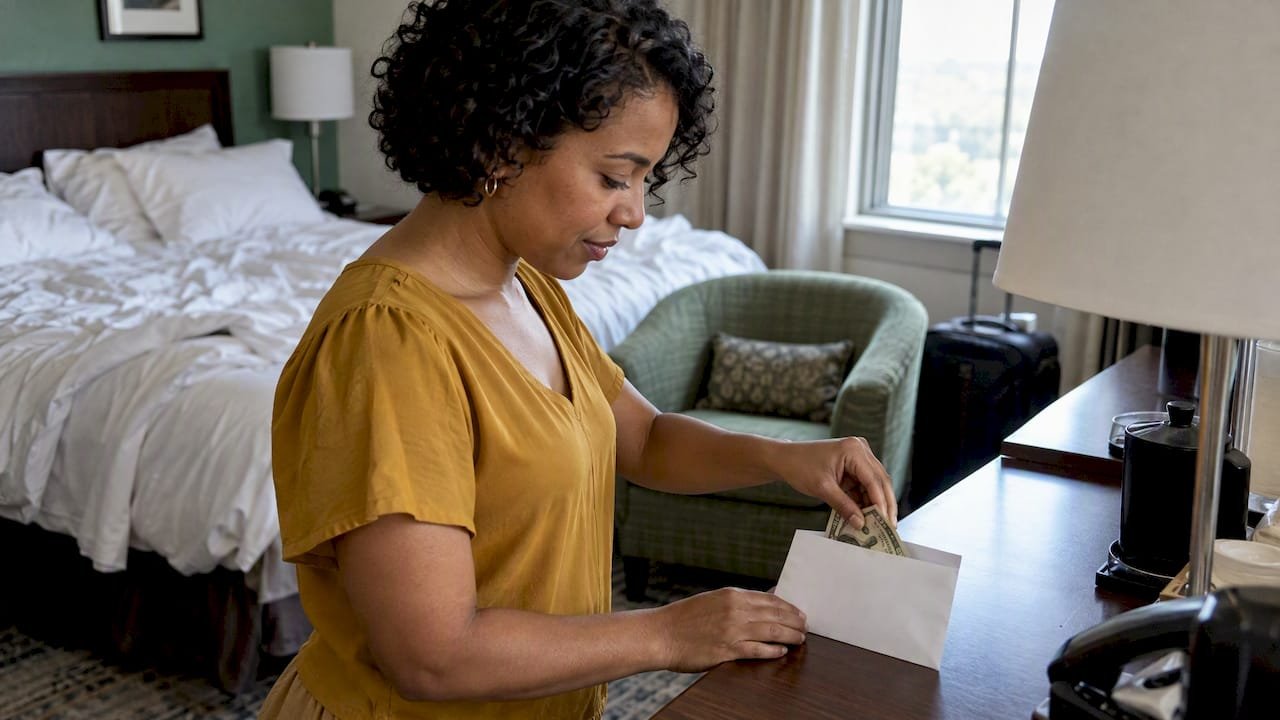
Housekeeping is the place Americans most often forget. The CNBC piece cites that only 23% of Americans consistently tip housekeepers, and the share has been drifting down. The advice is to leave the tip each day rather than at checkout, because the person cleaning your room often changes. Put it in a clearly marked envelope or beside a note on the desk so it is not mistaken for something you left behind.
On a $300-per-night room, the guidance does not scale with the rate. The $1 to $5 range is about the work done, not the price of the room, so $3 to $5 a day is a considerate choice if the room is well used or you leave a mess.
Tipping house cleaners and other home services
For a recurring home cleaner, many people give roughly the cost of one visit at the holidays and a smaller thank-you for exceptional jobs. That is a common courtesy rather than a published rule, so treat it as a guide. Ask the cleaning company if tips go to the individual or are pooled, then decide.
It is fine to decline, and it is fine to tip later
You can press “No tip” or “Custom” without explaining. If a prompt came before you received anything, you can also tip afterward when it is truly deserved. Many service businesses now offer QR-based tipping after the service is delivered, which is closer to the cash model and removes the pre-service pressure. Our guide to service business tipping etiquette walks through examples by industry.
Etiquette for creators who accept tips
If you stream, make videos, write, design, or freelance, you are on the other side of the prompt. A tip jar online should feel like a tip jar: visible when someone wants it, quiet when they do not.
Keep tips voluntary
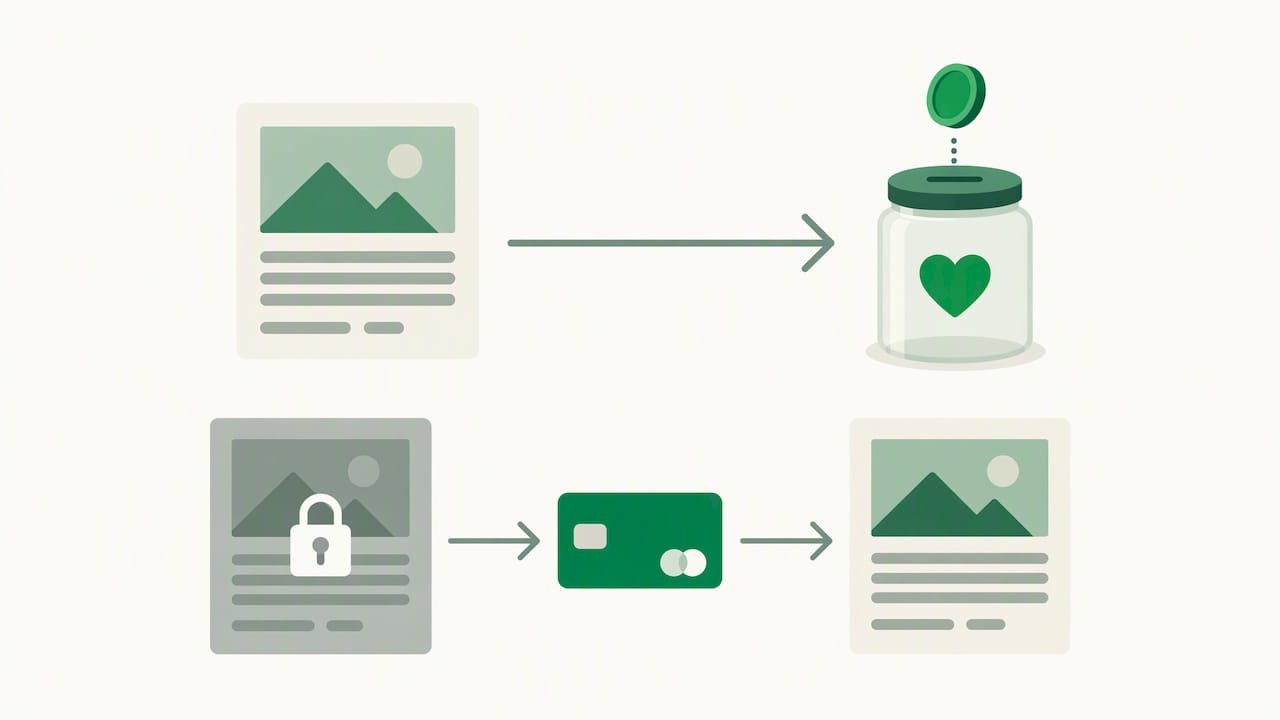
A tip is a gift after you have delivered value. The moment a payment is required to see, download, or unlock something, it stops being a tip and becomes a sale. The IRS draws that line in its guidance for gig economy workers: voluntary payments after content is accessed are tips, while payments required to unlock access are compensation for services. Do not blur it in your wording. “If this helped, you can say thanks here” is honest. “Tip to continue” is a price.
Ask once, ask clearly
Put your link in your bio, your video description, a pinned comment, or a QR code on printed material. Mention it a single time per piece of content. Repeated on-screen begging is the creator version of the aggressive tip screen, and your audience has the same fatigue as diners do.
Decide how public tipping should be
Visible tip amounts and top-tipper boards change behavior. The UCLA Anderson study Platform Design in a Tipping Economy found that tipping is heavily social: when amounts are visible, they create a norm that shapes what new users give. When community tipping data is hidden, people tended to tip smaller amounts but more often, which can add up to more total support over time.
The trade-off is yours to make. Public leaderboards reward your biggest fans and encourage friendly competition, a dynamic explored in these social proof strategies for engagement. Private tipping lowers the performance anxiety for people who do not want to be watched. A good compromise is to let each supporter choose: show the name, show a nickname, or stay anonymous. Our write-ups on social proof and tip amounts and privacy-first tipping go deeper on both approaches.
Say thank you like a person
The fastest way to separate yourself from an impersonal tip screen is a human reply. A short note, a photo, or a quick video thank-you turns a payment into a relationship. It costs you thirty seconds and it is what people remember. Our piece on customer feedback and tipping for creators shows how thank-you messages and feedback can work together.
Be straight about money and disclosure
Two rules matter here, and neither is optional.
Taxes. The IRS says all tips, whether cash, non-cash, or virtual currency, must be reported as income. A new federal deduction lets people in qualifying tipped occupations deduct up to $25,000 of qualified tips per year from 2025 through 2028, and the Treasury published final regulations on which occupations and tips qualify in April 2026. Whether a streamer, designer, or freelancer qualifies depends on the occupation lists and your own situation, so check with a CPA or enrolled agent before assuming you do.
Endorsements. If a payment labeled a tip is really compensation for promoting a product, the FTC expects a clear disclosure of that material connection. The agency’s position is reflected in its action against a retailer over paid content. Keep real tips separate from sponsorships, and mark sponsored posts plainly. If you work with brands, a primer on influencer partnerships can help you set expectations.
Protect your QR code
QR codes are easy to fake. Security writers have warned that stickers can be placed over genuine codes, and that scammers can screenshot a creator’s code and repost a fraudulent one. The FanClan safety checklist recommends that creators periodically check public-facing codes on flyers, stickers, and merchandise, and that fans verify the destination link before entering payment details. Practically:
- Print your short link beneath the QR code so people can compare.
- Inspect printed codes for stickers or scratches every time you restock.
- Post your official link in one pinned place and tell followers that it is the only one.
- As a fan, preview the URL your phone shows before you pay.
What we think at Tipper
We built Tipper around a simple belief: the person leaving a tip should never have to do homework first. That is why supporters can tip through a creator’s personal link without creating an account, paying with Apple Pay, Google Pay, or a card. Accounts, passwords, and forced profiles are the friction that kills the impulse to say thanks.
We also believe tip pages should feel like a person, not a checkout. Creators can customize their page and send thank-you messages as text, photo, or video. Creators keep 100% of their tips; a small payment processing fee is added at checkout for the supporter, and creating and keeping an account is free with no subscription.
On etiquette, our view is that the tool should take pressure off both sides. Prompts should come after value, never before. Amounts should be the supporter’s decision, not a nudge toward a 30% button. Visibility should be a choice. The research on hidden versus visible tipping suggests privacy can raise how often people give, so we would rather let creators and supporters decide than force a public feed on everyone.
— Tipper
Tipping tools for in-person and online creators
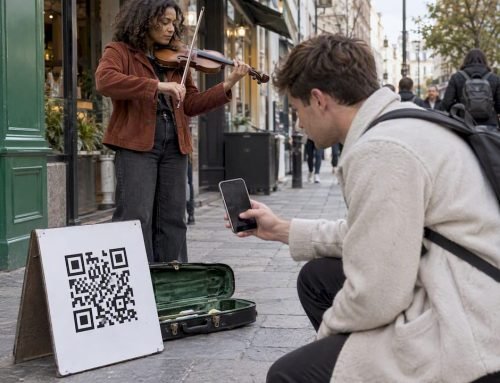
Creators tip-collect in two situations: online (streams, videos, link in bio) and in person (events, markets, studios, live shows). The same link works for both. A QR code on a business card, a sticker on a camera case, or a card on a table sends a fan straight to your page. If you want to see how others do it, we have a roundup of contactless tip collection examples for creators, and a guide to how QR codes work in hospitality without apps or hardware.
If you are comparing options, our digital tipping platforms comparison lays out what to weigh, and what digital tipping is and how it works is the place to start if the idea is new to you.
Ready to set up your own link? Create your free Tipper page, share it anywhere, and keep 100% of what supporters give you. Only a small payment processing fee is added at checkout.
A short code of conduct
If you want one list to pin on the wall, use this.
For tippers
- Tip the person who served you, not the device.
- Use the table above as a baseline and adjust for effort.
- Decline without apology when no service happened.
- Verify QR codes before you pay.
For creators
- Ask once, thank personally.
- Keep tips voluntary and separate from paywalled access and sponsored content.
- Offer anonymity to anyone who wants it.
- Report your tip income and talk to a tax professional about the deduction.
FAQ
Is it rude not to tip on a digital screen?
No, not when nobody served you. Etiquette experts say there is no obligation at unattended kiosks or simple counter transactions where no one handled your order. If someone did real work, such as preparing a custom order or bringing your food, a tip is a fair way to acknowledge it.
How much should I tip when a screen asks for 25% or 30%?
You can choose the custom option. For table service, 15% to 20% remains the common range, and for larger takeout or curbside orders about 10% is considered appropriate. Suggested defaults are set by the business or payment provider, not by etiquette.
How do creators get digital tips?
Creators set up a tipping page and share its link or QR code in their bio, video descriptions, or on printed material. With Tipper, supporters pay without creating an account, using Apple Pay, Google Pay, or a card, and creators can reply with a text, photo, or video thank-you. Treat tips as income and ask a tax professional how to report them.
Are tips to creators taxable?
Yes. The IRS says all tips must be reported as income on your federal return. A 2025 to 2028 deduction of up to $25,000 for qualified tips may apply if your occupation qualifies under the Treasury’s rules, so confirm with a tax professional before you rely on it.
Should I tip hotel housekeeping every day?
Yes, that is the advice. Leave $1 to $5 each day in a marked envelope or with a note, because the person cleaning your room may change from day to day.
Sources
- iPad tipping fatigue: why we’re all tired of tip screens (Splitty)
- The Tipping Point: How Digital Payment Screens Rewired Tipping (Oobit)
- Tipping experts reveal when to tip digital screens (New York Post)
- Robots are asking for tips (BBC)
- Do Restaurants Expect You To Tip When Picking Up Takeout? (AOL)
- Etiquette expert on where Americans forget to tip (CNBC)
- Filing tips and updates for gig economy workers (IRS)
- Occupations That Customarily and Regularly Received Tips (Federal Register)
- Platform Design in a Tipping Economy (UCLA Anderson)
- FTC settlement over paid content (Yale Law School)
- Adult Creator QR Codes: Fan Safety Checklist (FanClan)

Leave A Comment