
Customer feedback tipping is defined as the practice of using tips to express appreciation and signal satisfaction with service quality, directly influencing how providers perform and engage. This practice sits at the intersection of behavioral economics and relationship building, making it far more than a simple transaction. For content creators, freelancers, and small business owners, understanding how feedback and tipping interact can mean the difference between a loyal supporter base and a disengaged audience. Research confirms that 85% of consumers are more likely to use a business because of positive reviews, while 77% avoid businesses with negative reviews. That data makes one thing clear: the role of customer feedback tipping goes well beyond a few extra dollars.
How does tipping serve as a feedback and monitoring tool?
Tipping is one of the oldest performance monitoring systems in service industries. When a customer leaves a generous tip, they signal satisfaction. When they leave nothing, they signal disappointment. This feedback loop works across restaurants, freelance platforms, and creator ecosystems alike.

Research on tipping behavior identifies two distinct customer types: “appreciators,” who tip to reward genuinely good service, and “conformists,” who tip because social pressure demands it. This distinction matters enormously. Conformist tipping weakens performance incentives because providers receive tips regardless of quality. Appreciator tipping, by contrast, creates a direct link between service quality and financial reward.
For freelancers and content creators, this means the goal is to attract appreciators, not just tip volume. A graphic designer who delivers work ahead of schedule, a podcaster who answers listener questions on air, or a fitness coach who personalizes advice all create conditions where appreciators naturally want to tip. The tip becomes a genuine signal of satisfaction, not a social obligation.
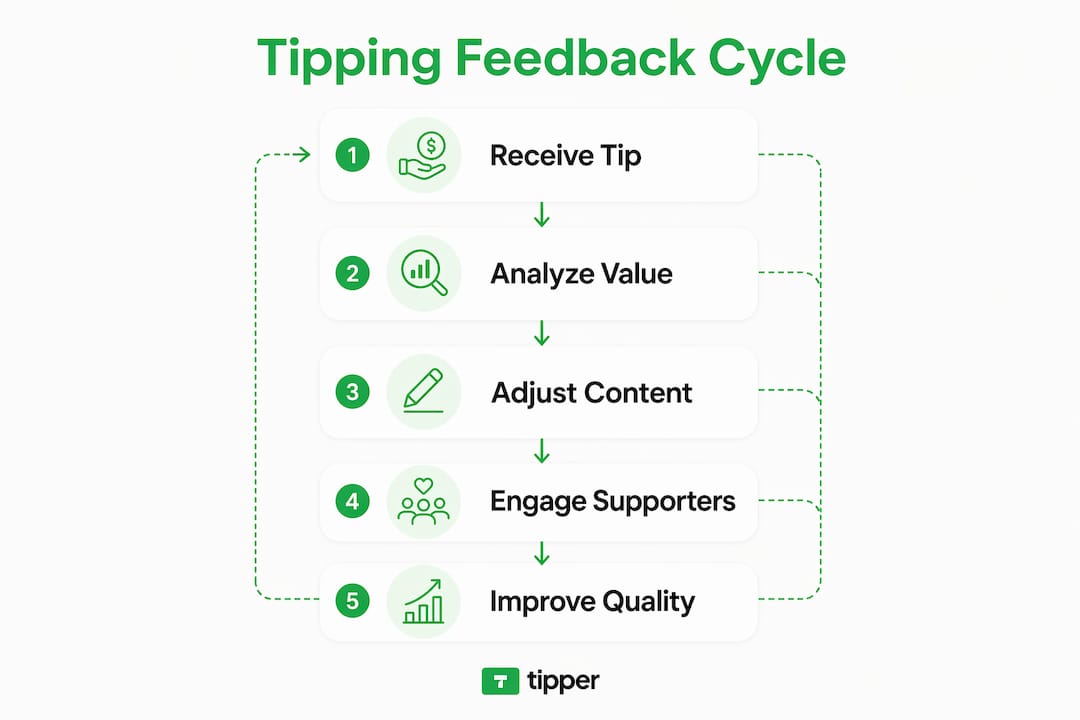
- Reward signal: Tips tell you what worked. A spike in tips after a new content format tells you to keep doing it.
- Punishment signal: A drop in tips after a price increase or quality dip tells you something is wrong before a formal complaint arrives.
- Engagement signal: Supporters who tip repeatedly are your most loyal audience. They are worth more than passive followers.
- Improvement signal: Pairing tip data with written feedback reveals patterns that neither source shows alone.
Pro Tip: Track your tip frequency alongside your content calendar. If tips cluster around specific post types or delivery styles, that pattern is more honest feedback than any survey.
The importance of customer feedback goes beyond collection. Teams that analyze feedback alongside usage data make better financial and operational decisions than those who collect feedback passively. Applied to tipping, this means treating tip data as a metric, not just income.
What are the common challenges and risks with tipping prompts?
Tipping fatigue is real, and it is growing. A 399% increase in Yelp reviews mentioning “tipflation” shows that aggressive tipping prompts are eroding brand loyalty and reducing repeat visits, particularly in quick-service environments. That number reflects a broader shift in how customers feel about being asked for tips.
The core problem is psychological reactance. When customers feel pressured to tip, they resist. Research on tipping fatigue confirms that negative reactions to tipping prompts occur most often where tipping norms are unclear. Customers who feel manipulated do not just skip the tip. They often skip coming back.
“Non-normative tipping prompts directly following feedback requests cause reactance, eroding trust as customers feel tips are being bought for positive ratings. Separating tipping from feedback requests is the most effective way to avoid this psychological trap.” — Harvard Business Review
The timing of a tipping prompt matters as much as the prompt itself. Asking for a tip immediately after requesting a review or rating creates a perception that the tip is payment for a positive score. That perception destroys the authenticity that makes tipping meaningful in the first place.
| Risk Factor | What It Causes | How to Reduce It |
|---|---|---|
| Prompt immediately after feedback request | Psychological reactance, distrust | Separate the two requests by time or screen |
| No opt-out option visible | Pressure, resentment | Always include a clear “no thanks” option |
| Unclear tipping norms | Confusion, negative emotion | State what the tip supports in plain language |
| Aggressive or repeated prompts | Fatigue, reduced loyalty | Limit prompt frequency per interaction |
Small retention improvements of 5% can boost profits by 25%–95%. Losing a loyal supporter to a poorly timed tip prompt is a costly mistake that most creators and small businesses never measure.
How can creators and small businesses integrate tipping with feedback effectively?
The most effective approach separates appreciation tipping from transactional feedback entirely. Separating these two requests produces higher voluntary tip rates and reduces negative customer reactions. The practical steps below apply whether you run a Substack newsletter, a local bakery, or a freelance design practice.
-
Ask for feedback first, then wait. Send your feedback request immediately after a transaction or content delivery. Wait at least 24 hours before any tipping prompt appears. This removes the perception that the tip is tied to the review score.
-
Make “no thanks” visible and easy. Including an explicit “no thanks” option alongside tipping prompts reduces the perception of pressure and preserves the customer relationship. A supporter who skips a tip today but feels respected will return tomorrow.
-
Tell supporters where the tip goes. Transparency about tip destination builds trust and reduces friction. A simple line like “Tips go directly to the creator and cover production costs” normalizes the ask without pressure.
-
Frame tipping as appreciation, not payment. Language matters. “If you enjoyed this, a tip means the world” reads differently than “Please tip to support this content.” The first invites; the second demands.
-
Use feedback to improve before asking for tips. Supporters who see their feedback reflected in your work tip more willingly. Acting on comments, adjusting formats based on responses, and acknowledging suggestions publicly all signal that you listen. That signal builds the trust that makes appreciators tip.
Pro Tip: Send a personal thank-you note or short video to supporters who tip. Tipper’s platform supports this natively, and that personal touch converts one-time tippers into repeat supporters.
Promoting a healthy tipping culture in your business starts with respecting customer autonomy. Supporters who feel free to choose will choose more generously over time.
What is the impact of digital tipping platforms on feedback and engagement in 2026?
Digital tipping platforms have changed how feedback and tipping interact. Digital tipping tools use social proof and real-time feedback integration to tailor tipping prompts, increasing voluntary tipping behavior without pressure. The timing and presentation of each prompt is shaped by actual customer data, not guesswork.
Nearly 60% of businesses have shifted to proactive engagement using near real-time feedback, enabling personalized outreach that builds trust and encourages voluntary tipping. That shift reflects a broader understanding: reactive feedback collection is far less effective than acting on signals as they arrive.
The practical benefits for creators and small business owners are concrete:
- Real-time signals: When a supporter tips immediately after a post goes live, that timing tells you the content landed. Platforms that log this data let you spot patterns across weeks and months.
- Social proof integration: Showing that others have tipped, without revealing amounts, normalizes the behavior for new supporters. Social proof directly affects tip amounts and reduces the hesitation first-time tippers feel.
- Feedback loops that improve content: When creators combine tip data with written comments, they identify which topics, formats, and delivery styles generate the most genuine appreciation.
- Reduced friction: Platforms that accept Apple Pay or Google Pay without requiring account creation remove the biggest barrier between a supporter’s intention to tip and the actual tip.
Proactive feedback use improves long-term customer loyalty. For creators, that means treating every tip notification as a data point, not just a deposit.
Key Takeaways
Customer feedback tipping works best when appreciation is kept separate from transactional feedback, prompts respect customer autonomy, and transparency about tip use builds the trust that turns one-time supporters into loyal ones.
| Point | Details |
|---|---|
| Tipping as a feedback signal | Tips reveal what supporters value most, making them a more honest metric than surveys alone. |
| Appreciators vs. conformists | Design your tipping experience for appreciators; conformist tipping weakens quality incentives. |
| Separate feedback from tipping | Asking for tips immediately after feedback requests causes reactance and erodes trust. |
| Transparency builds loyalty | Telling supporters where tips go reduces friction and increases repeat tipping behavior. |
| Digital platforms amplify results | Real-time feedback integration and social proof features increase voluntary tipping without pressure. |
What I’ve learned about tipping and feedback after working with thousands of creators
The most common mistake I see is treating tipping as a revenue line and feedback as a separate customer service task. They are not separate. Every tip is a vote, and every piece of feedback is a map. When you read them together, you stop guessing what your audience wants.
The second mistake is confusing volume with quality. A creator with 50 loyal tippers who feel genuinely appreciated will outperform one with 500 passive followers who tip once out of social pressure and never return. Conformist tipping feels good in the short term. It hollows out your relationship with your audience over time.
Authenticity is not a soft concept here. It has a measurable outcome. Supporters who receive a personal thank-you, who see their feedback reflected in your next piece of work, and who feel free to skip a tip without judgment are the ones who come back. They are the ones who tell their friends. That compounding effect is worth far more than any single tip.
The creators who get this right share one habit: they treat every interaction as a relationship, not a transaction. Tipping becomes a natural expression of that relationship, not a tax on it.
— Tipper
How Tipper helps creators turn appreciation into a sustainable income stream
Creators and small business owners who want to put these principles into practice need a platform built around respect for the supporter relationship.
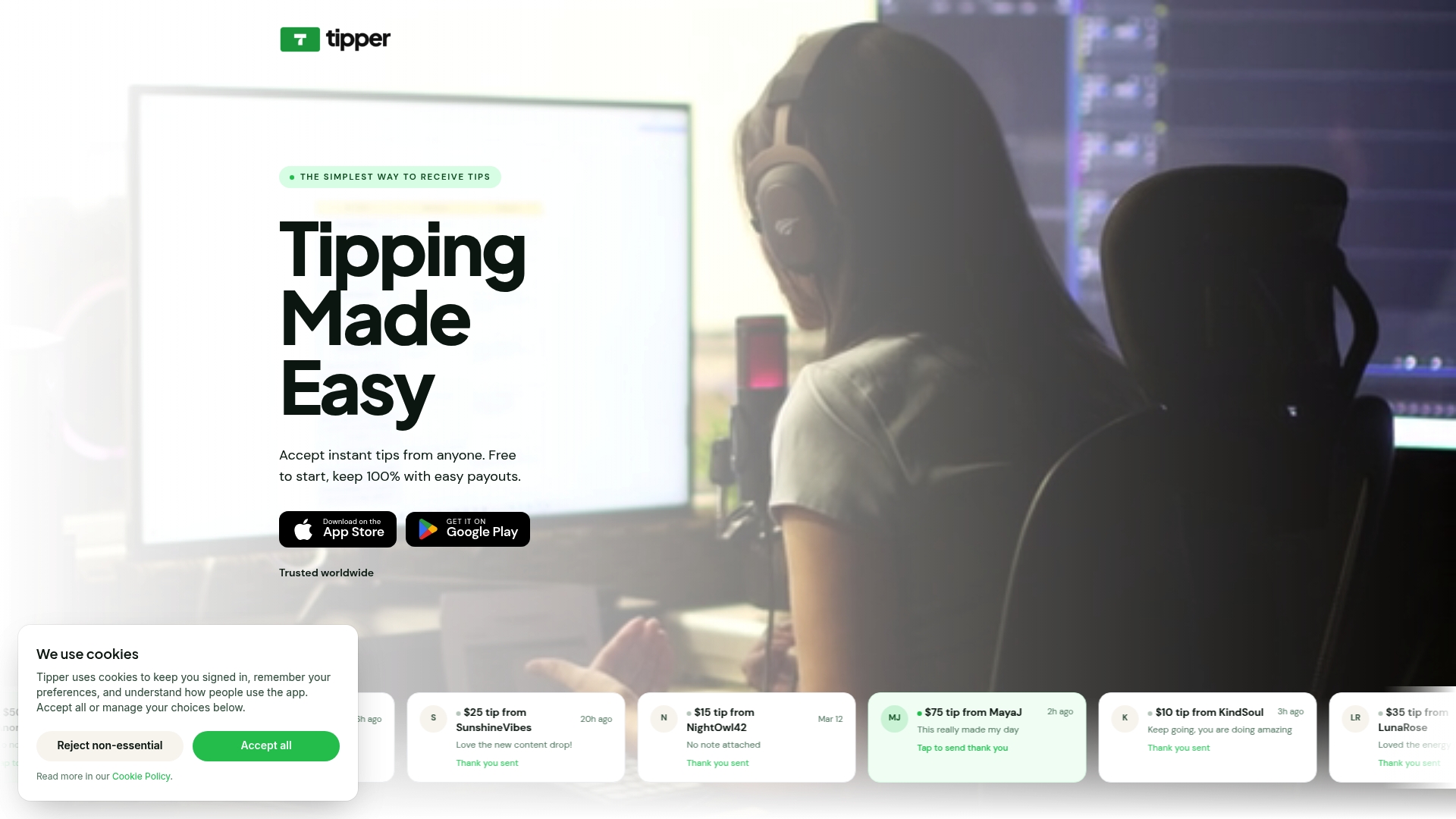
Tipper is built for exactly this. Supporters can send a tip through a personalized link using Apple Pay or Google Pay, with no account required. Creators keep 100% of their earnings and can respond with a thank-you note or video, turning each tip into a genuine exchange. The platform keeps tipping separate from transactional feedback by design, which means every tip you receive is a voluntary act of appreciation, not a pressured response. Start receiving tips today and build the kind of supporter relationships that grow over time.
FAQ
What is customer feedback tipping?
Customer feedback tipping is the practice of using tips to express satisfaction and reward service quality, functioning as both a financial signal and a relationship-building tool between creators and their supporters.
How does tipping influence service quality?
Tips act as direct performance signals. Appreciators tip to reward genuinely good service, which creates a feedback loop that motivates higher quality work over time.
Why do tipping prompts sometimes backfire?
Tipping prompts cause reactance when they appear immediately after feedback requests or lack a visible opt-out option. Research confirms that unclear tipping norms and pressure tactics reduce satisfaction and repeat visits.
How should creators separate tipping from feedback requests?
Send feedback requests immediately after a transaction, then wait at least 24 hours before any tipping prompt. Separating these two requests produces higher voluntary tip rates and reduces negative reactions.
Does transparency about tips really matter?
Transparency about where tips go builds trust and reduces friction. A brief explanation of how tips are used normalizes the ask and increases the likelihood of repeat tipping behavior.




[…] signal for fans, which is a far stronger motivator than gratitude alone. Learn more about how gamified tipping drives engagement at the community […]