

Tip acknowledgment is the intentional expression of gratitude that follows a tip or token of support, and it is one of the most direct ways creators and community leaders build lasting bonds with their audiences. The practice works as positive reinforcement: when a supporter receives a genuine, timely response to their contribution, they feel seen, and that feeling drives repeat engagement. Research confirms that real-time tip acknowledgment can increase job satisfaction among service-based roles and creators by 25%. That number reflects something deeper than workplace morale. It shows that recognition reshapes how people relate to each other over time. Tipper, a platform built around personalized tipping and thank-you messages, is designed precisely around this insight.
How does tip acknowledgment build community?
Tip acknowledgment builds community by triggering a psychological feedback loop that makes contributors feel valued and connected. When someone tips a creator or community member and receives a personal response, the brain registers that exchange as a social reward. Real-time tip notifications trigger a dopamine response that validates creator effort more effectively than anonymous cash tips. That validation is not just pleasant. It is the mechanism that turns a one-time supporter into a loyal community member.

Reciprocity deepens this effect. When acknowledgment is genuine and specific, it creates what researchers call “chains of appreciation.” A 2026 study found that nurturing appreciation chains within groups fosters upward cycles of social cohesion and well-being across ages 10–79. That range matters because it shows the effect is not limited to any single demographic. It works in gaming communities, creator fan bases, local service teams, and nonprofit groups alike.
The role of fairness also shapes these bonds. When contributors see that their support is noticed and named, they trust that the community values equal participation. That trust reduces the social friction that causes people to disengage. Recognition signals that every contribution counts, which keeps people coming back.
“Gratitude shared openly within a group does not just thank one person. It signals to everyone watching that this community notices effort and rewards it.”
Three core mechanisms explain why acknowledgment strengthens bonds:
- Positive reinforcement: Immediate feedback after tipping encourages repeat support behaviors from patrons and community members.
- Social proof: Public acknowledgment shows other community members that generosity is recognized, which normalizes giving.
- Belonging: Being named and thanked signals membership. It tells the contributor they are part of something, not just a transaction.
What are effective methods for acknowledging tips in digital communities?
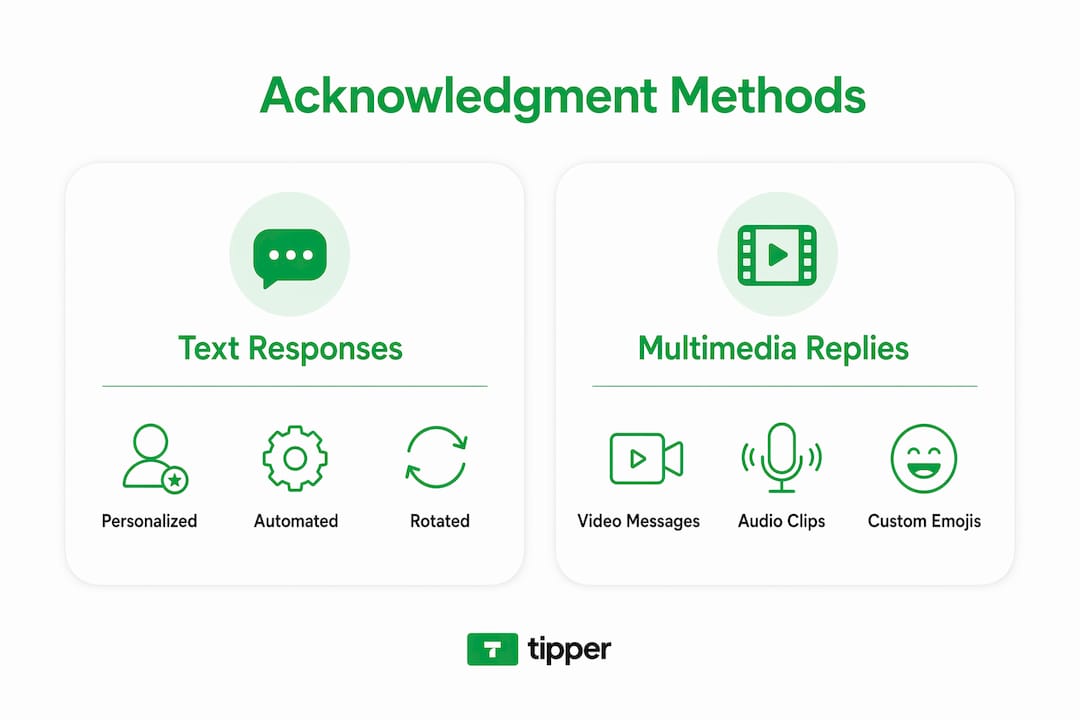
Personalization is the single most important factor in effective tip acknowledgment. Generic automated responses do the opposite of what you intend. Generic acknowledgments alienate supporters; personalization with photos, names, or specific references transforms tipping into meaningful interaction. A creator who responds to a tip with “Thanks for the support!” loses the moment. A creator who says “Sarah, your tip during last Tuesday’s stream meant a lot. It helped me hit my equipment goal” creates a memory.
Practical methods for meaningful acknowledgment include:
- Respond in real time when possible. Platforms that send instant tip notifications give creators the chance to acknowledge support while the moment is still warm. A response within minutes carries far more weight than one sent days later.
- Name the contributor publicly. A shoutout during a live stream, a mention in a newsletter, or a post on a community board tells the contributor and everyone watching that their support was noticed.
- Celebrate milestones and firsts. The first tip a creator ever receives, the hundredth supporter, or a funding goal crossed deserve specific recognition. Consistent public thanks for milestones improve emotional investment and drive ongoing participation.
- Use video or voice messages. A short recorded thank-you carries more emotional weight than text. Tipper allows creators to send thank-you messages through notes or videos, which turns a financial transaction into a personal moment.
- Create a gratitude ritual. End each live session with an “appreciation round” that names every supporter from that session. This small habit signals that no contribution goes unnoticed.
Pro Tip: Rotate your acknowledgment format. If you always respond with text, try a 15-second video reply once a week. Variety signals genuine effort rather than automated habit.
Creators who build acknowledgment into their workflow, rather than treating it as an afterthought, see stronger audience retention. The acknowledgment does not need to be elaborate. It needs to be specific, timely, and human.
Why does systemic gratitude matter for long-term community health?
Systemic gratitude is different from saying “thank you” occasionally. It is the practice of embedding appreciation into the regular rhythm of a community so that recognition becomes a shared habit, not a rare event. Systemic gratitude practices embedded as daily group rituals build resilience, higher trust, better collaboration, and reduce burnout. Sporadic grand gestures do not produce the same result.
The distinction matters for creators and community leaders because burnout is a real threat. When contributors feel consistently recognized, they stay engaged longer. When recognition is rare or unpredictable, people start to wonder whether their support matters.
Systemic practices that work include:
- Weekly appreciation posts that highlight contributors by name across social channels.
- Peer-to-peer recognition boards where community members can thank each other, not just the creator.
- Gratitude walls in Discord servers or community forums where supporters can see their names displayed over time.
- Monthly milestone announcements that celebrate collective achievements and credit the supporters who made them possible.
The table below shows how isolated versus systemic gratitude affects key community outcomes:
| Outcome | Isolated thanks | Systemic gratitude |
|---|---|---|
| Supporter retention | Low to moderate | High |
| Trust between members | Slow to build | Builds steadily |
| Burnout risk for creators | Higher | Lower |
| Community participation | Sporadic | Consistent |
| Emotional investment | Surface level | Deep and ongoing |
Inclusive participation is also critical. Systemic gratitude only works when all contributors feel eligible for recognition, not just the biggest tippers. Acknowledging a first-time $1 supporter with the same warmth as a recurring $50 contributor tells your community that presence matters as much as size.
What challenges arise in tip acknowledgment and how do you fix them?
The biggest risk in tip acknowledgment is inauthenticity. When gratitude feels scripted or obligatory, it backfires. Authentic community-building requires creating safe spaces for honest appreciation rather than forced positivity. A creator who sends the same copy-pasted thank-you to every supporter is not building community. They are performing it.
Common pitfalls include:
- Transactional language. Phrases like “Thanks for your purchase” or “We appreciate your business” signal that the acknowledgment is automated, not personal.
- Delayed responses. Thanking someone three weeks after their tip communicates that the acknowledgment is an afterthought.
- Acknowledging only large tips. This creates a visible hierarchy that discourages smaller contributors from engaging.
- Over-acknowledgment. Thanking every micro-interaction with equal fanfare dilutes the meaning of recognition and can feel overwhelming to both creator and supporter.
Pro Tip: Write your acknowledgments as if you are texting a friend who just did something kind for you. That tone, specific and warm without being formal, is the one that builds real connection.
The solution to forced gratitude is not less acknowledgment. It is better acknowledgment. Failing to recognize contributions consistently leads to community complacency and disengagement. The goal is to find a rhythm that feels natural for you and meaningful for your supporters. Start with one genuine acknowledgment per day and build from there.
Creators also face the challenge of scale. As a community grows, personal responses become harder to sustain. The answer is to use tools that support personalization at scale, such as platforms that let you send video notes or attach a personal message to each tip notification, without requiring you to write from scratch every time.
Key Takeaways
Tip acknowledgment builds community by turning financial support into a personal, repeating social exchange that deepens trust, loyalty, and belonging over time.
| Point | Details |
|---|---|
| Acknowledgment drives repeat support | Immediate, personal responses reinforce giving behavior and keep supporters engaged. |
| Personalization beats automation | Named, specific thank-yous build connection; generic responses alienate contributors. |
| Systemic gratitude outperforms one-off thanks | Daily or weekly recognition rituals build resilience and reduce creator burnout. |
| Recognize all contribution sizes | Treating first-time and recurring supporters equally signals that presence matters. |
| Authenticity is non-negotiable | Scripted or forced gratitude erodes trust faster than no acknowledgment at all. |
What I have learned from watching acknowledgment transform communities
Tipper’s perspective on this is shaped by watching creators go from transactional to transformational in how they relate to their audiences. The shift rarely comes from a big strategy change. It comes from one creator deciding to send a 20-second video reply to a supporter instead of a templated text. That one moment changes the relationship.
The creators who build the most loyal communities are not always the ones with the best content. They are the ones who make their supporters feel like insiders. Acknowledgment is the tool that does that. When a supporter sees their name mentioned in a live session or receives a personal note after tipping, they stop being an audience member and start being a community member.
The mistake I see most often is waiting until a community is “big enough” to start these practices. The best time to build acknowledgment habits is when your community is small. Those early supporters become your most vocal advocates precisely because they were seen before it was easy to see them.
Start with one consistent practice. Pick a format, a video note, a weekly shoutout post, or a gratitude round at the end of each session, and do it every time. Consistency matters more than creativity. Your supporters will notice the pattern, and that pattern is what builds trust.
— Tipper
Tipper makes tip acknowledgment personal and instant
Creators who want to turn tips into genuine community moments need a platform that supports personal acknowledgment without friction. Tipper lets anyone send a tip through a personalized link using Apple Pay or Google Pay, with no account required. Creators keep 100% of their earnings and can respond with a thank-you note or video directly through the platform.
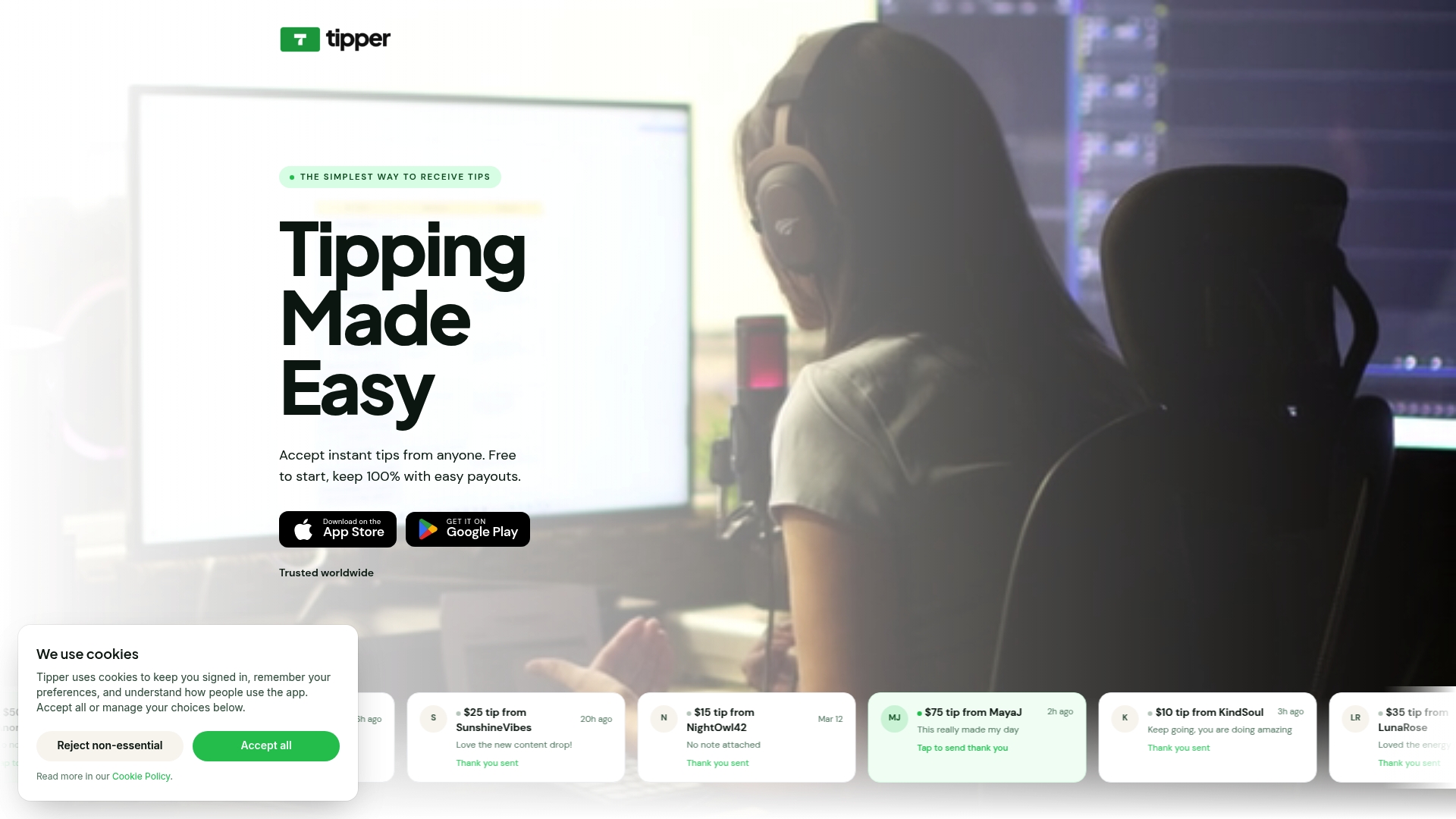
That combination of frictionless tipping and personal response tools is what separates a transaction from a relationship. With real-time tip notifications, creators can acknowledge support the moment it arrives, which is when acknowledgment carries the most weight. Visit Tipper to set up your personalized tipping link and start building the kind of community where every contribution is seen.
FAQ
How does tip acknowledgment build community?
Tip acknowledgment builds community by creating a positive feedback loop where contributors feel seen and valued, which encourages repeat engagement and deepens social bonds over time.
Why does personalization matter in tip acknowledgment?
Generic automated responses alienate supporters, while personalized acknowledgments that use names and specific references transform tipping into meaningful interaction and strengthen community loyalty.
What is systemic gratitude and why does it matter?
Systemic gratitude is the practice of embedding regular recognition rituals into a community’s routine. Research shows these daily gratitude practices build resilience, trust, and reduce burnout more effectively than occasional grand gestures.
How often should creators acknowledge tips?
Creators should acknowledge tips as close to real time as possible. Consistent, timely recognition matters more than elaborate responses, and varied public and private acknowledgments are key to sustained community involvement.
What makes tip acknowledgment feel authentic?
Authentic acknowledgment is specific, timely, and written in a personal tone rather than corporate language. Avoiding scripted phrases and referencing the contributor’s actual support makes the response feel genuine rather than obligatory.




Leave A Comment