

Contactless tip collection is defined as any cashless, app-free method that lets customers or fans send gratuities instantly using digital tools like QR codes, NFC tags, or biometric passkey wallets. The three leading examples of contactless tip collection are QR code tipping, NFC tap-to-tip, and passkey-authenticated gasless digital wallets. Each method removes a different layer of friction. QR codes eliminate the need for cash. NFC eliminates the need to scan. Passkey wallets eliminate the need for any account at all. For content creators, freelancers, and small business owners, understanding these options is the difference between leaving money on the table and building a reliable, real-time income stream from audience appreciation.
1. QR code tipping: the most accessible contactless method
QR code tipping is the most widely deployed form of digital tip collection because it requires nothing more than a smartphone camera. Contactless, app-free tipping works by placing printed QR codes on signage, receipts, table tents, or name badges, and customers scan to open a tipping page instantly. No app download is required, and payment can route through PayPal, Venmo, Cash App, or Stripe depending on the platform.
The placement strategy matters as much as the technology itself. A QR code buried at the bottom of a receipt performs far worse than one printed on a table tent at eye level or embedded in a creator’s video description. Multiple visible placements with a clear call-to-action consistently increase tip likelihood. Think of it as the digital equivalent of a tip jar placed directly in front of the register rather than beside the napkin dispenser.
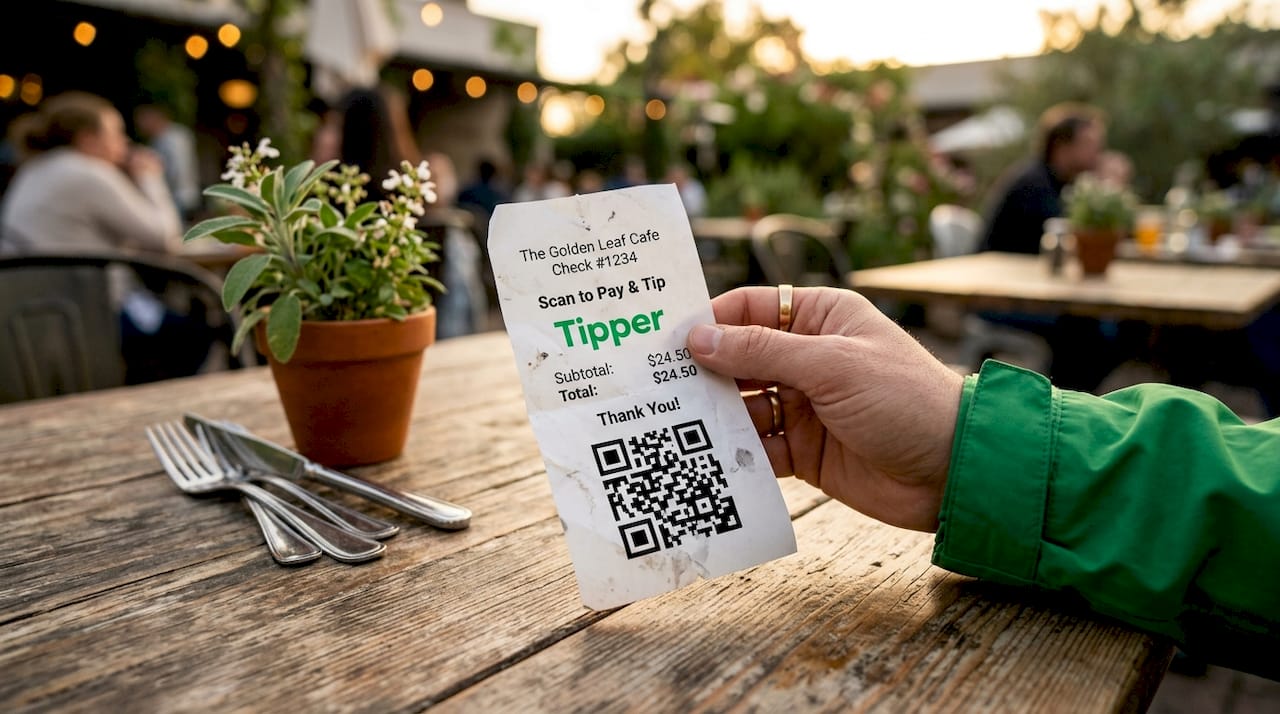
Businesses using QR prompts report 10 to 30% higher tip rates compared to cash-only setups. That gap exists because suggested-amount interfaces remove the mental friction of deciding how much to give. The customer sees three preset options, taps one, and the transaction is done in under ten seconds.
The main limitation is that QR codes are location-tied. A freelance photographer working an event cannot hand a QR code to every guest in motion. For fixed-location businesses like cafes, food trucks, or hotel lobbies, QR tipping is the lowest-barrier entry point into contactless tipping methods.
Pro Tip: Print your QR code at a minimum of 2 inches by 2 inches and test it under the actual lighting conditions where it will be displayed. A code that scans perfectly on your desk may fail under dim restaurant lighting.
2. NFC tap-to-tip: the hospitality standard
NFC (Near Field Communication) tipping uses the same tap-to-pay technology built into every modern smartphone, but instead of paying for a product, the customer opens a personal tipping page for a specific employee. NFC tap-to-tip badges are worn on lanyards, wristbands, or keychains and linked directly to an individual, not a location.
The interaction is faster than QR scanning because it requires no camera alignment. A guest taps the badge and the tipping page opens in under two seconds. This speed advantage matters in high-volume hospitality settings like hotel lobbies, spas, or event venues where staff are moving constantly and interactions are brief.
The person-tied nature of NFC is its defining advantage over QR codes:
- A housekeeper’s NFC badge ensures tips go directly to that individual, not a shared pool
- A bartender can receive a tip mid-shift without pointing to a fixed sign
- A valet can collect a tip at the car, not at a stationary kiosk
Security is a genuine strength of NFC tipping. Standards like NTAG 424 DNA with SUN (Secure Unique NFC) deliver banking-grade authentication, meaning each tap generates a unique cryptographic signature that cannot be replicated or spoofed.
“NFC tipping offers a more natural interaction in hospitality because it mimics tap-to-pay and links tips to people rather than locations.” — Hospitality Net
The operational challenge is lifecycle management. When staff change shifts or roles, NFC tags must be reassigned or deactivated to prevent tips from routing to the wrong person. Platforms that automate this reassignment process eliminate what would otherwise be a persistent administrative headache.
3. Passkey-authenticated gasless digital wallets
Passkey-authenticated gasless wallets represent the most technically advanced category of contactless tipping, and they are purpose-built for digital creators and freelancers who operate entirely online. Biometric passkey authentication using Face ID, Touch ID, or Windows Hello replaces the need for crypto wallets, seed phrases, or any account creation by the tipper.
The gasless component is equally important. Traditional blockchain tipping requires the sender to hold cryptocurrency and pay network fees, which creates a steep barrier for casual supporters. Gasless smart-wallet transactions use a paymaster fee abstraction pattern, meaning the platform absorbs or eliminates the transaction fee entirely. The tipper sees no wallet popups, no fee confirmations, and no crypto jargon.
For a YouTube creator or independent podcast host, this translates to a tipping experience that feels identical to tapping Apple Pay. The supporter authenticates with their fingerprint, confirms the amount, and the creator receives the tip in real time.
- No wallet download required for the tipper
- No seed phrase management for the creator
- Instant tip confirmation without blockchain complexity
- OS-native authentication means the security layer is already trusted by the user
The current limitation is integration complexity. Deploying a passkey wallet tipping system requires developer resources or a platform that has already built the infrastructure. As of 2026, this method is gaining traction among technically sophisticated creator communities but has not yet reached mainstream small business adoption.
Pro Tip: If you are a creator exploring gasless wallet tipping, look for platforms that handle the paymaster infrastructure for you. Building it from scratch requires smart contract knowledge that most creators do not have and should not need.
4. Comparison of contactless tipping methods
Choosing between QR codes, NFC, and passkey wallets depends on your context, audience, and operational setup. The table below synthesizes the key differences.
| Feature | QR code tipping | NFC tap-to-tip | Passkey wallet tipping |
|---|---|---|---|
| Interaction speed | Moderate (scan required) | Fast (instant tap) | Fast (biometric confirm) |
| Hardware needed | Printed code only | NFC tag or badge | None (software only) |
| App download required | No | No | No |
| Person-tied tips | No (location-tied) | Yes | Yes |
| Security level | Standard HTTPS | Banking-grade NFC | OS-level biometric |
| Best for | Fixed-location businesses | Mobile hospitality staff | Digital creators, freelancers |
| Setup cost | Very low | Low to moderate | Low (with platform support) |
QR codes win on cost and simplicity. NFC wins on interaction speed and personal attribution. Passkey wallets win on frictionless digital experience. A coffee shop owner should default to QR. A hotel concierge team benefits most from NFC. A Twitch streamer or freelance designer gets the most from a passkey-enabled platform like Tipper.
5. How to implement contactless tip collection effectively
Simply placing a QR code is not enough. Effective implementation requires a software platform that handles tip collection, compliance, reporting, and distribution automatically. Manual reconciliation of digital tips is one of the most common operational failures for small businesses adopting contactless tipping methods.
The following placement locations consistently produce the highest tip engagement:
- Table tents at point-of-service (restaurants, salons, food trucks)
- Name badges and lanyards for mobile staff
- Packaging inserts for product-based creators and makers
- Email signatures and invoice footers for freelancers
- Video descriptions and end screens for digital content creators
Software selection is the second critical decision. Platforms like Canary Technologies integrate tipping into the full guest journey with staff profiles, real-time reporting, and cashless direct routing to individual employees. For creators, platforms that offer instant payouts and zero-account tipping remove the biggest barrier to audience participation.
Suggested tipping amounts are not optional. Presenting three preset options (for example, $2, $5, and $10) increases average tip size because it anchors the customer’s decision. Leaving the amount as a blank field consistently produces lower totals and higher abandonment rates.
The final implementation rule: brand your tipping collateral. A generic QR code with no context gets ignored. A QR code on a card that reads “Enjoyed the experience? Tap to say thanks” with your logo gets scanned. Context and personality convert browsers into tippers.
Key takeaways
The most effective contactless tip collection combines the right technology with clear placement, preset amounts, and a platform that automates payouts and reporting.
| Point | Details |
|---|---|
| QR codes are the entry point | Low cost and no hardware make QR the best starting method for fixed-location businesses. |
| NFC wins in hospitality mobility | Person-tied NFC badges route tips to individuals and match the speed of tap-to-pay interactions. |
| Passkey wallets serve digital creators | Biometric, gasless tipping removes every account and fee barrier for online audiences. |
| Placement drives tip volume | Multiple visible locations with clear calls-to-action outperform single-point QR code setups. |
| Software handles the hard part | Platforms with real-time reporting and automated payouts prevent reconciliation failures. |
Why friction is the only real enemy of tips
I have spent years watching creators and small business owners set up technically correct tipping systems that still fail. The technology works. The problem is almost always friction, and it almost always comes from the operator’s side, not the customer’s.
The most common mistake I see is treating contactless tipping as a one-time setup task. You print a QR code, tape it to the counter, and assume the work is done. It is not. The QR code fades. The link breaks. The payout platform changes its fee structure. Nobody notices until tip volume quietly drops to zero over three months.
NFC is better in this regard because a broken tag is physically obvious. A faded QR code is invisible until you test it. I recommend testing every QR code in your setup weekly, the same way you would check that your point-of-sale terminal is working.
The passkey wallet category genuinely excites me because it solves the problem I hear most from digital creators: “My audience wants to support me but they won’t download another app.” That objection disappears entirely when tipping requires nothing more than a Face ID confirmation. The account-free tipping model is not a niche feature. It is the future standard.
The creators who will benefit most from contactless tipping in the next two years are not the ones with the largest audiences. They are the ones who remove every possible reason for a supporter to hesitate. One extra tap, one required sign-up, one confusing fee disclosure is enough to lose the tip entirely.
— Steve
How Tipper makes contactless tipping work for you
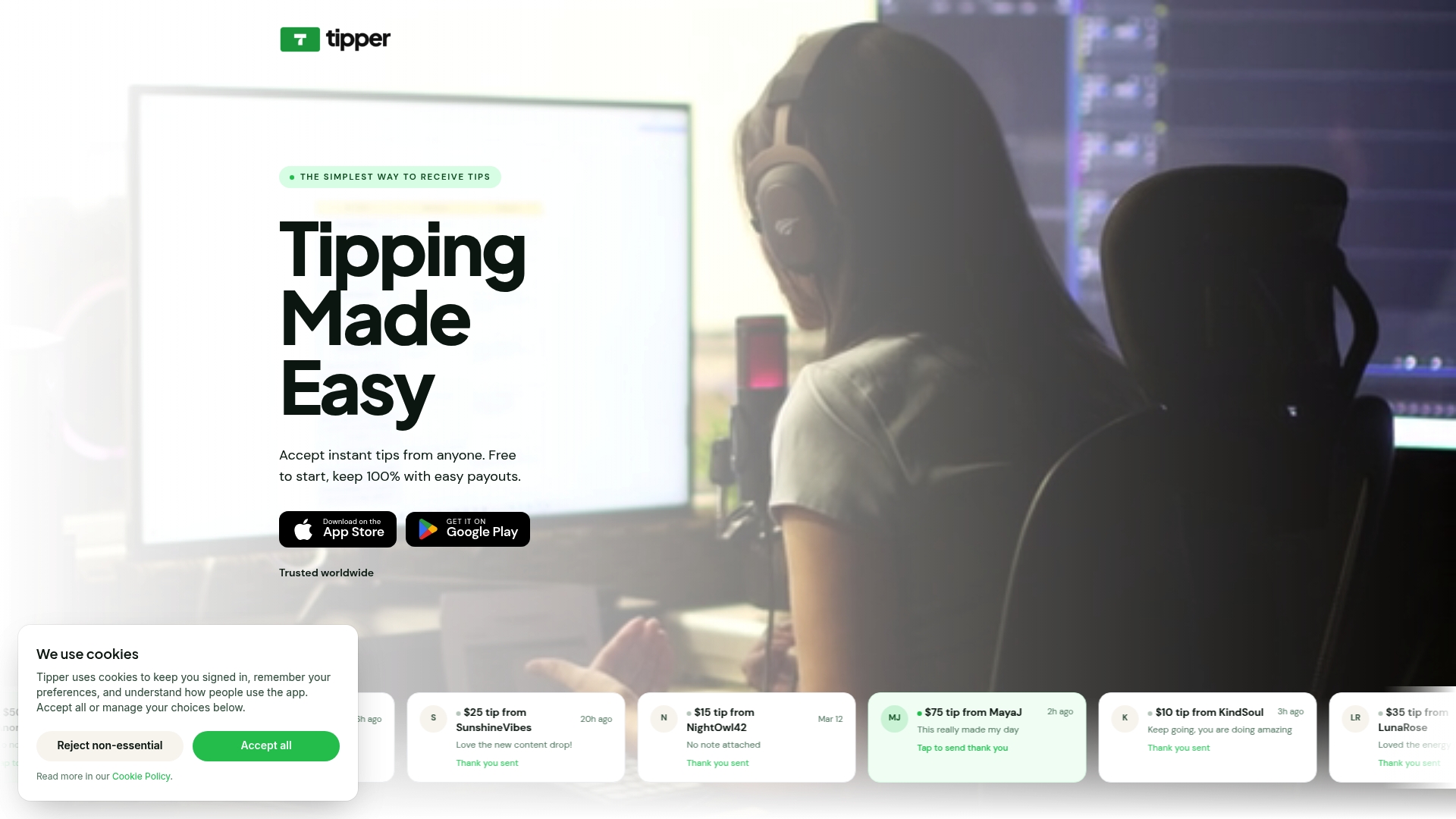
Tipper is built specifically for creators, freelancers, and small business owners who want to collect tips without forcing their audience through account creation or app downloads. With Tipper, you get a personalized tipping link that works with Apple Pay and Google Pay out of the box. Your supporters tip in seconds, and you keep 100% of every dollar. Real-time tracking shows you exactly who tipped and when, and supporters can attach a note or video message to make the moment personal. If you are ready to put the best practices for online tip collection to work, start collecting tips with Tipper today and see the difference a frictionless experience makes.
FAQ
What are the main examples of contactless tip collection?
The three main examples are QR code tipping, NFC tap-to-tip using badges or wristbands, and passkey-authenticated gasless digital wallets. Each method is app-free and cashless, differing primarily in interaction speed and the technology required.
Do customers need to download an app to leave a contactless tip?
No. App-free tipping is a core feature of all three major contactless methods. Guests scan a QR code, tap an NFC badge, or authenticate with Face ID without installing anything.
How much can contactless tipping increase tip rates?
Businesses using QR code prompts report 10 to 30% higher tip rates compared to cash-only setups. The increase comes from frictionless payment and preset suggested amounts that remove decision hesitation.
What is the best contactless tipping method for content creators?
Passkey-authenticated wallets and personalized tipping links are the best fit for digital creators because they work entirely online, require no hardware, and let supporters tip without creating an account. Platforms like Tipper combine this approach with instant payouts and zero platform fees for the creator.
Is NFC tipping secure?
Yes. NFC tipping using standards like NTAG 424 DNA with SUN generates a unique cryptographic signature on every tap, making it banking-grade secure and resistant to spoofing or replay attacks.



[…] mobile payment advantages of Apple Pay and Google Pay into a single, shareable tipping link. For contactless tip collection without hardware or complex setup, Tipper is built specifically for creators, freelancers, and […]
[…] no delays. The person tipping taps or clicks, and the funds move. For businesses exploring contactless tip collection or creators building a direct support channel, Tipper provides the infrastructure without the […]
[…] signals risk to supporters and reduces trust before they even enter payment details. Check your contactless tip collection setup to confirm your link is […]
[…] Contactless tip collection increases frequency by meeting supporters where they already are […]
[…] fixes like these, drawn from common contactless tipping mistakes, solve most scan failures before they cost you a […]
[…] Support the payment methods customers already trust and use daily, including Apple Pay and Google Pay. […]
[…] the creator tips playbook covers preset amounts and copy in more depth, and Tipper’s guide on contactless tip collection has more setup examples. Photographers exploring other monetization channels can also read about […]
[…] If you want a walkthrough of how other creators are placing these links in real setups, the contactless tip collection examples page is a good place to see it in practice. Head to Tipper to create your link and start collecting […]
[…] table sends a fan straight to your page. If you want to see how others do it, we have a roundup of contactless tip collection examples for creators, and a guide to how QR codes work in hospitality without apps or […]