
About Tipper

This author has not yet filled in any details.
So far Tipper has created 92 blog entries.

Point-of-Sale Tipping Alternatives for Business Owners

A point-of-sale tipping alternative is any digital or non-traditional method that lets customers leave gratuities outside the conventional POS terminal tip screen, including QR code platforms, digital tip jars, and app-free web-based tipping tools. Platforms like eTip, TipMee, and Tipper have made these alternatives mainstream in 2026, giving business owners real options beyond the awkward tablet flip. Digital tipping solutions can increase average gratuity amounts by 15 to 20% compared to traditional cash or manual methods, and that figure alone explains why operators across hospitality, food service, and personal care are rethinking how they collect tips. The shift matters because it affects not just revenue, but customer comfort and staff retention in equal measure.

What is a point-of-sale tipping alternative?

A point-of-sale tipping alternative replaces or supplements the standard tip prompt on a POS terminal with a method that gives customers more control, privacy, and convenience. The traditional POS tip screen places the customer on the spot at the moment of payment, often with the service worker standing directly in front of them. That dynamic creates pressure, and pressure creates resentment over time.

The alternatives fall into several categories: QR code scanning at the table or counter, NFC tap-to-tip cards, post-transaction digital links sent by text or email, and standalone digital tip jar platforms. Each removes the face-to-face pressure point while keeping the tipping option visible and accessible. For business owners, the added benefit is that every transaction is logged automatically, which eliminates the compliance headaches that come with cash tip handling.

Customer scanning QR code on smartphone at table

Non-cash tipping options are also aligned with how customers already pay. Contactless and mobile payments now dominate transaction volumes in most service sectors, so a tipping method that works through Apple Pay or Google Pay fits naturally into an existing behavior rather than asking customers to do something new.

How do digital tipping solutions work?

Digital tipping solutions operate through a web-based interface that customers access without downloading an app. A QR code displayed at the counter, on a receipt, or on a table card opens a branded tipping page directly in the customer’s browser. The customer selects a tip amount, pays through their preferred method, and the transaction is recorded instantly.

QR code tipping platforms now operate across 1,000 or more major hospitality venues, and the technology supports automated compliance reporting alongside diverse payout options. Tips can be routed to individual employees or pooled and distributed according to preset rules, with payouts delivered to debit cards, PayPal, or Venmo accounts. That flexibility matters because different business models require different distribution logic.

The compliance and reporting benefits deserve specific attention. Manual cash handling introduces security risks and audit burdens that automated, bank-integrated payout platforms eliminate entirely. For multi-location operators or businesses with high staff turnover, that reduction in administrative work is a genuine operational gain.

Key features to look for in any digital tipping platform:

  • App-free access so customers face zero friction at the tipping step
  • Automated tip distribution with configurable pooling or individual routing
  • Real-time reporting that integrates with payroll and accounting systems
  • Multiple payout methods including debit, PayPal, and Venmo
  • Branded interface that matches your business identity

Pro Tip: Place your QR code in at least three locations: the receipt, the table or counter surface, and a small card near the exit. Customers who feel rushed at checkout often tip more generously when given a second, lower-pressure moment.

What are the main types of tipping alternatives in 2026?

The market in 2026 offers four primary formats, each suited to different service environments and customer behaviors.

Method Best for Customer pressure Tracking Staff payout speed
POS-integrated digital tip screen Full-service restaurants, retail High Automatic Varies by processor
QR code tipping platform Cafes, salons, food trucks Low Automatic Real-time
Digital tip jar (standalone link) Freelancers, creators, pop-ups None Automatic Instant
Post-transaction tip link (SMS/email) Hotels, delivery, remote services None Automatic Real-time

Infographic outlining main tipping alternatives in 2026

The POS-integrated digital tip screen is the most familiar format. It appears on the payment terminal at checkout and prompts the customer before the transaction closes. It generates the highest tip rates in the short term, but aggressive prompt configurations drive customer tip fatigue and long-term brand damage when overused.

QR code platforms are the fastest-growing category. They decouple the tipping moment from the payment moment, which removes the social pressure that makes many customers uncomfortable. For quick-service businesses like coffee shops and food trucks, a QR code on the counter or cup sleeve gives customers a genuine choice without holding up the line.

The digital tip jar, popularized by creator-economy platforms, translates directly to physical service businesses. A barber, personal trainer, or food vendor can share a personalized link that customers tap through Apple Pay or Google Pay in seconds. Personalized digital tipping experiences also allow for thank-you notes and branded interactions, which turn a routine transaction into a moment of genuine connection.

Post-transaction links sent by SMS or email work particularly well for hotel housekeeping, delivery services, and any situation where the customer and worker are not in the same place at payment time.

How do tipping alternatives affect customers and employees?

The customer experience impact of alternative tipping methods is more nuanced than most operators expect. Removing the face-to-face tip prompt does not reduce tips. It reduces reluctant tips, which are the ones that generate negative reviews and eroded loyalty. Moderate prompt configurations tailored to customer profiles consistently outperform aggressive defaults over a full business cycle.

“Digital tipping should be considered part of the overall guest experience, not merely a revenue tool. Tailoring prompts to customer preferences reduces backlash and builds the kind of loyalty that brings customers back.” — Tip Screen Guide 2026

For employees, the single biggest factor is speed of access. Instant tip payouts significantly boost motivation, retention, and workplace satisfaction by removing the frustration of delayed or opaque tip distribution. A server who knows their tips from Tuesday night are already in their account by Wednesday morning has a fundamentally different relationship with their job than one waiting for a weekly cash envelope.

Personalization features add another layer. Platforms that let customers attach a note or short video message to their tip transform the interaction from a financial transaction into a moment of recognition. Branded tipping interfaces with personalized notes increase customer engagement and loyalty beyond what any static POS screen can deliver. For businesses competing on experience rather than price, that distinction is worth real money.

Pro Tip: Train your staff to mention the tipping option naturally, not as a request. A simple “You can also tip through the QR code on your receipt if you’d like” removes awkwardness and increases follow-through without pressure.

Tip fatigue is a documented pattern, not a theory. Customers who encounter aggressive tip prompts at every transaction, including self-checkout kiosks and digital ordering screens, begin to tune them out or actively resent them. Businesses that offer a clear, low-pressure alternative tipping method position themselves as respectful of the customer’s choice, which is a brand differentiator in a market where that respect is increasingly rare.

How to implement a point-of-sale tipping alternative

Selecting and deploying the right alternative tipping method requires a structured approach. Moving too fast leads to poor adoption; moving too slowly means leaving staff satisfaction and revenue on the table.

  1. Audit your current tipping setup. Document what percentage of transactions currently include a tip, the average tip amount, and any staff complaints about distribution delays or disputes. This baseline makes it possible to measure the impact of any change.

  2. Match the method to your service model. Quick-service businesses benefit most from QR code platforms that work post-transaction. Full-service restaurants may prefer a hybrid approach that keeps the POS screen for dine-in but adds a QR option for takeout and delivery.

  3. Evaluate platforms on payout speed, compliance features, and integration. Confirm that any platform you consider connects to your existing payroll or accounting software. Standalone systems that require manual data export create the same administrative burden you are trying to eliminate.

  4. Configure prompts using best-practice settings. Offering three tip options such as 10%, 15%, and 18%, alongside a clearly visible No Tip button, reduces friction and customer resentment. For transactions under $10, fixed dollar amounts like $1, $2, and $3 produce clearer decisions than percentages.

  5. Train your team before launch. Staff who understand how the new system works and why it benefits them will advocate for it naturally. Explain the payout timeline, show them how to check their balance, and address questions about tip pooling rules before the first customer interaction.

  6. Monitor results and iterate. Track tip rate, average tip amount, and customer feedback for the first 30 days. Adjust QR code placement, prompt wording, or default tip amounts based on what the data shows. Small changes in prompt design can produce measurable differences in outcome.

Key takeaways

The most effective point-of-sale tipping alternative combines low customer pressure with instant employee payouts and automated compliance reporting, making QR code and post-transaction platforms the strongest choice for most service businesses in 2026.

Point Details
Definition matters A POS tipping alternative is any method beyond the standard terminal tip screen, including QR codes and digital tip jars.
Digital tools outperform cash Digital tipping platforms increase average gratuity by 15 to 20% while eliminating manual distribution errors.
Pressure reduction builds loyalty Low-pressure tipping formats reduce tip fatigue and protect long-term customer relationships.
Instant payouts retain staff Real-time tip access is a proven driver of employee motivation and frontline retention.
Prompt design is operational strategy Offering three tip amounts plus a visible No Tip option consistently outperforms aggressive default configurations.

Why I think most businesses are still getting this wrong

I have watched operators spend months debating which POS system to upgrade while their tip setup stays exactly as it was in 2019. The tablet flip is still the default in most coffee shops, salons, and quick-service restaurants, and it is costing them on both ends of the transaction.

The mistake I see most often is treating the tipping interface as a fixed feature of the payment system rather than a customer experience decision. When you frame it as a customer experience decision, the priorities change immediately. You stop asking “how do we get the highest tip percentage?” and start asking “how do we make this interaction feel good for everyone involved?” The second question produces better long-term numbers.

The businesses I have seen get this right share one habit: they piloted a QR code or post-transaction link for a single shift or a single location before committing to a full rollout. That pilot almost always surfaces something unexpected, whether it is a placement issue, a staff communication gap, or a customer segment that responds differently than expected. The businesses that skip the pilot tend to either abandon the new system too quickly or stick with a configuration that is underperforming because they have no baseline to compare it against.

One more thing worth saying directly: the transparency argument for digital tipping is not just about compliance. Employees who can see exactly what they earned, from which transactions, and when it will arrive trust their employer more. That trust is harder to build than any tipping platform, and easier to lose.

— Steve

How Tipper makes digital tipping simple for your business

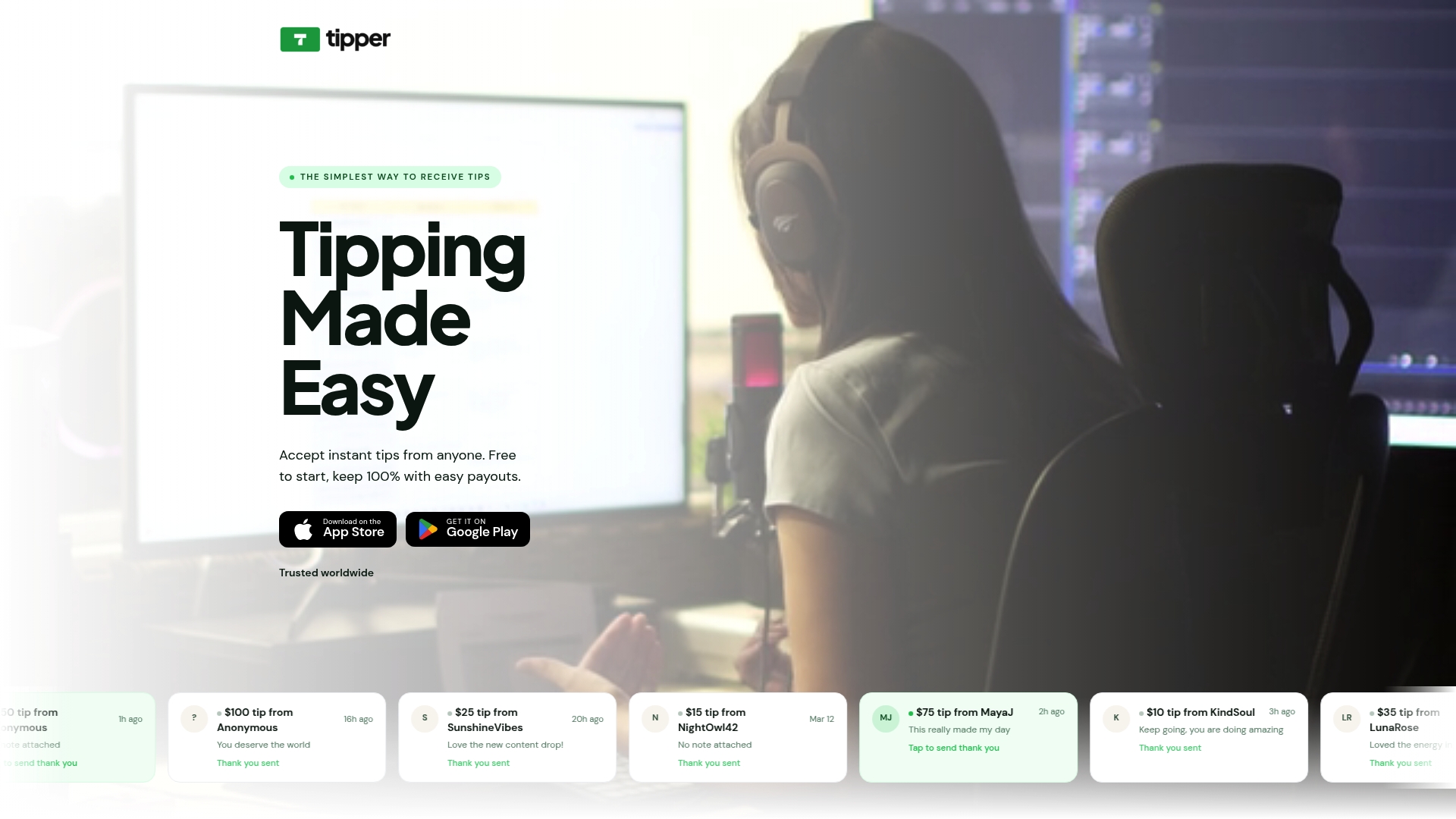
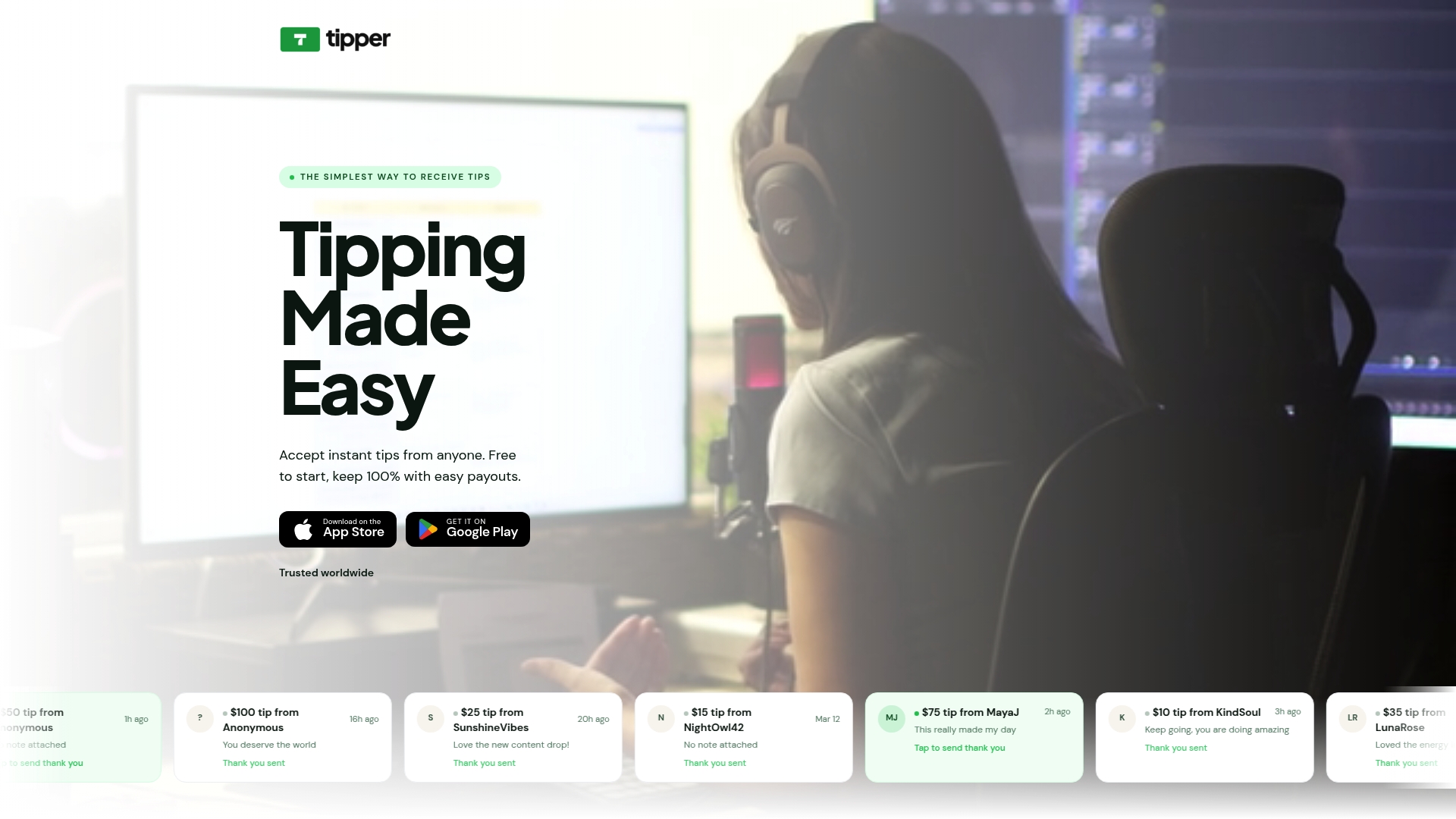
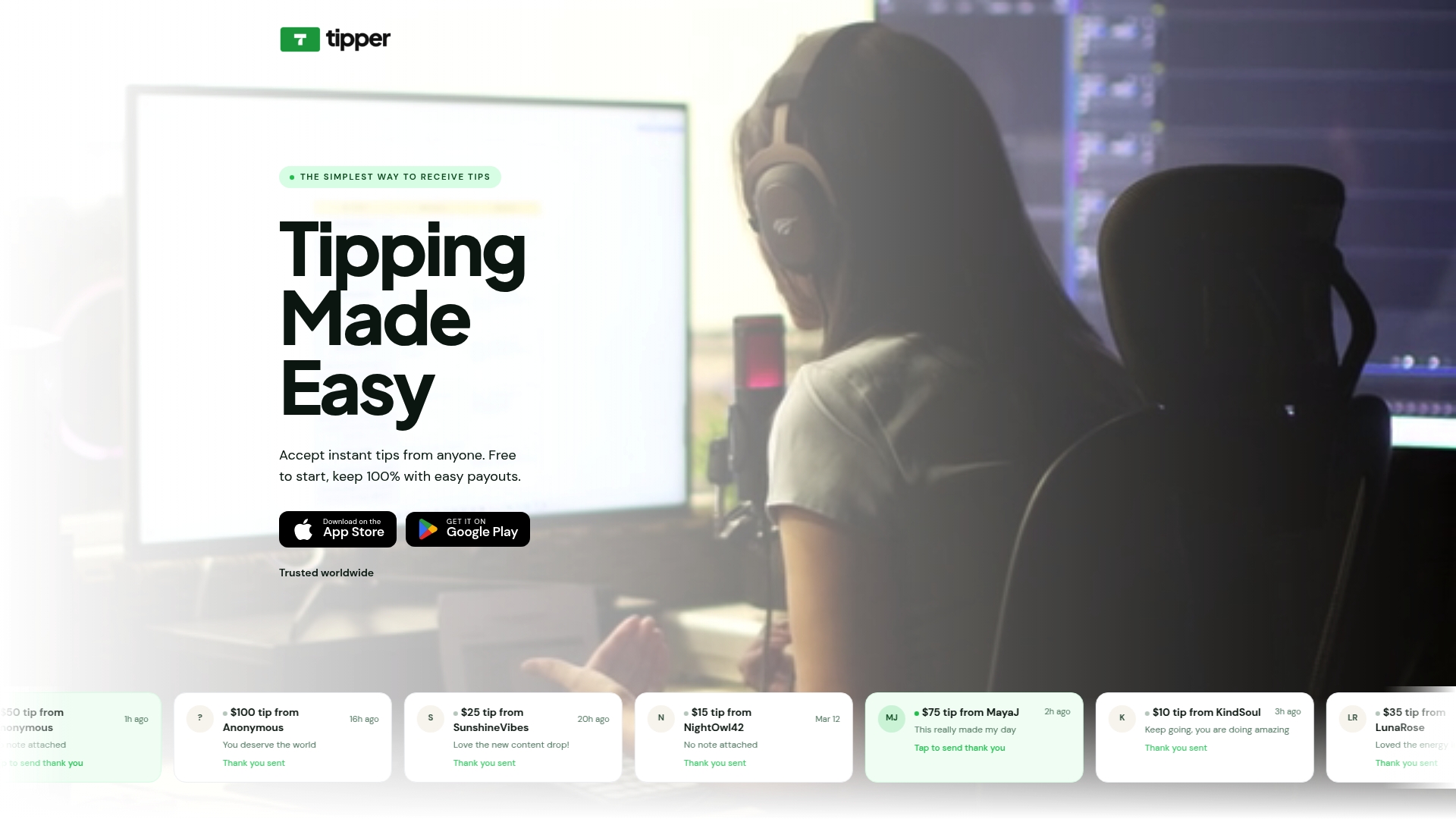
If you are ready to move beyond the POS tip screen, Tipper gives you a direct path to setup without the technical overhead. Tipper lets customers tip through a personalized link using Apple Pay or Google Pay, with no app required on either side. Creators and service providers keep 100% of their earnings, and the platform supports thank-you notes and video messages that turn a tip into a genuine moment of recognition.

https://tipper.app

Tipper works for coffee shops, freelancers, personal trainers, and anyone who wants a low-pressure, branded tipping experience that customers actually use. Setup takes minutes, payouts are instant, and the platform handles the reporting so you do not have to.

FAQ

What is a point-of-sale tipping alternative?

A point-of-sale tipping alternative is any tipping method that operates outside the standard POS terminal tip screen, including QR code platforms, digital tip jars, post-transaction SMS links, and app-free web-based tipping tools.

Do digital tipping alternatives increase tip amounts?

Digital tipping platforms increase average gratuity by 15 to 20% compared to traditional cash or manual methods, according to data from platforms like eTip, primarily because they reduce friction and support post-transaction tipping.

How do customers tip without cash or a POS screen?

Customers scan a QR code or tap an NFC card that opens a branded tipping page in their browser, then pay through Apple Pay, Google Pay, or a card without downloading any app.

Which tipping alternative works best for quick-service businesses?

QR code and post-transaction link platforms work best for quick-service environments because they remove the face-to-face pressure of the checkout moment and allow customers to tip at their own pace.

How do I avoid tip fatigue with digital tipping tools?

Offering three moderate tip options alongside a clearly visible No Tip button, and avoiding aggressive default percentages, reduces customer resentment and protects long-term brand loyalty according to 2026 tipping best practices.

Point-of-Sale Tipping Alternatives for Business Owners2026-06-13T20:51:18+00:00

Types of No-Fee Customer Tipping Systems in 2026

No-fee customer tipping systems are defined as gratuity platforms that charge businesses zero platform fees while routing payments directly to service providers, creators, or freelancers. The industry term for the broader category is digital tipping infrastructure, and it covers everything from app-less paylinks to NFC tap-to-tip hardware and crypto wallet transfers. The types of no-fee customer tipping systems available today vary widely in speed, technical complexity, and customer experience. Choosing the wrong one costs you tips, not just fees. This guide breaks down each type so you can match the right solution to your business and your customers.

App-less paylinks are the most frictionless type of no-fee tipping solution available. A single shareable URL or QR code lets customers tip without downloading an app, creating an account, or entering card details manually. Merchant notifications arrive in under 3 seconds, and no point-of-sale hardware or payment processor contract is required.

Barista assisting customer with app-less paylink

That speed matters more than most business owners realize. Standalone apps create significant friction through download and profile creation steps, leading to high drop-off in tipping behavior compared to app-less solutions. Every extra step between a customer’s impulse to tip and the completed transaction is a lost tip.

App-less paylinks work across a wide range of contexts:

  • Cafes and food stalls display a QR code at the counter or on a receipt
  • Event performers share a link in a bio or on a screen
  • Freelancers and creators embed the link in email signatures, invoices, or social profiles
  • Market vendors print the link on a business card or product tag

Pro Tip: Place your paylink QR code at the exact moment of peak satisfaction, right after a customer receives their order or finishes watching your content. Conversion drops sharply when the prompt comes too early or too late.

Tipper is built on this exact model. Anyone can send a tip through a personalized link using Apple Pay or Google Pay, with no account required on either side. Creators keep 100% of what they receive.

2. qr-code tipping systems: wide reach, moderate friction

QR-code tipping is the most widely deployed no-cost gratuity system in physical retail and hospitality. A customer scans a printed or displayed code with their phone camera, which opens a payment page directly in the browser. No app download is needed, and the system works on virtually every modern smartphone.

The tradeoff is speed. QR codes require approximately 15 seconds to scan and complete, compared to 2 seconds for NFC tap. That gap is small in isolation but meaningful in high-volume service environments like coffee shops or food trucks where customer flow is constant.

QR-code tipping systems also depend on good UX design to perform well. Best practices include tip tiers and fallback prompts even in no-fee systems, because the absence of suggested amounts reduces tip rates noticeably. A QR code that opens a blank payment field converts far worse than one that presents three preset tip options.

Pro Tip: Print your QR code at a minimum of 2 inches by 2 inches and test it under your actual lighting conditions before deploying. Poor contrast or glare is the most common reason QR tipping fails silently.

3. NFC tap-to-tip: fastest customer tipping alternative

NFC (Near Field Communication) tap-to-tip is the fastest tipping system without fees currently available for physical businesses. A customer taps their phone or contactless card against an NFC tag or wearable device, and the tip processes in approximately 2–8 seconds with zero app required.

Here is how QR-code and NFC-based tipping systems compare directly:

Feature QR Code Tipping NFC Tap-to-Tip
Transaction speed ~15 seconds ~2–8 seconds
Required tech Smartphone camera NFC-enabled phone or card
Hardware cost Near zero (print only) Low to moderate (tags, wearables)
Device compatibility Near universal Modern smartphones and cards
Interaction style Scan and wait Tap and done
Best use case Counters, receipts, signage Wearables, table tags, events

NFC wearables are a particularly strong option for service staff in restaurants, salons, and event venues. A server wearing an NFC-enabled wristband or badge lets customers tip with a single tap at the table, without any device being passed between hands. That frictionless quality protects both the service flow and the customer experience.

Pro Tip: Use waterproof NFC tags for outdoor venues or food service environments. Standard paper-backed tags degrade quickly in humid or wet conditions, which kills your tipping system at the worst possible moment.

4. crypto wallet-to-wallet tipping: true zero-platform-fee transfers

Crypto-based tipping routes value directly from sender wallet to recipient with no platform tax and no custodian holding funds. This is the purest form of no-platform-fee tipping available, though it comes with real onboarding complexity for mainstream customers.

The two most practical implementations are Lightning Network zaps and crypto QR codes. Lightning zaps send satoshis (fractions of Bitcoin) directly between wallets, with routing fees in single-digit satoshis and no platform cut. Crypto QR codes use standards like BIP21 and EIP-681 to encode recipient addresses and optional amounts, supporting multiple cryptocurrencies and enabling direct wallet-to-wallet payments with no signup.

The audience for crypto tipping is specific. It works best for:

  • Independent creators and podcasters whose audiences already use Lightning wallets
  • Freelancers serving international clients who want to avoid card processing fees and currency conversion costs
  • Nostr and Bitcoin-native communities where zapping is a standard social interaction
  • Tech-forward small businesses willing to invest in customer education

The honest limitation is onboarding. A customer who does not already have a Lightning wallet or crypto app will not set one up just to tip. Crypto tipping is a powerful no-cost gratuity system for the right audience and a near-zero-conversion option for everyone else.

5. embedded tip widgets: one-click tipping for websites and creators

Embedded tip widgets are web components that sit directly inside a webpage, newsletter, or content platform. A reader or viewer clicks once to tip without leaving the page. These widgets often create automatic wallets without requiring signup and support multiple payment systems, making them one of the most flexible tipping systems without fees for digital creators.

The contrast with standalone paylinks is meaningful. A paylink takes a customer away from your content to a separate page. An embedded widget keeps them exactly where they are, which reduces drop-off and increases the likelihood of a completed tip. For journalists, bloggers, and video creators, that difference in placement directly affects revenue.

Nonprofits get an additional benefit. Nonprofit nodes enable tax-deductible tips and transparent tip records, while open-source implementations give organizations full control over payment rails and data. For-profit nodes typically charge processing fees, so the no-fee claim depends on which infrastructure you build on.

Key advantages of embedded widgets for creators and small businesses:

  • No redirect required. The tip happens inside your existing content experience.
  • Repeat tipping is easier. Returning visitors see the widget immediately without searching for a link.
  • Flexible payment rails. Open-source projects like SimpleTip support card, crypto, and wallet-based payments.
  • Transparent records. Tip history is visible and auditable, which matters for nonprofits and grant-funded creators.

For insights on embedding tip widgets into creator monetization strategies, Revenue Operator’s blog covers the technical and business side of one-click tipping in depth.

6. what “no-fee” actually means and what to watch for

“No-fee tipping” most commonly means no platform fee, not the total absence of all costs. Payment methods like card processing or blockchain gas fees may still apply, and businesses should verify who actually pays those costs before committing to a system.

The three most common fee structures in no-fee tipping systems are:

  • Business pays nothing, customer absorbs card fees. The platform charges zero to the business but adds a processing surcharge to the customer’s tip amount. The customer pays more than they intended.
  • Business pays nothing, fees come from the tip. Card processing fees are deducted from the tip before it reaches the recipient. A $5 tip becomes $4.65 after fees.
  • True zero-fee routing. Crypto and some wallet-based systems route the full amount with minimal or no deduction on either side.

Harvard Business Review identifies tipping design and placement as a customer satisfaction lever, not just a revenue tool. Unexpected or invasive tipping prompts reduce satisfaction even when the transaction itself is free. The fee structure you choose affects your customers’ perception of your brand, not just your bottom line.

A practical checklist before choosing any no-fee tipping system:

  • Who pays card or network processing fees?
  • Does the customer see the full tip amount before confirming?
  • Is the fee structure disclosed at the point of tipping?
  • Does the system match your customers’ existing payment habits?
  • Can you test the full customer flow before going live?

Key takeaways

The most effective no-fee tipping system is the one with the least friction for your specific customer base, whether that means an app-less paylink, NFC hardware, or an embedded widget.

Point Details
App-less paylinks lead on friction No app download or account needed; notifications arrive in under 3 seconds.
NFC beats QR on speed Tap-to-tip completes in 2–8 seconds versus ~15 seconds for QR scanning.
Crypto suits specific audiences Lightning zaps and BIP21 QR codes work best for crypto-native creators and international freelancers.
“No-fee” needs verification Always confirm who absorbs card or network processing costs before deploying any system.
Widget placement drives conversion Embedded widgets outperform redirect paylinks for digital creators by keeping users on-page.

What i’ve learned choosing tipping systems for real businesses

After watching dozens of small businesses deploy tipping systems, the pattern is consistent. Owners choose based on what sounds good in a demo, not what their actual customers will use. A restaurant installs NFC wearables because they look impressive, then discovers their older customer base finds them confusing. A freelancer sets up a crypto wallet because the fees are genuinely zero, then gets zero tips because their clients use Venmo.

My honest recommendation: start with an app-less paylink. It works for almost every customer on almost every device, and it costs nothing to deploy. Once you have baseline tip data, you can layer in NFC for your highest-volume service moments or an embedded widget if you run a content-heavy website.

The fee transparency issue is the one most businesses underestimate. Customers notice when a $10 tip becomes $10.38 at checkout. That surprise does not just reduce the tip. It damages trust. Tipping design and placement directly affect customer satisfaction, and a poorly designed prompt can cost you more in goodwill than you gain in gratuity revenue.

Test your full customer flow before you go live. Tip yourself. Time it. Count the steps. If it takes more than 15 seconds or more than two taps, you will lose tips at scale.

— Steve

Start collecting tips with zero platform fees

If you want a no-fee tipping solution that works out of the box, Tipper delivers exactly that. The platform supports app-less paylinks, QR code sharing, and NFC-compatible workflows, all with zero platform fees and real-time notifications.

https://tipper.app

Anyone can tip through Tipper using Apple Pay or Google Pay, with no account required. Creators and service providers keep 100% of every tip they receive. The setup takes minutes, and the personalized link works across social profiles, invoices, websites, and physical signage. For small business owners and freelancers who want to reward great service without losing a cut to a platform, Tipper is the direct path from customer appreciation to your pocket.

FAQ

What is the fastest no-fee tipping method?

NFC tap-to-tip is the fastest method, completing transactions in approximately 2–8 seconds with no app required. QR codes take around 15 seconds, making NFC the better choice for high-volume service environments.

Do no-fee tipping systems still have processing costs?

Most no-fee tipping platforms eliminate platform fees but may still pass card processing or network fees to the customer or recipient. Always confirm the full fee structure before deploying any system.

Who benefits most from crypto tipping systems?

Crypto wallet-to-wallet tipping works best for creators, freelancers, and international clients who already use Lightning wallets or crypto apps. Mainstream customers without existing wallets rarely complete the onboarding process.

Embedded widgets let customers tip without leaving the page, while paylinks redirect to a separate payment screen. Widgets reduce drop-off for digital creators and are particularly useful for nonprofits that need transparent tip records.

Can small businesses use app-less tipping without technical setup?

Yes. App-less paylinks require no hardware, no payment processor contract, and no technical integration. A shareable URL or printed QR code is all you need to start accepting tips immediately.

Types of No-Fee Customer Tipping Systems in 20262026-06-16T11:00:22+00:00
Go to Top