
About Tipper

This author has not yet filled in any details.
So far Tipper has created 92 blog entries.

Receipt-Based Tipping Explained: What You Need to Know

Receipt-based tipping is a tipping process where customers add gratuity directly to an itemized receipt, either printed or digital, with suggested amounts and flexible options to customize the final tip. This method is now standard in restaurants, cafes, and service businesses across the United States, powered by point-of-sale systems like Toast POS. Understanding how receipt-based tipping works matters not just for diners, but for anyone exploring tip-based compensation, including freelancers, creators, and service providers looking to maximize financial support from their audience or clients.

What is receipt-based tipping and how does it work?

Receipt-based tipping, also called gratuity-on-receipt tipping, is defined as a system where suggested tip amounts appear directly on a customer’s itemized receipt, giving them a clear prompt and the option to add, adjust, or skip a tip before finalizing payment. The receipt typically displays two or three preset percentages alongside a blank line for a custom amount. This format removes ambiguity and speeds up the payment process for both customers and staff.

The mechanics are straightforward. When a customer finishes a transaction, the POS system generates a receipt that includes the subtotal, tax, and a dedicated tip section. Customers circle or write in a tip on paper receipts, or tap a tip button on digital or card-reader screens. The chosen amount is then captured and routed to the appropriate staff member or tip pool.

Close-up receipt showing tip suggestions

One detail most customers overlook is how the suggested percentages are calculated. Tip calculations can be set to run on the pre-tax subtotal or the post-tax total, and the difference is real. A 20% tip on a $50 pre-tax meal is $10.00. The same 20% on a $54.25 post-tax total is $10.85. Many customers mistakenly tip on after-tax amounts without realizing it, which is why experts recommend tipping on pre-tax subtotals for accuracy.

Here is what the receipt-based tipping process typically looks like from start to finish:

  • The customer receives a printed or digital receipt showing the itemized order and subtotal.
  • Suggested tip percentages (commonly 15%, 18%, and 20%) appear with pre-calculated dollar amounts.
  • The customer selects a suggestion or writes in a custom amount on the tip line.
  • For credit card payments, the customer signs or confirms the total including the tip.
  • The POS system records the tip and assigns it to the relevant employee or tip pool.

Pro Tip: If you want to tip on the pre-tax amount, look at the subtotal line on your receipt rather than the total. Calculate your tip from that number to avoid unintentionally over-tipping due to post-tax calculation settings.

What is the difference between tips and gratuities on receipts?

The receipt tipping definition gets more nuanced when you separate voluntary tips from mandatory gratuities. A tip is a voluntary payment by the customer, added at their discretion after service. A gratuity, by contrast, is an automatic service charge that the business applies to the bill, most commonly for large parties of six or more, private events, or catered functions.

The distinction carries real financial and legal weight. Voluntary tips are generally considered the property of the employee and are subject to income tax reporting by the worker. Mandatory gratuities are treated as service charges by the IRS, meaning they count as business revenue first and are distributed to employees through payroll. This means gratuities are subject to payroll taxes and withholding in a way that standard tips are not.

Infographic comparing voluntary tips and mandatory gratuities

Feature Voluntary tip Mandatory gratuity
Customer choice Yes, fully optional No, automatically added
Appears on receipt as Tip line or blank field Service charge line item
Tax treatment Employee income, self-reported Business revenue, payroll-taxed
Typical use case Standard dining, individual service Large parties, events, catering
Refundable by customer Generally yes, with manager approval Depends on business policy

Customers are sometimes surprised to find a gratuity already added to their receipt, especially at busy restaurants during peak hours. Differentiating between voluntary tips and mandatory gratuities is important for managing customer expectations and avoiding the common mistake of double-tipping, where a customer adds a voluntary tip on top of an already-included service charge.

A few practical points worth knowing:

  • Gratuities are always itemized separately on the receipt, usually labeled “service charge” or “auto-gratuity.”
  • If you see both a gratuity line and a tip line on the same receipt, you are not required to fill in the tip line.
  • Businesses must disclose automatic gratuity policies, either on the menu or verbally before the bill arrives.

What are the operational and technological benefits of receipt-based tipping?

Receipt-based tipping does more than simplify the customer experience. It creates a data trail that powers accurate payroll, fair tip distribution, and operational reporting. POS systems like Toast use receipt tip data for tip pooling and payroll integration, generating reports that break down each employee’s collected tips, pooling contributions, and net payout.

The operational advantages are significant for any business managing multiple staff members across shifts.

Benefit How it works in practice
Tip pooling accuracy Receipt data assigns tips to specific transactions and employees automatically
Payroll integration Tip totals feed directly into payroll software, reducing manual entry errors
Reconciliation reports Managers review tip math per receipt to catch discrepancies before payroll runs
Approval workflows Managers approve tip distributions before they are finalized and paid out
Audit trail Every tip is tied to a specific receipt, transaction, and employee record

One operational risk that many businesses underestimate is the connection between tip accuracy and time-tracking data. Accurate tip pooling requires correct time-entry data to assign tip eligibility. If an employee clocks in late or forgets to clock out, the system may miscalculate their share of pooled tips even when every receipt was processed correctly. This is a back-end problem that receipt-based tipping alone cannot solve.

Transparency is another major benefit. When dedicated tip lines and selectable percentages appear on receipts, customers know exactly what they are paying and why. This reduces disputes, builds trust, and gives service providers confidence that their earnings are being tracked and distributed fairly. For businesses using expense management software, integrating receipt tip data into broader financial reporting becomes straightforward.

Pro Tip: If you manage a tipped workforce, audit your time-entry records monthly alongside your tip reports. A single clock-in error can cascade into incorrect tip distributions across an entire shift.

How can receipt-based tipping enhance financial support for creators and service providers?

The logic behind receipt-based tips explained in a restaurant context translates directly to any service environment where compensation depends on voluntary contributions. Clear, easy tipping options increase the likelihood that customers will tip and tip generously. When the path to tipping is obvious and the suggested amounts are reasonable, friction disappears and revenue for service providers rises.

For creators and independent service providers, the principles are identical. A content creator who makes it easy for supporters to send a tip, with a clear prompt and a suggested amount, will consistently earn more than one who buries a donation link in a bio. The receipt-based model teaches a core lesson: visibility and simplicity drive tip volume.

Here is how those principles apply beyond the restaurant floor:

  • Show suggested amounts. Whether on a receipt or a digital tip page, preset options like $2, $5, and $10 reduce decision fatigue and increase conversion.
  • Make the tip line visible. Customers and supporters who have to search for a way to tip are less likely to follow through.
  • Explain what the tip supports. A brief note on a receipt or a creator’s tip page connecting the tip to real work builds motivation to give.
  • Offer multiple payment methods. Receipt-based systems that accept credit cards, Apple Pay, and Google Pay capture more tips than cash-only setups.
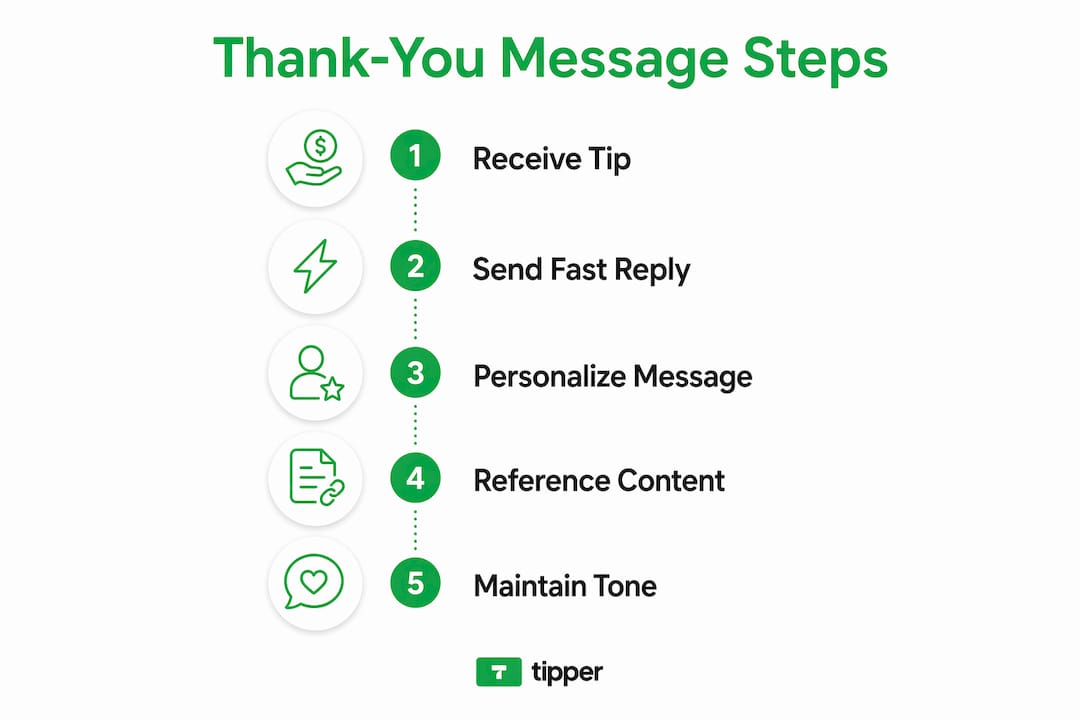
  • Follow up with acknowledgment. A thank-you note or message after a tip reinforces the relationship and encourages repeat support.

Transparency and customer education on tipping calculations reduce confusion and improve trust between customers and service providers. For creators specifically, this means being upfront about how tips are used and what supporters are contributing to. That transparency is not just good ethics. It is good business.

Key takeaways

Receipt-based tipping works best when suggested amounts are visible, calculations are transparent, and tip data integrates directly with payroll or distribution systems.

Point Details
Core definition Receipt-based tipping lets customers add gratuity directly on itemized receipts with suggested amounts.
Pre-tax vs. post-tax matters Tip calculations based on post-tax totals produce higher amounts than pre-tax, which confuses many customers.
Tips vs. gratuities Voluntary tips and mandatory gratuities differ in tax treatment, customer choice, and how they appear on receipts.
Operational accuracy POS systems like Toast link receipt tip data to payroll and tip pooling, but only when time-entry records are correct.
Creator applications The visibility and simplicity principles of receipt-based tipping apply directly to digital tip pages for creators and freelancers.

Why receipt-based tipping is more complicated than it looks

I have spent years watching businesses roll out new POS systems with receipt-based tipping features, confident the technology will handle everything. It rarely does on its own. The most common failure point is not the receipt design or the suggested percentages. It is the gap between what the receipt captures and what actually reaches the employee’s paycheck.

The pre-tax versus post-tax debate is a perfect example of a small technical setting creating outsized confusion. I have seen customers genuinely upset after noticing their 20% tip produced a higher dollar amount than expected, not because they were cheated, but because the POS was calculating on the post-tax total. Businesses that do not communicate this clearly invite distrust, which is the opposite of what a good tipping system should do.

My honest advice to business owners: audit your receipt tip settings before your next busy season. Confirm whether your POS calculates suggested tips on the pre-tax or post-tax amount, and consider adding a single line of text to your receipt explaining the basis. For customers, always check the subtotal line before accepting a suggested tip percentage. The math is simple once you know where to look.

For creators and freelancers adapting these ideas to digital platforms, the lesson is even simpler. Make tipping obvious, make the amounts feel reasonable, and tell people what their support means. That combination outperforms any complicated monetization structure I have seen.

— Steve

How Tipper makes tipping simple for creators and service providers

https://tipper.app

Tipper is built for creators, freelancers, and service providers who want the same clarity and ease that receipt-based tipping brings to restaurants, applied to their own work. With Tipper, supporters send tips instantly through a personalized link using Apple Pay, Google Pay, or a credit card. No account required. No platform fees cutting into earnings. Creators keep 100% of every tip they receive.

Setting up a tip page on Tipper takes minutes, and the experience for supporters is as frictionless as tapping a button on a digital receipt. Tipper also supports thank-you messages via notes or video, giving creators a direct way to acknowledge support and build the kind of trust that keeps supporters coming back. If you are ready to put receipt-based tipping principles to work for your own income, Tipper is the place to start.

FAQ

What is the receipt tipping definition?

Receipt-based tipping is a system where customers add a gratuity directly on their itemized receipt, typically choosing from suggested tip percentages or writing in a custom amount. It is standard practice in U.S. restaurants and service businesses using POS systems like Toast.

How does pre-tax vs. post-tax affect my tip on a receipt?

When a POS calculates suggested tips on the post-tax total, the dollar amounts shown are higher than if calculated on the pre-tax subtotal. Experts recommend tipping on the pre-tax subtotal to keep tip percentages accurate.

What is the difference between a tip and a gratuity on a receipt?

A tip is voluntary and added by the customer at their discretion. A gratuity is an automatic service charge applied by the business, most often for large parties, and it is taxed differently under IRS rules.

Can receipt-based tipping work for creators and freelancers?

Yes. The core principles, visible suggested amounts, simple payment options, and transparent communication, apply directly to digital tip pages used by creators and freelancers. Platforms like Tipper replicate this model outside the restaurant context.

Why do some receipts show both a gratuity and a tip line?

Some receipts include an automatic gratuity as a service charge and still display a blank tip line. Customers are not required to fill in the tip line when a gratuity is already included. Checking the receipt carefully before signing prevents unintentional double-tipping.

Receipt-Based Tipping Explained: What You Need to Know2026-06-23T07:56:01+00:00

How Tipping Links Work for Creators in 2026

If you’ve ever wondered how tipping links work and whether setting one up requires a computer science degree, you’re not alone. Most creators assume the process is complicated, technical, or buried behind fees. The reality is that modern tipping links, sometimes called tip jars or payment links in the industry, have become genuinely simple tools that let supporters send money in seconds without creating accounts or fumbling with wallets. This guide breaks down the mechanics, the user experience, and the strategies that help creators turn casual readers into consistent supporters.

Table of Contents

Key Takeaways

Point Details
Tipping links are instant payment gateways Supporters click once, choose an amount, and pay with Apple Pay or Google Pay without signing up.
Wallet auto-creation removes friction Modern widgets create a supporter wallet on the first tip, making every future tip a one-click action.
Crypto tipping links work without gas tokens Non-custodial links let payers select their preferred chain and pay in stablecoins with no extra setup.
Placement and messaging drive results Where and how you display your tipping link directly affects how often supporters actually use it.
Platform choice affects privacy and payouts Custodial and non-custodial solutions differ significantly in who holds funds and how quickly creators get paid.

A tipping link is exactly what it sounds like. It’s a URL, a button, or an embedded widget that takes a supporter directly to a payment screen where they can send a creator money as a thank-you. Think of it as a digital tip jar sitting at the end of your article, video, or social bio.

The confusion usually comes from lumping tipping links together with complicated donation platforms that require account creation, bank verification, and multi-step checkouts. Modern tipping links skip all of that. Research into tipping behavior shows the main motivations are gratitude and social norms, meaning supporters already want to tip. The tool just needs to get out of their way.

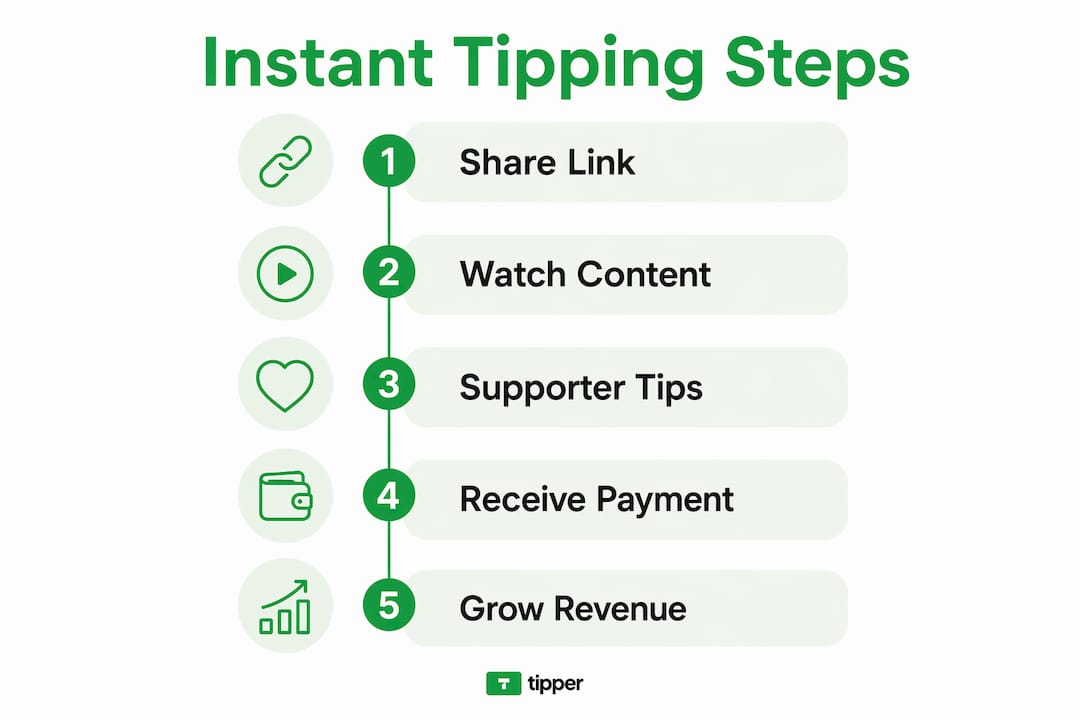
Here’s what a typical tipping link flow looks like from the supporter’s perspective:

  • Step one: The supporter sees your tipping link or button at the end of your content, in your social bio, or embedded on your website.
  • Step two: They click it and land on a clean payment screen showing tip amount options.
  • Step three: They choose an amount and pay with Apple Pay, Google Pay, a credit card, or crypto, depending on what the platform supports.
  • Step four: The payment processes and the creator receives the funds, sometimes instantly.

From the creator’s side, setup usually means copying a short code snippet or sharing a personalized URL. Tools like Tipper let anyone create a tipping link in minutes, without technical knowledge. Embedding tipping tools on sites like Substack, Ghost, or WordPress typically requires nothing more than a script tag and a custom element with your author parameters.

The distinction between an embedded widget and a shareable link matters. A shareable link works anywhere you can paste a URL, including a Twitter bio, an email signature, or a YouTube description. An embedded widget lives inside your page and lets supporters tip without ever leaving your content. Both have their place depending on where your audience is most active.

Infographic tipping link how-to steps

Wallet auto-creation and one-click tipping

This is where tipping link mechanics get genuinely clever, and where most creators don’t realize how much work happens behind the scenes to make their experience feel effortless.

When a supporter clicks your tipping link for the first time, some platforms automatically create an internal wallet for them during the checkout process. They don’t fill out a form or choose a password. The wallet simply exists after that first transaction.

Supporter tapping creator tipping link on phone

Here’s why that matters. The SimpleTip web component demonstrates the model clearly: it auto-creates a wallet with no signup and uses a popup only for the initial funding step. Every tip after that is a single click with no checkout screen appearing at all. The supporter stays on your page, the tip sends instantly, and nobody had to create an account.

The practical steps behind this experience typically work like this:

  1. Supporter clicks your tipping button for the first time.
  2. A lightweight popup appears to collect payment details and fund the new wallet.
  3. The platform creates a server-side wallet linked to that session or optionally to an email address.
  4. On every future visit, the platform recognizes the supporter and processes the tip in one click.
  5. The creator receives the funds minus any platform fees, or in Tipper’s case, the full amount.

Wallet balances in these systems are stored server-side rather than in the browser, meaning supporters don’t lose access if they clear their cookies or switch devices. Optional email linking or identity verification through protocols like ATProto lets supporters recover their wallet across devices. This small detail is the difference between a one-time tip and a habitual supporter.

Some platforms take this further by allowing tip splitting. The SimpleTip widget lets readers decide what percentage of a tip goes to the author versus a subject featured in the content. If you write a profile piece on a musician, your reader can tip you both in a single transaction. That kind of flexibility turns tipping from a simple thank-you into a meaningful gesture.

Pro Tip: Ask supporters to save your page or follow you on a platform that supports persistent login so their wallet auto-link stays active. The easier it is for them to return, the more likely repeat tipping becomes.

Crypto tipping links operate on a different philosophy entirely, and that philosophy has real advantages for creators who want to avoid intermediaries.

In a standard tipping link, the platform typically holds your funds until you request a payout. That’s a custodial model. Crypto tipping links, by contrast, can be non-custodial, meaning the payment goes directly from the supporter’s wallet to yours with no middleman holding the money in between.

The user experience for crypto tipping has improved dramatically. Consider how Hash PayLink works: a creator generates a single URL or QR code that carries multiple blockchain addresses. When a supporter opens the link, they select which chain they want to use and complete the payment in stablecoins or tokens. The creator receives the funds directly on the chosen chain.

The specific advantages of this model include:

  • No app download required. Supporters open a link in any browser.
  • No gas token headache. Multi-chain PayLink URLs eliminate the need for payers to hold gas tokens, which is one of the biggest friction points for crypto newcomers.
  • Broader chain support. One link works across multiple networks, so you’re not forcing supporters into a specific ecosystem.
  • Direct settlement. Funds arrive in the creator’s wallet without passing through a platform’s treasury.

The use cases extend well beyond the typical “donate to this creator” scenario. Hash PayLink applications include paid subscriptions, course fees, merchandise payments, and in-game purchases, making this model useful for musicians selling track downloads, educators charging for workshops, and gaming creators offering premium experiences.

Pro Tip: If your audience already engages with crypto, a non-custodial tipping link builds trust instantly because supporters can verify on-chain that their payment went directly to you. That transparency is something custodial platforms can’t offer.

Choosing between an embedded widget and a shareable crypto link isn’t about which is better in absolute terms. It’s about which fits your audience, your platform, and your tolerance for setup complexity.

Feature Embedded widget (e.g., SimpleTip) Crypto link (e.g., Hash PayLink)
Custody of funds Custodial, platform holds balance Non-custodial, direct to creator
User experience One-click after first tip Requires chain selection each time
Wallet management Auto-created, server-side Supporter uses own crypto wallet
Setup complexity Moderate, requires script embed Low, just share a URL or QR code
Chain support Single payment rails Multi-chain out of the box
Tip splitting Supported between author and subject Not standard, depends on implementation
Recovery options Email or identity-linked wallet Supporter’s own wallet handles recovery
Best for Blog, editorial, long-form content Events, courses, social posts, global reach

The embedded widget wins when your content lives on a page and you want the tipping experience to feel native to that page. Your supporter never leaves. The wallet remembers them. The experience feels like part of your content rather than a detour.

The shareable crypto link wins when you need portability. You’re posting on social media, speaking at an event, or reaching an audience that’s already crypto-literate. You paste one URL everywhere and it works. Non-custodial solutions simplify the payer experience while giving creators full control over their funds from the moment a transaction settles.

The practical advice here: start with whichever format your primary audience already understands. If your readers use Apple Pay and Google Pay, an embedded widget with fiat payment support gets you tipping revenue faster than asking them to set up a crypto wallet. If you’re building in Web3 communities, a non-custodial crypto link signals that you speak their language.

Strategies for maximizing tipping revenue

Understanding how tipping links generate traffic and convert supporters into tippers requires more than just placing a link somewhere on your page. Location, framing, and timing all affect results.

The creators who earn the most from tipping links treat them as part of the content experience rather than an afterthought. Here’s what actually moves the needle:

  • Place your tipping link at the emotional peak. For long-form writers, that’s right after a powerful conclusion. For video creators, it’s at the end of a build-up. Supporters tip when they feel something, not when they scroll to a generic footer.
  • Use specific language over generic calls to action. “Buy me a coffee” has become invisible through overuse. Telling supporters exactly what their tip supports, whether that’s your recording equipment, your research time, or your team, creates a personal connection that generic phrases don’t.
  • Leverage the one-click wallet experience for repeat supporters. Once a supporter has tipped once, remind them in your next piece of content that tipping is now instant for them. That reminder converts occasional supporters into habitual ones.
  • Track what works. Most tipping platforms offer basic analytics. Check which pieces of content generate the most tips and double down on that format. If your deep-dive tutorials earn more than your opinion pieces, that’s a signal worth acting on.
  • Protect supporter trust above everything else. Don’t over-ask. One clear tipping prompt per piece of content is enough. Popups and aggressive overlays train readers to tune you out entirely.

Integrating your tipping link into a broader monetization strategy means treating it as complementary to subscriptions, digital products, and sponsorships, not a replacement. Tipping captures the spontaneous gratitude that other models miss. It’s the supporter who loved one specific article and wants to say so with $5. Every revenue stream captures a different supporter mindset, and tipping captures one that nothing else does.

For freelancers working with clients, placing a tipping link in your email signature or on your invoice page gives clients a frictionless way to express satisfaction beyond the agreed rate. Tools like those in the PeerFounder directory offer additional resources for freelancers building multiple income streams around their expertise.

I’ve watched tipping tools evolve from clunky PayPal buttons to the genuinely elegant experiences we have today, and my honest observation is that most creators still underestimate what a well-placed tipping link can do for their relationship with an audience.

What I’ve seen consistently is that the friction point is almost never the money. Supporters who care about your work will pay. The friction is always the process. Every extra click, every account creation screen, every “you must download our app” message cuts the conversion rate in half. Reducing supporter friction through wallet auto-creation isn’t a minor UX improvement. It’s the difference between a creator who earns $50 a month in tips and one who earns $500.

My preference has shifted toward combining both models. An embedded widget on your main content channels handles the regular readers who return weekly. A crypto link handles the global supporters, the crypto-native audience, and the use cases where you need portability. Neither one alone is the full picture.

The caution I’d offer is about privacy. Some tipping platforms collect far more supporter data than they need to process a payment. Before you embed any tool, read how it handles the people who tip you. Your supporters trust you by extension when they click your link. That trust is worth protecting. Platforms like Tipper are built around user privacy by design, and that approach earns long-term loyalty from supporters who notice those details.

— Steve

Start earning with Tipper today

If the mechanics above made sense but the setup still feels uncertain, Tipper was built specifically to solve that.

https://tipper.app

Tipper gives you a personalized tipping link in minutes. Supporters pay with Apple Pay, Google Pay, or a credit card. No account required on their end, and you keep 100% of what they send. You can embed your tipping link on your website, drop it in your social bio, or share it directly with your audience. When a supporter sends a tip, you can respond with a thank-you note or video, which creates the kind of personal connection that turns a one-time tipper into a loyal fan. Tipper handles the technical side so you can focus entirely on your content.

FAQ

A tipping link is a URL or embedded button that lets supporters send a creator money as a thank-you, usually without creating an account or going through a multi-step checkout.

Platforms like Tipper allow supporters to pay using Apple Pay or Google Pay directly from the tipping link, processing the payment without requiring the supporter to register anywhere.

What does wallet auto-creation mean for tipping?

Wallet auto-creation means the platform generates a supporter wallet during their first tip, making every future tip a one-click action with no checkout popup required.

Non-custodial crypto tipping links are generally very safe because funds go directly to the creator’s wallet rather than sitting in a third-party platform’s account.

Place your tipping link at the emotional high point of your content, right after your strongest conclusion or most impactful moment, where supporters are most motivated to express appreciation.

How Tipping Links Work for Creators in 20262026-06-23T07:54:01+00:00

One-Click Tip Solutions: Top Examples for Creators

If you create content and have ever tried to collect audience tips, you already know the friction is real. A clunky payment page, a required account signup, or a confusing checkout flow can kill a supporter’s impulse before they ever hit “send.” The best examples of one-click tip solutions solve this by collapsing the entire transaction into a single tap or click. These tools, formally known as frictionless micro-payment or instant tip widgets, come in more varieties than most creators realize. This article breaks down the strongest options, compares them honestly, and helps you pick the setup that fits your workflow.

Table of Contents

Key takeaways

Point Details
Two-phase tipping works best Auto-provision a wallet or passkey on first use, then every subsequent tip is one click.
Preset amounts reduce hesitation Offering fixed amounts like $5, $10, and $20 cuts decision fatigue and speeds up the transaction.
Crypto tips need zero complexity Gasless transactions and biometric login remove the barriers that make crypto tipping fail.
Embed beats external links Native widgets on your site or newsletter outperform standalone tip page links in conversion.
Fees add up faster than you think Platforms charge anywhere from 0% to 5%+, so your net earnings depend heavily on your choice.

Examples of one-click tip solutions: what to look for first

Before picking a tool, you need a framework. Not every platform that calls itself “one-click” actually delivers on that promise. The difference between a genuinely fast tipping experience and a rebranded checkout page comes down to a few specific criteria.

Ease of setup and integration matters more than it sounds. Some tools require developer access or API keys. Others give you a shareable link in under two minutes. Your choice should match your technical comfort level.

Frictionless user experience is the core promise. True one-click tipping operates in two phases: a one-time provisioning step where the user’s wallet or payment credentials are saved, and then a single-tap experience for every tip after that. If your audience has to re-enter payment details every time, it is not a real one-click solution.

Payment method breadth determines how many people can actually tip you. Some tools support only credit cards. The best ones accept Apple Pay, Google Pay, PayPal, Venmo, and crypto without forcing users to create accounts.

Security and privacy directly affect whether people trust the process. Platforms that avoid storing sensitive data, skip KYC requirements, or use biometric authentication build credibility with cautious users.

Fees and transaction costs are where many creators get surprised. Use a PayPal fee calculator before committing to any platform that routes payments through PayPal, because fees compound faster than expected on small transactions.

Pro Tip: Look for platforms where the tip button can be embedded directly into your content. Native tip widgets on platforms like Substack, Ghost, or custom HTML sites consistently outperform standalone tip page links in frequency of use.

1. SimpleTip

SimpleTip is an open-source widget that takes a smart approach to one-click tip collection setup. The first time a reader tips, the system auto-creates a wallet and walks them through funding it. After that, every tip is a single click with no checkout popup appearing again.

Blogger installs open-source tip widget

What makes it particularly useful for creators is the split tip feature. You can configure tips to divide automatically between the content author and the subject of the content, which works well for interview-based creators or collaborative channels. Payment method support is wide: cards, Apple Pay, Google Pay, PayPal, Venmo, Zelle, M-Pesa, and crypto are all on the table.

The open-source nature means you can self-host it and customize the look to match your brand. The tradeoff is that initial setup requires some technical confidence.

2. Lazortip

Lazortip is one of the most interesting quick tip solutions in the crypto space right now. It runs on Solana and removes every piece of friction that normally makes crypto tipping a bad experience for mainstream audiences.

Users tap the tip button and authenticate with FaceID or TouchID. No seed phrases. No wallet extensions. No gas fees. The transaction sends gasless in the background, and the tipper never sees a wallet popup. For creators with a crypto-native audience, this is the cleanest implementation available. The biometric login also doubles as a security layer, which matters for supporters who are cautious about mobile payments.

The limitation is obvious: your audience needs to be at least moderately comfortable with Solana-based transactions. This tool is not the right fit if your community is entirely Web2.

3. Kit Tips

Kit (formerly ConvertKit) built tipping directly into its creator platform, and it is one of the most beginner-friendly one-click tip examples available today. Creators configure preset tip amounts, typically $5, $10, $20, and $50, with an optional custom tip floor set at $5 minimum.

The result is a dedicated tipping page that you can either share as a link or embed using provided code. Supporters pick an amount and pay without creating a Kit account. For newsletter creators already on the Kit platform, this is the path of least resistance because everything lives inside a tool you are already using.

Preset amounts work well because they align with what research shows about decision fatigue. When someone sees four clear options instead of a blank dollar field, they are far more likely to complete the transaction quickly.

UniLink’s Tips block is built specifically for casual, frictionless support without the overhead of a donation campaign. Quick-tap buttons let supporters choose $1, $3, $5, or similar amounts. There are no goal trackers, no tiers, and no progress bars.

Payment routing goes through Stripe or PayPal, which means broad compatibility with existing supporter payment methods. The key advantage here is simplicity: minimal steps and a clean interface that does not make the tipping process feel like a fundraiser. For influencers who want a low-pressure “buy me a coffee” feel without signing up for a dedicated platform, this block is worth testing.

5. Aurpay crypto tip jar

Aurpay brings crypto tipping to ecommerce by letting creators set up a tip jar product directly on WordPress or Shopify. Supporters pay through the normal checkout flow using their crypto wallet. No KYC is required and no middleman holds the funds. Aurpay’s fee sits at approximately 0.8%, which is well below most traditional payment processors.

This approach is clever because it piggybacks on checkout infrastructure that already works. If you run a Shopify store alongside your content, adding a tip jar product costs almost no setup time. The checkout flow is familiar to your audience, which reduces the trust barrier that often slows crypto adoption.

6. WooCommerce or Shopify tip jar products

Beyond Aurpay, you can configure a simple virtual tip product on WooCommerce or Shopify without any third-party tipping tool. Create a product called “Tip” or “Support my work,” set a fixed price or allow buyers to enter a custom amount using a price field plugin, and share the product link.

This method works for creators who already manage an ecommerce store and do not want another tool in their stack. The downside is that the checkout flow is longer than a dedicated tip widget, which means slightly more friction. You can offset this by enabling Google Pay one-click checkout in your store settings. With stored credentials active, repeat tippers complete the transaction in one tap on Android.

7. Preset tip buttons in website builders and newsletters

Most major website builders (Squarespace, Webflow, Wix) and newsletter platforms let you create button-linked forms or external redirect buttons. Pairing these with Stripe Payment Links gives you a surprisingly clean tipping setup without dedicated software.

Create separate Stripe Payment Links for three or four fixed amounts. Add them as buttons on your site or newsletter footer. Label each clearly: “Tip $5,” “Tip $10,” “Tip $25.” When a reader clicks, Stripe handles the payment page, and Apple Pay or Google Pay appear automatically on mobile. The setup takes about 30 minutes and costs only Stripe’s standard processing fee. This is one of the best one-click tip methods for creators who want full control without vendor lock-in.

Comparison of key tipping solutions

Solution Setup difficulty Payment types Unique feature Fee range Best for
SimpleTip Moderate (self-host) Cards, wallets, crypto Split tips, auto wallet Varies Tech-comfortable creators
Lazortip Moderate Solana crypto only Gasless + biometrics Gasless Crypto-native audiences
Kit Tips Easy Card, PayPal Built-in to Kit platform Kit plan fee Newsletter creators
UniLink Tips Easy Stripe, PayPal No campaign overhead Stripe/PayPal rates Casual supporter setups
Aurpay Easy (ecommerce) Crypto No KYC, no custody ~0.8% Store-based creators
Stripe Payment Links Easy Cards, Apple/Google Pay Full control, no platform ~2.9% + $0.30 Independent creators

Pro Tip: If your audience is split between Web2 and Web3 users, consider running two parallel options: a card-based widget for general followers and a crypto solution like Lazortip for your Web3 community. You capture both without complicating the experience for either group.

My honest take on getting tipping right

I have worked with enough creator communities to say this clearly: most tipping setups fail not because of the tool, but because of where and how the button is placed.

Creators obsess over which platform to pick and then bury the tip button at the bottom of a page no one scrolls to. I have seen creators generate more in tips after simply moving their button to the top of their newsletter or pinning it in their bio link than after switching tools entirely.

The other mistake I see constantly is over-engineering the first-time experience. Yes, reducing setup friction matters deeply for repeat tipping. But if your first-time flow asks too many questions or requires too many permissions, you lose people before they ever become repeat tippers. Keep the first interaction under 30 seconds, and everything else gets easier.

On the crypto side, I am genuinely impressed by what Lazortip is doing. Eliminating seed phrase complexity is not a minor UX tweak; it is the difference between a feature your audience actually uses and one they abandon after one confused attempt.

The creators I respect most treat tipping like a natural part of their content rhythm, not a fundraising moment. The framing matters as much as the tool.

— Steve

Start collecting tips with Tipper

If you want a one-click tipping setup that works out of the box without technical headaches, Tipper is worth a serious look. Tipper lets you share a personalized tip link, and supporters send tips instantly using Apple Pay or Google Pay without creating an account. You keep 100% of what you earn. Supporters can even send thank you notes or videos, which creates a real connection rather than a transactional exchange.

https://tipper.app

Whether you are a freelancer, a YouTuber, or a newsletter writer, Tipper makes tipping simple for your audience and transparent for you. No platform cuts, no complicated setup, and full privacy for everyone involved.

FAQ

What are the best one-click tip solutions for creators?

SimpleTip, Kit Tips, UniLink, and Tipper are among the strongest options, each suited to different audience types and technical setups. The best choice depends on your platform, payment preferences, and how much setup time you are willing to invest.

How do one-click tips actually work?

Most effective tools use a two-phase approach: a one-time setup where the user saves payment credentials or creates a wallet, followed by a true single-click transaction for every tip after that.

Are crypto one-click tip tools safe to use?

Platforms like Lazortip use biometric authentication and gasless transactions to make crypto tips secure without exposing users to seed phrase risks. Aurpay avoids custody entirely, so funds go directly to the creator.

Do tip platforms take a cut of my earnings?

Most charge either a platform fee or pass through processor fees from Stripe or PayPal. Aurpay charges approximately 0.8%, while Stripe-based setups run around 2.9% plus $0.30 per transaction. Tipper lets creators keep 100% of their tips.

What payment methods should my tip solution support?

At minimum, look for Apple Pay, Google Pay, and card support. Research shows 84% of shoppers value one-click payment options, and 80% actively use stored credentials, so wallet support directly affects how many tips you actually receive.

One-Click Tip Solutions: Top Examples for Creators2026-06-23T07:52:01+00:00

Top 6 paytostream.com Alternatives 2026

Setting up a tipping link that actually lets creators keep most of their earnings often means dealing with confusing payout rules, forced donor accounts, or regional payment restrictions. Many mainstream platforms either take a steep commission, require donors to sign up, or do not offer instant access to funds in key markets. This guide compares revenue share, ease of setup, and payout workflows across six creator tipping link tools so you can pick the one that fits your income needs and audience location.

Table of Contents

Tipper

https://tipper.app

At a Glance

Creators keep 100% of what they receive. Tipper takes no platform cut and advertises instant payouts to bank accounts while protecting a receiver’s personal information.

The product accepts tips online and in person through a personalized link or QR code and supports Apple Pay, Google Pay, and card payments without forcing donors to create accounts.

Core Features

  • Personalized link or QR code for both online profiles and printed cards at events.
  • No sign-up needed for tippers so supporters can pay with Apple Pay, Google Pay, or card immediately.
  • Keep 100% of tips; Tipper does not take a platform commission and routes earnings directly to you.
  • Quick setup that goes live across devices in minutes.
  • Built-in options for short thank you notes or videos to send back to supporters.

Key Differentiator

Tipper’s standout claim is simple and concrete: the platform takes no fee on tips so creators keep 100 percent of what supporters send. That economics pairs with privacy controls and fast access to funds, which changes how a creator treats tipping as revenue rather than miscellaneous donations.

Pros

  • Easy to set up: Live link or QR code in minutes makes it practical for creators who change platforms often.
  • No commission taken: Keeping the full tip increases per-transaction earnings compared with common donation platforms that take a cut.
  • Instant payouts: The ability to request quick bank payouts reduces cash flow friction for freelancers and performers who need funds immediately.
  • Privacy-first profile: Only public profile details are shown to tippers which limits unnecessary exposure of personal contact information.
  • Works with existing socials: You can drop the link into bios, livestream overlays, and printed signage at events.

Cons

  • Relies on external payment processors which may impose their own fees or delays; that dependency means you still see standard card processing costs and occasional payout timing gaps.

Who It’s For

Creators, influencers, street performers, workshop leaders, and freelancers who want a low-friction way to receive direct support online and in person. It fits people who prioritize immediate access to earnings and privacy over deep analytics or CRM features.

Unique Value Proposition

Anyone can tip without creating an account using mobile wallets or cards via a single link or QR code. For creators this reduces friction at the moment support is most likely to happen and preserves the full value of each contribution without platform commissions.

Real World Use Case

A social media creator pins their Tipper link to their profile and prints a QR code for meet-and-greets. Followers use Apple Pay or Google Pay to send tips and the creator replies with a short thank you video while requesting a same-day payout to cover event expenses.

Website: https://tipper.app

Tipeee

https://en.tipeee.com

At a Glance

Tipeee’s marketing materials state it has collected over €57.5 million from 704,039 tipers since 2013. The platform positions itself as a Europe-focused hub for one-off and recurring support, but user reports on Trustpilot flag confusing donation flows and delayed billing.

Core Features

  • Recurring and one-off tips across creators in video, music, art, journalism, and gaming.
  • Customizable reward tiers and creator supporter interactions that map to campaign goals.
  • Real-time dashboards for live streams so tips display instantly during broadcasts.
  • Embedded payment modules creators can place on sites and social profiles.
  • Promotional resources aimed at helping creators launch funding drives and projects.

Key Differentiator

Tipeee leans into community-led monetization for European creators with flexible donation formats and project funding options. That focus on recurring patronage and campaign goals sets it apart from platforms that prioritize instant, accountless checkouts. If you want predictable monthly support and donor relationship tools, Tipeee is geared toward that workflow.

Pros

  • Large creator base. That figure above provides scale which can help new creators find audience overlap and discoverability.

  • Flexible funding. The ability to mix recurring tips with project goals makes it useful for creators who run both ongoing work and one-off campaigns.

  • Interaction tools. Reward tiers, notes, and the live tip dashboard give you ways to recognize supporters and keep them engaged during streams.

  • Low headline fee. The vendor advertises an 8% transaction fee which is competitive for platforms that handle both one-off and recurring donations.

  • Longevity. Operating since 2013, Tipeee has built workflows tailored to creator payouts and campaign management.

Cons

  • User experience complaints. Multiple Trustpilot entries describe confusing donation flows, especially around setting or canceling recurring tips, which raises friction for supporters.

  • Support and billing reliability. Reviews report delayed payouts and unclear transactions, which may force creators to reconcile payments manually.

  • Community dependence. Because discovery and earnings rely heavily on an existing supporter base, creators without an established audience may see uneven income.

When It May Not Fit

If you need instantaneous, accountless tipping through Apple Pay or Google Pay, or you want to keep 100 percent of receipts with a minimal, one-click workflow, Tipeee’s donation flow and payout rhythm may feel slower or more complex. Expect extra attention to billing reconciliations if your volume is high or if you require fast, predictable payouts.

Who It’s For

Independent European creators and artists who want a mixture of monthly patronage and project-driven funding. It fits creators who value reward tiers and community interaction over ultra-fast checkout mechanics.

Real World Use Case

A YouTuber sets a monthly tip tier with personalized updates and a studio tour reward for higher supporters. They run a month-long campaign for a documentary and use the embedded payment module on video descriptions to collect one-off contributions while maintaining recurring supporters for baseline income.

Website: https://en.tipeee.com

Streamloots

https://streamloots.com

At a Glance

Streamloots reports more than 100,000 creators using its tools to monetize live content, a figure the company provides on its site. The product mixes interactive viewer mechanics with recurring subscriptions and auctions to turn engagement into recurring income for streamers.

Core Features

  • Interactive cards viewers can trigger during streams to affect gameplay, chat, or on-screen graphics.
  • Recurring subscriptions that let creators gate exclusive content and perks for supporters.
  • Premium auctions and marketplace features for one-off exclusive rewards.
  • Viewer-driven goals with marathon timers and milestones to boost community participation.
  • A revenue share model that the vendor advertises starting at 80%, increasing for partners.

Key Differentiator

Streamloots prioritizes platform independence and creator pay. The vendor advertises a high starting revenue share and tools that let you keep direct lines to fans regardless of where you broadcast. That combination focuses on creator fairness more than platform lock-in.

Pros

  • Fair revenue split. The revenue share above gives creators more take home per sale compared with many platform-take models.

  • True multi-platform support lets you run the same monetization setup on Twitch, YouTube, or other streaming destinations without rebuilding your offering.

  • Direct fan messaging keeps supporters tied to you rather than to a single social or streaming service.

  • Secure payments reduce chargeback risk and simplify payouts so you spend less time on dispute handling.

  • Variety of monetization tools fits different content styles from gaming to music to IRL streams.

Cons

  • Some community feedback raises concerns that buyable interactive mechanics can feel gambling-like to parts of an audience.

  • Public pricing details are limited in the provided content, so total cost or fee structure beyond the revenue share is unclear.

  • Income outcomes depend heavily on your audience size and engagement level, so results will vary widely between creators.

When It May Not Fit

If you prefer a simple donation button or a single recurring membership without interactive triggers, Streamloots may be more than you need. Creators who want transparent, line-item pricing up front will find public pricing visibility limited based on the provided information.

Who It’s For

You are a streamer or creator who wants interactive ways to monetize live shows and is comfortable designing triggerable experiences for viewers. This fits creators who plan campaigns, auctions, or subscription perks and who value keeping a higher share of revenue.

Real World Use Case

A Twitch streamer builds custom card decks tied to in-game actions and runs weekly auctions for signed digital items. Viewers buy cards and subscribe for recurring perks, which increases engagement and stabilizes monthly income compared with one-off donations.

Pricing

Specific pricing tiers are not listed in the provided content. The vendor advertises a revenue share starting at 80%, rising for partners and higher-tier creators, but detailed fees or plan structures are not specified.

Website: https://streamloots.com

tiptip.id

https://tiptip.id

At a Glance

Tickets and digital content on tiptip.id range from Rp3.000 to Rp2.499.000, with many premium events priced from about Rp200.000 and early bird discounts available. The site combines event ticketing and educational digital goods in one local marketplace aimed at Indonesian users.

Core Features

tiptip.id offers a broad event catalog covering concerts, festivals, webinars, workshops, and community gatherings.

  • Digital e-tickets for contactless entry and smartphone scanning.
  • Region-based discovery that surfaces nearby events and location-specific suggestions.
  • A library of digital content including e-books, courses, and recorded webinars.

Customer support is reachable by WhatsApp and email for order questions and ticket issues.

Key Differentiator

tiptip.id focuses squarely on the Indonesian market, consolidating both live event tickets and educational digital content in one place. Unlike Tipper, which emphasizes instant tips through personalized links and creators keeping 100% of earnings, tiptip.id serves event-goers and learners looking for local activities and purchasable content.

Pros

  • Wide category coverage makes it easy to switch between entertainment and personal development options without leaving the marketplace.
  • The checkout flow is straightforward and supports secure online purchases plus immediate e-ticket delivery.
  • Local curation helps surface events that matter regionally rather than global listings that can dilute discovery.
  • Availability of courses and guides means users can buy practical learning materials alongside tickets.
  • Official partnerships with organizers reduce the risk of invalid tickets compared with informal resale channels.

Cons

  • Independent third-party reviews appear limited, so trust signals beyond the platform may be scarce.
  • The product positioning lacks a clearly defined unique feature that separates it from other local ticket sellers.
  • International users will find the catalog narrow; the platform targets domestic Indonesian events primarily.

When It May Not Fit

If you live outside Indonesia or chase international festivals, tiptip.id will feel constrained. Buyers who need bulk corporate ticketing or wholesale pricing will likely need a specialized vendor. Users who rely on extensive third-party reviews for buying decisions will find fewer external references here.

Who It’s For

Indonesian event-goers, learners, and creators who want a single place to buy tickets and pay for digital courses or guides. Ideal for people who prefer contactless e-ticketing and regional event discovery rather than global marketplaces.

Real World Use Case

A Jakarta resident searches tiptip.id for upcoming concerts and a stress management webinar. They buy an e-ticket, receive it on their phone, and show it at the door for entry. The same account later purchases an e-book on personal finance from the platform.

Pricing

Individual tickets and digital content span a wide range from around Rp3.000 to Rp2.499.000. Many events list premium tickets from roughly Rp200.000 upward and offer early bird discounts. The site emphasizes affordability though no explicit fee structure is published.

Website: https://tiptip.id

COY Creator Platform

https://coycreator.com

At a Glance

COY offers a white-label option that lets organizations launch private creator networks under their own brand, a capability often reserved for enterprise vendors. The platform combines a customizable creator website with built-in tools for subscriptions, courses, livestreams, and exclusive content.

Core Features

Creators get a fully custom branded website, direct control of their email list and subscriber data, and an integrated marketplace for subscriptions, courses, livestreams, and gated posts. The product also includes AI-driven automation for scheduling, messaging, and basic marketing tasks.

Key Differentiator

COY’s selling point is audience ownership plus on-site monetization paired with automation. That mix targets creators who refuse platform gatekeepers and want their subscriber list, branding, and payments centralized on a single, self-hosted experience rather than split across feeds and algorithmic distribution.

Pros

  • Full ownership of audience data helps you export subscribers, run your own campaigns, and avoid relying on third-party algorithms for reach.

  • Control over branding and content distribution means your site, pricing, and discoverability follow your rules, not a marketplace’s layout.

  • Multiple monetization streams are built into one dashboard so subscriptions, courses, and live events live under the same account and payment flow.

  • AI tools automate recurring tasks like scheduling launches, sending drip messages, and seeding marketing sequences, which reduces manual overhead for solo creators.

  • The white-label option enables brands and talent organizations to deploy a private creator network without building custom infrastructure.

Cons

  • The vendor does not publish independent third-party reviews, so operational strengths and weaknesses come primarily from the product description rather than user reports.

  • Creators unfamiliar with self-managed sites may face a learning curve for DNS, payment setup, and email deliverability that platform-first services hide.

  • You must own your marketing. COY facilitates sales tools but does not replace the need for ongoing audience acquisition and retention work.

When It May Not Fit

If you want a frictionless, tip-first setup where fans can contribute without leaving a social post, COY is a heavier lift than a simple tipping link service. Teams without marketing resources or technical comfort may find the platform’s control model more work than value.

Who It’s For

Independent creators who prioritize control over discoverability and revenue splits, plus organizations that want to run branded networks for talent or members. This is for people willing to trade convenience for ownership and who either have or will invest in audience growth.

Real World Use Case

A solo creator launches a COY site to sell a monthly membership, a three-module course, and occasional ticketed livestreams. They use the AI scheduler to queue promotions, keep subscriber lists in-house, and host recorded lessons behind their own paywall so earnings and emails never pass through an aggregator.

Pricing

Pricing information is listed as informational only by the vendor. The site does not publish standard public tiers in the provided product data, so you will likely need to request a demo or quote for white-label or enterprise network options.

Website: https://coycreator.com

streampay.sa

https://streampay.sa

At a Glance

No app downloads are required for payers — StreamPay.sa uses branded payment pages and shareable links so customers pay instantly from a browser. The vendor positions the product for Saudi merchants who need subscriptions, installments, and quick collections without forcing an app install.

Core Features

Branded payment pages handle instant payment processing and one-off collections via links shared over SMS, WhatsApp, or email. The platform includes automated subscription management with renewal alerts and retries to reduce failed payments.

Custom payment links let you collect from multiple clients without account setup. Installment plans are configurable and support automated collections and reconciliation. The service also claims integrations with accounting systems and compliance with Saudi standards.

Key Differentiator

What sets this offering apart is the focus on local banking rules and compliance combined with a no-app payer flow. That local integration aims to shorten setup time for Saudi businesses and keeps payment pages familiar to regional customers.

Pros

  • Simplifies collections for teams that send invoices by link. Payment pages and links cut friction for customers who do not want another app.
  • Automated subscription management reduces manual follow-up. Renewal alerts and retries limit lost recurring revenue.
  • Flexible installment plans let merchant configure schedules and automate collections, useful for memberships and tuition.
  • Integration with accounting tools and local compliance means reconciliation workflows can be more predictable for finance teams.
  • Supports common merchant use cases in education, events, and membership services, matching the stated target audience.

Cons

  • There are no publicly available third-party reviews cited in the provided materials, so independent customer sentiment is hard to verify.
  • Public documentation of strengths and weaknesses is limited, which makes due diligence heavier for buyers who rely on external references.
  • The product data gives no detailed pricing breakdown; you must consult the vendor for plan specifics and fee structures.

Who It’s For

Business owners, school administrators, and service providers operating in Saudi Arabia who need fast digital payment collection without forcing customers into apps. Teams that rely on payment links, subscriptions, or installment plans will find the feature set directly relevant.

Real World Use Case

A private school sets up monthly tuition subscriptions and sends branded payment links to parents. The automated renewals and retry logic reduce manual reminders, and the school’s accounting system receives reconciled entries through the advertised integration.

Pricing

The vendor lists flexible options on its site, with subscription or usage-based plans. Contacting the sales team is necessary to get exact fees, gateway charges, and any onboarding costs for local bank integration.

Website: https://streampay.sa

Comparative Analysis

When evaluating alternatives for creator tipping tools, several platforms offer unique strengths, catering to varying demands of content creators and their audiences. It becomes crucial for users to assess these differences to select an option that aligns with their goals and operational priorities.

Platform Fee Structures and Revenue Distribution

Tipper.app sets itself apart by allowing contributors to keep 100% of their received funds, distinguishing it from competitors which levy commission-based fees. While Tipeee advertises an 8% fee on transactions, this is competitive for platforms incorporating extensive features like reward tiers and community engagement tools. Conversely, Streamloots offers a scalable revenue share starting at 80% for creators, improving profitability for high-volume users. For individuals aiming to maximize immediate earnings from direct contributions, Tipper.app’s fee-free model is compelling, though competitors provide additional monetization mechanics that cater to specific creative formats.

Feature Customization and Audience Engagement

Streamloots excels by enabling creators to craft personalized engagement experiences, such as interactive triggers during live broadcasts. This offers dynamic interaction and extended viewer participation beyond straightforward contributions. Meanwhile, COY Creator Platform provides an opportunity for brand-centric integrations, including customizable websites and AI-driven automation — valuable for creators prioritizing their branding and audience ownership. However, Tipper.app’s simplicity in setup and use through direct links and QR codes remains an attractive solution for creators emphasizing frictionless engagement.

Best Fit

  • For creators seeking direct monetization without platform fees: Tipper.app’s structure suits individuals wanting to maximize immediate earnings without commission deductions.
  • For content creators emphasizing community engagement: Tipeee allows rich interaction with tools such as reward tiers and campaign structures, ideal for fostering recurring supporter relationships.
  • For live streamers requiring interactive mechanics: Streamloots provides customizable interaction cards and subscription options tailored to boost live show engagement.
  • For creators desiring extensive customization and control: COY Creator Platform offers self-managed features that enable full ownership of audience data and distribution choices.

Our Pick

Tipper.app emerges as the choice for creators seeking a streamlined mechanism to obtain contributions without interruptions or commission overhead. Its dedication to fast payouts ensures cash flow remains consistent for users who depend on immediate access to funds. However, creators requiring advanced community features or customized branding opportunities might find platforms like Tipeee or COY Creator Platform better suited to their needs. For those prioritizing simplicity and rapid transactions, Tipper.app delivers value and convenience.

Selecting the right platform depends on retaining earnings, ease of supporter use, and real-time fund access.

Platform Core Feature Key Differentiator Best For Notable Limitation
Tipper Personalized tipping via links or QR codes No platform cut; instant payouts Creators needing immediate, full payouts Relies on external payment processors
Tipeee One-off and recurring tips with reward tiers Supports European creators and campaigns Monthly patronage and project funding User experience issues with automated billing and payouts
Streamloots Viewer-triggered cards and content subscriptions High revenue share with interactive features Streaming and interactive live shows Can feel overly complex based on engagement tools
tiptip.id Digital goods and event ticketing marketplace Focus on Indonesian events and learning Local event discovery and ticketing Narrow catalog for international users
COY Creator Platform Self-branded websites for creators Control over branding, audience, and data Creators wanting platform independence May require time/skills for self-management

Discover a Simpler Way to Receive Tips with Tipper

If you are exploring paytostream.com alternatives looking to eliminate platform fees while providing instant payouts, Tipper stands out as the ideal choice. Many creators face the challenge of delayed access to funds and losing a share of their tips to commissions. Tipper solves these problems by allowing supporters to tip using Apple Pay or Google Pay without creating accounts, and creators keep 100 percent of their earnings. This direct approach also safeguards privacy and lets creators send personalized thank-you notes or videos.

https://tipper.app

Take control of your tipping income and connect with your audience immediately. Visit Tipper to create your personalized tip link or QR code and start receiving tips the moment support happens. Experience instant payouts and keep every dollar your supporters send without any platform cut today.

Frequently Asked Questions

How does Tipper ensure creators keep all their earnings?

Tipper guarantees that creators keep 100% of the tips they receive. This is due to the platform taking no commission on tips, allowing creators to maximize their earnings. Start using Tipper to benefit from instant payouts and retain the full value of your contributions.

What is the difference between Tipper and Tipeee regarding donation flows?

Tipeee offers a flexible funding system that includes both recurring and one-off tips, which is beneficial for creators seeking predictable support. In contrast, Tipper is designed for immediate tipping with no sign-up required for donors, making it easier for supporters to contribute instantly. If you prioritize easy, accountless tipping, Tipper is an excellent choice.

Can I use Tipper if I want to interactively engage my supporters?

Tipper does not feature interactive options like those available on Streamloots, which lets viewers trigger actions during streams. Instead, Tipper focuses on straightforward tipping without additional interactive mechanics. For creators who want to keep things simple and direct, Tipper remains a strong option.

Does Tipeee offer tools for engaging with supporters?

Tipeee includes customizable reward tiers and interaction tools that help creators recognize their supporters. On the other hand, Tipper provides built-in options for sending quick thank-you notes or videos but lacks the same level of tiered engagement features. Consider your needs for supporter interaction when deciding between the two platforms.

How does Tipper protect creator privacy?

Tipper ensures creator privacy by only displaying public profile details to tippers, which limits the exposure of personal information. This feature is essential for creators who prefer to maintain their privacy while still receiving support. If privacy is a significant concern, Tipper offers a secure way to monetize without compromising your personal data.

Top 6 paytostream.com Alternatives 20262026-06-23T07:44:02+00:00

Top 3 buymeacoffee.com Alternatives for Creators 2026

Setting up straightforward tipping links for creators often means sacrificing either payout transparency or ease of use for fans. Most alternatives take a platform cut or add complex withdrawal steps that make small donations less impactful. This guide compares fee structure, payment flexibility, and supporter engagement across three tipping link platforms so you can choose one that fits your income strategy without losing earnings to unclear terms.

Table of Contents

Tipper

https://tipper.app

At a Glance

According to the company, creators keep 100% of the tips and tip givers do not need an account to pay via Apple Pay or Google Pay or cards. The vendor also advertises bank payouts within 7 to 10 business days once setup is complete.

Tipper centers on instant, low‑friction tipping that you can share anywhere with a link or QR code.

Core Features

  • Accept tips through a personalized link or QR code that you place in bios, websites, or printed flyers.
  • No sign up required for tip givers with payments via Apple Pay, Google Pay, or card checkout.
  • Customizable profile page that lists your links and houses built in payments and thank you message options.
  • Quick setup to go live in minutes and the ability to withdraw to a bank account after initial setup.

Key Differentiator

Tipper’s claim that creators keep all tip revenue changes how you think about small donations. That 100 percent claim shifts the arithmetic: every $5 tip goes straight toward your work rather than splitting with a platform. Combined with one tap payments, this reduces friction for impulse supporters.

Pros

  • Completely free to join for creators and no platform cut on tip amounts. That model keeps more nominal earnings in creators’ hands.

  • Multiple sharing options including links and QR codes that work in social bios and printed merch. Use the same link across channels.

  • Simple setup that takes minutes and does not require a technical workflow to start accepting contributions.

  • Supports mainstream payment methods so fans can tip with wallets or cards without creating an account.

Cons

  • Limited in depth analytics and advanced monetization features compared with platforms that bundle subscriptions, gated content, or detailed member reports.

Who It’s For

Creators, performers, and influencers who want a lightweight tip jar that works both online and at live events. If you depend on a simple, shareable link and prefer keeping small donations intact, Tipper fits that use case well.

Unique Value Proposition

Because tips are routed directly to the creator and the vendor advertises no platform cut, Tipper changes the net revenue per interaction. For creators who rely on frequent small contributions, that arithmetic converts casual appreciation into steadier income without switching tools or adding purchase friction.

Real World Use Case

At a street performance a musician displays a QR code linked to their Tipper page. Fans tap using Apple Pay, leave brief notes, and the musician later withdraws the collected funds to their bank account when convenient. The workflow keeps the moment focused on the performance.

Website: https://tipper.app

Tipeee

https://en.tipeee.com

At a Glance

Tipeee’s marketing materials state an 8% fee on payouts, a single headline that frames its trade off between features and take. The platform, founded in Paris for creators, supports recurring or one-time contributions and offers reward tiers, posts, and a live tip display for streams.

Core Features

  • Supports recurring and one-time tips so creators can collect steady patronage or occasional gifts.
  • Lets creators offer personalized rewards tied to contribution levels, including exclusive content or merchandise.
  • Dashboard for campaign and tip monitoring with basic analytics and supporter management tools.
  • Built-in posts and messaging to interact with backers and send update notes.
  • Embeds into personal sites and shows a live tip display for Twitch, YouTube, and Facebook streams.

Key Differentiator

Tipeee pairs community tools with a straightforward payout charge, and that 8% figure is the clearest pricing signal on its site. The product emphasizes visible engagement features such as reward tiers and live tip visibility more than enterprise payment plumbing.

Pros

  • Easy to use for creators and fans. The flow from landing page to tipping is quick and clear which lowers friction for small supporters.
  • Transparent headline fee. The platform advertises the 8% fee up front which simplifies quick comparisons with other sites.
  • Wide content support. Video creators, podcasters, musicians, and writers can all set campaigns and rewards without custom development.
  • Community tools included. Posts, messages, and reward management let creators run small patron programs without a separate membership tool.
  • Embeddable widgets. You can put the tipping module on a blog or landing page rather than forcing fans to leave your site.

Cons

  • Support reliability is a recurring complaint. Some creators report slow or hard to reach customer service when issues arise.
  • Payout and withdrawal mechanics are reported as unclear by several users which can cause confusion during cashouts.
  • Delays or errors with fund withdrawals have been reported which adds operational risk for creators relying on frequent payouts.
  • There is limited direct support for supporters which can hurt conversion if backers run into payment problems.

When It May Not Fit

Tipeee is not designed for high volume enterprise processing. If you plan to run thousands of large transactions or need advanced payments infrastructure you will likely outgrow it.

The limited supporter support and the reported withdrawal issues also mean this is a weaker choice for creators who need white glove payment handling or enterprise grade guarantees.

Who It’s For

Solo creators, independent musicians, streamers, and small editorial projects that want an easy comparison point for recurring tips and reward tiers. It fits people who prefer a simple community driven tip model and who can tolerate occasional friction around payouts.

Real World Use Case

A YouTuber sets up a monthly support page, offers early access videos as reward tiers, and activates the live tip display during streams. Fans subscribe monthly and the creator posts update notes to reward higher tiers while managing tips from the dashboard.

Website: https://en.tipeee.com

Tip Top Jar

https://tiptopjar.com

At a Glance

Multi-party admin control and custom branding appear in higher tiers while the platform accepts credit cards, Apple Pay, PayPal, and Venmo across multiple currencies. The product data also highlights social tipping with personalized notes and GIFs as a conversion-focused mechanic.

Core Features

  • Create personalized tip pages in minutes with page-level branding and multi-user admin controls.

  • Accept payments via credit card, Apple Pay, PayPal, Venmo, and other wallets across multiple currencies.

  • Social tipping features that let supporters leave notes, GIFs, and visible contributions to add social proof.

  • A real-time dashboard for tracking tips, basic analytics, and ownership rights tied to each account.

Key Differentiator

The vendor claims the product uses a social-proof-enhanced tipping flow to lift conversion rates by combining visible contributions with personalized messages. That emphasis on visible support and personalization is the platform’s advertised edge over other tip jars.

The approach places community reactions at the foreground rather than treating tips as private transactions, which aims to nudge casual visitors into contributing.

Pros

  • Fast setup: The onboarding flow is geared for creators who want a working tip page in minutes without technical steps.

  • Payment breadth increases reach since fans can tip with digital wallets and cards in different currencies.

  • Tiered plans mean small creators can start free while teams get multi-user management and branding as they scale.

  • Social features help generate visible momentum on a page, which can lead to more frequent small tips from followers.

  • The dashboard centralizes earnings and basic analytics so managers and collaborators can view activity without shared passwords.

Cons

  • Product data notes critical user reviews that allege scams and problems withdrawing funds; those reports raise serious trust questions.

  • There is limited credible third-party validation beyond initial launch material, which makes long-term reliability harder to verify.

  • Customer support visibility is limited in the product data and unresolved complaints are listed as a recurring issue.

  • Some features spotlighted in marketing are said to be undermined by negative user experiences according to the data.

When It May Not Fit

Avoid using Tip Top Jar if you need audited payout guarantees or institutional-grade payment dispute handling. The product data flags unresolved user complaints about withdrawals and scams, so organizations handling high volumes or donor funds should prefer a provider with clear third-party reviews and more transparent support.

If you require detailed SLA commitments or independent security attestations, this is likely not the right match.

Who It’s For

Creators, musicians, and small organizations who want a lightweight, social-forward tipping page that supports multiple payment methods and multi-user management. It fits teams that value visible supporter engagement more than enterprise payout guarantees.

Real World Use Case

A musician posts a branded tip page link after a livestream. Fans send small tips via digital wallets in their local currency and leave GIF-backed notes. The artist and manager both view earnings through the dashboard and adjust messaging based on which posts drove the most visible contributions.

Website: https://tiptopjar.com

Comparing Creator Tipping Platforms: Which Fits Your Needs?

Creators seeking effective tipping platforms have an array of options, each tailored to specific requirements and workflows. In this section, we compare Tipper, Tipeee, and Tip Top Jar to highlight attributes important for choosing the right solution.

Revenue Retention and Earnings Transparency

Tipper stands out with its commitment to ensuring creators keep 100% of their tips—no deductions for platform fees. This straightforward revenue model directly maximizes creator income, contrasting with Tipeee’s 8% fee on payouts and complex multi-tiered plans by Tip Top Jar. The clarity Tipper offers benefits small-scale creators prioritizing transparent and equitable earnings.

Advanced Features Versus Simplicity

Tipper provides a minimalist and fast-to-setup architecture that meets the needs of creators valuing simplicity with features such as shareable links and personalized QR codes. Conversely, Tipeee includes advanced engagement features like recurring support and reward tiers, suitable for creators seeking community-building tools. Meanwhile, Tip Top Jar emphasizes visible community participation, with GIF functionalities and social-tip annotation tools offering unique interaction strategies.

Best Fit Scenarios

  • For Fee-Free Tipping Simplicity: Creators prioritizing platforms without revenue cuts will find Tipper indispensable for direct income maximization.
  • For Rich Community Engagement Features: Tipeee excels with its additional tools enabling tiers, recurring messages, and integration with content updates.
  • For Social-Driven Engagements: Teams whose strategy entails visually emphasizing donations’ social aspects may benefit from Tip Top Jar’s interactive and aesthetic features.

Our Pick

Tipper offers an commitment to creators retaining their full earnings and a user-friendly platform that doesn’t burden users with unnecessary complexities. However, for those valuing patron management or social interactivity as a strategy, exploring Tipeee and Tip Top Jar respectively may be beneficial. This level of choice ensures creators can select an option tailored to their unique audience engagement strategies.

Choose the platform that suits your tipping needs with clarity on key features and differentiators.

Product Core Feature Key Differentiator Best For Notable Limitation
Tipper Instant and low-friction tipping via links or QR Creators retain 100% of their tips Performers needing simple tipping setups Limited advanced analytics features
Tipeee Recurring and one-time tipping support Community interaction and reward tiers Creators offering tiered rewards 8% fee and reported withdrawal challenges
Tip Top Jar Multi-currency, branded tipping pages Enhanced social-proof tipping functionality Small organizations valuing social engagement Reports of unresolved withdrawal and security issues

Discover a Better Way to Receive Tips Beyond BuyMeACoffee.com Alternatives

Are you looking for buymeacoffee.com alternatives that truly maximize your earnings and reduce friction for your supporters? Tipper lets you keep 100 percent of your tips while accepting payments instantly via Apple Pay or Google Pay without requiring accounts. This means every small donation adds directly to your income helping you build deeper connections with your audience through personal thank you notes or videos.

https://tipper.app

Experience the freedom of fast setup and seamless tipping with Tipper. Visit Tipper now to create your personalized tipping link and start accepting tips the easy way. Don’t wait to turn casual appreciation into steady support with a tool designed just for creators like you.

Frequently Asked Questions

How does Tipper help creators maximize their earnings from tips?

Tipper allows creators to keep 100% of their tips, without any platform cuts. This is supported by their claim that every $5 tip goes directly to the creator, making it an ideal choice for those who want to maintain a higher net income. Creators should consider using Tipper for a straightforward and beneficial tipping experience.

What is the difference between Tipper and Tipeee in terms of fees?

Tipeee charges an 8% fee on payouts, which is a clear and upfront cost when using their platform. In contrast, Tipper does not take any cut from the tips, meaning creators can retain the entire amount given by supporters. If you seek to avoid service fees altogether, Tipper stands out as a better option for maximizing tip revenue.

Which platform is better for showing real-time contributions, Tipper or Tip Top Jar?

Tip Top Jar offers social tipping features that allow supporters to leave notes, GIFs, and visible contributions, enhancing the social proof of engagement. Tipper, while effective in its straightforward approach, does not highlight contributions in this way. For those who value visible engagement from supporters, Tip Top Jar may be the preferred choice.

Can creators withdraw funds easily with Tipper?

Yes, creators can withdraw funds to their bank account within 7 to 10 business days after setting up their profile. Tipper’s quick setup and bank payout process mean creators can access their earnings without lengthy delays. If timely access to funds is essential, Tipper effectively meets this need without added complexities.

Does Tipper support payment methods without requiring sign-up?

Tipper allows tip givers to use Apple Pay, Google Pay, or cards without needing to create an account. This feature reduces friction for both the creators and supporters during the tipping process. If seamless and low-barrier payment options are important to you, Tipper is designed to facilitate quick transactions.

Top 3 buymeacoffee.com Alternatives for Creators 20262026-06-23T07:35:01+00:00

Why Instant Gratification Motivates Tipping Behavior

The real reason people tip has less to do with excellent service than most assume. Understanding why instant gratification motivates tipping reveals something surprising: social pressure, digital design, and dopamine responses often matter more than the quality of your meal. A quick tap on a payment screen now triggers the same reward loop that once made tip jars effective, only faster and with significantly more psychological weight behind it. If you have ever wondered why you tipped more generously at a digital checkout than you intended, the answer is buried in behavioral science.

Table of Contents

Key Takeaways

Point Details
Bill size drives tip amounts The size of the bill, not service quality, explains roughly 70% of tipping variation in dining contexts.
Digital defaults shift behavior Changing default tip anchors on POS systems increases average tip amounts by about 10%.
Dopamine reinforces quick tipping Immediate rewards trigger dopamine responses that accelerate habit formation and repeat tipping behavior.
Token systems reduce spending hesitation Digital tokens abstract real money, making tipping feel less costly and more frequent.
Tipflation creates consumer resentment Escalating default tip suggestions boost short-term tips but generate psychological reactance over time.

Why people tip: social norms and traditional motivations

Most people believe they tip because the service was good. Research tells a different story. Tipping rates in the U.S. have climbed from roughly 10% to 20% historically, not because service improved across the board, but because social conformity pushed norms upward. When generous tippers set a visible standard, others follow. This is the “appreciators pulling conformists” dynamic, and it explains why tipping expectations expand even in industries where tipping was never traditional.

Here is what actually shapes how much people leave on the table:

  • Bill size. About 70% of tipping variation in dining contexts is explained by how large the bill is, not how attentive the server was.
  • Social approval. People tip partly to avoid feeling judged, especially in public settings where others observe the transaction.
  • Rapport with the server. Small personal gestures like eye-level contact or a personalized thank-you can increase a tip by a dollar or more per table.
  • Social conformity. Tipping norms spread bottom-up through peer behavior, not top-down rules or policy.

The distinction between “appreciators” and “conformists” is especially important here. Appreciators tip because they genuinely want to reward effort. Conformists tip because it feels socially required. In any tipping environment, conformists make up the majority. That means the structure of the tipping moment, including who is watching and what the defaults suggest, carries enormous weight. It also sets the stage for understanding why digital payment systems have such a dramatic effect on tipping behavior.

How digital payment design drives instant gratification and tipping

When a barista turns that tablet toward you with three tip options glowing on screen, something specific happens in your brain. You are no longer deciding whether to tip. You are deciding how much. That is a deliberate design choice, and it works.

Traditional tip jars operated on what psychologists call the “sin of omission.” You could walk past without tipping and feel mildly guilty, but the choice was invisible. Digital POS systems flipped that completely. Now, not tipping requires actively pressing “No Tip” in full view of the person serving you. That is a sin of commission. The social cost skyrockets.

Digital systems also exploit choice architecture through default anchors. When the lowest suggested tip jumps from 15% to 20%, people recalibrate their sense of “normal.” Changing default tip options increased average tip amounts by roughly 10%, a significant shift driven entirely by how choices are presented, not by changes in service.

Here is how the psychological chain unfolds in a typical digital tipping moment:

  1. You receive a service and feel a mild positive emotional response.
  2. The payment screen appears immediately, while that feeling is still fresh.
  3. A default tip amount is pre-selected, anchoring your reference point upward.
  4. Declining to tip requires a deliberate, visible action.
  5. You tap quickly to resolve the social tension. The transaction completes. Relief.

That final moment of relief is the instant gratification piece. The discomfort is short, the resolution is immediate, and the whole sequence is over in seconds. Tips and instant rewards are tightly linked here because the speed of digital payment compresses the emotional arc into something that feels almost reflexive.

Pro Tip: If you want to tip intentionally rather than reactively, decide your tip percentage before the payment screen appears. That small mental shift breaks the default anchor’s grip and puts you back in control of the decision.

The neuroscience behind instant rewards and tipping habits

The psychology of tipping behavior connects directly to how the brain processes rewards. Immediate rewards produce sharper dopamine spikes than delayed ones. Research on reward learning shows that larger, immediate rewards accelerate habit formation, compressing the time it takes to lock in a behavior pattern. When tipping produces instant social relief and positive emotional feedback, the brain files it as a successful behavior worth repeating.

Vertical flow infographic of digital tipping cycle

This is why digital tipping can feel habit-forming. Each quick tap followed by a completed transaction reinforces the loop: friction appears, action resolves it, relief arrives. Over time, that sequence becomes automatic.

Person tips on app during typical morning

There is a counterpoint worth understanding, though. Effortful, earned rewards produce richer dopamine responses than passive instant gratification. A tip motivated by genuine appreciation for a memorable experience carries more psychological weight for both giver and recipient than a reflexive screen tap. Instant gratification and service quality are not the same driver, even if they produce the same outcome.

The token economy layer makes this even more interesting:

  • Digital currency abstraction. When you pay with a tap rather than cash, token abstraction reduces spending hesitation, making tips feel less costly than handing over actual bills.
  • Gamification mechanics. Streaming platforms use leaderboards and timed tipping goals to create urgency and social visibility around generosity.
  • Repeat engagement loops. Gamified tipping features like badges and recognition reduce hesitation and increase the frequency of tipping transactions.
Tipping Context Primary Psychological Driver Typical Friction Level
Cash tip jar Social norm, omission-based Low
Digital POS screen Default anchors, commission-based guilt High
Streaming platform tokens Gamification, social recognition Very low
Creator tip links Personal connection, direct appreciation Moderate

Pro Tip: Service workers who create personal moments before the payment screen appears, by using a customer’s name, making eye contact, or offering a specific thank you, convert conformist tippers into appreciator tippers. That is worth more than any default tip anchor.

Tipflation, resentment, and the limits of digital pressure

The impact of instant rewards on tipping is not entirely positive. When default tips escalate from 20% to 25% to 30% on screens for counter service and takeout, consumers start to feel coerced rather than generous. That feeling has a name: tipflation fatigue.

“Higher default tip suggestions increase tips in the short term but cause psychological reactance over time, as consumers begin resisting nudges they perceive as manipulative.” (Psychology of tipping in digital and in-person transactions)

This is the tension at the heart of digital tipping culture. The same tools that increase generosity also erode trust. When a customer feels that a screen is engineered to extract money rather than facilitate appreciation, the emotional connection between tip and service breaks down. The tip becomes a social tax, not a reward.

There is also a loss of authenticity in the digital tipping moment. In traditional settings, the face-to-face rapport between customer and server directly influenced the tip. You saw the effort, you felt the connection, and you responded. In many digital interactions, the payment screen appears before any real human exchange, decoupling the reward from the actual experience entirely. The tip no longer reflects satisfaction. It reflects social survival.

Social surveillance also works differently online. Streaming platform viewers can see who tipped and how much. That visibility drives competitive generosity among a subset of users, while making others feel excluded or pressured. The psychology of short-term rewards in tipping gets complicated fast when public recognition enters the picture.

Practical ways to navigate tipping in a digital world

For consumers, the goal is to tip intentionally without letting digital design override your judgment. A few approaches that actually work:

  • Set a personal tipping framework before you pay. Decide your standard rates for different service types, such as 20% for sit-down dining and 10% for counter service, and stick to them regardless of what the screen suggests.
  • Recognize the anchor effect. When you see a pre-selected 25% option, that number was chosen to shift your baseline upward. You are not being cheap if you choose 15%.
  • Build in a brief pause. The instant gratification loop is most powerful when you act within the first two seconds of seeing the screen. A three-second pause disrupts the reflex.

For service workers and content creators, the dynamics are different. Your goal is to create genuine connection before the tipping moment arrives, because personal rapport increases tips more reliably than any screen design. Be specific with your appreciation. Remember a detail about a returning customer. Make the transaction feel human.

For businesses, the ethical path forward involves balancing technology’s ability to encourage tipping with the customer’s right to feel comfortable. Screens that default to 30% for a pre-packaged item are generating short-term revenue while building long-term resentment. Sustainable tipping culture requires defaults that reflect the actual labor and service involved, not just what the algorithm can extract. Mobile-first feedback systems that incorporate behavioral science can help businesses design tipping interfaces that feel supportive rather than coercive.

My take on tipping psychology and where this is headed

I have spent years watching tipping culture shift from a personal gesture into a behavioral design problem. What strikes me most is how few people realize how much of their tipping behavior is borrowed from the architecture around them. You think you are being generous. Often, you are just resolving a social discomfort that someone else engineered.

That is not cynicism. It is just worth knowing. The instant gratification mechanism that motivates tipping is genuinely powerful, and it is not inherently exploitative. A quick, frictionless tipping moment can express real appreciation efficiently. The problem comes when speed and social pressure replace genuine connection entirely.

What I have noticed is that the most sustainable tipping relationships, whether between a diner and a longtime server or a viewer and a creator, are ones where the tip carries some emotional weight. When tipping becomes purely reflexive, it loses meaning for both parties. The service worker stops feeling recognized, and the tipper stops feeling generous. Everyone just feels pressured.

My honest prediction is that digital tipping culture will fragment. High-friction, coercive default screens will generate increasing backlash, particularly in low-service contexts. Meanwhile, direct creator tipping, where a real person is on the other end of that tap, will grow because the emotional return is higher. Mindful tipping is not about tipping less. It is about tipping in ways that actually feel good.

— Steve

Make your tips count with Tipper

Understanding the psychology behind tipping changes how you think about the moment itself. Whether you are a creator, freelancer, or content producer, you deserve to receive appreciation that feels genuine, not extracted.

https://tipper.app

Tipper makes that possible. Anyone can send you a tip through your personalized link using Apple Pay or Google Pay, no account required. You keep 100% of what you earn. Supporters can add a note or video, which turns each tip into a real expression of connection rather than a reflexive screen tap. That is the kind of instant gratification that actually means something. If you want to know how Tipper handles your data, the cookie policy lays it out clearly.

FAQ

Why does instant gratification motivate tipping?

Instant gratification motivates tipping because digital payment screens create an immediate emotional loop: social pressure appears, a quick tap resolves it, and relief follows instantly. That fast cycle reinforces tipping as a habit through dopamine-driven reward responses.

Does service quality actually drive tip amounts?

Not as much as most people think. Bill size explains roughly 70% of tip variation, while service quality plays a secondary role. Social norms and payment design have a stronger measurable effect on tip amounts.

What is tipflation and why does it happen?

Tipflation refers to the gradual escalation of expected tip percentages, largely driven by digital POS systems setting higher default options. It happens because higher anchors shift social norms upward, but it tends to generate resentment when defaults feel disconnected from actual service.

How do token systems affect tipping behavior?

Token systems, used in streaming platforms and gaming, reduce the emotional cost of spending by abstracting real money into digital units. This lowers spending hesitation and makes tipping feel lighter, leading to more frequent and sometimes larger tips.

Can service workers increase tips without relying on digital design?

Yes. Personal gestures like eye contact, using a customer’s name, and specific thank-yous increase tips more reliably than screen defaults. Genuine rapport converts social-norm tippers into appreciation-driven tippers, which produces more consistent results.

Why Instant Gratification Motivates Tipping Behavior2026-06-23T07:32:01+00:00

Top 3 linktr.ee Alternatives 2026

Collecting tips and managing creator bio links often means sacrificing branding, paying high platform fees, or missing out on essential analytics. Many platforms either take a share of every tip, restrict advanced features to paid tiers, or lack real-time link monitoring that stops revenue leaks from broken URLs. This comparison breaks down how three creator tipping link platforms handle fees, payment simplicity, branding options, and link management so you can match a solution to your content and monetization needs.

Table of Contents

Tipper

https://tipper.app

At a Glance

Creators keep 100% of earnings while supporters can tip without an account using Apple Pay or Google Pay. You can collect tips online via a personalized link or in person with a QR code and receive instant payouts.

Core Features

  • Personalized link pages and scannable QR codes for in-person or social sharing.

  • No sign-up required for tippers; payments work with Apple Pay, Google Pay, or cards at checkout.

  • Fast setup so a profile can be live in minutes and accept payments immediately.

  • Private tip flow that does not expose personal details and supports thank you messages by notes or short videos.

Key Differentiator

The clearest distinction is economic. Tipper does not take a platform cut so creators retain tip revenue, with payouts available immediately or on a fast schedule. That flows directly into creator cash flow rather than sitting behind subscription or split rules.

Pros

  • Free to start: No upfront cost to create a tip page so creators can test tipping on a single video or event without risk.

  • Quick sharing options make tipping friction low. A single link or printed QR code integrates with socials and live sets.

  • No sign-up for tippers lowers the donor friction barrier which helps casual supporters complete payments on mobile devices.

  • The platform is designed around privacy. Tips do not reveal your personal contact details and supporters can leave private notes or video messages.

  • Handles both online and in-person scenarios so the same page works on stream overlays, profiles, and vendor booths.

Cons

  • Limited visual customization for the tip page makes branding basic; if you need a highly styled landing experience you will feel constrained.

Who It’s For

Creators, educators, performers, and small business owners who want a simple, private way to collect direct support without platform fees. Ideal when you need quick setup for one-off events, social posts, or continual tip collection without building a storefront.

Unique Value Proposition

Keeping every dollar a supporter sends changes creator economics. With Tipper the math is straightforward: the amount a fan clicks to send largely becomes receivable income minus payment processor charges. That improves per-tip revenue and shortens the cash cycle for solo creators and small teams.

Real World Use Case

A YouTuber drops a personalized tip link in video descriptions and pins a QR code to livestream scenes. Viewers on phones tap Apple Pay, send a tip without signing up, and the creator receives the payout quickly. Supporters can add a short thank you video that the creator can respond to privately.

Website: https://tipper.app

Linktree

https://linktree.com/link-in-bio

At a Glance

Linktree’s marketing materials state it is trusted by over 70 million users globally, positioning the product as a broadly adopted link-in-bio hub with built-in monetization and analytics. The emphasis is on packaging multiple outlets and offerings behind a single, brandable profile link.

Core Features

Linktree centers on a customizable profile page with themes, fonts, and backgrounds that let creators match their brand.

  • Customizable link in bio page with themes and display options.
  • Link shortener that provides trackable, shareable links.
  • QR codes for quick offline to online handoffs.
  • Contact forms and email integrations for audience capture.
  • Monetization tools including Shops and digital products.

Key Differentiator

The clearest differentiator is the combination of customization and direct monetization tools on one profile. Where many alternatives are minimal link lists, Linktree wraps link management, commerce features, and analytics into the same member profile so creators can both promote and sell from a single landing page.

Pros

  • Centralizes links and offerings so you send followers to one maintained profile rather than juggling multiple posts. This saves time and reduces friction on conversion paths.

  • Integrates with familiar marketing tools such as Canva and Shopify, making it easier to design assets and surface products without manual linking work.

  • The free tier covers basic needs while paid tiers add deeper customization and analytics, meaning small creators can start without a budget and scale when needed.

  • Built-in tracking gives you click counts and engagement breakdowns to inform what to promote next. That analytics layer helps creators prioritize content that actually converts.

Cons

  • Support responsiveness varies; several users report slow or unhelpful customer service when issues arise.

  • There are reports of website and app functionality issues, including customization glitches and occasional account access problems.

  • Billing friction appears in the field. Users have complained about unexpected renewals or charges and dissatisfaction with perceived value relative to some paid tiers.

When It May Not Fit

  • If you require guaranteed uptime or enterprise-grade support, the reported variability in customer service makes Linktree a risky choice.

  • If your workflow depends on flawless account continuity for high-volume sales, the functionality and access issues above could interrupt revenue.

  • If you need transparent, inflexible billing policies, the renewal and charge complaints suggest you should prefer a vendor with clearer invoicing controls.

Who It’s For

Creators, influencers, and small businesses that want a single public profile to route followers to content, products, and signups. It fits users who value quick setup, visual customization, and built-in monetization over running a self-hosted landing page.

Real World Use Case

A fitness coach uses Linktree to host program links, sell digital workouts via the Shops feature, and collect emails through an embedded form. She measures which workout previews drive purchases and adjusts weekly promotions based on the click and conversion data.

Website: https://linktree.com/link-in-bio

Connectr.ee

https://connectr.ee

At a Glance

Create custom bio links in 60 seconds and get notified when those links break. Connectr.ee pairs fast setup with dead link detection and basic affiliate tracking so creators can keep link pages tidy and revenue flowing without constant manual checks.

Core Features

  • Create custom bio links in 60 seconds for quick launch and profile updates.
  • Dead link detection and alerts that notify you when an outbound link stops working.
  • Detailed click analytics to see which links attract attention and conversions.
  • Affiliate tracking and conversion monitoring for attribution across sponsored posts.
  • Custom domain support so pages match your brand and social profiles.

Key Differentiator

Connectr.ee focuses on link hygiene and rapid deployment rather than payments. Its combination of fast setup, link-level affiliate tracking, and real-time dead link alerts is tailored for creators who publish frequently and need low-friction link maintenance. That contrasts with Tipper, which centers on instant tipping and direct monetization rather than link management.

Pros

  • Easy onboarding. The setup flow requires no design skills, so you can publish a branded page in minutes and avoid hours of configuration.
  • Actionable analytics. Click-level metrics show what content drives traffic, which helps you prioritize links that convert rather than guess.
  • Proactive maintenance. Dead link alerts reduce revenue leakage from broken affiliate links and keep evergreen pages accurate.
  • Branding control. Custom domain support removes the default domain and helps maintain a professional appearance across social profiles.
  • Free entry point. A freemium tier provides essential features and lets you test the core workflow before committing.

Cons

  • The free plan includes Connectr.ee branding, which some creators will find distracting on storefront or affiliate pages.
  • Advanced analytics and affiliate features are gated behind paid plans, so power users will need to upgrade to access conversion details.
  • Third-party integrations are not detailed in the provided materials, which suggests limited automation compared with ecosystems that offer dozens of native apps.

When It May Not Fit

If you need turnkey payment collection, instant tipping, or wallet-based donations, this is not the right tool. Connectr.ee lacks the native payment focus that platforms like Tipper provide, so creators prioritizing donations over link tracking will find the feature set narrow.

If your workflow depends on deep integrations with multiple marketing tools, the unspecified integration list above implies you may have to rely on manual exports or a separate automation layer.

Who It’s For

Content creators, influencers, and small businesses who run multiple affiliate links and want a low-effort, branded landing page with alerts and basic conversion visibility. It fits creators who publish often and need link reliability rather than an all-in-one payments hub.

Real World Use Case

A YouTuber centralizes every affiliate link on a Connectr.ee page, points video descriptions to that single URL, and receives alerts when a vendor changes an affiliate path. Click analytics reveal which videos drive the most purchases and where to place new sponsorships.

Pricing

Free forever plan at $0/month offering core link pages and basic analytics. A Pro plan adds dead link alerts, advanced analytics, custom domains, and branding removal; specific Pro pricing and details are available after sign-up according to the vendor.

Website: https://connectr.ee

Comparing Creator Tipping Platforms

The creator economy necessitates tools that streamline the tipping process, enhance audience interactions, and optimize revenue retention. Below, we compare three prominent platforms, examining strengths and tradeoffs to identify which options best align with varying needs.

Revenue Retention and Payouts

Tipper distinguishes itself in its approach to revenue. By ensuring creators retain 100% of their tips and offering immediate payouts, Tipper significantly enhances cash flow for creators relying on these earnings. This contrasts with platforms like Linktree and Connectr.ee, which focus on broader functionalities and do not prioritize tipping flows or revenue maximization.

Customization Features

For creators needing tailored branding options, Linktree offers advanced profile customizations, including themes, fonts, and backgrounds. Connectr.ee supports custom domains for enhanced brand alignment but includes platform branding in its free tier, which may detract from professionalism. Tipper’s customization is limited, focusing on simplicity and efficacy rather than aesthetic flexibility.

Analytics and Optimization

Connectr.ee excels in its analytics, providing detailed click metrics and dead link detection. This makes it ideal for use cases where content performance tracking is critical. While Linktree also incorporates engagement analytics, its emphasis leans towards campaign support rather than granular auditability of link performance. Tipper, by contrast, prioritizes payment flows over granular marketing insights.

Best Fit Recommendations

  • Tipper: Suitable for individuals prioritizing direct support solutions without shared revenue or setup complexity. Quick payout turnaround adds further appeal to those reliant on immediate cash flow.
  • Linktree: Recommended for multi-channel creators and influencers seeking an integrated hub for content distribution and e-commerce in one branded experience.
  • Connectr.ee: Best for affiliate marketers and creators maintaining numerous outbound links, due to its analytics and link monitoring features.

Our Pick

For creators emphasizing a streamlined tipping experience where revenue retention and privacy are priorities, Tipper emerges as the superior choice. However, those emphasizing branding flexibility or utilizing multi-platform sales funnels may find Linktree or Connectr.ee better suited. This makes Tipper particularly compelling for creators looking to focus solely on enhancing supporter engagement and maximizing tip revenue.

Determining the best creator tipping link platform starts with understanding which solution maximizes revenue retention, ease of use, and tipper convenience.

Product Key Differentiator Best For Pricing Notable Limitation
Tipper No platform fee, instant tip payouts Creators needing direct, instant tips Not disclosed Limited visual customization for branding
Linktree Combines link management with monetization features Broadly managing links and offerings Not disclosed Reported customer service issues affecting usability
Connectr.ee Dead link detection along with affiliate tracking Managing affiliate links effectively Free basic plan Features for payments require separate integrations

Discover a Smarter Way to Monetize Beyond Linktr.ee Alternatives

The article highlights key challenges creators face with link management and monetization tools like linktr.ee alternatives. Many creators want quick, private, and fee-free ways to receive direct support from their audience without complicated setups or platform cuts. If you need a solution that puts control and earnings fully in your hands, Tipper delivers. With no sign-up required for supporters and instant payouts allowing you to keep 100% of your tips, it addresses the pain points of slow payment access and revenue sharing.

https://tipper.app

Experience a tipping platform designed just for creators who want fast setup, total privacy, and seamless tipping using Apple Pay or Google Pay. Don’t let platform fees slow your growth. Visit Tipper and start collecting instant tips today, directly increasing your income with personalized links and QR codes that work anywhere you need them.

Frequently Asked Questions

What advantage does Tipper offer for creators wanting to collect tips?

Tipper allows creators to keep 100% of their earnings while providing supporters with a frictionless tipping experience. This is due to its model where no platform fees are deducted from tips, enabling instant payouts that enhance cash flow for creators. To benefit from this, creators can quickly set up a personalized tip page and start receiving tips immediately.

How does Tipper compare to Linktree regarding monetization?

Linktree provides extensive customization features and integrates monetization tools, making it a solid choice for users seeking to promote multiple offerings behind one link. Tipper, however, specializes in direct tipping, making it ideal for creators focused on receiving immediate support without the complexities of managing a storefront. Users should choose based on whether they prioritize direct tips or comprehensive link management.

Which platform is best for immediate payouts: Tipper or Connectr.ee?

Tipper is specifically designed for instant payouts to creators, allowing them access to their funds right away after receiving tips. In contrast, Connectr.ee emphasizes link management and maintenance features without integrated payment collection, making it less suitable for creators who need quick revenue. Creators seeking fast payouts should opt for Tipper to streamline their income flow.

Can supporters leave messages when they tip through Tipper?

Yes, supporters can leave private notes or video messages when they tip using Tipper. This feature enhances the personal connection between creators and their supporters while ensuring that neither party’s personal contact details are disclosed. For creators who value interaction, this adds a meaningful layer to their tipping experience.

What is a limitation of Tipper regarding customization?

Tipper offers limited visual customization for the tip page, which may feel basic for users who desire a highly stylized landing experience. Despite this, it remains effective for creators who need a straightforward and quick setup without extensive branding requirements. Users who need detailed branding might consider this factor when choosing Tipper.

Top 3 linktr.ee Alternatives 20262026-06-23T07:28:01+00:00

QR Code Tip Collection Benefits for Small Businesses

QR code tip collection is a contactless gratuity method that lets customers tip directly from their smartphones, with no cash, no app download, and no extra hardware required. Platforms like sunday, EasyTip, and Tipper have made this approach the fastest-growing tipping format in hospitality and service businesses. The core benefits of QR code tip collection include higher average tips, faster transactions, and measurable gains in employee retention. Restaurants using QR code tipping report tip rates in the 20–22% range with revenue increases up to 10% within three months. That kind of result is not an accident. It comes from removing friction at the exact moment a customer decides whether and how much to tip.

1. What are the top benefits of QR code tip collection?

QR code tipping removes the single biggest barrier to gratuity: the moment of inconvenience. Customers no longer need cash, a card terminal, or a downloaded app. They scan, tap, and tip in seconds using Apple Pay, Google Pay, or a saved card.

The advantages stack up across three groups: customers, employees, and business owners. Customers get speed and control. Employees get higher, more consistent pay. Owners get data, efficiency, and reduced overhead.

Close-up of smartphone scanning QR code

Pro Tip: Place a QR code at every natural pause point in the customer experience, not just at checkout. The more visible the code, the higher the scan rate.

2. No cash or hardware needed

QR code tipping requires zero physical infrastructure on the customer side. No wallet, no coins, no fumbling for the right bill. QR codes require no app downloads or wallet setup, which removes the friction that kills NFC conversion rates.

On the business side, you print or display a QR code. That is the entire setup. There is no card reader to maintain, no software to install on a terminal, and no staff training on hardware. A freelancer, a food truck owner, or a hotel housekeeper can deploy QR tipping in under an hour.

3. Higher tip amounts through preset suggestions

Automated tip suggestion prompts embedded in digital payment flows increase tip amounts by about 10%. The mechanism is the anchoring effect: when a customer sees preset buttons for 18%, 20%, and 22%, they treat those numbers as the norm rather than the ceiling.

Without a prompt, many customers default to the lowest socially acceptable amount or skip tipping entirely. Preset percentages remove that decision fatigue. The customer picks a button and moves on. That single design choice consistently produces higher average gratuity across service categories.

4. Faster transactions and table turns

Digital tipping speeds up table turns by 6–10 minutes per table, based on data from over 3,500 restaurant operators. That time saving translates directly into more covers per shift and higher revenue per square foot.

The reason is simple. Customers no longer wait for a server to bring the check, process a card, return with a receipt, and collect a signature. They scan, pay, and tip on their own timeline. Staff are freed to focus on the next table rather than managing payment logistics.

5. Improved employee satisfaction and retention

Replacing a single service employee costs approximately $5,864 in recruitment and training. QR code tipping reduces that cost by increasing take-home pay and automating tip distribution, which eliminates the disputes and errors that drive staff turnover.

When tips are tracked digitally, every dollar is accounted for. Tip pooling calculations happen automatically. Employees see transparent records of what they earned and when. That transparency builds trust between staff and management, which is one of the most underrated drivers of retention in service businesses.

6. QR codes outperform NFC for gratuity collection

NFC tipping sounds appealing in theory. In practice, it confuses customers. Many Android users do not have NFC enabled by default. iPhone users often do not know how to trigger an NFC tap for a third-party payment. QR codes surpass NFC in hospitality because they require no special settings, no hardware compatibility check, and no learning curve.

Every smartphone camera made in the last five years reads QR codes natively. The customer sees the code, points their camera, and the tip page opens. That familiarity is the single biggest reason QR code adoption in tipping continues to outpace every other contactless format.

7. How QR codes compare to other tipping methods

The table below compares QR code tipping against cash, card terminals, and NFC across the factors that matter most to small business owners.

Method Hardware needed Customer friction Tip suggestion prompts Works without an app
QR code None Very low Yes Yes
Cash None High (requires cash) No N/A
Card terminal Yes Low Sometimes Yes
NFC tap Reader required Medium Sometimes No (wallet setup)

QR codes win on deployment speed and customer familiarity. Card terminals are reliable but require hardware investment and staff involvement. Cash tipping is declining because fewer customers carry it. NFC has real adoption barriers that QR codes simply do not face.

A multi-touch tipping strategy combining QR codes, terminals, and payment links captures the widest range of customer preferences. QR codes handle table-side tipping. Terminals catch impulse tips at checkout. Payment links allow customers to tip after the service ends.

8. Strategic placement drives scan rates

Strategic placement at natural customer pauses can increase tipping frequency by up to 22%. The most effective locations are eye-level displays, mirrors in service areas, the final slide of a digital presentation, and the bottom of a printed receipt.

The logic is behavioral. Customers are most likely to tip when they feel satisfied and have a natural moment to pause. Placing a QR code at that exact moment, rather than at an awkward or rushed point in the interaction, produces significantly higher scan rates. Visibility is not decoration. It is a revenue decision.

Pro Tip: Test two or three placement locations for one week each and track scan rates. The data will tell you exactly where your customers are most likely to tip.

9. Branded and secure tipping builds customer trust

Branded, encrypted QR codes feel more reliable to customers than handwritten signs or informal tip jars. A professional-looking tip page with your business name and logo signals that the payment is legitimate and secure. That signal matters more than most business owners realize.

Customers are increasingly cautious about where they enter payment information. A generic QR code pointing to an unbranded page creates hesitation. A branded page with recognizable payment options like Apple Pay and Google Pay removes that hesitation entirely. Trust converts browsers into tippers.

10. Compatibility with Apple Pay and Google Pay

QR code tipping integrates with Apple Pay, Google Pay, and saved cards, offering instant digital payouts and multi-language support. That compatibility is not a minor feature. It is the reason customers complete the tip rather than abandoning the flow.

Platforms like Tipper take this further by allowing anyone to send a tip without creating an account. The customer taps, pays, and optionally leaves a note or video message. The creator or business owner keeps 100% of the tip. That model eliminates the friction that causes drop-off in traditional donation or tipping platforms.

11. Practical strategies to maximize QR tipping results

Getting a QR code in front of customers is step one. Getting them to actually tip requires a few deliberate choices.

  • Use preset tip percentages. Offer 18%, 20%, 22%, and 25% as default options. Customers choose faster and tip more when the decision is simplified.
  • Train staff to mention the QR code naturally. A brief, pressure-free mention at the end of a service interaction increases scan rates without making customers feel obligated.
  • Combine QR codes with payment links. Send a follow-up message or email with a tipping link for after-service gratuity. This captures tips from customers who did not tip in the moment.
  • Keep the tip page mobile-first. A page that loads slowly or requires scrolling on a phone will lose customers before they complete the tip.
  • Track performance by location and time. Digital tipping generates data. Use it to identify which placements and which staff interactions produce the highest tip rates.

The businesses that see the strongest results treat QR tipping as a system, not a one-time setup. Placement, prompts, staff behavior, and follow-up links all work together.


Key takeaways

QR code tip collection increases average gratuity, speeds up transactions, and reduces employee turnover by removing friction from every step of the tipping process.

Point Details
Higher tip amounts Preset tip prompts increase average gratuity by about 10% through the anchoring effect.
Faster table turns Digital tipping saves 6–10 minutes per table, adding covers and revenue per shift.
No hardware required QR codes need no terminals or app downloads, making deployment instant for any business.
Employee retention Automated tip tracking reduces errors and disputes, lowering costly staff turnover.
Multi-touch strategy Combining QR codes, terminals, and payment links captures the widest range of tippers.

Why I think most businesses underestimate QR tipping

The first time I watched a small café owner tape a handwritten QR code to their counter, I expected customers to ignore it. They did not. Within a week, the owner told me tip frequency had jumped noticeably, and the average amount was higher than what they had seen with a tip jar.

What surprised me was not the technology. It was how little resistance customers showed. People are already comfortable scanning QR codes for menus, parking, and boarding passes. Tipping through one feels like a natural extension of that behavior, not a new habit they have to learn.

The mistake I see most often is treating QR tipping as a replacement for everything else. It is not. The businesses that get the best results use QR codes alongside terminals and payment links for after-service tips. Each channel catches a different type of customer at a different moment.

The other thing I would push back on is the idea that customers find tipping prompts pushy. The data does not support that. Customers who do not want to tip skip it. Customers who do want to tip appreciate having a clear, fast way to do it. The prompt is a service, not a demand.

— Steve


Tipper makes QR code tip collection simple

Tipper is built for exactly this use case: fast, frictionless tipping that works for creators, freelancers, and small business owners without requiring customers to create an account.

https://tipper.app

With Tipper, you get a personalized tipping link that works with Apple Pay, Google Pay, and saved cards. Customers tip in seconds, you keep 100% of every tip, and the whole experience feels personal rather than transactional. Supporters can even leave a thank-you note or video alongside their tip. For business owners exploring point-of-sale tipping alternatives or creators looking to collect tips without platform fees, Tipper offers a direct, no-friction path. Visit Tipper to set up your tipping page today.


FAQ

What is QR code tip collection?

QR code tip collection is a digital gratuity method where customers scan a code with their smartphone and complete a tip payment without cash or a card terminal. No app download is required.

Do QR codes actually increase tip amounts?

Yes. Automated tip suggestion prompts in digital payment flows increase tip amounts by about 10%, driven by the anchoring effect of preset percentage buttons.

How does QR tipping compare to NFC tipping?

QR codes outperform NFC because they require no special hardware, no wallet setup, and no app. Every modern smartphone camera reads QR codes natively, which produces higher actual conversion rates.

Where should I place a QR code to get the most tips?

Place QR codes at natural customer pause points such as eye-level displays, mirrors, receipts, and the end of a digital presentation. Strategic placement can increase tipping frequency by up to 22%.

Can customers tip after leaving the business?

Yes. Payment links sent by email or message allow customers to tip after the service ends. Combining QR codes with follow-up links is the most effective multi-touch tipping strategy.

QR Code Tip Collection Benefits for Small Businesses2026-06-23T07:23:54+00:00

What Does Frictionless Tipping Mean for Creators?

If you’ve ever fumbled for cash to tip someone or abandoned a donation page because it demanded account creation, you already understand the problem that frictionless tipping solves. What does frictionless tipping mean, exactly? It means removing every unnecessary step between a supporter’s impulse to tip and the moment that money actually lands in your pocket. For content creators, freelancers, and anyone building an audience online, understanding this concept is the difference between leaving money on the table and getting paid in real time for the value you deliver.

Table of Contents

Key takeaways

Point Details
No barriers to tip Frictionless tipping removes account creation, app downloads, and cash requirements from the tipping process.
Instant payouts matter Tips move immediately to recipients, eliminating the delays common in traditional tip collection.
UX design drives behavior How a tip prompt looks and where it appears directly influences whether supporters follow through.
Social pressure is real Digital tip prompts increase average tip sizes but can also create discomfort for some supporters.
Platform choice is critical Choosing a platform without hidden onboarding steps prevents drop-off before the tip is ever sent.

What frictionless tipping means and why it’s different

Frictionless tipping is the practice of sending a monetary tip with the fewest possible steps, using digital tools that require no cash, no app download, and no account setup from the person tipping. Think of it as applying the same logic behind one-click checkout to the act of showing appreciation. Frictionless payments reduce checkout steps by preloading payment information or using contactless methods, and frictionless tipping borrows that exact framework for gratuity.

What separates it from regular digital payments is the focus on tipping-specific friction. Standard contactless payments still often require a merchant terminal, a registered card, or a specific app. Frictionless tipping addresses tip-specific barriers like UI complexity, manual tip collection, and reconciliation headaches that a general payment solution never touches.

The core characteristics that define a genuinely frictionless tipping experience:

  • No cash handling. The entire transaction is digital, from the supporter’s phone to the recipient’s account.
  • No app required. Supporters scan a QR code or tap a link and tip using tools they already have, like Apple Pay or Google Pay.
  • No account creation. Tips complete in seconds without requiring the supporter to register, verify an email, or create a profile.
  • Instant transmission. The tip moves immediately, with automated backend processing handling distribution and reporting.
  • Digital confirmation. Receipts arrive via SMS or email, giving supporters proof without extra steps.

Pro Tip: When evaluating any tipping platform, test the supporter experience yourself before sharing it with your audience. If you hit a login screen or a form with more than two fields, your supporters will too.

How frictionless tipping works technically

Understanding the mechanics helps you choose the right setup for your situation. There are two dominant patterns in frictionless tipping in digital payments, and they behave very differently.

The two main tipping patterns

  1. Merchant-collected tips. The tip amount is added before the payment is processed. The supporter sees a suggested amount or percentage on a screen and confirms the total before the transaction completes. This pattern is common in point-of-sale systems at coffee shops and restaurants.
  2. Wallet-prompted tips. After a scan-to-pay action, the digital wallet itself surfaces a tip suggestion natively inside its own UI. Wallet-native tip prompts allow suggested fixed amounts or percentages, and supporters can accept or skip without leaving the wallet interface.

The second pattern is more powerful for creators and freelancers because it leverages the familiar wallet interaction the supporter already trusts. Wallet-native tipping feels more natural than a custom tip form because it reduces cognitive friction by using an interface the user already knows.

Comparing tipping integration approaches

Approach Barrier level Best for Key limitation
QR code to payment link Very low Freelancers, creators Requires phone camera access
Wallet-prompted tip UI Very low In-person and digital Wallet compatibility varies
Custom tip form (web) Medium Branded experiences Account creation risk
Blockchain gasless tipping Low (advanced) Crypto-native audiences Niche adoption

On the advanced end, blockchain tipping with biometric authentication eliminates wallet popups and network gas fees entirely using passkey flows. A supporter authenticates with their fingerprint or face ID and the tip processes without any visible blockchain interaction. This is still early-stage, but it points to where frictionless tipping is heading.

Freelancer verifying tip payment at café

The biggest pitfall in any of these approaches is hidden friction. Mandatory account creation causes drop-off at the onboarding stage, not the payment stage. Supporters who were ready to tip abandon the process when they hit a registration wall. The technical sophistication of your payment backend means nothing if the front end asks for a username and password.

Pro Tip: For creators sharing tipping links in video descriptions or social bios, a personalized link that opens directly to a wallet pay screen converts far better than one that routes through a landing page with a sign-up form.

The social and behavioral side of frictionless tipping

Frictionless tipping explained purely as a technical concept misses half the story. The behavioral effects are just as significant, and for creators and freelancers, they carry real implications.

Digital tip prompts have measurably increased tipping frequency and average tip sizes. But digital tipping also creates social pressure for customers who feel watched or judged when declining. This tension is worth understanding because it shapes how your supporters experience your tipping setup.

“Digital tipping increased tipping but reactions to the process itself vary,” noted Professor John Quiggin, highlighting that social friction exists alongside technical friction even in the most convenient systems.

The design of the tip prompt matters enormously. A screen that defaults to a 25% tip and requires an active tap to select “No tip” creates a very different psychological experience than one that presents tipping as an optional, low-pressure choice. For content creators especially, the frictionless tipping meaning should include respecting supporter autonomy, not just maximizing tip conversion.

Here is what the research and real-world behavior tell us about the social dynamics:

  • Supporters who feel pressured by tip prompts are less likely to tip again in the future, even if they complete the transaction once.
  • Voluntary, low-pressure tip flows build stronger long-term supporter relationships than high-pressure defaults.
  • Digital tip prompts raise ethical questions about customer autonomy and hospitality norms that creators should think through before choosing a platform.
  • The framing of a tip as “support” or “appreciation” rather than an expected gratuity tends to generate more goodwill among online audiences.

For freelancers working with clients directly, frictionless tipping also opens a channel for spontaneous appreciation that invoicing never captures. A client who loved a deliverable can send a tip in ten seconds without it feeling transactional.

Practical steps for creators and freelancers

Knowing the benefits of frictionless tipping is one thing. Actually setting it up in a way that works for your specific audience is another. Here is how to approach it without overcomplicating things.

Infographic explaining frictionless tipping steps

Evaluate platforms on the right criteria. The most important question is not “what features does this platform have?” It is “what does my supporter have to do before the tip goes through?” Count the steps. If there is an account creation screen anywhere in that flow, look for a different platform. No app or account requirement is the single most important feature for maximizing tip completion rates.

Set up a personalized tipping link. Most quality frictionless tipping platforms generate a unique URL you can place anywhere: your Instagram bio, YouTube description, email signature, or podcast show notes. The link should open directly to a payment screen that accepts Apple Pay, Google Pay, or a card without any intermediate steps.

Communicate it clearly to your audience. Supporters do not tip if they do not know tipping is an option. A brief, direct mention works better than a long explanation. Something like “If this helped you, you can send a tip in about ten seconds at [link]” is more effective than a paragraph about how much you appreciate support.

  • Place your tipping link in the first three lines of any description field, since most platforms collapse text after that.
  • Mention it verbally in video content at a natural moment, not as a hard sell at the end.
  • Rotate the framing occasionally. “Buy me a coffee,” “support the work,” and “send a tip” all resonate differently with different audiences.

Balance ease with respect. The best frictionless tipping setups feel like an open door, not a toll booth. Make it easy, make it visible, and then let supporters decide. The creators who build the most loyal supporter bases treat tipping as a two-way relationship, often sending a personal thank-you note or short video back to anyone who tips.

Watch the emerging space. Gasless crypto tipping and biometric-authenticated tip flows are moving from experimental to practical. If your audience skews tech-forward, keeping an eye on these developments now means you will be ready to adopt them when they hit mainstream usability.

Pro Tip: Backend automation matters more than most creators realize. Platforms that automate tip tracking and payouts save you hours of manual reconciliation every month, especially as your audience grows.

My take on frictionless tipping for direct support

I’ve spent years watching creators underestimate how much friction kills their income. They build great content, they mention tipping once, and then they wonder why the numbers are low. The answer is almost always the same: the path from “I want to tip this person” to “the tip is sent” has too many steps.

What I’ve learned is that frictionless tipping is not just a convenience feature. It is a conversion rate problem. Every extra click, every form field, every “create an account to continue” screen is a percentage of supporters who never complete the transaction. The creators I’ve seen do this well treat their tipping setup with the same seriousness they give their content quality.

I’ve also noticed a misconception worth naming directly. Many creators assume that a platform with more features is automatically better. It is not. A platform that requires supporters to download an app or verify an email before tipping will consistently underperform a simpler one that opens straight to a pay screen. Simplicity is the feature.

The social pressure question is real too, and I think creators should be honest with themselves about it. If your tipping prompt feels pushy, your audience will notice. The best approach I’ve seen is framing tips as optional appreciation, making the process genuinely easy, and then trusting your audience to respond when the content earns it.

The future of this space is genuinely exciting. Gasless crypto tipping and biometric flows will eventually make even the current “scan and pay” experience feel clunky. But right now, the gap between the best frictionless platforms and the worst is enormous, and choosing correctly matters a great deal for your income.

— Steve

Start receiving tips without the friction

If you are a creator or freelancer who has been putting off setting up a tipping option because the existing tools felt complicated, Tipper was built specifically for your situation. With Tipper, supporters can send you a tip through a personalized link using Apple Pay or Google Pay, with zero account creation required on their end. You keep 100% of every tip, and supporters can attach a thank-you note or video so the exchange feels personal, not transactional.

https://tipper.app

Tipper works globally, respects supporter privacy, and gets you from setup to your first live tipping link in minutes. Whether you share it in a YouTube description, a newsletter, or a social bio, the experience for your supporters is frictionless by design. If you are ready to make it easy for people to support your work, start with Tipper and see the difference a genuinely barrier-free tipping flow makes.

FAQ

What does frictionless tipping mean?

Frictionless tipping means sending a monetary tip with minimal steps, requiring no cash, no app download, and no account creation. The goal is to reduce every barrier between a supporter’s intent to tip and the completed transaction.

How does frictionless tipping work for content creators?

Creators share a personalized tipping link, and supporters tap it to pay instantly using Apple Pay or Google Pay. No registration is needed, and the tip reaches the creator immediately with automated backend processing.

What is the biggest risk with frictionless tipping platforms?

The biggest risk is hidden friction, specifically mandatory account creation or app downloads that cause supporters to abandon the process before completing a tip. Always test the full supporter flow before sharing a platform with your audience.

Does frictionless tipping create social pressure?

It can. Digital tip prompts increase average tip sizes but some supporters feel uncomfortable when prompted, especially if declining requires an active step. Framing tips as optional appreciation rather than expected gratuity reduces this tension.

What is frictionless tipping in digital payments?

In digital payments, frictionless tipping applies the same logic as one-click checkout to gratuity. It uses QR codes, digital wallets, or personalized links to let supporters tip in seconds without leaving a familiar payment interface.

What Does Frictionless Tipping Mean for Creators?2026-06-23T07:21:00+00:00

What Is Post-Project Tipping? a Clear Guide

Post-project tipping confuses a lot of people, and for good reason. The phrase sounds straightforward, but it sits at the intersection of service culture, creator economics, and professional etiquette in ways that aren’t always obvious. What is post-project tipping, exactly? At its core, it’s a voluntary financial gratuity given to a contractor, freelancer, or creator after they’ve completed a project. It’s not a review, not a bonus clause, and not a platform fee. Understanding the distinction matters more than ever as tipping culture expands into industries where it was never the norm.

Table of Contents

Key takeaways

Point Details
Post-project tipping defined It’s a voluntary gratuity paid after project completion, separate from contractual fees or bonuses.
Tips vs. reviews vs. bonuses These three concepts serve different purposes and should never be treated as interchangeable.
Tipping etiquette varies Industry, geography, and project complexity all shape whether and how much to tip.
Tax reporting applies The IRS has specific rules for reporting tips, including Form W-2 codes for tax years 2025 to 2028.
Alternatives often work better Referrals and positive reviews frequently deliver more long-term value to creators than cash tips.

What is post-project tipping and where did it come from

The post-project tipping definition is simpler than most people expect. It refers to any voluntary monetary payment made by a client or audience member to a service provider or creator after a project has been completed and the agreed fee has already been paid. The key word is voluntary. No contract requires it. No invoice includes it. It’s pure discretionary appreciation.

The practice has roots in traditional service industries like hospitality and food service, where tipping compensated for wages that were legally set below living standards. Over time, the concept migrated. Gig economy platforms introduced digital tip prompts. Content creators started receiving voluntary contributions from audiences who wanted to show appreciation beyond a like or a comment. The logic shifted from “making up for low wages” to “rewarding exceptional work.”

Here’s what makes post-project gratuity practices distinct from everyday tipping:

  • Timing: Tips in restaurants happen immediately. Post-project tips happen after a defined scope of work is finished, sometimes days or weeks later.
  • Relationship context: The creator-client relationship in project work is usually more personal and longer-term than a single restaurant visit.
  • Amount ambiguity: There’s no standard 15 to 20 percent rule. The amount is entirely up to the payer.
  • Platform dependency: Many post-project tips now flow through digital platforms rather than cash envelopes.

In specialized service industries, post-project tipping has become highly structured. For example, clients may tip $300 per climber on an 8-day expedition, distributed in front of an independent monitor to prevent skimming. That level of formality shows how far the concept has evolved from dropping coins on a table.

Tips vs. reviews vs. bonuses: what’s actually different

This is where most confusion originates. People use “post-project tipping,” “post-project review,” and “performance bonus” almost interchangeably, but they describe fundamentally different things.

Infographic comparing tip and bonus attributes

A post-project review is a structured evaluation conducted after a project ends. Reviews typically occur one to three months after completion and are designed to analyze performance, identify what worked, and extract lessons for future projects. They’re strategic. They’re documented. They have nothing to do with money changing hands.

A contractual bonus is a pre-agreed payment triggered by hitting specific milestones or performance thresholds. Milestone billing secures structured extra payments far more reliably than discretionary tips, and it carries legal weight. If you promised a $500 bonus for early delivery in a contract, that’s not a tip. That’s an obligation.

A tip, by contrast, is none of those things. It’s spontaneous, personal, and entirely optional.

Concept Basis Timing Legally binding
Post-project tip Voluntary appreciation After project completion No
Post-project review Performance evaluation 1 to 3 months post-completion No (but documented)
Contractual bonus Pre-agreed milestone Triggered by contract terms Yes

The confusion arises most often in freelance and creator contexts, where clients sometimes treat a tip as a substitute for a proper performance review, or where creators mistake a bonus clause for a tip. Neither substitution serves anyone well.

Pro Tip: If you’re a freelancer negotiating a new project, build milestone payments into your contract rather than hoping for a tip at the end. Contractual clarity protects both parties and removes the awkwardness of post-project gratuity conversations entirely.

Etiquette, guidelines, and when to tip after a project

Knowing the post-project tipping definition is one thing. Knowing when and how to actually do it is another. The guidelines for post-project tipping are less codified than restaurant norms, which is exactly what makes them tricky.

Labor costs are built into project bids, which means tipping contractors is not always expected or even appropriate. A plumber who charges $200 for a job has already priced their time and expertise into that number. Tipping them is a nice gesture, not a social obligation. Compare that to a freelance illustrator who spent 40 hours on a passion project for a flat rate. A tip there carries a very different emotional weight.

Factors that genuinely influence whether a post-project tip makes sense:

  • Project complexity: Did the creator or contractor go significantly beyond the original scope?
  • Professionalism and communication: Was the experience unusually smooth, responsive, and stress-free?
  • Budget context: Is the client a large company or an individual? The same tip means something very different depending on who’s giving it.
  • Industry norms: Some fields have emerging tipping cultures (digital creators, voice actors, independent designers). Others don’t (architects, attorneys, accountants).

Cultural context matters too. Tip fatigue is real in professional services, and applying restaurant-style tipping logic to skilled trades creates unnecessary pressure on both sides. In some countries, tipping a professional is considered mildly offensive. In others, it’s expected.

The most overlooked alternative to tipping? A referral. Many contractors value referrals and positive reviews more than cash because they fuel sustainable business growth. If a freelance web developer built something you love, a detailed five-star review and a referral to your network is worth far more than a $50 tip.

Pro Tip: When you genuinely want to show appreciation beyond payment, ask the creator or contractor what they’d value most. Some prefer a public review. Others appreciate a tip. Asking removes the guesswork and shows respect.

Legal and tax implications of post-project tipping

This section surprises most people. Tips aren’t just social transactions. They carry tax obligations, and the IRS has gotten more specific about them in recent years.

Accountant recording tips for tax purposes

As of May 2026, the IRS clarified rules under the One Big Beautiful Budget Act. Qualified tips must be voluntarily paid by the customer and require employer reporting with specific codes. For tax years 2025 to 2028, cash tips must be reported in Box 12 of Form W-2 using code “TP,” and a Treasury Tipped Occupation Code must appear in Box 14b.

Tip type Voluntary Tax reportable IRS form
Cash tip (employee) Yes Yes Form W-2, Box 12 (code TP)
Digital tip (freelancer) Yes Yes Schedule C or 1099
Contractual bonus No (obligated) Yes Form W-2 or 1099-NEC
Mandatory service charge No Yes Treated as wages

For freelancers and independent creators, tips received are considered self-employment income and must be reported on Schedule C. There’s no minimum threshold that makes a tip tax-free. A $20 tip from a satisfied client is still taxable income.

The distinction between a voluntary tip and a mandatory service charge matters legally. A platform that automatically adds a “tip” at checkout and routes it to the creator is not technically a tip in the IRS sense. It functions more like a service charge, which is treated as wages. Platforms that allow the payer to choose whether and how much to tip preserve the voluntary nature that qualifies the payment as a genuine gratuity.

My take on what post-project tipping actually means for creators

I’ve watched the conversation around post-project tipping shift considerably over the past few years, and I think a lot of people are drawing the wrong lessons from it.

The most common mistake I see is treating tipping as a substitute for proper compensation structures. Creators who undercharge and then hope for tips at the end are building their income on a foundation that can collapse at any moment. A tip is a gift. You can’t budget around gifts.

What I’ve found more interesting is how post-implementation reviews transform project experiences into practical knowledge for both parties. A thoughtful written review from a client does more for a creator’s career than a $30 tip. It shapes their reputation, improves their search visibility, and gives future clients the social proof they need to hire with confidence.

My honest take: post-project tipping is a meaningful gesture when it’s genuine and proportionate. But the creator-audience relationship is healthiest when appreciation takes multiple forms, not just financial ones. The creators I’ve seen thrive long-term are the ones who build real relationships with their audiences, communicate clearly about value, and don’t depend on the unpredictability of voluntary gratuities to make their numbers work.

— Steve

How Tipper makes post-project tipping effortless

If you’ve decided that tipping after a project is the right move, the mechanics of actually doing it shouldn’t get in the way. That’s the problem Tipper was built to solve.

https://tipper.app

Tipper lets creators and freelancers receive tips instantly through a personalized link, with no account required from the person sending the tip. Supporters can pay using Apple Pay or Google Pay in seconds. Creators keep 100% of what they receive, with no platform cut taken from their earnings. The platform also supports thank-you messages through notes or videos, which adds a personal layer to what might otherwise feel like a purely transactional exchange. For anyone exploring how to tip after a project in a way that feels easy and genuine, Tipper removes every friction point that typically gets in the way.

FAQ

What is the post-project tipping definition?

Post-project tipping refers to a voluntary financial gratuity paid to a contractor, freelancer, or creator after a project has been completed and the agreed fee has already been settled. It is discretionary and not legally required.

Should you tip after a project?

Tipping after a project is not universally expected. It depends on industry norms, the quality of work delivered, and whether the creator or contractor went beyond the original scope. Referrals and positive reviews are often valued just as highly.

How do you tip after a project legally?

Tips received by freelancers and creators are taxable income and must be reported to the IRS. For employees, cash tips go in Box 12 of Form W-2 with code TP. For self-employed individuals, tips are reported on Schedule C.

What is the difference between a tip and a contractual bonus?

A tip is voluntary and given at the payer’s discretion after project completion. A contractual bonus is a pre-agreed payment triggered by specific milestones or performance terms written into a contract, making it legally binding.

Are referrals better than tips for contractors?

Many contractors and freelancers find that referrals and detailed public reviews deliver more long-term business value than monetary tips, since they directly influence future client decisions and overall reputation.

What Is Post-Project Tipping? a Clear Guide2026-06-23T07:19:00+00:00
Go to Top