

About Tipper

This author has not yet filled in any details.
So far Tipper has created 92 blog entries.

How to Add a Tip Button to Your Blog in 2026

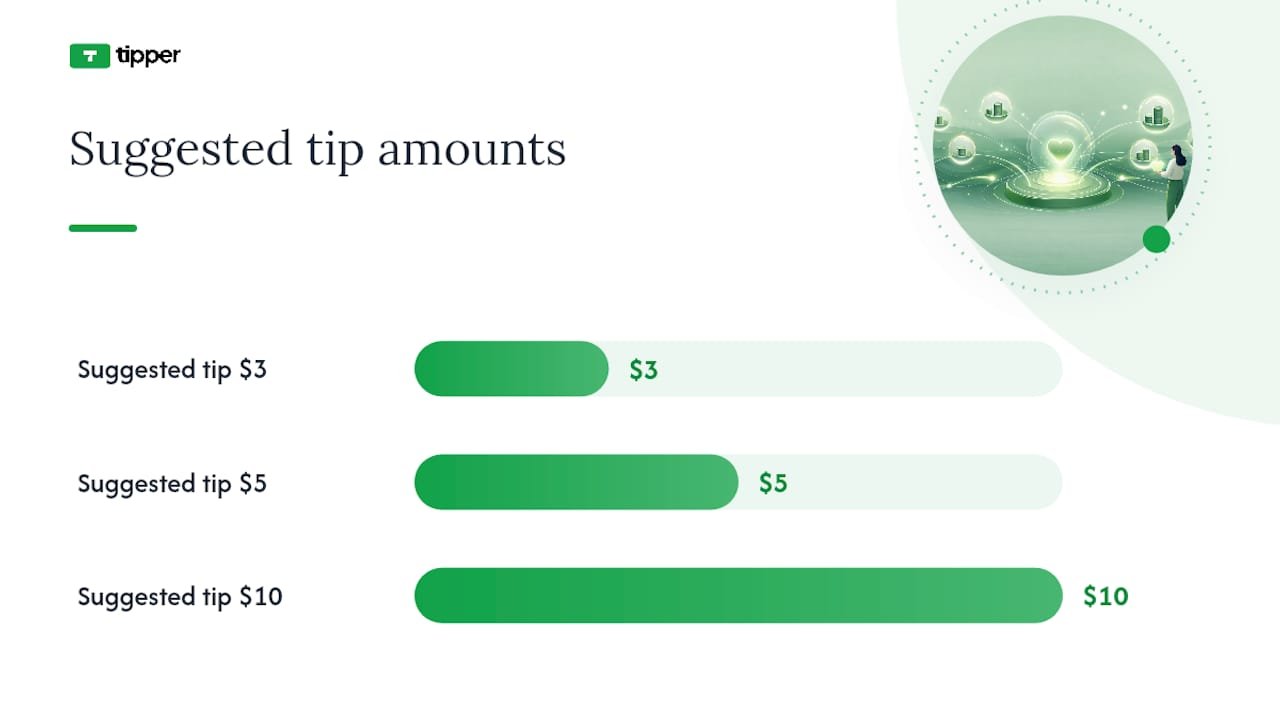
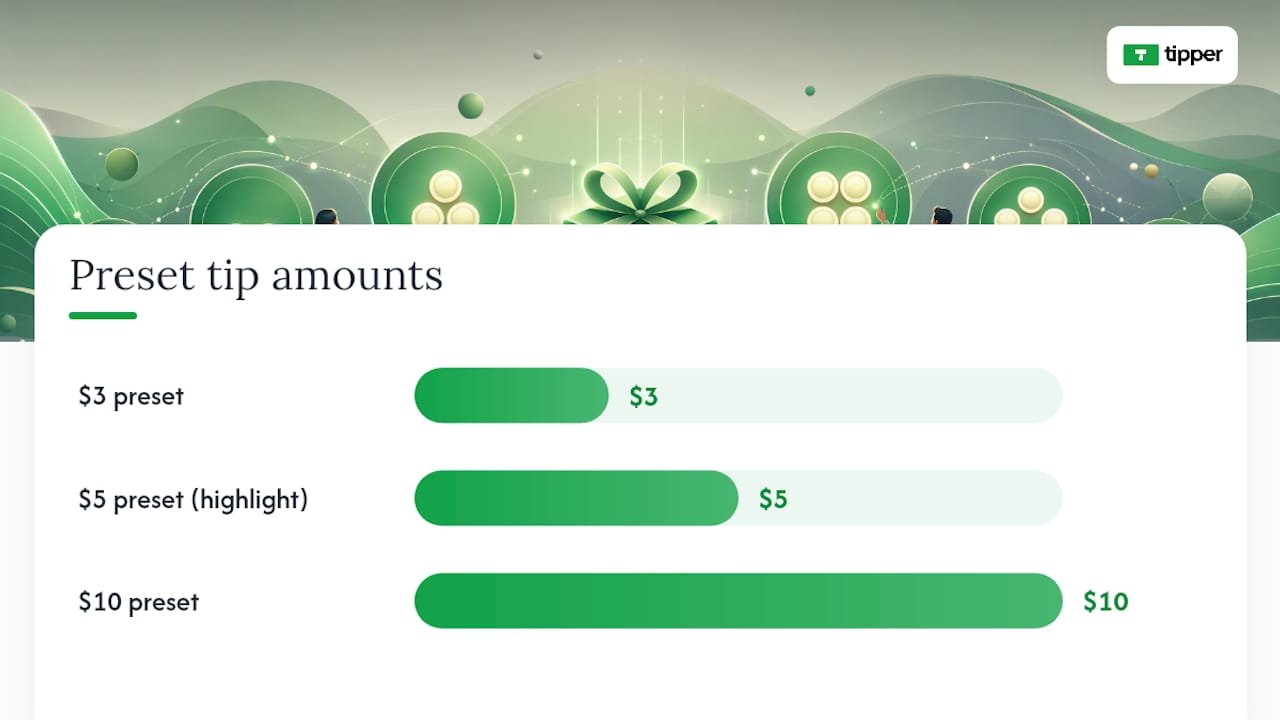
A tip button is a payment widget that lets blog readers send small, voluntary payments directly to a creator with one click. Adding a tip button to your blog gives readers a frictionless way to say “thank you” without a subscription or commitment. The industry term for this is a “tip jar,” and it functions as a low-pressure monetization layer on top of your existing content. Preset amounts like $3, $5, and $10 have become the standard for creator support, and payment processors like PayPal and Stripe are the most trusted rails for handling those transactions.

How to add a tip button to your blog: tools and plugins

The right tool depends on your blogging platform. WordPress bloggers have the widest selection, including dedicated donation and tip plugins that embed directly into posts or pages. Squarespace and Wix support tip buttons through third-party embed codes or native payment blocks. Any platform that accepts custom HTML can host a tip button from an external service like Tipper.

Most tools fall into three categories by feature depth:

  • Basic embed tools: Generate a button with a single fixed amount and a PayPal or Stripe link. Setup takes under ten minutes. Best for bloggers who want a fast, no-code solution.
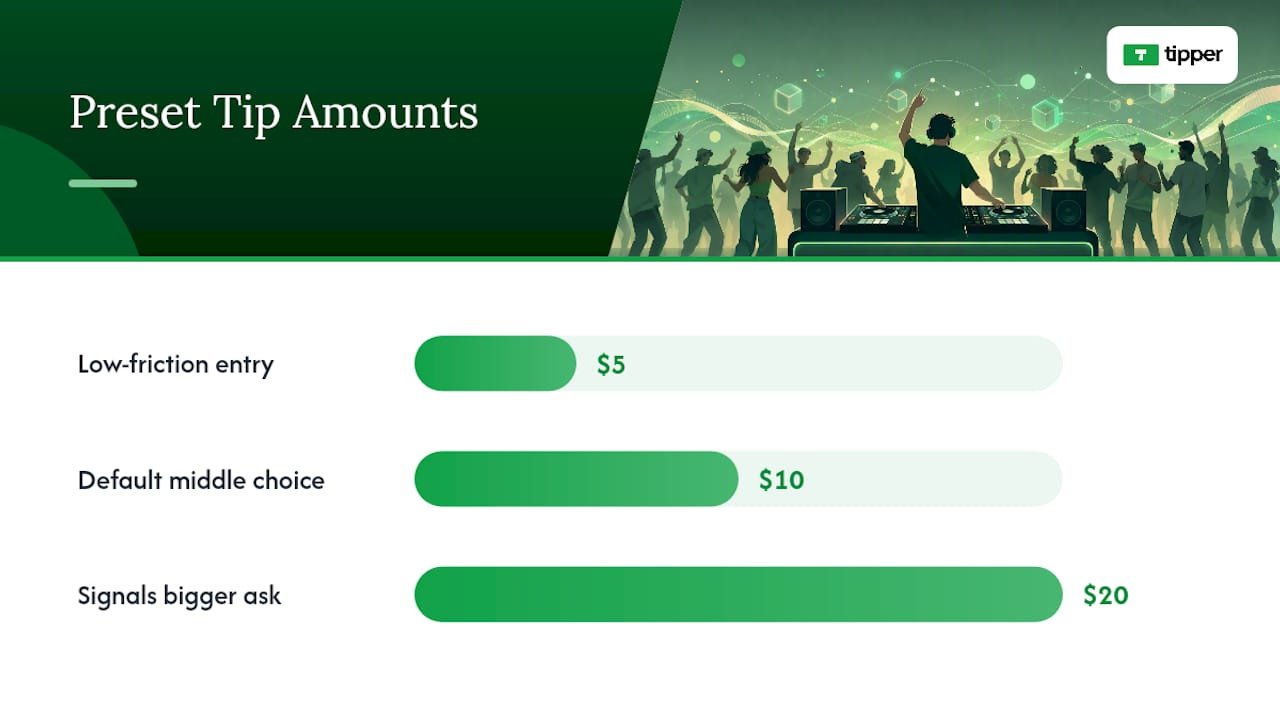
  • Preset amount platforms: Let you configure multiple tip tiers, typically $3, $5, and $10, so readers can choose. These preset tip amounts mirror casual everyday expenses and maximize the chance a reader follows through.
  • Advanced tip jar platforms: Include custom branding, thank-you messages, analytics, and multiple payment methods. Tipper falls into this category, offering Apple Pay and Google Pay support alongside traditional card payments.

For tech-savvy audiences, crypto tip jars built as products on WooCommerce or Shopify send tips directly to a wallet with minimal fees and no middleman. That approach suits niche audiences but adds setup complexity most bloggers do not need.

Feature category What to look for
Preset tip amounts Whole-number options: $3, $5, $10
Payment options PayPal, Stripe, Apple Pay, Google Pay
Ease of integration HTML embed or native plugin
Thank-you messaging Automated confirmation or personal note
Account requirement for supporters No signup preferred for higher conversion

Person configuring tip button on laptop

PayPal remains the most trusted processor for independent creator sites. Reader familiarity with PayPal reduces hesitation when entering payment details on a blog they have never purchased from before.

Step-by-step setup for a blog tip button

Getting a tip button live on your blog takes less than an hour when you follow a clear sequence. The steps below apply to any platform, whether you use a plugin or an external service like Tipper.

  1. Create your payment account. Sign up for a PayPal Business account or a Stripe account if you do not already have one. Connect it to your bank account and verify your identity. This step is non-negotiable. Without a verified processor account, tips cannot reach you.

  2. Choose your tip platform or plugin. Select a tool that matches your platform. WordPress bloggers can install a dedicated tip plugin directly from the plugin directory. Bloggers on other platforms should choose a service that provides an HTML embed code or a shareable tip link.

  3. Configure your preset tip amounts. Set three whole-number amounts: $3, $5, and $10. Whole number presets reduce cognitive load and make tipping feel like a quick, casual gesture rather than a financial decision. Avoid amounts like $2.50 or $7.99.

  4. Write your call-to-action title. Choose a phrase that fits your voice. “Buy me a coffee” works for casual, personal blogs. “Support my work” fits more earnest or professional creators. Emotionally framed CTAs aligned with your brand voice drive more consistent tip flow than generic prompts like “Donate here.”

  5. Embed the button on your blog. Paste the embed code or plugin shortcode at the end of your blog post, just below your closing paragraph. Do not place it in the header or sidebar on the first attempt. End-of-post placement is where readers are most engaged.

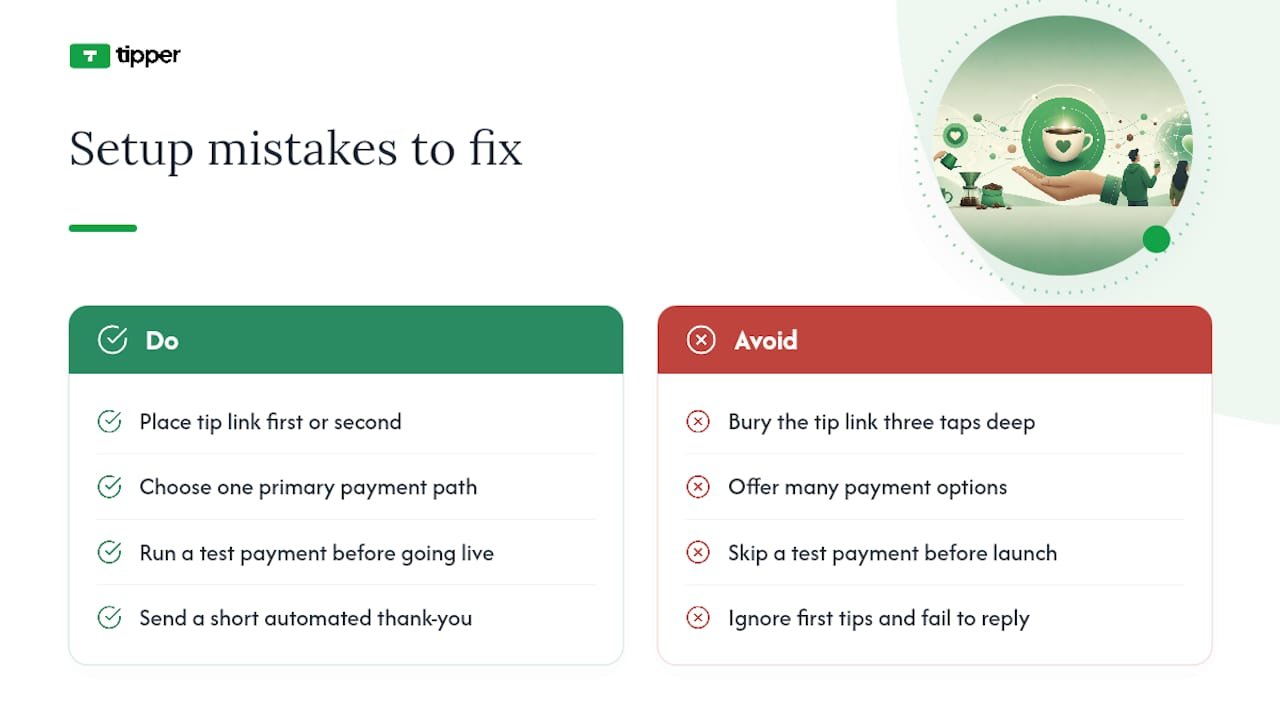
  6. Run a live payment test. Send yourself a $3 tip using a real card on your live site. Live payment tests catch broken redirects, missing confirmation emails, and failed thank-you messages that sandbox tests miss entirely.

Pro Tip: Place your tip button at the bottom of your three most-read posts first. Those pages already have proven reader engagement, so they give you the fastest real-world feedback on what is working.

Where to place your tip button for maximum impact

Infographic illustrating five steps to add a tip button

Placement is the single biggest variable in tip button performance. End-of-post placement consistently outperforms sidebars and headers because readers who finish a long article are already invested in your content. A reader who scrolls to the bottom has self-selected as someone who found value. That is the exact moment to ask for support.

The most effective placement strategy combines multiple touchpoints without feeling aggressive:

  • End of post: Primary placement. Position the button directly after your final paragraph, before comments.
  • Sticky footer bar: A subtle, persistent bar at the bottom of the screen keeps the option visible without interrupting reading.
  • About page: Readers who visit your About page are actively curious about you. A tip option there converts well.
  • Email signature: Add your Tipper link to every email you send. Readers who reply to your newsletter are already engaged.
  • Social media bio: A tip link in your Instagram or LinkedIn bio captures support from followers who never visit your blog directly.

Your CTA language matters as much as placement. Keep it friendly and low-barrier. Avoid language that sounds like a fundraiser or a charity appeal. Phrases like “If this helped you, buy me a coffee” feel personal. Phrases like “Please donate to support ongoing content creation” feel formal and create friction.

Pro Tip: Test two different CTA phrases over 30 days by alternating them on your most-visited post. Track which version generates more clicks using your platform’s analytics or a URL shortener with click tracking.

Common mistakes that kill tip button conversions

Most tip buttons underperform not because readers are unwilling to tip, but because the setup creates unnecessary friction or confusion.

  • Setting a fundraising goal. A tip jar without a target encourages smaller, more frequent tips. A visible goal adds pressure and makes readers feel like they are contributing to a campaign rather than thanking a person.
  • Using fractional preset amounts. Amounts like $2.50 or $4.99 slow readers down. Fractional amounts increase cognitive load and make the decision feel more like a purchase than a casual gesture.
  • Burying the button. A tip button in a sidebar widget or buried in a footer menu gets ignored. Readers do not go looking for ways to pay you.
  • Skipping the live payment test. Sandbox environments do not replicate real transaction flows. A broken redirect or missing confirmation email means you lose the tip and the reader’s goodwill.
  • Ignoring thank-you messages. A confirmation message or personal note after a tip builds the relationship. Readers who feel acknowledged are more likely to tip again.
  • Mismatched CTA language. A casual food blog using corporate language like “financial contributions are appreciated” creates a tone mismatch that makes readers hesitate.

A tip button is an invitation, not a demand. The moment it feels like an obligation or a campaign, readers disengage. Keep the ask light, the amounts simple, and the thank-you genuine.

Key Takeaways

A tip button converts best when you combine whole-number preset amounts, end-of-post placement, and emotionally resonant CTA language that matches your blog’s voice.

Point Details
Use whole-number presets Set $3, $5, and $10 to reduce friction and match casual spending habits.
Place at end of post End-of-post placement outperforms sidebars because readers are most engaged after finishing content.
Frame the CTA emotionally Phrases like “Buy me a coffee” outperform generic prompts by aligning with your personal brand voice.
Test with a real payment Always run a live transaction to catch broken redirects and missing confirmation messages.
Skip the fundraising goal No target amount keeps the environment casual and encourages frequent small tips.

What I have learned from running tip buttons on real blogs

The biggest surprise when I first started experimenting with tip buttons was how much CTA wording mattered. I ran the same button with two different phrases on identical posts. “Support my work” generated a handful of tips. “Buy me a coffee” generated three times as many over the same period. The content was identical. The only variable was the six words above the button.

Whole-number preset amounts made a noticeable difference too. When I tested a $4.99 option against a clean $5, the $5 option won without question. Readers do not want to think. They want to feel good about a quick, generous gesture. Fractional amounts interrupt that feeling.

The live payment test saved me real money. I skipped it once on a new setup and spent two weeks wondering why my tip button had zero conversions. The redirect was broken. Every reader who clicked got an error page. I had no idea until a reader emailed me. Test with a real card, every single time.

Placement experiments taught me that the About page is underrated. Readers who visit that page are already curious about the person behind the content. A tip option there converts at a rate that surprises most bloggers I have talked to. If you have not tried it, add your tip link there this week.

The digital tipping landscape is still maturing, and the bloggers who build the habit of testing and iterating now will have a real advantage as reader expectations around creator support continue to shift.

— Tipper

Tipper makes adding a tip button to your blog simple

Tipper gives bloggers a personalized tip link that works on any platform, with no account required from the reader. Supporters pay instantly using Apple Pay, Google Pay, or a card, and you keep 100% of every tip.

https://tipper.app

Setting up takes minutes. You configure your preset amounts, write your CTA, and share your link or embed your button wherever your readers are. Tipper also lets supporters send a personal note or video with their tip, which turns a one-time transaction into a genuine connection. For bloggers who want a tip button that works without technical headaches, Tipper is the fastest path from zero to live. You can also explore how other creators are using tip jar tools to build sustainable income from their content.

FAQ

What is a tip button on a blog?

A tip button is a payment widget that lets readers send a small, voluntary payment to a blogger with one click. It functions as a digital tip jar, typically offering preset amounts like $3, $5, or $10.

How do I add a tip button to my blog without coding?

Use a service like Tipper, which provides a shareable link or embed code that works on any platform. No coding is required, and setup takes under an hour.

Where should I place the tip button for the best results?

End-of-post placement consistently outperforms sidebars and headers. Readers who finish an article are most engaged and most likely to tip.

What preset tip amounts should I use?

Set $3, $5, and $10 as your standard presets. These whole-number amounts mirror casual everyday expenses and reduce the friction that causes readers to abandon the tip flow.

Do readers need an account to tip through Tipper?

No. Tipper lets anyone send a tip using Apple Pay, Google Pay, or a card without creating an account, which removes the single biggest barrier to first-time tips.

How to Add a Tip Button to Your Blog in 20262026-07-10T06:00:17+00:00

Freelancer Tipping Workflow: Your 2026 Guide

A freelancer tipping workflow is a structured process that lets content creators and freelancers receive, track, and manage tips without disrupting existing client relationships or payment systems. Most freelancers treat tips as an afterthought, which costs them both income and professional credibility. A deliberate workflow covers tool selection, client communication, tax documentation, and payment routing. The IRS now allows freelancers in tipping-customary fields to deduct up to $25,000 of tip income in 2026, which makes getting this process right a financial priority, not just a convenience.

What does a freelancer tipping workflow actually require?

A freelancer tipping workflow requires three things working together: a payment channel that accepts tips, a tracking system for tax purposes, and a clear communication plan for clients. Without all three, you leave money on the table and create accounting headaches at tax time. The industry term for this combined approach is “tip management workflow,” though most freelancers encounter it under the broader label of freelance payment methods.

Digital tipping separates itself from traditional invoicing because tips are voluntary, immediate, and emotionally driven. That distinction shapes every tool choice you make.

Freelancer managing digital tip tracking on smartphone

Choosing the right payment processor

Payment processors vary widely in how they handle tips. Stripe supports tip line items natively within its checkout flow, making it the cleanest option for freelancers who already invoice through a web-based system. PayPal works for domestic tips, but cross-border fees reach 4.4% plus fixed costs, with exchange rates running 3–4% worse than mid-market. That fee structure quietly erodes tip income for freelancers with international clients.

Crypto tip jars via gateways like AurPay give freelancers a low-fee alternative, especially for clients who prefer pseudonymous payments. Mobile wallets like Apple Pay and Google Pay reduce friction at the point of tipping, which directly increases conversion rates.

Payment Method Typical Fee Best For
Stripe tip line 2.9% + $0.30 Invoice-based freelancers
PayPal (domestic) 2.9% + $0.30 US-only client base
PayPal (international) Up to 4.4% + fixed Not recommended for tips
Crypto gateway Varies, often under 1% Privacy-focused or global clients
Apple Pay / Google Pay Processor rate applies Mobile-first tip moments

Pro Tip: Use Apple Pay or Google Pay as your front-end tip method and route payments through Stripe on the back end. You get low friction for the client and clean transaction records for your books.

Tip blocks vs. donation blocks

The distinction between a tip block and a donation block matters more than most freelancers realize. Tips are casual with no funding goal; donations carry goals, deadlines, and tier rewards. Using a donation block when you mean to collect tips signals the wrong intent to clients and reduces participation. Choose a tip block for spontaneous appreciation and reserve donation-style tools for crowdfunded projects.

Infographic showing freelancer tipping workflow steps

How to set up your tipping workflow step by step

A working tip management workflow takes less than a day to build. The steps below move from infrastructure to client communication.

  1. Pick one primary tip channel. Choose a payment processor or dedicated tip platform and commit to it. Splitting tips across three apps creates reconciliation problems at tax time.

  2. Create a dedicated tip jar product. In WordPress, Shopify, or your invoicing platform, set up a tip jar as a standalone product. This integrates with your existing checkout flow and logs every transaction automatically. It also looks professional, which matters when clients decide whether to tip.

  3. Set preset tip amounts. Preset amounts of $1, $3, and $5 convert better than open-ended fields. Presets above $15 reduce participation because they trigger cost-conscious hesitation. Offer three or four button options and include a custom amount field for clients who want to give more.

  4. Embed the tip block in the right places. Add your tip link to your invoice footer, project delivery email, and portfolio site. These are the three moments when client satisfaction peaks and tipping intent is highest.

  5. Communicate tipping options before the project starts. Payment processes, including tipping, should be agreed upon before work begins to prevent surprises. A single sentence in your contract or onboarding email covers this: “My invoices include an optional tip link for clients who want to show extra appreciation.”

  6. Test the full flow. Send yourself a $1 test tip through every channel you set up. Confirm the payment lands, the receipt generates, and the transaction appears in your tracking log.

Pro Tip: Add your Tipper link directly to your email signature. Clients who loved the work will tip in the moment. Waiting until the invoice arrives means the emotional peak has passed.

What mistakes undermine a freelancer tipping workflow?

The most common mistake is mixing tips with donations in the same workflow. Clients who see a “donate” button assume you are fundraising, not accepting appreciation. That framing reduces tip conversion and can feel awkward in a professional context. Use tip-specific language everywhere.

Relying solely on peer-to-peer apps creates a second problem. High fees and poor exchange rates on international transfers mean a $20 tip can net you $17 or less after processing. That gap compounds across dozens of transactions per year.

Failing to document tip income is the most expensive mistake a freelancer can make. The IRS requires daily, timestamped records of tip income to support deduction claims. A missing log means a missing deduction, and potentially a penalty if audited.

A third pitfall is skipping the client communication step. Freelancers who add a tip link without mentioning it risk clients feeling surprised or pressured. Transparency about tipping in client relationships avoids trust issues and contract violations. One proactive sentence in your onboarding materials eliminates the risk entirely.

Common mistakes to avoid:

  • Using donation blocks instead of tip blocks for casual appreciation payments
  • Routing international tips through high-fee P2P apps without checking exchange rates
  • Skipping a dedicated tip jar product and collecting tips through informal bank transfers
  • Failing to keep timestamped daily records of tip income
  • Omitting tipping expectations from client contracts or onboarding emails

What are the tax rules for freelancer tip income in 2026?

Freelancers in tipping-customary occupations, including creative performance, hospitality, and content creation, can deduct up to $25,000 of tip income in 2026 via Schedule 1-A. The deduction phases out for high earners, so freelancers approaching upper income thresholds should consult a tax professional before assuming the full deduction applies.

Digital tip logs with timestamps are the IRS-preferred documentation method. A spreadsheet with date, amount, client name, and payment method satisfies audit requirements. Dedicated tip jar products generate this data automatically, which is one more reason to use them over informal payment methods.

Tax Consideration Detail
Maximum deduction Up to $25,000 of tip income for qualifying occupations
Reporting form Schedule 1-A
Documentation required Daily digital logs with timestamps
Phase-out Applies to high-income freelancers
Ongoing contracts Tips typically replaced by annual or holiday bonuses

Tipping customs also differ by engagement type. Tipping runs at 15–20% for one-time or short freelance jobs, while ongoing retainer contracts typically substitute tips with annual bonuses. Knowing which category your work falls into helps you set client expectations correctly and plan your income accordingly.

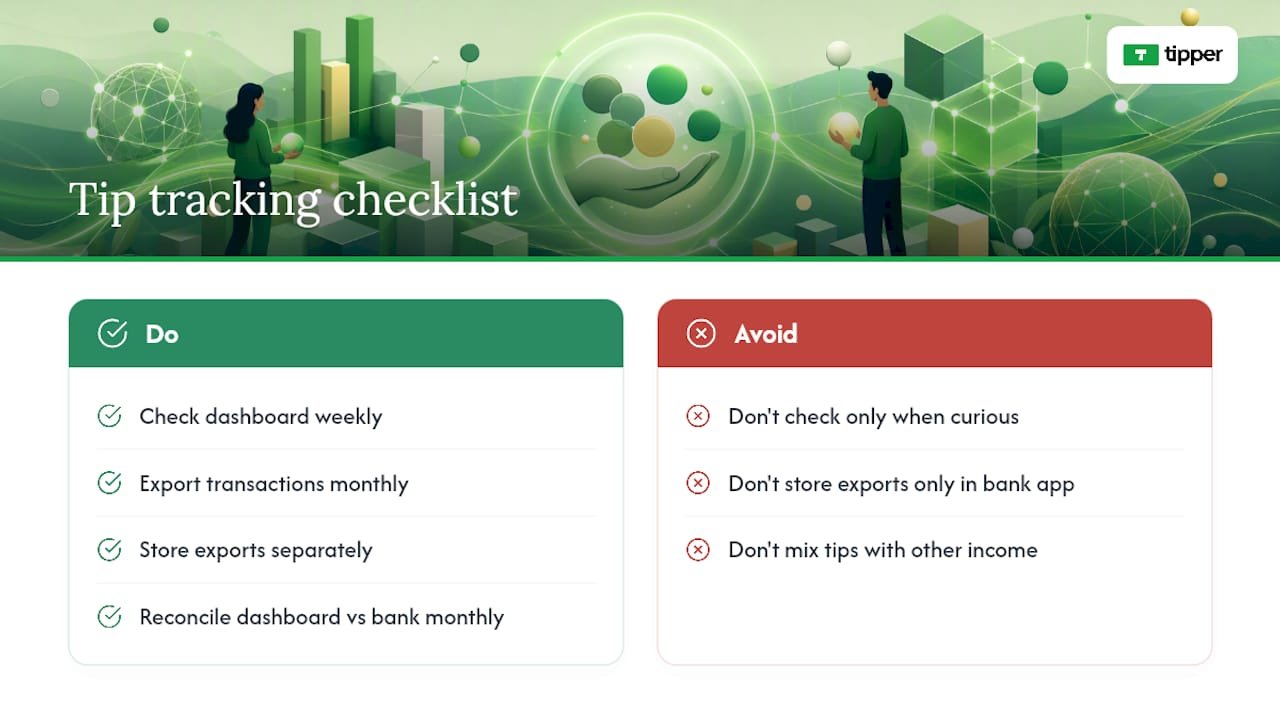
Pro Tip: Set a calendar reminder on the last day of each month to export your tip transaction history from your payment processor. Monthly exports take two minutes and build a complete, audit-ready record by year-end.

Key Takeaways

A structured tip management workflow is the single most effective way for freelancers to capture, track, and keep tip income without creating client friction or tax problems.

Point Details
Use tip blocks, not donation blocks Tip-specific framing increases client participation and avoids professional confusion.
Set preset amounts under $15 Presets at $1, $3, and $5 convert better than open-ended or high-value fields.
Document daily with timestamps Digital logs are required to claim up to $25,000 in IRS tip deductions for 2026.
Communicate tipping upfront One sentence in your contract prevents client surprise and protects trust.
Minimize fees on international tips High-fee P2P apps can cut tip income by 4.4% or more on cross-border payments.

Why I think most freelancers set up tipping backwards

Most freelancers build their tip workflow after a client asks how to tip them. That reactive approach costs real money. By the time a client asks, the emotional peak of the project delivery has already passed, and the tip amount drops or disappears entirely.

The freelancers I have seen build the most consistent tip income treat tipping as a client feedback channel, not a bonus. They embed tip links at delivery, mention them in onboarding, and use preset amounts that remove the mental effort of deciding how much to give. The result is not just more tips. It is faster cash flow and a clearer signal about which clients value the work most.

Niche matters too. Designers and video editors receive tips most often at project delivery. Writers and consultants on retainer rarely see tips because the ongoing relationship shifts client behavior toward bonuses. Knowing your niche’s tipping norm lets you frame the option correctly without it feeling out of place.

The one thing I would tell every freelancer: frictionless tipping is not about asking more. It is about removing every barrier between a satisfied client and the moment they want to show it. A single link, a familiar payment method, and a low preset amount does more than any follow-up email ever will.

— Tipper

Tipper makes tip collection simple for freelancers

Freelancers who want a purpose-built solution for collecting tips without the fee drag or setup complexity have a clear option in Tipper. The platform generates a personalized tip link that clients can use instantly, with no account required on their end. Payments go through Apple Pay, Google Pay, or card, and you keep 100% of every tip.

https://tipper.app

Tipper also lets clients add a thank-you note or video with their tip, which turns a financial transaction into a genuine moment of connection. Setup takes minutes, and the link works across email signatures, invoices, and portfolio sites. For freelancers who want to start collecting tips without building a custom checkout flow, Tipper is the fastest path from delivery to payment.

FAQ

What is a freelancer tipping workflow?

A freelancer tipping workflow is a structured system for receiving, tracking, and managing tips from clients or audiences. It covers payment channel selection, client communication, and tax documentation.

How much should clients tip freelancers?

Tipping runs at 15–20% for one-time or short freelance jobs. Ongoing retainer clients typically substitute tips with annual or holiday bonuses instead.

What preset tip amounts convert best?

Preset amounts of $1, $3, and $5 convert better than open-ended fields. Presets above $15 reduce participation because they create cost hesitation.

Do freelancers have to report tip income to the IRS?

Yes. Freelancers must report all tip income and can deduct up to $25,000 via Schedule 1-A in 2026 if they work in a tipping-customary occupation and maintain daily digital records.

What is the difference between a tip block and a donation block?

A tip block collects casual appreciation with no funding goal. A donation block carries goals, deadlines, and tier rewards. Using the wrong format reduces participation and sends the wrong signal to clients.

Freelancer Tipping Workflow: Your 2026 Guide2026-07-09T06:30:16+00:00

Local Business Digital Gratuity Examples That Work

Digital gratuity is the practice of collecting customer tips through electronic methods such as NFC cards, QR codes, and integrated payment prompts, replacing or supplementing cash. Local business digital gratuity examples range from a coffee shop NFC card near the register to a QR code on a restaurant table that routes tips directly to staff digital wallets. These methods work because they meet customers where they already are: paying with their phones. A nationwide coffeehouse chain saw a 20% increase in employee tips within six months of switching to digital tipping. That result is repeatable, and the playbook is simpler than most owners expect.

1. What are the best local business digital gratuity examples?

The most effective digital gratuity systems share one trait: they fit inside the existing payment moment without adding friction. The customer is already reaching for their phone or card. A well-placed prompt captures a tip that would otherwise never happen.

NFC tip cards at the point of sale

Customer tapping phone on NFC tip card

NFC cards sit near a register or on a counter. A customer taps their phone and a tip screen appears instantly, no app download required. Local cafés using NFC cards saw a 28% tip increase within 60 days, along with 18% more five-star reviews and 12% social media follower growth. That combination of outcomes from a single tap makes NFC one of the highest-return tools available to small businesses.

QR codes at tables and counters

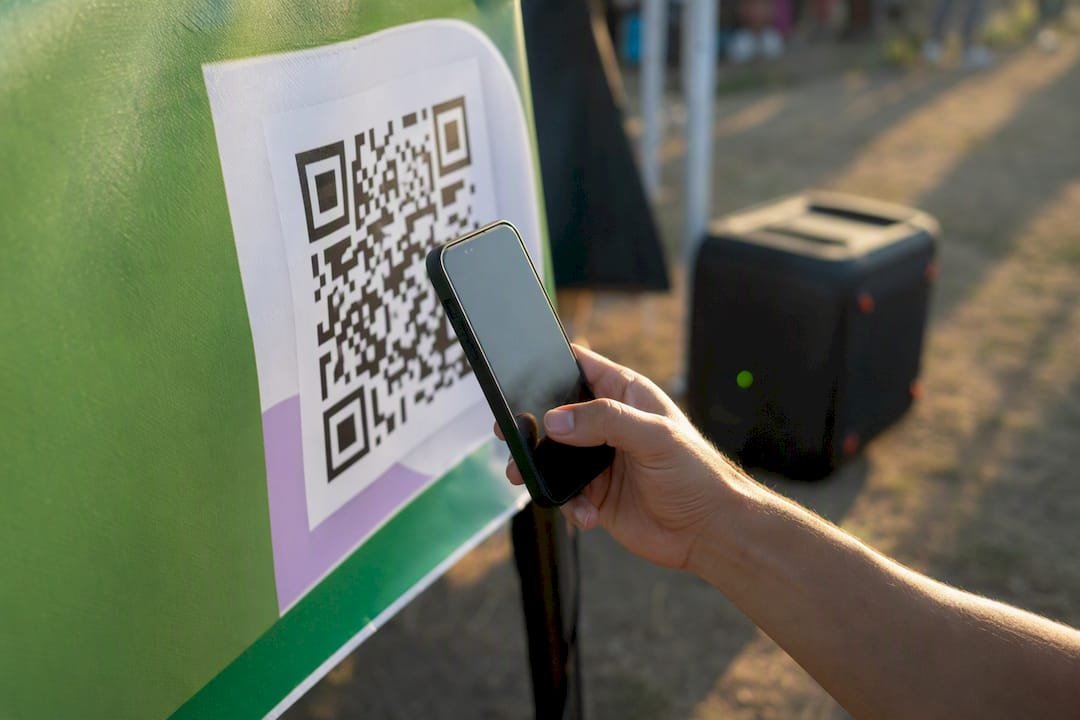
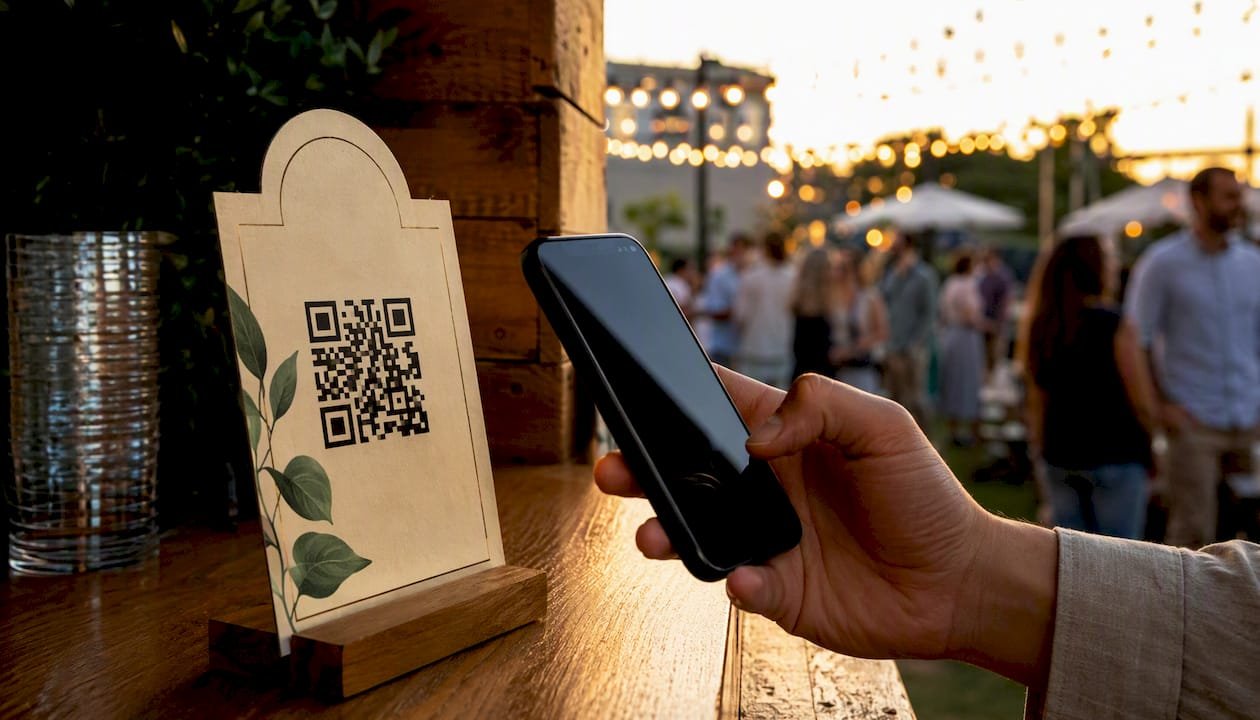
A printed QR code on a table tent, receipt, or counter card opens a tipping page when scanned. QR codes work especially well in full-service restaurants, salons, and food trucks where the customer lingers after the transaction. The setup cost is near zero, and the code can link to a page that also collects a review or a social follow. Tipper supports this format natively, letting businesses generate a personalized link that customers reach by scanning.

Tip prompts inside mobile payment apps

Many point-of-sale terminals now display a tip screen as part of the Apple Pay or Google Pay checkout flow. The customer sees preset amounts (for example, 15%, 20%, or 25%) before confirming payment. This format works because the tip decision happens before the customer puts their phone away, not as an afterthought. Apple Pay and Google Pay tips also process instantly, which means staff see their earnings faster.

Embedded tips in online ordering and delivery platforms

Online ordering pages for restaurants and food businesses can include a tip field at checkout. The customer selects an amount before placing the order, so the tip is collected without any in-person interaction. This format captures gratuities from customers who would never carry cash and who complete the entire transaction on their own device.

Multi-function NFC devices that bundle tips, reviews, and follows

Some NFC devices go beyond tipping. A single tap can prompt a customer to leave a Google review, follow the business on Instagram, and tip a staff member, all from one screen. This bundled approach increases the value of each customer interaction without requiring extra staff effort. For businesses focused on contactless tip collection, these devices represent the most efficient format currently available.

Pro Tip: Place your NFC card or QR code at eye level near the payment terminal, not buried on a table. Visibility at the moment of payment is the single biggest driver of tap-through rates.

2. How clear, transparent tipping workflows increase digital gratuity success

Transparency is the most underrated factor in digital tipping performance. Customers tip more when they understand exactly what they are paying and why.

The core principle is simple: show the customer the full amount, including the tip, before they confirm payment. Pre-set tip options and service charge controls improve tipping performance and reduce friction by removing the mental math that slows customers down. A customer who sees “$4.50 tip (20%)” in plain text is more likely to accept it than one who has to calculate the amount themselves.

Avoid stacking multiple tip requests in a single transaction. Asking a customer to tip the barista, then the delivery driver, then the kitchen staff in separate prompts creates what researchers call “tipflation.” A viral incident involving a $25 order with excessive tip prompts showed that poor communication around tipping can generate negative feedback that spreads far beyond the original customer. One clear, well-timed prompt outperforms three confusing ones every time.

Tronc systems, which are automated tip distribution frameworks used in hospitality, add another layer of trust. Automated tronc distribution gives staff full, transparent visibility of tips earned and aligns with tax regulations to protect the business from compliance errors. Customers who know tips go directly to staff, not into a general fund, are more likely to tip generously.

“Clear and simple tipping workflows without excessive prompts sustain customer trust and maximize gratuities. Transparency and automation in tipping build employee trust and protect business compliance, making them the two pillars of any successful digital gratuity program.”

Staff communication reinforces all of this. A brief, natural mention from a server or barista (“You can tap here to leave a tip if you’d like”) removes ambiguity and increases conversion without pressure. Clear signage near the payment point serves the same function for self-service environments.

3. What technological features boost digital gratuity effectiveness?

The right technology removes every barrier between a customer’s intention to tip and the actual payment. The features below separate high-performing digital gratuity systems from basic ones.

Feature What it does Why it matters
NFC and QR quick-tap Opens tip screen in one tap or scan Reduces steps and abandonment
Preset tip percentages Displays 15%, 20%, 25% before payment Removes calculation friction
Role-based tip profiles Routes tips to specific staff or roles Accurate attribution in multi-role teams
Central dashboard controls Adjusts tip options by location or channel Fast changes during peak periods
Instant digital payout Sends tips to staff wallets immediately Improves morale and reduces cash errors

Role-based profiles deserve special attention. In hotels, spas, and restaurants, multiple staff members serve a single customer. Role-based profiles and team sharing in digital gratuity platforms are critical for accurate tip attribution in these multi-role environments. A general-purpose payment app cannot handle this correctly without dedicated workflow features.

Central dashboard controls give managers real-time flexibility. Configuring toggleable, channel-specific tipping options from one dashboard prevents confusion and allows fast operational adjustments during busy periods. A manager can turn off a tip prompt for a self-service kiosk during a lunch rush and restore it afterward without touching the hardware.

Instant digital payout access significantly improves employee satisfaction by giving workers autonomy over their earnings. Staff who receive tips in a digital wallet within minutes of a shift are more engaged than those waiting for a weekly cash envelope. That engagement shows up in customer service quality, which drives more tips in return.

Pro Tip: If your business has multiple service roles, choose a platform with role-based tip distribution before anything else. Misattributed tips are the fastest way to damage staff trust in a new digital gratuity system.

4. How to implement digital gratuity systems smoothly

Implementation does not require a large budget or a technology overhaul. Most local businesses can set up NFC or QR-based digital tipping in under 20 minutes without complex point-of-sale integration. The barrier is lower than most owners assume.

A practical rollout follows these steps:

  1. Choose your entry point. Start with a standalone NFC card or a printed QR code. Neither requires integration with your existing payment system. Place it at the counter or on the table where payment happens.
  2. Set your tip options. Configure two or three preset amounts or percentages. Fewer choices reduce decision fatigue. A 15%, 20%, and 25% structure covers most customer preferences.
  3. Train staff in one sentence. Teach your team to say something brief and natural, not scripted. “You can tap here if you’d like to leave a tip” is enough. Pressure-free mentions outperform silence and scripted pitches alike.
  4. Keep cash tipping available. Digital and cash gratuity are not mutually exclusive. Maintaining a tip jar alongside your digital option captures customers who prefer cash and signals that you are not forcing a new behavior.
  5. Monitor and adjust. Review tip totals weekly for the first month. If a specific prompt or placement underperforms, adjust the position, the preset amounts, or the timing of the request. Cashless tipping setup is iterative, not a one-time decision.
  6. Use dashboard controls during peak periods. If your platform supports it, increase the default tip suggestion during high-traffic hours when service quality is highest and customers are most satisfied.
  7. Collect feedback alongside tips. Link your tip prompt to a short review request. Customers who just tipped are in a positive frame of mind and more likely to leave a five-star review than those who are not prompted at all.

The benefits of digital tipping for local businesses compound over time. Early adopters in a neighborhood often see a competitive advantage in staff retention because their employees earn more and receive it faster.

Key takeaways

Digital gratuity systems work best when they are visible, simple, and transparent, combining NFC or QR entry points with instant staff payouts and clear tip options shown before payment confirmation.

Point Details
NFC and QR are the fastest entry points Both deploy in under 20 minutes with no POS integration required.
Transparency drives higher tips Showing the full amount including tip before payment reduces friction and increases acceptance.
Role-based distribution protects staff trust Accurate tip attribution in multi-role teams requires dedicated workflow features, not general apps.
Instant payouts improve employee morale Staff who receive tips immediately are more engaged, which improves service quality and tips over time.
Avoid tip stacking Multiple prompts in one transaction cause customer frustration and can generate public backlash.

What I’ve learned about digital gratuity after watching hundreds of local businesses

The businesses that see the biggest gains from digital tipping are not the ones with the fanciest technology. They are the ones that treat the tip prompt as part of the service experience, not as an afterthought bolted onto the payment terminal.

The most common mistake I see is over-prompting. A business installs a digital tipping system, gets excited, and adds tip requests at every touchpoint: the ordering screen, the receipt email, the loyalty app. Customers notice. The backlash is quiet at first, then it shows up in reviews. One well-placed, well-timed prompt beats five scattered ones every time.

Staff buy-in is the other factor that separates successful rollouts from failed ones. When employees understand that digital tips reach their wallets faster than cash ever did, they become advocates for the system. They mention it naturally to customers. They stop dreading the end-of-shift cash count. That shift in attitude is visible to customers and creates a better experience all around.

My honest recommendation for any local business owner reading this: start with a single NFC card or QR code, place it at the payment moment, and watch what happens for 30 days before adding anything else. The psychology behind tipping behavior rewards simplicity. Customers tip when the moment feels right and the action feels easy. Your job is to make both of those things true, not to engineer every possible tip opportunity out of them.

The future of local gratuity practices is not about more prompts. It is about better ones.

— Tipper

Tipper makes digital gratuity simple for local businesses

Setting up a digital tipping system should not take a full day or a developer. Tipper lets customers send tips instantly through a personalized link, with no account required on their end. Customers pay using Apple Pay or Google Pay, and the tip arrives without delay.

https://tipper.app

Businesses keep 100% of their tip earnings, and the platform handles the payment flow from start to finish. Whether you run a café, a salon, or a food truck, Tipper fits into your existing setup without replacing your point-of-sale system. Customers can also send a thank-you note or video with their tip, which adds a personal touch that builds loyalty. Visit Tipper to see how fast you can go live, or read more about no-fee tipping systems to compare your options before deciding.

FAQ

What is digital gratuity for local businesses?

Digital gratuity is the collection of customer tips through electronic methods such as NFC cards, QR codes, or payment app prompts. It replaces or supplements cash tipping and routes earnings directly to staff digital wallets.

How quickly can a local business set up digital tipping?

Most businesses can deploy a standalone NFC card or QR code in under 20 minutes without integrating with an existing point-of-sale system. No technical expertise is required for basic setups.

Do digital tips increase the amount customers leave?

Local cafés using NFC cards reported a 28% tip increase within 60 days of adoption. Preset tip options shown before payment confirmation reduce friction and consistently produce higher average gratuities than cash-only systems.

How should tips be distributed fairly among staff?

Role-based tip profiles in dedicated digital gratuity platforms route tips to specific staff members or roles automatically. General payment apps lack this feature, which makes them a poor fit for multi-role hospitality environments.

What is the biggest mistake businesses make with digital tipping?

Stacking multiple tip prompts across a single transaction is the most common error. Excessive prompting causes customer frustration and can generate negative public feedback, as documented in widely shared incidents involving confusing tip requests on small orders.

Local Business Digital Gratuity Examples That Work2026-07-08T06:00:19+00:00

How to Add a Tip Option to Your Service Invoice

Adding a tip option to a service invoice is defined as including a voluntary gratuity field within your billing document, giving clients a clear, frictionless way to pay more than the base rate. Freelancers and small business owners who use this approach consistently report higher per-project income without raising their listed prices. Industry-standard preset tip percentages cluster at 15%, 20%, and 25%, with fixed-dollar amounts preferred for transactions under $10. The key rule: the tip line must always appear as a separate, clearly labeled item, distinct from your core service charges. That separation prevents billing disputes and builds client trust from the first invoice.

How to add a tip option to your service invoice

The first step is confirming that your invoicing platform supports a native tipping feature. Most digital invoicing platforms allow you to enable tipping directly from your account dashboard, with preset tip percentages and a custom-amount field already built in. If your platform does not offer this natively, you can add a manual line item labeled “Gratuity” as a workaround.

Freelancer setting up tip option on laptop in office

Before you touch any settings, check two things: your account permission level and your payment processor’s tipping support. Some platforms restrict tip configuration to admin-level accounts. Others require you to enable tipping at the payment processor level before the option appears on client-facing invoices.

Tax treatment is the detail most freelancers overlook. Tips are generally not subject to sales tax, but they are taxable income. Platforms like WooCommerce let you configure tip tax status independently from the service charge, which keeps your books clean. Confirm your platform does the same before going live.

Feature categories to evaluate before setup

Feature What to look for
Preset tip percentages 15%, 20%, 25% options with ability to edit
Custom tip amount Free-entry field for clients who want to tip differently
Label customization Ability to change “Tip” to “Gratuity” or a branded phrase
Tax status control Separate tax toggle for the tip line item
Mobile compatibility Tip prompt visible on phone and tablet payment screens

Infographic showing steps to set up invoice tipping

Pro Tip: If your platform locks the label to “Tip” and you prefer “Gratuity,” add a manual non-inventory line item with your preferred label. This workaround costs you two minutes and gives you full control over how the charge reads on the invoice.

Step-by-step: enabling and customizing tipping on invoices

Follow these steps to get tipping live on your next invoice.

  1. Log into your dashboard. Go to Settings, then Payments or Invoicing, and look for a “Tipping” or “Gratuity” toggle.
  2. Enable the feature. Flip the toggle on. Most platforms apply this change across all outgoing invoices within 1–5 minutes.
  3. Set your preset percentages. Enter 15%, 20%, and 25% as your defaults. Add a “Custom amount” option so clients are never boxed in.
  4. Customize the label. Change “Tip” to “Gratuity” if your brand calls for it, or use a phrase like “Show your appreciation.” If the platform does not allow label edits, use the manual line item method described above.
  5. Check tax settings. Confirm the tip field is marked as non-taxable for sales tax purposes.
  6. Preview the client view. Send a test invoice to yourself and verify the tip prompt appears clearly, below the subtotal, and before the total.
  7. Go live. Send your next real invoice and monitor whether clients engage with the tip field.

For platforms with no native tipping support, the manual method works reliably. Create a line item called “Gratuity (optional)” with a $0.00 default value. Add a short note in the invoice memo: “Feel free to adjust the gratuity line to any amount you’d like.” This keeps the request professional and low-pressure.

Pro Tip: Always place the tip prompt between the subtotal and the grand total. Clients who see the subtotal first have a clear reference point, which makes them more likely to add a tip rather than skip it.

Automated vs. manual tip addition

Method Best for Key limitation
Native dashboard toggle Platforms with built-in tipping Limited label and percentage customization
Manual line item Any platform, full label control Requires editing each invoice individually
E-commerce checkout field Online service sellers using WooCommerce Requires plugin or checkout configuration

What mistakes should you avoid when adding tipping options?

The most common mistake is burying the tip prompt after the client has already committed to paying. Tip prompts work best when they appear at the moment of payment, not in a follow-up email sent hours later. Clients who have already closed their browser are unlikely to reopen an invoice just to add a tip.

A second mistake is making the tip feel mandatory. Labeling a line item “Service Charge” when it is actually optional creates confusion and sometimes disputes. Transparent invoice presentation that clearly distinguishes optional tips from required fees is the standard that reduces client friction and protects your reputation.

Here are the most common pitfalls and how to fix them:

  • Unclear labeling. Use “Gratuity (optional)” or “Tip (your choice)” to signal that the field is voluntary.
  • Wrong timing. Integrate the tip prompt into the payment screen, not a post-payment thank-you email.
  • Locked percentages. If your platform only offers 10%, 15%, and 20%, add a custom-amount field or use a manual line item for clients who want to tip more.
  • No offline fallback. For in-person work, provide a printed receipt with a tip entry line when no touchscreen device is available.
  • Forgetting mobile. Test your invoice on a phone before sending. A tip field that is hard to tap on mobile gets skipped.

“Collecting tips at the moment of service leverages customer goodwill optimally. Relying on secondary follow-up actions consistently produces lower tip rates, because the emotional peak of the client experience has already passed.”

The fix for most of these problems is the same: treat the tip prompt as part of the payment flow, not an afterthought. Clients who feel respected and unpressured tip more often and more generously.

Best practices to maximize tip revenue and client satisfaction

A frictionless tipping experience starts with placement. The tip field should appear at the point of checkout, directly before the client clicks “Pay Now.” That single placement decision has a larger impact on tip rates than the specific percentages you offer.

Customize your tip language to match your brand tone. A graphic designer might use “Love the work? Add a thank-you.” A home service provider might keep it simple: “Tip your technician.” The phrasing signals professionalism and makes the request feel natural rather than awkward. You can read more about tipping etiquette by industry to find the right tone for your field.

These practices consistently produce better results:

  • Use mobile payment methods. Apple Pay and Google Pay reduce checkout friction, and clients who pay faster tend to tip more readily.
  • Send digital receipts with a thank-you note. A brief, personal message after payment reinforces goodwill and encourages repeat tipping.
  • Offer three preset options plus a custom field. Three choices prevent decision fatigue. The custom field catches clients who want to tip above your highest preset.
  • Avoid tip fatigue. Do not add tip prompts to every touchpoint. One clear prompt at payment is enough.
  • Build a tipping culture over time. Clients who tip once are more likely to tip again. Consistent, quality service is the foundation. Learn how to promote tipping culture across your client relationships.

Pro Tip: For recurring clients, consider adding a short line to your invoice memo: “Tips are always appreciated but never expected.” This phrasing reduces pressure while keeping the door open, and clients who genuinely value your work will act on it.

Key Takeaways

Adding a tip option to your service invoice increases revenue when the prompt is placed at the point of payment, labeled clearly, and kept fully optional.

Point Details
Standard preset percentages Use 15%, 20%, and 25% as defaults, plus a custom-amount field for flexibility.
Timing is the biggest factor Tip prompts at the payment screen outperform post-payment follow-up emails every time.
Clear labeling prevents disputes Mark tips as optional and separate them from core service charges on every invoice.
Manual line items fill platform gaps If your platform lacks native tipping, add a “Gratuity (optional)” line item manually.
Mobile compatibility matters Test your invoice on a phone before sending to confirm the tip field is easy to use.

Why timing changed everything for me

The first time I added a tip field to my invoices, I put it in a follow-up email sent after the client confirmed receipt of the work. The tip rate was low. Not because clients were unwilling, but because the moment had passed. By the time they saw the email, they had moved on mentally.

Moving the tip prompt to the payment screen changed the result immediately. Clients who were still in the mindset of completing a transaction responded far more often than those I asked hours later. The lesson was simple: goodwill is time-sensitive.

I also learned that default settings are rarely the right settings. Most platforms default to percentages that feel low for service work, and the label “Tip” can feel transactional in professional contexts. Switching to “Gratuity” or a custom phrase took me ten minutes and made the request feel more aligned with the quality of work I deliver.

The one thing I would tell any freelancer starting out: do not overthink the percentages. Clients who want to tip will tip. Your job is to make it easy, clear, and well-timed. Everything else is secondary.

— Tipper

Tipper makes invoice tipping simple for freelancers

Freelancers and small business owners who want to add tipping to their payment flow without rebuilding their entire invoicing setup have a direct path forward with Tipper.

https://tipper.app

Tipper lets you collect tips through a personalized link, with no account required from the client. Payments go through Apple Pay or Google Pay in seconds, and you keep 100% of every tip you receive. There are no platform fees eating into your gratuity income. Whether you send invoices by email or handle payments in person, Tipper fits into your existing workflow without friction. Clients can also leave a thank-you note or video, which adds a personal layer to every transaction. Get started at tipper.app and start collecting tips on your next invoice today.

FAQ

What is a tip option on a service invoice?

A tip option on a service invoice is a voluntary gratuity field that lets clients add an extra payment above the base service charge. It appears as a separate line item, clearly labeled, before the invoice total.

What tip percentages should I offer on my invoice?

The standard preset percentages are 15%, 20%, and 25%. Always include a custom-amount field so clients can tip any amount they choose.

Can I change the label from “Tip” to “Gratuity” on my invoice?

Many platforms restrict label changes for the tip field. The standard workaround is adding a manual non-inventory line item with your preferred label.

When is the best time to prompt clients for a tip?

The tip prompt should appear at the moment of payment, before the client clicks “Pay Now.” Prompts at checkout produce significantly higher tip rates than follow-up emails sent after payment is complete.

Do tips on invoices count as taxable income?

Tips are generally not subject to sales tax but are taxable income for the service provider. Confirm your platform separates the tip’s tax status from the core service charge to keep your records accurate.

How to Add a Tip Option to Your Service Invoice2026-07-07T06:30:15+00:00

How Tip Acknowledgment Builds Community Bonds

Tip acknowledgment is the intentional expression of gratitude that follows a tip or token of support, and it is one of the most direct ways creators and community leaders build lasting bonds with their audiences. The practice works as positive reinforcement: when a supporter receives a genuine, timely response to their contribution, they feel seen, and that feeling drives repeat engagement. Research confirms that real-time tip acknowledgment can increase job satisfaction among service-based roles and creators by 25%. That number reflects something deeper than workplace morale. It shows that recognition reshapes how people relate to each other over time. Tipper, a platform built around personalized tipping and thank-you messages, is designed precisely around this insight.

How does tip acknowledgment build community?

Tip acknowledgment builds community by triggering a psychological feedback loop that makes contributors feel valued and connected. When someone tips a creator or community member and receives a personal response, the brain registers that exchange as a social reward. Real-time tip notifications trigger a dopamine response that validates creator effort more effectively than anonymous cash tips. That validation is not just pleasant. It is the mechanism that turns a one-time supporter into a loyal community member.

Person typing tip acknowledgment on laptop in coworking space

Reciprocity deepens this effect. When acknowledgment is genuine and specific, it creates what researchers call “chains of appreciation.” A 2026 study found that nurturing appreciation chains within groups fosters upward cycles of social cohesion and well-being across ages 10–79. That range matters because it shows the effect is not limited to any single demographic. It works in gaming communities, creator fan bases, local service teams, and nonprofit groups alike.

The role of fairness also shapes these bonds. When contributors see that their support is noticed and named, they trust that the community values equal participation. That trust reduces the social friction that causes people to disengage. Recognition signals that every contribution counts, which keeps people coming back.

“Gratitude shared openly within a group does not just thank one person. It signals to everyone watching that this community notices effort and rewards it.”

Three core mechanisms explain why acknowledgment strengthens bonds:

  • Positive reinforcement: Immediate feedback after tipping encourages repeat support behaviors from patrons and community members.
  • Social proof: Public acknowledgment shows other community members that generosity is recognized, which normalizes giving.
  • Belonging: Being named and thanked signals membership. It tells the contributor they are part of something, not just a transaction.

What are effective methods for acknowledging tips in digital communities?

Personalization is the single most important factor in effective tip acknowledgment. Generic automated responses do the opposite of what you intend. Generic acknowledgments alienate supporters; personalization with photos, names, or specific references transforms tipping into meaningful interaction. A creator who responds to a tip with “Thanks for the support!” loses the moment. A creator who says “Sarah, your tip during last Tuesday’s stream meant a lot. It helped me hit my equipment goal” creates a memory.

Practical methods for meaningful acknowledgment include:

  1. Respond in real time when possible. Platforms that send instant tip notifications give creators the chance to acknowledge support while the moment is still warm. A response within minutes carries far more weight than one sent days later.
  2. Name the contributor publicly. A shoutout during a live stream, a mention in a newsletter, or a post on a community board tells the contributor and everyone watching that their support was noticed.
  3. Celebrate milestones and firsts. The first tip a creator ever receives, the hundredth supporter, or a funding goal crossed deserve specific recognition. Consistent public thanks for milestones improve emotional investment and drive ongoing participation.
  4. Use video or voice messages. A short recorded thank-you carries more emotional weight than text. Tipper allows creators to send thank-you messages through notes or videos, which turns a financial transaction into a personal moment.
  5. Create a gratitude ritual. End each live session with an “appreciation round” that names every supporter from that session. This small habit signals that no contribution goes unnoticed.

Pro Tip: Rotate your acknowledgment format. If you always respond with text, try a 15-second video reply once a week. Variety signals genuine effort rather than automated habit.

Creators who build acknowledgment into their workflow, rather than treating it as an afterthought, see stronger audience retention. The acknowledgment does not need to be elaborate. It needs to be specific, timely, and human.

Infographic comparing tip acknowledgment methods in text and multimedia

Why does systemic gratitude matter for long-term community health?

Systemic gratitude is different from saying “thank you” occasionally. It is the practice of embedding appreciation into the regular rhythm of a community so that recognition becomes a shared habit, not a rare event. Systemic gratitude practices embedded as daily group rituals build resilience, higher trust, better collaboration, and reduce burnout. Sporadic grand gestures do not produce the same result.

The distinction matters for creators and community leaders because burnout is a real threat. When contributors feel consistently recognized, they stay engaged longer. When recognition is rare or unpredictable, people start to wonder whether their support matters.

Systemic practices that work include:

  • Weekly appreciation posts that highlight contributors by name across social channels.
  • Peer-to-peer recognition boards where community members can thank each other, not just the creator.
  • Gratitude walls in Discord servers or community forums where supporters can see their names displayed over time.
  • Monthly milestone announcements that celebrate collective achievements and credit the supporters who made them possible.

The table below shows how isolated versus systemic gratitude affects key community outcomes:

Outcome Isolated thanks Systemic gratitude
Supporter retention Low to moderate High
Trust between members Slow to build Builds steadily
Burnout risk for creators Higher Lower
Community participation Sporadic Consistent
Emotional investment Surface level Deep and ongoing

Inclusive participation is also critical. Systemic gratitude only works when all contributors feel eligible for recognition, not just the biggest tippers. Acknowledging a first-time $1 supporter with the same warmth as a recurring $50 contributor tells your community that presence matters as much as size.

What challenges arise in tip acknowledgment and how do you fix them?

The biggest risk in tip acknowledgment is inauthenticity. When gratitude feels scripted or obligatory, it backfires. Authentic community-building requires creating safe spaces for honest appreciation rather than forced positivity. A creator who sends the same copy-pasted thank-you to every supporter is not building community. They are performing it.

Common pitfalls include:

  • Transactional language. Phrases like “Thanks for your purchase” or “We appreciate your business” signal that the acknowledgment is automated, not personal.
  • Delayed responses. Thanking someone three weeks after their tip communicates that the acknowledgment is an afterthought.
  • Acknowledging only large tips. This creates a visible hierarchy that discourages smaller contributors from engaging.
  • Over-acknowledgment. Thanking every micro-interaction with equal fanfare dilutes the meaning of recognition and can feel overwhelming to both creator and supporter.

Pro Tip: Write your acknowledgments as if you are texting a friend who just did something kind for you. That tone, specific and warm without being formal, is the one that builds real connection.

The solution to forced gratitude is not less acknowledgment. It is better acknowledgment. Failing to recognize contributions consistently leads to community complacency and disengagement. The goal is to find a rhythm that feels natural for you and meaningful for your supporters. Start with one genuine acknowledgment per day and build from there.

Creators also face the challenge of scale. As a community grows, personal responses become harder to sustain. The answer is to use tools that support personalization at scale, such as platforms that let you send video notes or attach a personal message to each tip notification, without requiring you to write from scratch every time.

Key Takeaways

Tip acknowledgment builds community by turning financial support into a personal, repeating social exchange that deepens trust, loyalty, and belonging over time.

Point Details
Acknowledgment drives repeat support Immediate, personal responses reinforce giving behavior and keep supporters engaged.
Personalization beats automation Named, specific thank-yous build connection; generic responses alienate contributors.
Systemic gratitude outperforms one-off thanks Daily or weekly recognition rituals build resilience and reduce creator burnout.
Recognize all contribution sizes Treating first-time and recurring supporters equally signals that presence matters.
Authenticity is non-negotiable Scripted or forced gratitude erodes trust faster than no acknowledgment at all.

What I have learned from watching acknowledgment transform communities

Tipper’s perspective on this is shaped by watching creators go from transactional to transformational in how they relate to their audiences. The shift rarely comes from a big strategy change. It comes from one creator deciding to send a 20-second video reply to a supporter instead of a templated text. That one moment changes the relationship.

The creators who build the most loyal communities are not always the ones with the best content. They are the ones who make their supporters feel like insiders. Acknowledgment is the tool that does that. When a supporter sees their name mentioned in a live session or receives a personal note after tipping, they stop being an audience member and start being a community member.

The mistake I see most often is waiting until a community is “big enough” to start these practices. The best time to build acknowledgment habits is when your community is small. Those early supporters become your most vocal advocates precisely because they were seen before it was easy to see them.

Start with one consistent practice. Pick a format, a video note, a weekly shoutout post, or a gratitude round at the end of each session, and do it every time. Consistency matters more than creativity. Your supporters will notice the pattern, and that pattern is what builds trust.

— Tipper

Tipper makes tip acknowledgment personal and instant

Creators who want to turn tips into genuine community moments need a platform that supports personal acknowledgment without friction. Tipper lets anyone send a tip through a personalized link using Apple Pay or Google Pay, with no account required. Creators keep 100% of their earnings and can respond with a thank-you note or video directly through the platform.

https://tipper.app

That combination of frictionless tipping and personal response tools is what separates a transaction from a relationship. With real-time tip notifications, creators can acknowledge support the moment it arrives, which is when acknowledgment carries the most weight. Visit Tipper to set up your personalized tipping link and start building the kind of community where every contribution is seen.

FAQ

How does tip acknowledgment build community?

Tip acknowledgment builds community by creating a positive feedback loop where contributors feel seen and valued, which encourages repeat engagement and deepens social bonds over time.

Why does personalization matter in tip acknowledgment?

Generic automated responses alienate supporters, while personalized acknowledgments that use names and specific references transform tipping into meaningful interaction and strengthen community loyalty.

What is systemic gratitude and why does it matter?

Systemic gratitude is the practice of embedding regular recognition rituals into a community’s routine. Research shows these daily gratitude practices build resilience, trust, and reduce burnout more effectively than occasional grand gestures.

How often should creators acknowledge tips?

Creators should acknowledge tips as close to real time as possible. Consistent, timely recognition matters more than elaborate responses, and varied public and private acknowledgments are key to sustained community involvement.

What makes tip acknowledgment feel authentic?

Authentic acknowledgment is specific, timely, and written in a personal tone rather than corporate language. Avoiding scripted phrases and referencing the contributor’s actual support makes the response feel genuine rather than obligatory.

How Tip Acknowledgment Builds Community Bonds2026-07-06T09:59:22+00:00

What Is the Voluntary Tip Economy? A 2026 Guide

The voluntary tip economy is an economic system where consumers choose to pay extra money directly to service workers, shifting part of the wage burden from employers to customers. This system generates over $50 billion annually in the United States alone. That figure reflects not just restaurant servers but millions of workers across hospitality, personal care, delivery, and increasingly, digital content creation. The formal industry term for this arrangement is “gratuity-based compensation,” though “voluntary tip economy” captures its defining feature: no law compels the payment. The federal tipped minimum wage has sat at $2.13 per hour since 1991, which means tips are not a bonus for most workers. They are the paycheck.

What is the voluntary tip economy and how is it defined?

The voluntary tip economy is defined as any compensation system where gratuities are paid at the customer’s discretion rather than mandated by contract or law. The word “voluntary” is the critical distinction. A service charge added automatically to a restaurant bill is not a tip in this sense. A customer choosing to tap 20% on a payment terminal after a haircut is.

This system operates across a wide range of industries. Restaurant servers, hotel housekeeping staff, taxi and rideshare drivers, salon workers, baristas, food delivery couriers, and now digital creators all participate in some form of voluntary tipping. The voluntary nature of tipping creates a power dynamic where the consumer holds direct financial influence over the worker’s income.

Server handing receipt to customer at restaurant

The scale of this system makes it economically significant. Millions of American workers depend on tips as their primary income source, not a supplement. That dependency shapes everything from how workers interact with customers to how businesses set base wages and staffing levels.

How does the voluntary tip economy operate in practice?

Infographic comparing benefits and challenges of voluntary tipping

Standard tipping expectations at full-service restaurants run 18% to 22% of the bill. That range did not emerge from any law or industry standard. It grew from decades of social norm formation, reinforced by the stagnant federal tipped minimum wage.

Behavioral economists identify two types of tippers driving this system:

  • Appreciators tip above the norm when service genuinely exceeds expectations.
  • Conformists match the prevailing social expectation regardless of service quality.

Studies show that appreciators push average tip percentages upward over time, while conformists lock in those higher rates as the new baseline. This dynamic explains why the “standard” tip has crept from 15% to 20% over the past two decades.

Social pressure plays a real role. Nearly 66% of consumers feel obligated to tip when digitally prompted, even in contexts where tipping was not previously expected. That obligation is not legal. It is psychological.

Common voluntary tipping scenarios include:

  • Tipping a restaurant server after a meal
  • Adding a gratuity at a coffee shop counter via a tablet prompt
  • Tipping a rideshare driver through an app after the ride ends
  • Sending a digital tip to a content creator through a platform like Tipper
  • Leaving cash for hotel housekeeping at checkout

Pro Tip: Always calculate your tip on the pre-tax subtotal. Tips based on the full bill include sales tax, which means you are tipping the government’s portion of the transaction, not just the service.

What economic impacts and challenges does the voluntary tip economy create?

Tipping shifts the wage burden from employer to customer. That shift benefits businesses directly. Instead of raising base wages, employers rely on customer generosity to bring workers to a living wage. Behavioral economists note that this arrangement can mask higher effective prices while keeping listed wages artificially low.

The economic challenges for workers are real and underappreciated. Tip income is volatile. A slow Tuesday night, a bad weather week, or a single difficult customer can cut a worker’s income significantly. That volatility makes budgeting, saving, and qualifying for loans harder than it is for salaried workers.

Factor Salaried worker Tipped worker
Income predictability High Low
Employer wage obligation Full base wage $2.13/hour (federal floor)
Performance incentive Indirect Direct but inconsistent
Tax reporting complexity Standard W-2 Requires tip documentation

The performance incentive argument for tipping is weaker than it appears. Research shows that tip amounts correlate more strongly with bill size, time of day, and customer mood than with actual service quality. That means tipping does not reliably reward better service. It rewards circumstances.

Employers benefit from tip-based compensation through tax advantages, but those advantages come with limits and worker income preferences that complicate the picture.

Pro Tip: If you run a business that relies on tip income for worker compensation, digital tipping tools can improve income consistency by creating a reliable, trackable tip flow rather than depending on cash-only transactions.

How have digital tipping systems transformed the voluntary tip economy?

Digital tipping has changed the mechanics of how tips move from customer to worker. Payment terminals, mobile apps, QR codes, and digital checkout screens now prompt tipping at nearly every transaction. Digital tipping reduces transaction costs and increases transparency for both businesses and workers.

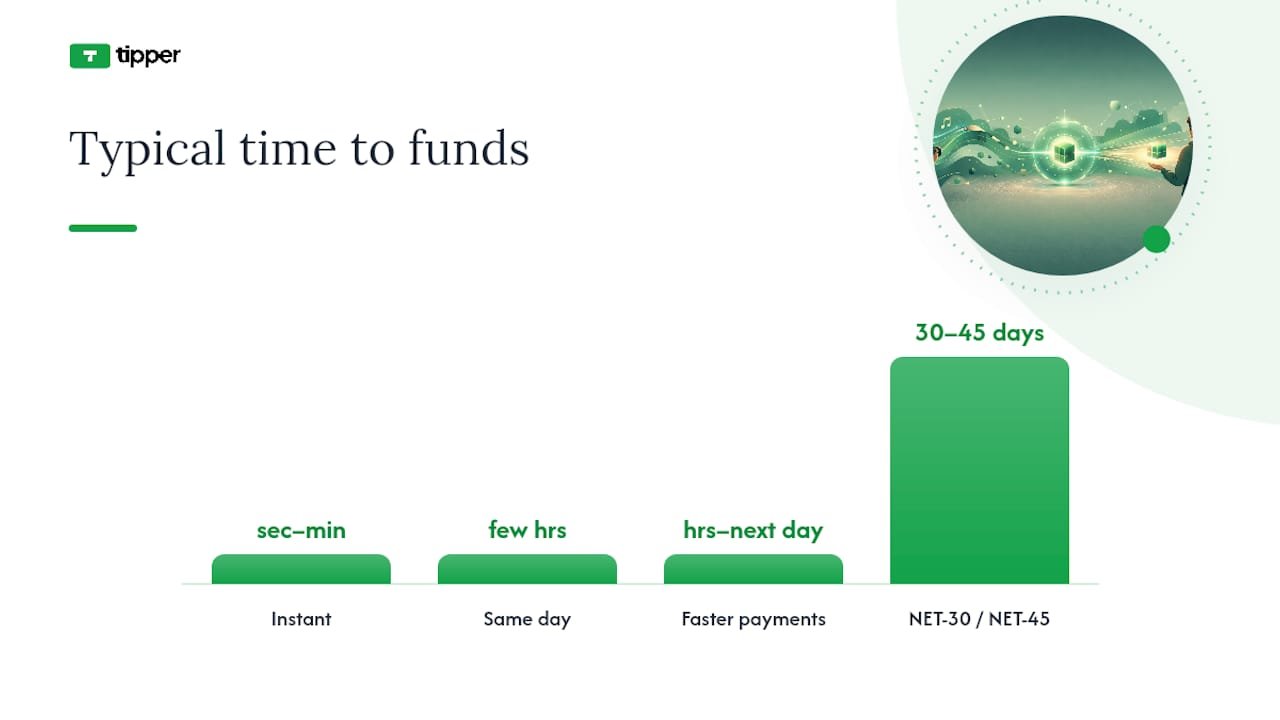
The tradeoff is timing. Cash tips go directly into a worker’s pocket at the end of a shift. Digital tips often process through payroll cycles, delaying access by days or even weeks. For workers living paycheck to paycheck, that delay creates real financial stress.

Digital systems also reshape tipping behavior through interface design. Point-of-sale systems often suggest inflated tip percentages as defaults, nudging customers toward higher amounts regardless of service quality. A screen showing 20%, 25%, and 30% as options makes 20% feel like the minimum, even when 15% was the norm a decade ago.

Key advantages of digital tipping for businesses and workers include:

  • Automatic record-keeping for tax reporting
  • Reduced risk of cash theft or loss
  • Increased tip amounts through social prompting effects
  • Easier tip pooling and distribution across teams
  • Integration with payroll and accounting software

The role of social proof in digital tipping is significant. When customers see suggested amounts or know others are tipping, they tip more. That social signal does not exist with a cash jar on a counter.

Qualified tip income is defined under U.S. tax law as voluntary cash tips in traditionally tipped occupations, with deductions capped at $25,000 and specific reporting requirements attached. That definition matters because not all gratuities qualify for the same tax treatment.

Workers must report all tip income to their employer if tips exceed $20 in a calendar month. Employers then withhold federal income tax, Social Security, and Medicare on that reported amount. Failure to report tips accurately creates legal and financial risk for both parties.

Key legal points for tipped workers and employers:

  • Workers must keep a daily tip record and report monthly totals to their employer.
  • Employers must include reported tips in W-2 wage calculations.
  • Mandatory service charges are not tips under IRS rules. They are wages.
  • Independent contractors who receive tips report them directly on Schedule C.
  • The $25,000 deduction cap applies to qualifying tip income under the 2025 reconciliation framework.

The distinction between employee and independent contractor matters significantly here. Employees have taxes withheld automatically. Independent contractors bear full responsibility for self-employment tax on tip income. Digital creators using platforms like Tipper typically fall into the independent contractor category and must account for this in quarterly estimated tax payments.

Pro Tip: Keep a simple daily log of tip income, even if your employer tracks digital tips. Your own records protect you in the event of a discrepancy during an IRS audit.

How can individuals and businesses engage with the voluntary tip economy?

Businesses that want to benefit from voluntary tipping without creating resentment need to make the process frictionless and pressure-free. The goal is to make tipping easy, not mandatory. Small businesses can set up cashless tipping with minimal technical overhead using QR codes or personalized tip links.

Practical strategies for businesses include:

  • Display a QR code at the point of service so customers can tip on their own device.
  • Avoid pre-selecting a tip amount on payment terminals. Let customers choose.
  • Train staff to thank customers for tips without creating awkward expectation.
  • Use tip links on receipts, email follow-ups, and social media profiles.
  • Review tipping etiquette standards for 2026 to stay current with evolving norms.

For individuals, the voluntary tip economy now extends well beyond restaurants. 75% of consumers report that tipping expectations have expanded into professional and retail contexts. That expansion means navigating new situations where the right amount is unclear.

Business type Recommended tipping approach Best format
Full-service restaurant 18%–22% of pre-tax subtotal Cash or card at table
Coffee shop or counter service Optional, $1–$2 per order Digital prompt or jar
Content creator or freelancer Discretionary, any amount Digital tip link
Personal care (salon, spa) 15%–20% of service cost Cash or app
Delivery service $3–$5 per order minimum In-app tip at checkout

The local business advantages of digital tipping are clearest for small operators who lack the infrastructure of large chains. A personalized tip link costs nothing to create and can generate meaningful supplemental income with zero friction for the customer.

Key Takeaways

The voluntary tip economy functions as a customer-driven compensation system that transfers wage responsibility from employers to consumers, creating both opportunity and financial risk across service industries.

Point Details
Scale of the system U.S. tipping generates over $50 billion annually, making it a core income source for millions of workers.
Behavioral drivers Appreciators and conformists together push average tip rates higher over time, independent of service quality.
Digital tipping tradeoffs Digital systems increase transparency and tip amounts but delay worker access to funds compared to cash.
Tax obligations Workers must report tips exceeding $20 per month; qualified tip deductions are capped at $25,000 under current law.
Business strategy Frictionless, pressure-free tipping systems generate more voluntary tips than aggressive prompting or mandatory pools.

The voluntary tip economy is more complicated than it looks

I have watched the voluntary tip economy shift dramatically over the past decade, and the most important thing I have learned is this: the word “voluntary” does not mean what most people think it means.

When a payment terminal shows you three tip options and a “no tip” button in small gray text at the bottom, that is not a neutral choice. The interface is designed to make tipping feel like the default and declining feel like a social failure. That is not voluntary in any meaningful sense. It is engineered consent.

The businesses that build genuine goodwill through tipping are the ones that make it easy and never make it awkward. A QR code on a table, a tip link in an email, a simple prompt at the end of a digital transaction. No guilt, no theater. Just an honest offer.

The future of voluntary tipping is not in restaurants. It is in the creator economy, in freelance services, and in any context where one person delivers real value to another and wants a direct way to receive appreciation. That is where the model works best, because the relationship is personal and the gratitude is genuine.

— Tipper

Tipper makes voluntary tipping work for creators and businesses

Receiving tips should not require a complicated setup or force your supporters to create an account. Tipper gives creators and businesses a personalized tip link that anyone can use instantly, with Apple Pay, Google Pay, or a card, no login required.

https://tipper.app

Creators keep 100% of every tip they receive. There are no platform fees eating into earnings, and every transaction comes with the option for a thank-you note or video, so the connection between creator and supporter stays personal. Whether you run a small service business or create content online, start accepting tips through Tipper today. For businesses looking to move beyond traditional checkout prompts, point-of-sale tipping alternatives offer a better path to consistent, frictionless gratuity income.

FAQ

What is a voluntary tip economy?

The voluntary tip economy is a compensation system where customers choose to pay gratuities directly to service workers, with no legal obligation to do so. It generates over $50 billion annually in the U.S. and serves as a primary income source for millions of workers.

How does tipping work in the U.S.?

Standard tips at full-service restaurants range from 18% to 22% of the pre-tax bill, driven by a federal tipped minimum wage of $2.13 per hour. Customers tip at their discretion, though digital prompts increasingly shape the amounts they choose.

Are tips taxable income?

Yes. Workers must report all tip income exceeding $20 per month to their employer, who withholds federal income and payroll taxes. Qualified tip income deductions under current U.S. law are capped at $25,000.

What are the advantages of voluntary tipping for businesses?

Voluntary tipping reduces direct wage costs for employers and creates a tax-advantaged compensation structure. Businesses that implement frictionless digital tipping systems also see higher average gratuities compared to cash-only setups.

How has digital tipping changed the tip-based economy?

Digital tipping increases transparency and average tip amounts through interface prompts and social proof effects, but it delays worker access to funds compared to immediate cash. Nearly 66% of consumers feel obligated to tip when digitally prompted.

What Is the Voluntary Tip Economy? A 2026 Guide2026-07-05T05:00:31+00:00

The Role of Customer Feedback Tipping for Creators

Customer feedback tipping is defined as the practice of using tips to express appreciation and signal satisfaction with service quality, directly influencing how providers perform and engage. This practice sits at the intersection of behavioral economics and relationship building, making it far more than a simple transaction. For content creators, freelancers, and small business owners, understanding how feedback and tipping interact can mean the difference between a loyal supporter base and a disengaged audience. Research confirms that 85% of consumers are more likely to use a business because of positive reviews, while 77% avoid businesses with negative reviews. That data makes one thing clear: the role of customer feedback tipping goes well beyond a few extra dollars.

How does tipping serve as a feedback and monitoring tool?

Tipping is one of the oldest performance monitoring systems in service industries. When a customer leaves a generous tip, they signal satisfaction. When they leave nothing, they signal disappointment. This feedback loop works across restaurants, freelance platforms, and creator ecosystems alike.

Woman reviewing customer tips on smartphone

Research on tipping behavior identifies two distinct customer types: “appreciators,” who tip to reward genuinely good service, and “conformists,” who tip because social pressure demands it. This distinction matters enormously. Conformist tipping weakens performance incentives because providers receive tips regardless of quality. Appreciator tipping, by contrast, creates a direct link between service quality and financial reward.

For freelancers and content creators, this means the goal is to attract appreciators, not just tip volume. A graphic designer who delivers work ahead of schedule, a podcaster who answers listener questions on air, or a fitness coach who personalizes advice all create conditions where appreciators naturally want to tip. The tip becomes a genuine signal of satisfaction, not a social obligation.

  • Reward signal: Tips tell you what worked. A spike in tips after a new content format tells you to keep doing it.
  • Punishment signal: A drop in tips after a price increase or quality dip tells you something is wrong before a formal complaint arrives.
  • Engagement signal: Supporters who tip repeatedly are your most loyal audience. They are worth more than passive followers.
  • Improvement signal: Pairing tip data with written feedback reveals patterns that neither source shows alone.

Pro Tip: Track your tip frequency alongside your content calendar. If tips cluster around specific post types or delivery styles, that pattern is more honest feedback than any survey.

The importance of customer feedback goes beyond collection. Teams that analyze feedback alongside usage data make better financial and operational decisions than those who collect feedback passively. Applied to tipping, this means treating tip data as a metric, not just income.

Infographic illustrating tipping feedback cycle stages

What are the common challenges and risks with tipping prompts?

Tipping fatigue is real, and it is growing. A 399% increase in Yelp reviews mentioning “tipflation” shows that aggressive tipping prompts are eroding brand loyalty and reducing repeat visits, particularly in quick-service environments. That number reflects a broader shift in how customers feel about being asked for tips.

The core problem is psychological reactance. When customers feel pressured to tip, they resist. Research on tipping fatigue confirms that negative reactions to tipping prompts occur most often where tipping norms are unclear. Customers who feel manipulated do not just skip the tip. They often skip coming back.

“Non-normative tipping prompts directly following feedback requests cause reactance, eroding trust as customers feel tips are being bought for positive ratings. Separating tipping from feedback requests is the most effective way to avoid this psychological trap.” — Harvard Business Review

The timing of a tipping prompt matters as much as the prompt itself. Asking for a tip immediately after requesting a review or rating creates a perception that the tip is payment for a positive score. That perception destroys the authenticity that makes tipping meaningful in the first place.

Risk Factor What It Causes How to Reduce It
Prompt immediately after feedback request Psychological reactance, distrust Separate the two requests by time or screen
No opt-out option visible Pressure, resentment Always include a clear “no thanks” option
Unclear tipping norms Confusion, negative emotion State what the tip supports in plain language
Aggressive or repeated prompts Fatigue, reduced loyalty Limit prompt frequency per interaction

Small retention improvements of 5% can boost profits by 25%–95%. Losing a loyal supporter to a poorly timed tip prompt is a costly mistake that most creators and small businesses never measure.

How can creators and small businesses integrate tipping with feedback effectively?

The most effective approach separates appreciation tipping from transactional feedback entirely. Separating these two requests produces higher voluntary tip rates and reduces negative customer reactions. The practical steps below apply whether you run a Substack newsletter, a local bakery, or a freelance design practice.

  1. Ask for feedback first, then wait. Send your feedback request immediately after a transaction or content delivery. Wait at least 24 hours before any tipping prompt appears. This removes the perception that the tip is tied to the review score.

  2. Make “no thanks” visible and easy. Including an explicit “no thanks” option alongside tipping prompts reduces the perception of pressure and preserves the customer relationship. A supporter who skips a tip today but feels respected will return tomorrow.

  3. Tell supporters where the tip goes. Transparency about tip destination builds trust and reduces friction. A simple line like “Tips go directly to the creator and cover production costs” normalizes the ask without pressure.

  4. Frame tipping as appreciation, not payment. Language matters. “If you enjoyed this, a tip means the world” reads differently than “Please tip to support this content.” The first invites; the second demands.

  5. Use feedback to improve before asking for tips. Supporters who see their feedback reflected in your work tip more willingly. Acting on comments, adjusting formats based on responses, and acknowledging suggestions publicly all signal that you listen. That signal builds the trust that makes appreciators tip.

Pro Tip: Send a personal thank-you note or short video to supporters who tip. Tipper’s platform supports this natively, and that personal touch converts one-time tippers into repeat supporters.

Promoting a healthy tipping culture in your business starts with respecting customer autonomy. Supporters who feel free to choose will choose more generously over time.

What is the impact of digital tipping platforms on feedback and engagement in 2026?

Digital tipping platforms have changed how feedback and tipping interact. Digital tipping tools use social proof and real-time feedback integration to tailor tipping prompts, increasing voluntary tipping behavior without pressure. The timing and presentation of each prompt is shaped by actual customer data, not guesswork.

Nearly 60% of businesses have shifted to proactive engagement using near real-time feedback, enabling personalized outreach that builds trust and encourages voluntary tipping. That shift reflects a broader understanding: reactive feedback collection is far less effective than acting on signals as they arrive.

The practical benefits for creators and small business owners are concrete:

  • Real-time signals: When a supporter tips immediately after a post goes live, that timing tells you the content landed. Platforms that log this data let you spot patterns across weeks and months.
  • Social proof integration: Showing that others have tipped, without revealing amounts, normalizes the behavior for new supporters. Social proof directly affects tip amounts and reduces the hesitation first-time tippers feel.
  • Feedback loops that improve content: When creators combine tip data with written comments, they identify which topics, formats, and delivery styles generate the most genuine appreciation.
  • Reduced friction: Platforms that accept Apple Pay or Google Pay without requiring account creation remove the biggest barrier between a supporter’s intention to tip and the actual tip.

Proactive feedback use improves long-term customer loyalty. For creators, that means treating every tip notification as a data point, not just a deposit.

Key Takeaways

Customer feedback tipping works best when appreciation is kept separate from transactional feedback, prompts respect customer autonomy, and transparency about tip use builds the trust that turns one-time supporters into loyal ones.

Point Details
Tipping as a feedback signal Tips reveal what supporters value most, making them a more honest metric than surveys alone.
Appreciators vs. conformists Design your tipping experience for appreciators; conformist tipping weakens quality incentives.
Separate feedback from tipping Asking for tips immediately after feedback requests causes reactance and erodes trust.
Transparency builds loyalty Telling supporters where tips go reduces friction and increases repeat tipping behavior.
Digital platforms amplify results Real-time feedback integration and social proof features increase voluntary tipping without pressure.

What I’ve learned about tipping and feedback after working with thousands of creators

The most common mistake I see is treating tipping as a revenue line and feedback as a separate customer service task. They are not separate. Every tip is a vote, and every piece of feedback is a map. When you read them together, you stop guessing what your audience wants.

The second mistake is confusing volume with quality. A creator with 50 loyal tippers who feel genuinely appreciated will outperform one with 500 passive followers who tip once out of social pressure and never return. Conformist tipping feels good in the short term. It hollows out your relationship with your audience over time.

Authenticity is not a soft concept here. It has a measurable outcome. Supporters who receive a personal thank-you, who see their feedback reflected in your next piece of work, and who feel free to skip a tip without judgment are the ones who come back. They are the ones who tell their friends. That compounding effect is worth far more than any single tip.

The creators who get this right share one habit: they treat every interaction as a relationship, not a transaction. Tipping becomes a natural expression of that relationship, not a tax on it.

— Tipper

How Tipper helps creators turn appreciation into a sustainable income stream

Creators and small business owners who want to put these principles into practice need a platform built around respect for the supporter relationship.

https://tipper.app

Tipper is built for exactly this. Supporters can send a tip through a personalized link using Apple Pay or Google Pay, with no account required. Creators keep 100% of their earnings and can respond with a thank-you note or video, turning each tip into a genuine exchange. The platform keeps tipping separate from transactional feedback by design, which means every tip you receive is a voluntary act of appreciation, not a pressured response. Start receiving tips today and build the kind of supporter relationships that grow over time.

FAQ

What is customer feedback tipping?

Customer feedback tipping is the practice of using tips to express satisfaction and reward service quality, functioning as both a financial signal and a relationship-building tool between creators and their supporters.

How does tipping influence service quality?

Tips act as direct performance signals. Appreciators tip to reward genuinely good service, which creates a feedback loop that motivates higher quality work over time.

Why do tipping prompts sometimes backfire?

Tipping prompts cause reactance when they appear immediately after feedback requests or lack a visible opt-out option. Research confirms that unclear tipping norms and pressure tactics reduce satisfaction and repeat visits.

How should creators separate tipping from feedback requests?

Send feedback requests immediately after a transaction, then wait at least 24 hours before any tipping prompt. Separating these two requests produces higher voluntary tip rates and reduces negative reactions.

Does transparency about tips really matter?

Transparency about where tips go builds trust and reduces friction. A brief explanation of how tips are used normalizes the ask and increases the likelihood of repeat tipping behavior.

The Role of Customer Feedback Tipping for Creators2026-07-04T05:30:18+00:00

Digital Tipping Platforms Comparison 2026: Creator’s Guide

Digital tipping platforms are defined as tools that let supporters send money directly to creators through contactless, digital payment channels without needing cash or a shared physical space. The digital tipping platforms comparison 2026 reveals a clear truth: the best platform is not the most popular one. It is the one that matches your average tip size, your audience’s location, and your payment preferences. Cash usage is declining as creators without digital tipping options risk missing spontaneous support from digitally native audiences. Tipper, for example, lets supporters pay instantly via Apple Pay or Google Pay with no account required, and creators keep 100% of their earnings.

1. What features define the best digital tipping platforms for creators in 2026?

The single most important feature is fee structure. A platform that charges a fixed fee per transaction will eat a large share of micro-tips, while a percentage-based fee favors smaller amounts. Fixed per-transaction fees typically run around $0.29 or €0.29, which can wipe out most of a $1 tip before it reaches you.

Beyond fees, the best platforms share these qualities:

  • Zero friction for supporters. No account creation, no app download, no waiting. The fewer steps between intent and payment, the higher your conversion rate.
  • Multiple payment methods. Apple Pay, Google Pay, and major credit cards cover the vast majority of digital-first audiences in 2026.
  • Global currency support. If your audience spans multiple countries, your platform must handle multi-currency transactions without punishing exchange rates.
  • Privacy and data compliance. Platforms operating under GDPR or equivalent standards protect both you and your supporters.
  • Flexible tip amounts. Supporters should be able to send $1 or $100 without the interface making either feel awkward.

Pro Tip: Set a suggested tip amount slightly above your average. Research on pricing psychology shows that anchoring guides supporters toward higher amounts without pressure.

Tipper checks every box on this list. Supporters pay with one tap, creators receive funds with no platform cut, and the setup takes minutes.

Creator managing digital tipping on tablet

2. Top digital tipping methods and technologies used in 2026

Four core technologies power digital tipping in 2026: instant bank-to-bank networks, credit card processors, QR codes, and NFC chips. Each serves a different use case.

Instant bank-to-bank networks work best for micro-tips in supported regions. Wero charges about €0.05 on a €1 tip, compared to a €0.29 fixed fee from card processors. That difference makes bank-to-bank networks up to 5x cheaper for very small amounts.

Credit card processors handle larger tips and international payments well. They charge a percentage of the transaction, which becomes proportionally smaller as tip size grows. For a $20 tip, a 2.9% fee costs $0.58. That is reasonable. For a $1 tip, it is not.

QR codes remain the most accessible contactless method. Every smartphone camera can read one, and they cost nothing to generate. The downside is security: QR codes can be spoofed or replaced at in-person events.

NFC chips, specifically those using NTAG 424 DNA technology, solve the spoofing problem. NFC tipping is harder to spoof and delivers a smooth tap-to-tip experience that venues and live-event creators prefer. The trade-off is device compatibility. Older smartphones may not support NFC tipping.

Method Best for Main limitation
Bank-to-bank (instant) Micro-tips in supported regions Limited geographic coverage
Credit card processor Larger tips, international reach Fixed fees hurt micro-tips
QR code Broad accessibility, online sharing Spoofing risk at in-person events
NFC chip In-person events, security-focused Requires NFC-compatible devices

Pro Tip: Combine QR and NFC at live events. Display a QR code for broad access and offer an NFC tap point for supporters with compatible devices. Hybrid QR and NFC setups maximize conversion by covering both audiences.

3. How to optimize digital tipping setups for mixed international audiences

Creators with global audiences face a real cost problem. No single payment method is cheapest for every supporter in every country. The solution is a hybrid setup.

Combining low-cost eurozone instant payments with a global card processor reduces overall fees while keeping your tipping page accessible to everyone. EU-based supporters use the instant network. Everyone else uses a card. You present both options clearly on one page.

Practical steps for a mixed-audience setup:

  • Segment by region. Identify where your top supporters are located. If 60% are in the EU, prioritize an instant payment option for that group.
  • Display local currency. Supporters tip more when they see their own currency. A $5 tip feels different from a €4.62 tip, even at the same exchange rate.
  • Keep the interface in one language. Multilingual tipping pages create confusion. Use English as the default for global audiences unless your audience is predominantly one language.
  • Test on mobile first. The majority of digital tips come from mobile devices. If your tipping page does not load cleanly on a phone, you lose the tip.
  • Minimize redirects. Every page redirect between “I want to tip” and “tip sent” costs you conversions. Platforms like Tipper handle the full transaction on one page.

Cross-platform tipping strategies help creators manage multiple payment methods without overwhelming supporters with choices.

4. Integrating digital tipping into your creator workflow and audience engagement

Tipping works best when it feels like a natural part of your content, not an interruption. The framing matters more than most creators expect. Positive, supportive messaging outperforms generic donation requests every time. “Support this work” converts better than “donate if you can.”

A practical integration workflow looks like this:

  1. Create a personalized tipping page. Use your name, a short description of your work, and a clear call to action. Tipper generates a shareable link and QR code automatically.
  2. Add your tipping link to every content channel. Pin it to your social profiles, include it in video descriptions, and add it to your email signature.
  3. Mention tipping at natural moments. The end of a video, the bottom of a newsletter, or after a live Q&A are all low-pressure moments to mention support.
  4. Enable real-time notifications. Real-time tip alerts let you acknowledge supporters immediately, which builds loyalty and encourages repeat tips.
  5. Send a personal thank-you. Tipper supports thank-you notes and video messages. A 15-second video response to a tip creates a connection that no automated email can replicate.
  6. Track your tip revenue monthly. Reviewing which content generates the most tips tells you what your audience values most. That data shapes your content calendar.

Verified performance tracking shifts audience perception from casual donation to genuine investment in your work. Transparency builds the kind of trust that turns one-time tippers into regular supporters.

5. Common pitfalls and overlooked options in digital tipping platforms

The most expensive mistake creators make is choosing a platform based on name recognition rather than fee math. A well-known card processor may cost you 29 cents on every $1 tip. That is a 29% fee before the percentage charge even applies. Transaction fee structure depends entirely on your average tip amount, and most creators never run the numbers.

Other common mistakes:

  • Relying on one payment method. A creator who only accepts card payments excludes supporters who prefer Apple Pay, Google Pay, or bank transfers.
  • Weak tipping copy. Phrases like “buy me a coffee” or “donate” carry connotations that reduce conversion. Frame tipping as audience participation, not charity.
  • Ignoring NFC for in-person work. Freelancers who meet clients or perform live often overlook NFC tipping. NFC adoption at in-person events is growing because it reduces fraud and speeds up the payment moment.
  • Skipping no-fee alternatives. Platforms that charge creators zero platform fees exist. Tipper keeps 100% of tips with the creator, which is a meaningful difference over time.

Choosing a tipping platform without calculating your average tip size against the fee structure is the same as pricing a product without knowing your costs. The math determines your actual earnings, not the platform’s marketing copy.

Explore types of digital tip jar tools to compare categories before committing to a single solution.

Key Takeaways

The best digital tipping platform in 2026 is the one that matches your average tip size, your audience’s geography, and your workflow, not the one with the biggest brand name.

Point Details
Fee structure drives real earnings Fixed fees destroy micro-tip revenue; calculate cost per average tip before choosing a platform.
Hybrid setups reduce total fees Combine instant bank networks for EU supporters with card processors for international reach.
NFC beats QR for in-person security NFC chips using NTAG 424 DNA technology reduce spoofing risk and improve conversion at live events.
Framing determines conversion Supportive, non-begging copy consistently outperforms generic donation language.
Zero-fee platforms exist Tipper charges creators no platform fee, meaning 100% of every tip reaches the creator.

What I have learned from watching creators choose the wrong platform

The pattern repeats constantly. A creator picks a well-known payment processor because it feels safe, then spends months wondering why their tipping revenue is lower than expected. The answer is almost always fee math combined with friction. Their supporters hit one extra step and abandon the process.

The creators who earn the most from tipping share two habits. First, they treat their tipping page like a product page. They write clear copy, use a real photo, and update the page when their content focus changes. Second, they review their tip data monthly. They know which posts drive tips and which do not. That feedback loop shapes their content decisions in ways that no analytics dashboard can replicate.

The technology trend worth watching is NFC at live events. Creators who perform, teach workshops, or meet clients in person are leaving money behind if they rely only on QR codes. An NFC card or sticker costs a few dollars and converts at a higher rate because the tap feels intentional. It is a small investment with a measurable return.

The honest advice is this: start with a platform that charges you nothing and requires nothing from your supporters. Add complexity only when your volume justifies it. Most creators never need more than a clean tipping link, a good payment method, and a genuine thank-you.

— Tipper

Tipper makes digital tipping simple for creators in 2026

Tipper gives you a personalized tipping page with a shareable link and QR code ready in minutes. Supporters pay with Apple Pay, Google Pay, or a card. No account creation, no app download, no friction.

https://tipper.app

Creators keep 100% of every tip. Tipper handles the payment processing, the thank-you message tools, and the real-time notifications. If you want tipping made easy without platform fees eating your earnings, Tipper is built for exactly that. The setup takes less time than writing a single social post, and your first tip can arrive the same day. Learn more about frictionless tipping practices that help creators convert audience support into real income.

FAQ

What is the cheapest digital tipping platform for micro-tips?

Instant bank-to-bank networks cost significantly less than card processors for tips under $5, with fees as low as $0.05 compared to a fixed $0.29 per transaction from card processors. Tipper charges creators no platform fee at all.

How do I use a digital tipping platform as a freelancer?

Create a personalized tipping page, add your shareable link to your client communications and social profiles, and mention it at natural moments after delivering work. Tipping links for creators can be shared anywhere a URL works.

Is NFC tipping better than QR code tipping?

NFC tipping using NTAG 424 DNA chips is more secure and harder to spoof than QR codes, making it the better choice for in-person events. QR codes remain more accessible for online and remote audiences.

Do supporters need an account to tip through Tipper?

No. Tipper lets supporters send a tip using Apple Pay, Google Pay, or a card with no account required. That zero-friction experience is the main reason conversion rates stay high.

What 2026 tipping app features matter most for international creators?

Multi-currency support, multiple payment methods, and low or no platform fees matter most. A hybrid setup combining regional instant payment networks with a global card processor covers the widest audience at the lowest cost.

Digital Tipping Platforms Comparison 2026: Creator’s Guide2026-07-03T07:49:10+00:00

Loyalty-Linked Tipping Explained: Your 2026 Guide

Loyalty-linked tipping is defined as the practice of connecting customer loyalty rewards directly with digital tipping systems, so that a single payment action captures both a tip and a loyalty credit at once. This model is gaining traction in 2026 because payment-linked loyalty and NFC-based tipping credentials have matured enough to make the experience genuinely frictionless. Businesses using these systems report stronger customer retention and higher worker satisfaction than those running loyalty and tipping as separate programs. Understanding how loyalty-linked tipping works gives both businesses and individuals a clear path to better engagement and real monetization.

What is loyalty-linked tipping explained: the core mechanics

Loyalty-linked tipping works by connecting two systems that traditionally operated in isolation. The first is a payment-linked loyalty program. The second is a digital tipping mechanism. When both are active, a customer’s payment triggers a loyalty reward and delivers a tip to a worker in a single interaction.

Payment-linked loyalty enables automatic reward earning by linking one payment card to a loyalty account. The initial setup takes about 60 seconds. After that, every qualifying transaction earns rewards with zero customer action at the point of sale. No app to open, no card to scan, no code to enter.

Restaurant server receiving digital tip via NFC badge

The tipping side works through NFC-based personal credentials. A staff member carries a small token or badge loaded with their tipping identity. A customer taps their smartphone to that badge, and a browser payment screen appears instantly. The tip completes via Apple Pay or Google Pay in under one second, with no account creation required.

The key insight is that these two mechanisms work best when they are kept separate at the technical level. Separating loyalty from tipping at the point of sale optimizes the customer experience and operational efficiency for both reward types. Trying to force both into a single POS workflow creates friction and confusion.

How NFC credentials change the tipping experience

NFC tipping credentials give workers a portable professional identity that travels with them. A server at a restaurant, a hotel porter, or a freelance creator can each carry a credential tied directly to their personal payment details. The guest taps, the tip lands in the worker’s account immediately, and the employer never touches the funds. This is a structural shift from the old model where tips pooled through employer systems before reaching workers.

Pro Tip: If you are a business owner setting up loyalty-linked tipping, configure your loyalty program through card-linking first, then deploy NFC tipping credentials separately. Mixing both into one POS screen slows the checkout and reduces tip rates.

Why the psychology behind loyalty tipping drives real behavior

Behavioral psychology explains why loyalty-linked tipping works better than either system alone. The combination activates two powerful motivators: the desire to gain rewards and the fear of losing earned status.

Infographic showing key benefits of loyalty-linked tipping

Loss aversion drives customer retention in tiered loyalty programs because customers work harder to avoid losing earned status than they do to gain new benefits. A customer who has reached a “Gold” tier will spend more to protect that status than a new customer will spend to reach it. Tipping fits into this dynamic because it becomes part of the ritual that maintains the relationship with a brand or service worker.

The data on program structures confirms this. Cashback loyalty models have high signup rates of 62% but only 8% engagement after six months. Tiered programs start lower at 38% adoption but hold 73% engagement at 18 months. That gap shows that emotional investment, not just financial incentive, keeps customers active.

Direct, verified tipping through NFC credentials adds another psychological layer. Digital tipping transforms workers from passive recipients into principals with portable professional identities. When a customer taps to tip a specific person, the act feels personal and direct. That emotional connection increases the likelihood of tipping and the likelihood of returning.

Key psychological drivers behind loyalty-linked tipping:

  • Loss aversion: Customers protect earned tier status by continuing to spend and engage.
  • Reciprocity: Receiving instant, personalized recognition from a worker triggers a desire to tip.
  • Habit formation: Frictionless reward capture turns loyalty participation into an automatic behavior.
  • Autonomy: Direct NFC tipping gives customers full control over who receives their tip and when.

“Consumer behavior is shifting toward expecting frictionless, no-manual-step rewards and tipping enabled by mobile wallets and identification-linked payments.” — Rewardly research on payment-linked loyalty

What loyalty program structures work best with tipping integration?

Three main loyalty structures exist, and each integrates with tipping differently. Understanding the differences helps businesses choose the right model.

Cashback programs return a percentage of spend as cash or credit. They are easy to understand and drive fast signups. The problem is that cashback feels transactional. Customers earn and redeem without building any emotional attachment to the brand. Tipping in a cashback environment tends to stay flat because the relationship never deepens beyond the discount.

Points programs assign a point value to each dollar spent. Customers accumulate points and redeem them for rewards. Effective points programs tie rewards directly to behavior change and manage breakage, which is the percentage of points that are never redeemed, to subsidize rewards for engaged users. Breakage typically ranges from 10% to 30%. That unredeemed value funds better rewards for active customers, which is how well-run programs stay financially healthy. Points programs pair well with tipping because both systems reward ongoing engagement rather than one-time transactions.

Tiered programs assign customers to status levels based on cumulative spend or activity. Each tier unlocks better rewards. As shown above, tiered programs produce the strongest long-term engagement. They also create the best environment for loyalty-linked tipping because customers at higher tiers are already emotionally invested in the brand.

Program type Signup rate 18-month engagement Tipping compatibility
Cashback High Low Weak
Points-based Medium Medium Strong
Tiered Lower Very high Strongest

Virtual payment cards add another layer to points redemption. Some programs issue a virtual card loaded with redeemable points, which customers use at checkout. This approach keeps the loyalty and payment experience inside a single wallet, making it easier to layer in tipping credentials from the same device.

Pro Tip: For points and tiered programs, set your effective reward rate between 1% and 3% of spend. Rates below 1% feel meaningless. Rates above 3% erode margin faster than breakage can offset.

What are the real benefits of loyalty tipping for businesses and customers?

The benefits of loyalty tipping split cleanly between the business side and the customer side. Both gain something concrete.

For businesses, the primary gain is retention. Modern commerce links mobile wallets to transactions, enabling hyper-personalization and instant recognition at payment. When a business knows who a customer is at the moment of payment, it can tailor offers, track tipping behavior, and identify its most valuable customers without any manual data entry. That data feeds better decisions about staffing, promotions, and service design.

For workers, the gain is financial and psychological. Tips delivered immediately without an employer intermediary improve worker retention in high-turnover environments like hospitality. A server who receives a tip directly to their account within seconds of completing a table service has a fundamentally different relationship with their work than one who waits for a weekly payroll disbursement.

For customers, the gain is simplicity and meaning. A single tap handles both the loyalty credit and the tip. No fumbling with cash, no navigating a payment terminal, no creating yet another account.

Practical steps for businesses implementing loyalty-linked tipping:

  • Link your loyalty program to a card-based or mobile wallet system so rewards capture automatically at payment.
  • Deploy NFC tipping credentials for individual staff members, separate from the POS loyalty workflow.
  • Set tip amounts to display as suggested values rather than open fields. Suggested amounts increase average tip size.
  • Protect tip privacy by keeping individual tip amounts visible only to the recipient. Workers and customers both prefer this, and it increases tipping rates.
  • Review breakage data quarterly to confirm your reward rate stays within a sustainable range.

For local businesses adopting digital tipping, the NFC credential model removes the need for expensive hardware upgrades. A badge or sticker with an embedded NFC chip costs a fraction of a new POS terminal and works with every modern smartphone.

Key Takeaways

Loyalty-linked tipping works best when payment-linked loyalty and NFC-based tipping credentials operate as separate but complementary systems, each optimized for its own moment in the customer experience.

Point Details
Keep systems separate Run loyalty through card-linking and tipping through NFC credentials for best results.
Tiered programs win long-term Tiered loyalty holds 73% engagement at 18 months versus 8% for cashback models.
Direct tipping empowers workers NFC tips reach workers instantly without employer intermediary, improving retention.
Breakage funds sustainability Unredeemed points (10%–30%) subsidize rewards for active users and protect margin.
Privacy increases tip rates Keeping tip amounts private from management raises both worker comfort and tipping frequency.

The shift I see coming in loyalty and tipping

The most underappreciated part of loyalty-linked tipping is not the technology. It is the power shift it creates for workers. For years, tipping was controlled by whoever owned the POS system. Employers decided when tips were distributed, how they were pooled, and what workers could see. NFC credentials break that model entirely. A worker’s tipping identity now belongs to them, not their employer. They carry it from job to job, build a reputation on it, and receive funds directly. That is a structural change, not a feature update.

Businesses that recognize this shift early will attract better staff. Workers choose employers who let them keep their tipping identity intact. The businesses that try to route NFC tips back through their own systems will lose workers to those that do not.

The privacy dimension matters just as much. Software systems that protect individual tip amounts from management scrutiny consistently see higher tipping adoption. Customers tip more when they know the money goes directly to the person they intend to reward. Transparency to the recipient and privacy from management is the combination that works.

The next phase will be loyalty programs that recognize tipping behavior as a signal of customer quality. A customer who tips consistently is a better long-term customer than one who maximizes cashback without tipping. Programs that weight tipping history in their tier calculations will build more loyal, higher-value customer bases. That is where the real monetization opportunity sits.

— Tipper

Tipper makes loyalty-linked tipping work for you

Tipper is built for exactly this moment in the tipping and loyalty space. Any creator, freelancer, or business can set up a personalized tipping link in minutes, with no signup required from the person tipping. Supporters pay instantly through Apple Pay or Google Pay, and the creator keeps 100% of every tip.

https://tipper.app

Tipper’s model fits naturally into loyalty-linked tipping programs because it removes every barrier between a supporter’s intention and the actual payment. No apps, no accounts, no delays. The person tipping taps or clicks, and the funds move. For businesses exploring contactless tip collection or creators building a direct support channel, Tipper provides the infrastructure without the complexity. Visit Tipper to set up your tipping link and start receiving instant appreciation from your audience today.

FAQ

What is loyalty-linked tipping?

Loyalty-linked tipping is the practice of connecting customer loyalty rewards with digital tipping systems so that a single payment captures both a tip and a loyalty credit. It uses payment-linked loyalty and NFC-based credentials to make the process automatic and frictionless.

How does NFC tipping work with loyalty programs?

A staff member carries an NFC badge loaded with their personal tipping identity. A customer taps their smartphone to the badge, and a payment screen appears via Apple Pay or Google Pay, completing the tip in under one second with no app or account required.

Which loyalty program type works best with tipping?

Tiered loyalty programs produce the strongest long-term engagement, holding 73% of participants active at 18 months. Their emotional investment structure makes customers more likely to tip consistently compared to cashback or basic points models.

Why should tip amounts stay private from management?

Workers and customers both prefer tip amounts to remain visible only to the recipient. Systems that protect this privacy consistently see higher tipping rates and greater worker comfort, which improves overall adoption of digital tipping programs.

Can small businesses implement loyalty-linked tipping without expensive hardware?

Yes. NFC tipping credentials work as low-cost badges or stickers that pair with any modern smartphone. Payment-linked loyalty requires only a card-linking setup, not a new POS terminal, making the full system accessible for small business cashless tipping at minimal cost.

Loyalty-Linked Tipping Explained: Your 2026 Guide2026-07-02T07:54:56+00:00

Why Tipping Boosts Service Quality: A 2026 Guide

Tipping is a voluntary monetary reward given to service providers to recognize and encourage quality service, combining social expectations with economic incentives. The question of why tipping boosts service quality is more complex than it first appears. Research shows that bill size drives tip amounts far more than perceived service quality, yet tipping systems still improve aggregate customer satisfaction. Understanding both the social and economic forces behind gratuity helps consumers tip more thoughtfully and helps service professionals earn more consistently.

Why tipping boosts service quality: what the research says

Tipping functions as both a performance incentive and a social signal, but the two roles carry unequal weight. Bill size explains about 70% of the variance in tip amounts, while customer-rated service quality explains only about 4%. That gap is striking. It means most customers tip based on what they spent, not how well they were served.

Server receiving tip at restaurant table

That said, the 4% figure is not meaningless. An improvement in perceived service quality increases the probability of a customer leaving a tip by approximately 4%. In high-volume service environments, that modest shift adds up across hundreds of daily transactions. Service quality does move the needle, just not as dramatically as the cultural narrative around tipping suggests.

Research also identifies several key drivers of tipping behavior beyond bill size and service quality:

  • Social approval: Customers tip partly to be seen as generous and fair by servers and peers.
  • Empathy: A personal connection with the server increases tip likelihood.
  • Conformity: Customers follow perceived social norms, tipping a standard percentage regardless of their actual experience.
  • Reciprocity: Tipping satisfies a felt obligation to reward someone who has served you.

The effects of tipping on service also vary by industry. In restaurants, tipping is deeply embedded in compensation structures. In banking, retail, and personal services, the relationship between tips and service performance is less established. Tipping behavior is driven by social signaling, empathy, and conformity rather than purely by self-interest, which explains why economic theory alone cannot predict tipping patterns in one-off transactions.

What this means for service quality at scale

Individual tip amounts correlate weakly with service quality. Yet tipping systems improve aggregate customer satisfaction even when individual tip decisions are driven by social norms. The system works at a macro level because it creates a culture of attentiveness, even if each transaction does not perfectly reward each interaction.

How do social norms shape tipping and service behavior?

Social norms are the invisible engine behind most tipping decisions. The conformity effect causes many customers to tip a standard percentage regardless of service quality. Customers tip 18–20% at a restaurant not because they consciously evaluated the service, but because that is what people do. This norm sustains the tipping system even when individual service falls short.

Infographic showing statistics on tipping and service quality

Social rapport between customer and server plays a measurable role. Servers who introduce themselves by name, make eye contact, and mirror customer body language receive higher tips. These behaviors build the empathy and connection that tipping sustains through reciprocity and social approval. The interaction itself becomes part of the service experience, not just the food or the product.

Tipping in non-traditional settings creates friction. When a tip prompt appears at a self-service kiosk or a counter where no table service occurred, customers feel social pressure without a clear social contract. Tip prompts in non-traditional or self-service settings often reduce customer satisfaction and repurchase intent. The discomfort comes from a mismatch between the social norm and the context.

  • Normative settings: Full-service restaurants, hair salons, taxis. Tipping is expected and reinforces service quality.
  • Ambiguous settings: Coffee counters, fast-casual restaurants. Tipping is optional and often driven by guilt rather than gratitude.
  • Non-normative settings: Self-checkout kiosks, automated services. Tipping prompts here frequently damage customer experience.

Pro Tip: If you manage a service business, frame digital tip prompts as optional and explain what the suggested percentages represent. Customers who understand the context tip more willingly and return more often.

What are the practical implications for service professionals?

Tipping creates a direct financial incentive for attentive service. Tipped servers earn a median wage of $27 per hour, which reflects how performance-based compensation shapes service culture. That figure underscores why gratuity matters not just as a courtesy but as a core part of service worker income.

Training is the most reliable lever for improving tipping outcomes. Staff who demonstrate product knowledge, attentiveness, and genuine courtesy can enhance tipping outcomes significantly. Specific behaviors that research links to higher tips include:

  1. Introducing yourself by name at the start of the interaction.
  2. Repeating the customer’s order back to confirm accuracy and show care.
  3. Checking in at the right moments, not too often, not too rarely.
  4. Offering personalized recommendations based on what the customer has ordered before.
  5. Thanking customers sincerely at the end of the transaction.

These behaviors work because they build the social connection that drives tipping. They also improve the overall service experience, which benefits the business beyond the tip itself.

Digital tipping tools change the mechanics of how tips are collected and distributed. Digital tipping tools offer frictionless tip collection, potentially increasing tip revenue while reducing the awkwardness of cash handling. For managers, the key is transparency. Digital tipping prompts should be explained as calculation aids to reduce customer tip fatigue and negative sentiment. A brief note explaining that suggested amounts help customers calculate a fair tip reduces resistance and increases average tip size.

Pro Tip: Service managers should review tipping etiquette standards for 2026 to align staff training with current customer expectations and digital tipping norms.

What are the real criticisms of tipping as a service incentive?

Tipping as a pure performance incentive has genuine weaknesses. The conformity effect means that most customers tip a standard amount regardless of service quality, which weakens the direct link between pay and performance. A server who delivers exceptional service may receive the same tip as one who delivers average service, simply because both customers follow the same social script.

Unequal tip distribution is a structural problem. In many restaurants, tips flow primarily to front-of-house staff while kitchen workers receive little or none. This creates pay inequity that does not reflect the full team effort behind a quality meal. Customer bias also affects tip amounts, with research showing that demographic factors unrelated to service quality influence how much customers tip.

“Monetizing empathy in non-traditional service contexts can erode customer experience rather than enhance it.” — Harvard Business Review

Some service businesses have experimented with no-tip models, building gratuity into menu prices or service fees. These models often improve pay equity and reduce staff anxiety about income variability. However, restaurants that eliminate tipping often experience lower customer satisfaction ratings online. Customers appear to value the sense of control and reciprocity that tipping provides, even when the financial outcome is similar.

The core tension is this: tipping works as a social system better than it works as a pure economic incentive. Removing it disrupts the social contract without always replacing the satisfaction it generates.

How can consumers use tipping to improve their service experience?

Consumers hold more influence over service quality than they often realize. Tipping thoughtfully, rather than automatically, sends a clearer signal to service providers about what earns genuine appreciation. The impact of tips on service quality grows when customers treat gratuity as a performance-based reward rather than a fixed social tax.

Practical ways to tip more effectively:

  • Tip based on service, not just bill size. A $5 tip on a $20 order communicates more than a $5 tip on a $100 order.
  • Acknowledge good service verbally. A compliment paired with a tip reinforces the specific behavior you want to see again.
  • Use digital tipping when available. It is faster, traceable, and often goes directly to the individual who served you.
  • Skip the tip guilt in non-service contexts. Tipping at a self-service kiosk does not improve service quality. Reserving tips for genuine service interactions keeps the signal meaningful.
  • Build rapport early. Customers who engage warmly with service staff tend to receive better service, which creates a positive cycle that benefits both sides.

Pro Tip: When you receive outstanding service, leave a short written note alongside your tip. Many service platforms and digital tipping tools allow notes or messages. That personal acknowledgment often means more to the service provider than the dollar amount alone.

The impact of tips on service quality depends on how consistently customers use tipping as a real signal. When gratuity becomes purely automatic, it loses its power to reinforce good behavior.

Key Takeaways

Tipping boosts service quality primarily through social norms and aggregate satisfaction effects, not through a direct one-to-one link between tip size and individual performance.

Point Details
Bill size dominates tip amounts Bill size explains 70% of tip variance; service quality explains only about 4%.
Service quality still matters A perceived quality improvement raises the probability of tipping by approximately 4%.
Social norms drive conformity Most customers tip a standard percentage regardless of actual service, sustaining the system socially.
Non-normative prompts backfire Tip requests in self-service settings reduce satisfaction and repurchase intent.
Training improves tipping outcomes Staff who show knowledge, attentiveness, and courtesy earn higher tips and deliver better experiences.

Tipping is more social contract than economic formula

The research on tipping has shifted my thinking considerably. For years, the conventional wisdom held that tips are a clean performance incentive: serve well, earn more. The data tells a different story. Social conformity, bill size, and empathy drive most tipping decisions. That is not a reason to dismiss tipping. It is a reason to understand it more honestly.

What I find most interesting is the aggregate effect. Individual tip amounts may not track service quality closely, but tipping systems as a whole appear to sustain a culture of attentiveness. Restaurants that remove tipping often see satisfaction scores drop, not because the service gets worse, but because customers lose the sense of agency and reciprocity that tipping provides. That psychological dimension is real and worth preserving.

The future of tipping will be shaped by digital tools and changing social norms. Younger consumers are more comfortable with digital tipping and more skeptical of automatic prompts in non-service contexts. Service businesses that explain their tipping systems clearly, train staff in the behaviors that earn genuine appreciation, and use digital tools to make tipping frictionless will come out ahead. The goal is not to extract tips. The goal is to create service experiences worth tipping for.

— Tipper

Tipper makes fair, instant tipping simple for everyone

Tipping works best when it is easy, transparent, and goes directly to the person who earned it. Tipper is built on exactly that principle.

https://tipper.app

With Tipper, service providers and creators receive tips instantly through a personalized link, with no account required from the person tipping. Customers can pay via Apple Pay or Google Pay in seconds. Tipper charges no fees, so service workers keep 100% of their tips. The platform also supports thank-you notes and video messages, which deepens the connection between the person tipping and the person being tipped. For any service professional looking to modernize how they collect gratuity, Tipper removes the friction and puts the full reward where it belongs.

FAQ

Does tipping actually improve service quality?

Tipping improves service quality at the system level by creating a culture of attentiveness, though individual tip amounts correlate weakly with individual service performance. Research shows service quality explains only about 4% of tip variance.

Why do customers tip even when service is poor?

The conformity effect causes most customers to tip a standard percentage regardless of service quality, driven by social norms and the desire to avoid social disapproval rather than by a genuine performance evaluation.

What behaviors help service workers earn higher tips?

Staff who introduce themselves by name, repeat orders for accuracy, check in attentively, and offer personalized recommendations consistently earn higher tips, according to research on server behavior and gratuity outcomes.

Are tip prompts at self-service counters effective?

Tip prompts in non-traditional or self-service settings often reduce customer satisfaction and repurchase intent. Businesses that explain prompts as optional calculation aids see better customer responses than those that present them without context.

How does digital tipping affect service quality and worker income?

Digital tipping tools reduce friction in the tipping process and can increase tip revenue while making distribution more transparent. Platforms like Tipper allow instant, no-fee tips that go directly to the service worker, strengthening the link between good service and fair reward.

Why Tipping Boosts Service Quality: A 2026 Guide2026-07-01T08:30:13+00:00
Go to Top